Ryzen AI Max vs RTX 40 Series: Which Wins for AI and Gaming?
AMD's unified-memory AI chip meets Nvidia's discrete GPU lineup — here's how the trade-offs actually shake out.
By Mike Perry, Founder & Editor-in-Chief · Published 2026-07-19 · Updated 2026-08-12
Ryzen AI Max vs RTX 40 series compared: unified memory for large AI models versus CUDA-accelerated gaming, creative apps, and power efficiency.
Quick answer
AMD's Ryzen AI Max series and Nvidia's GeForce RTX 40 series solve different problems and aren't a clean apples-to-apples swap. Ryzen AI Max is a mobile-first accelerated processing unit (APU) that puts CPU cores, an RDNA-based integrated GPU, and a dedicated neural processing unit (NPU) on one die with a large pool of unified system memory. The RTX 40 series is a discrete GPU lineup — add-in cards with their own dedicated VRAM, CUDA cores, and Tensor cores — sold across everything from budget desktops to workstation rigs. For local large-language-model (LLM) inference on big models, Ryzen AI Max's unified memory pool is the more flexible option. For gaming frame rates, ray tracing, and CUDA-accelerated creative apps, a discrete RTX 40-series card is still the stronger pick. Most builders end up choosing based on form factor first: a thin-and-light AI laptop favors Ryzen AI Max, while a desktop or gaming laptop favors an RTX 40-series GPU.
What is AMD's Ryzen AI Max?
Ryzen AI Max (also marketed as the Ryzen AI Max+ 300 series, codenamed Strix Halo) is AMD's high-end mobile platform aimed squarely at on-device AI workloads. It combines Zen 5 CPU cores, an RDNA 3.5-based integrated GPU, and an on-chip NPU on a single package, paired with a wide LPDDR5X memory bus that the CPU, GPU, and NPU all share. Per AMD's official laptop processor lineup, the appeal of this design is that the integrated GPU can address a large slice of system memory — configurations with 64GB or more of unified RAM let the GPU work with far larger AI models than a typical laptop GPU's dedicated VRAM would allow, at the cost of memory bandwidth that trails a discrete card's dedicated GDDR6/GDDR6X.
What is Nvidia's RTX 40 series?
The GeForce RTX 40 series is Nvidia's Ada Lovelace-generation discrete GPU lineup, spanning the budget-oriented RTX 4060 up through the RTX 4090 flagship. Per Nvidia's official RTX 40 series product page, every card in the range ships with dedicated GDDR6X (or GDDR6 on lower-tier SKUs) VRAM, CUDA cores for general compute, and Tensor cores for AI-accelerated tasks like DLSS upscaling and machine-learning inference. Because these are add-in cards, they need a desktop or a larger gaming laptop chassis with adequate cooling and power delivery — they aren't an option for the thin-and-light form factor Ryzen AI Max targets.
AI and machine-learning workloads
Factor
Ryzen AI Max
RTX 40 series
Memory model
Unified LPDDR5X shared across CPU/GPU/NPU (up to 128GB on top configurations)
Dedicated GDDR6X VRAM per card (8GB on RTX 4060 up to 24GB on RTX 4090)
Best fit
Running large local LLMs that exceed a discrete GPU's VRAM
Fast inference/training on models that fit within VRAM, backed by CUDA/Tensor core throughput
Ecosystem
AMD ROCm + on-chip NPU acceleration
Mature CUDA ecosystem — the default target for most ML frameworks
Bottleneck
Memory bandwidth versus dedicated VRAM
VRAM capacity caps model size
The practical trade-off: a Ryzen AI Max laptop configured with a large unified-memory pool can load LLMs a VRAM-limited discrete GPU simply can't fit, but token-generation throughput on models that do fit in an RTX card's VRAM tends to favor the discrete GPU's CUDA/Tensor core throughput and mature software stack. Builders exploring this trade-off directly should see Ryzen AI Max vs RTX 4060: Which Fits Your Build? and Ryzen AI Max+ 395 vs RTX 4070: Gaming vs AI in 2026 for SKU-specific breakdowns. If you're set on an iGPU-only local-LLM path without any discrete card at all, Running local LLMs on the Ryzen 5 5600G iGPU covers the lower-budget end of that same unified-memory idea.
Gaming performance
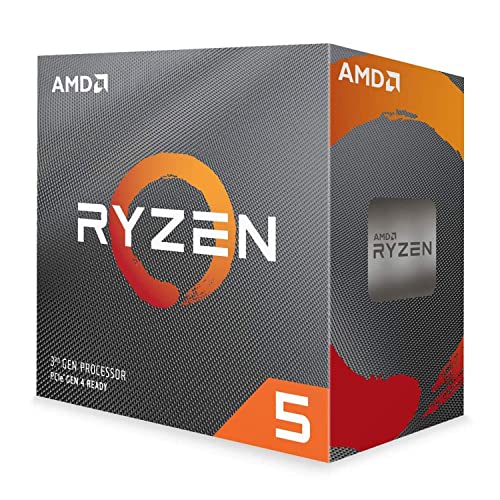
Ryzen AI Max ships in laptops, not gaming desktops, so the more common real-world comparison is between a Ryzen desktop CPU paired with a discrete RTX 40-series card versus a Ryzen AI Max laptop's integrated GPU. For context on what an AMD Ryzen desktop CPU contributes to a discrete-GPU gaming build, SpecPicks' hardware benchmark index lists the following frame rates for the Ryzen 5 3600 (per publicly aggregated GPU benchmark data):
These numbers reflect a mid-range desktop CPU paired with a discrete GPU, not Ryzen AI Max's integrated graphics — but they illustrate why enthusiasts chasing maximum frame rates still build around a Ryzen desktop CPU (or a newer part like the Ryzen 5 5600X or Ryzen 7 3700X) plus a discrete RTX 40-series card rather than relying on any integrated GPU. Builders assembling that kind of rig should also check Best GPU for the Ryzen 7 5800X3D in 2026 and Ryzen 7 5800X vs 5700X for a Dual-Duty Gaming and Local-LLM Build for pairing guidance. Ryzen AI Max's RDNA 3.5 integrated GPU can run modern titles at lower settings and resolutions, but it isn't positioned to match a dedicated RTX 4070 or 4080 for high-refresh-rate or ray-traced gaming — that gap is architectural (discrete VRAM and CUDA/Tensor core count versus a shared memory bus), not a benchmark specific to any one title.
Creative workflows: video editing and 3D rendering
Nvidia's CUDA ecosystem has the deeper install base among creative applications — DaVinci Resolve, Adobe Premiere Pro, and Blender's Cycles renderer all have mature CUDA/OptiX acceleration paths tuned specifically for RTX-series Tensor and RT cores. Ryzen AI Max's integrated GPU can handle these workloads through OpenCL or vendor-specific acceleration, and its larger unified memory pool helps with memory-hungry scenes, but for GPU-accelerated rendering and export speed on CUDA-optimized software, a discrete RTX 40-series card remains the more consistent performer. Exact speedups vary by project complexity, codec, and software version, so treat any specific percentage claim from a third party with caution unless it cites the exact test scene and software build used.
Power efficiency and thermal performance
This is one area where the two platforms aren't really competing on the same axis. Ryzen AI Max is designed as a mobile SoC, so AMD tunes it for a laptop thermal and power envelope — it has to share a battery and a thin chassis with a display, storage, and everything else. RTX 40-series cards, by contrast, are built for desktop or larger gaming-laptop power budgets and can draw considerably more power at full load, especially on the higher-tier RTX 4080 and RTX 4090 SKUs. That makes Ryzen AI Max the obvious pick for battery-powered, fanless-adjacent AI work, while RTX 40-series cards trade higher power draw for more raw throughput when a wall outlet and desktop cooling are available.
Professional workstation use cases
For CAD/CAM, GPU-accelerated scientific computing, and enterprise AI clusters, the calculus shifts again. Nvidia's CUDA ecosystem and long track record of professional driver support (and, at the high end, the RTX 4090's 24GB of VRAM) keep it the default choice for GPU-accelerated CAD/CAM and rendering pipelines. Ryzen AI Max's advantage in this segment is memory capacity per dollar and per watt for workloads that are memory-bound rather than compute-bound — the same trade-off that shows up in the AI/ML section above, just applied to scientific and engineering software instead of chatbots. Teams evaluating both platforms for a mixed gaming-plus-local-AI desktop build may also want to compare a budget AMD path, like Ryzen 5 5600G vs Ryzen 7 5700X for a Budget LLM + Gaming Build, against a discrete-GPU path built around a chip like the Ryzen 5 5600X plus a discrete card and a memory upgrade such as this Crucial 16GB DDR4 kit. Desktop builders sticking with Ryzen should also check Best CPU Cooler for AM4 Ryzen Overclocking in 2026, and anyone tracking AMD's newer desktop parts should see AMD's Ryzen 7 7700X3D Goes Newegg-Exclusive at $329.
Which should you buy?
Thin laptop, local LLM work, battery life matters: Ryzen AI Max, especially a configuration with a large unified-memory pool.
Desktop gaming, ray tracing, high refresh rates: a Ryzen desktop CPU paired with a discrete RTX 40-series card.
Budget-conscious local AI experimentation without a discrete GPU: a lower-cost Ryzen APU path, as covered in the Ryzen 5 5600G iGPU LLM guide.
Mixed workstation duty (CAD, scientific compute, enterprise AI): RTX 40 series for CUDA maturity and VRAM headroom, unless the workload is specifically memory-bound rather than compute-bound.
FAQs
Is Ryzen AI Max a GPU or a CPU?
Neither exactly — it's an APU (accelerated processing unit) that combines CPU cores, an integrated RDNA-based GPU, and a dedicated NPU on one chip, with a shared pool of system memory rather than a separate graphics card.
Can I pair a discrete RTX 40-series GPU with a Ryzen AI Max system?
No. Ryzen AI Max ships in laptops built around its integrated graphics; it isn't designed to work alongside a separate discrete GPU in the same chassis. If you want a discrete RTX 40-series card, you're building (or buying) a traditional desktop or discrete-GPU gaming laptop instead.
Which is better for running local LLMs, Ryzen AI Max or an RTX 40-series card?
It depends on model size. Ryzen AI Max's unified memory can host larger models than a VRAM-limited discrete card, but an RTX 40-series GPU with CUDA acceleration will typically generate tokens faster on models that fit comfortably within its dedicated VRAM.
Does Ryzen AI Max support ray tracing like RTX 40-series GPUs?
Its RDNA-based integrated GPU supports ray tracing at a basic level, but it isn't built to match a discrete RTX 40-series card's dedicated RT cores for real-time ray-traced gaming at high settings.
Is a Ryzen AI Max laptop cheaper than a discrete RTX 40-series gaming laptop?
Pricing varies by configuration and memory capacity, so check current listings rather than assuming a fixed gap — the two platforms also target different use cases (efficient AI-capable laptop versus discrete-GPU gaming laptop), which affects how buyers should compare price at all.
Can I use Ryzen AI Max for gaming at all?
Yes, at lower settings and resolutions typical of integrated graphics. It isn't intended to replace a discrete RTX 40-series card for demanding, high-refresh-rate, or ray-traced gaming.
As an Amazon Associate, SpecPicks earns from qualifying purchases; we also earn on qualifying eBay purchases via the eBay Partner Network. Prices shown were last tracked at crawl time and may vary — check the listing for the current price.
📹 Watch a review
Why is EVERYONE buying this CPU?? - Ryzen 5 3600 — Linus Tech Tips on YouTube