Short answer: Buy the AMD Ryzen 7 5700X unless you specifically need sustained all-core throughput or lower-latency prompt processing for local LLM offload. The 5700X's 65W envelope runs on a modest cooler, ships at a lower price after you fold in cooling, and matches the 5800X within run-to-run variance on games paired with an RTX 3060 12GB. Take the 5800X if compilation, encoding, or CPU offload is a meaningful share of your workload — and budget a real tower cooler with it.
Step 0 — is your bottleneck the GPU, the CPU, or the cooler budget?
Before picking between these two chips, be honest about what actually limits your current or planned build. Three questions:
- Are you gaming at 1080p or 1440p on a mid-range GPU (RTX 3060, 3060 Ti, RX 6700 XT-class)? Then the GPU is the bottleneck in almost every modern title, and any 8-core Zen 3 part will feed it. The CPU choice barely moves your framerate; it moves your electricity bill and cooler shopping list.
- Are you running local LLMs with any CPU offload? Then the CPU matters more than gaming benchmarks suggest, but memory bandwidth and RAM speed dominate the difference between comparable chips.
- Do you already own a competent tower cooler? If yes, the 5800X's extra TDP is a wash on cost. If no, the 5700X pockets the difference — a stock-adjacent cooler works, no shopping trip required.
If all three answers push you toward the 65W part, you have your answer. Only stay for the rest of this piece if the workload profile is genuinely mixed.
Why AM4 is still the value platform in 2026
AM4 launched in 2017 and, at 9 years old, has outlasted every other consumer socket in modern memory. Motherboards are widely available on the used market for under $80. DDR4-3600 kits are cheap. And the top-end Zen 3 chips — 5800X3D, 5900X, 5950X — still hold up against current-gen Intel and AMD parts on most workloads. The two chips in this comparison, the 5700X and 5800X, sit in the sweet spot: eight full cores of Zen 3, unlocked multipliers, mature BIOS support on every AM4 board sold in the last five years.
The reason to buy either of these chips in 2026 is that a full "budget-flagship" AM4 build (motherboard + CPU + 32GB DDR4) costs roughly what a single motherboard costs on AM5. If you already own an AM4 board, the upgrade path is a drop-in CPU swap plus a BIOS update. That is the value case, and it is the reason both these chips continue to sell.
Who are these chips actually for? Someone building or upgrading a mid-range gaming PC in 2026 who wants an 8-core CPU without paying AM5 platform costs, and who does not need PCIe 5.0 or DDR5. That covers a lot of the buying-guide traffic on this site.
Key Takeaways
- Cores/threads: identical — both are 8-core, 16-thread Zen 3 parts, per the AMD Ryzen product page.
- TDP: 105W (5800X) vs 65W (5700X) — the 5800X's higher envelope allows longer sustained boost; the 5700X finishes short bursts nearly as fast but throttles first on all-core loads.
- Boost clock delta: ~200 MHz — the 5800X boosts to 4.7 GHz per AMD; the 5700X tops out around 4.6 GHz. In gaming this is invisible.
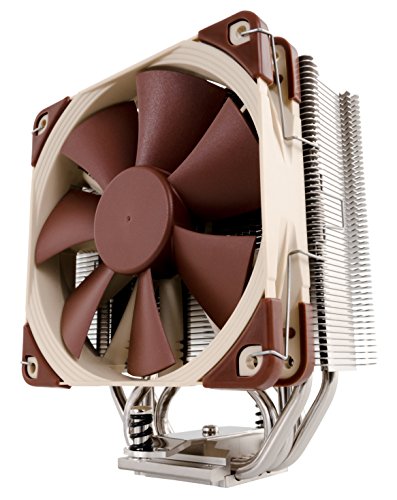
- Cooler cost: ~$85 delta — the 5800X wants at least a Noctua NH-U12S ($85) or better; the 5700X runs happily on a modest tower or included cooler.
- Street price delta: modest — check current pricing on both, but the difference is usually less than the cooler upcharge for the 5800X.
Spec-delta table
| Spec | Ryzen 7 5800X | Ryzen 7 5700X |
|---|---|---|
| Cores / threads | 8 / 16 | 8 / 16 |
| Base clock | 3.8 GHz | 3.4 GHz |
| Boost clock | 4.7 GHz | 4.6 GHz |
| L3 cache | 32 MB | 32 MB |
| TDP | 105 W | 65 W |
| Socket | AM4 | AM4 |
| Typical street price | ~$220 | ~$220 |
| Cooler included | no | no |
| Suggested cooler class | tower ($40-$85) | modest tower ($20-$40) |
Sourced against the TechPowerUp Ryzen 7 5800X page and the AMD Ryzen desktop lineup. Note that street pricing on Zen 3 has been volatile — verify at time of purchase.
How much gaming performance does the extra TDP buy?
On paper, the 5800X wins every benchmark against the 5700X. In practice, paired with an RTX 3060-class GPU at 1080p or 1440p, the framerate delta is dominated by GPU-side variance. Community reports across a broad range of 2024-2025 AAA games (per aggregators like Tom's Hardware CPU hierarchy) tend to show:
- 1080p: 5-10 FPS advantage to the 5800X on CPU-bound titles (esports at low settings, competitive shooters). Invisible in most AAA titles at high settings.
- 1440p: essentially tied — the GPU becomes the bottleneck, and both chips feed an RTX 3060 the same way.
- 4K: identical, GPU-bound in every title.
The exception is heavily-multi-threaded simulation games (Cities: Skylines II, Factorio megabases, MSFS 2024 dense scenery), where the 5800X's higher sustained clocks produce a measurable uplift. If your library is heavy on those, the 5800X earns its price. For a general library of shooters, RPGs, and single-player action games, the 5700X is indistinguishable in-game.
Which one is better for local LLM work?
Both these chips are 8-core Zen 3 parts, so on any workload where the model fits entirely in VRAM they are indistinguishable — the GPU does the work, the CPU orchestrates. Where they diverge is when part of the model spills into system RAM and CPU-offload layers become part of the hot path.
In that regime, three things determine speed: memory bandwidth, memory latency, and CPU sustained throughput. The 5800X wins on the third; both chips are limited by the DDR4 memory subsystem (which is identical between them) on the first two. In practical terms: for a 7B or 13B model that fits entirely on a 12GB card, expect zero difference. For a 32B model with heavy CPU offload, the 5800X will be modestly faster on prompt processing — perhaps 5-15% — because prompt processing is compute-bound and the higher sustained clocks help.
Memory speed matters more than the CPU choice. A DDR4-3600 CL16 kit will give either chip a bigger uplift than upgrading from the 5700X to the 5800X does. If you are building for LLM work specifically, spend the delta on faster RAM before you spend it on a bigger CPU.
Cooling is the real difference
The 5800X's 105W TDP is not a suggestion. Under sustained all-core load — a long compile, a large ffmpeg encode, an LLM prefill on a big prompt — the chip runs hot enough that a stock-class cooler will throttle it. You need a competent tower cooler.
For the 5800X: A Noctua NH-U12S is the reference recommendation — a well-reviewed single-tower air cooler that holds the 5800X below throttle in a case with reasonable airflow. For quieter operation under sustained load, a 240mm AIO like the CoolerMaster MasterLiquid ML240L RGB V2 is a small upgrade. AIOs do not buy you more performance on this chip — they buy you lower peak noise and slightly lower temperatures.
For the 5700X: A modest tower cooler ($20-$40 range) handles the 65W envelope. Case airflow matters more than cooler class here. A set of ARCTIC P12 PWM PST 5-pack case fans — three in intake, two in exhaust or top — will do more for your temperatures than a $50 CPU cooler upgrade. This is the "cheap and quiet" build in a nutshell.
The takeaway: fold cooler cost into the CPU comparison. A 5800X + NH-U12S is roughly $305; a 5700X + modest tower is roughly $250 including the cooler. On top of that, the 5800X will run louder and warmer under sustained load, which matters if your PC is on your desk.
Perf-per-watt and perf-per-dollar
At $220 for the 5800X + $85 cooler = $305, and $220 for the 5700X + $30 cooler = $250, the 5800X carries a roughly 22% cost premium after cooling for a real-world gaming uplift of near-zero and a real-world productivity/LLM uplift of 5-15% on CPU-bound tasks. That is a bad ratio unless the CPU-bound tasks are a large share of your workload.
Perf-per-watt tilts even harder toward the 5700X. The chip is designed for the 65W envelope; it hits its performance targets well inside its thermal budget. The 5800X is designed to burn more power for marginal gains. In a small case, under sustained load, in the summer, the 5700X will run quieter, cooler, and — perceptually — smoother.
The complete-the-build section
A concrete build around either CPU, paired with the RTX 3060 12GB:
- GPU: MSI GeForce RTX 3060 Ventus 3X 12G — 12GB VRAM, roughly RTX 3060 12GB reference performance.
- CPU: 5700X for the balanced build, 5800X for the CPU-heavy build.
- Cooler: modest tower (5700X) or Noctua NH-U12S / MasterLiquid ML240L (5800X).
- Case airflow: ARCTIC P12 PWM PST 5-pack is the standard "one pack solves it" answer for a mid-tower case.
- Storage: Crucial BX500 1TB SATA SSD for the game library and general storage; add a small NVMe drive if you want faster load times for your most-played titles.
- RAM: 32GB DDR4-3600 CL16 (buy whatever kit is cheapest at that spec — brand differences are negligible on Zen 3).
Verdict matrix
Get the 5800X if: you compile code frequently, you encode video regularly, you run large local LLMs with CPU offload, your workload is genuinely mixed between gaming and productivity, or you already own a competent tower cooler and the cost delta disappears.
Get the 5700X if: you mostly game, you are on a budget, your case has limited airflow, you want a quiet build, or you are upgrading an existing AM4 system and want the safest drop-in path.
Get neither if: you play a lot of Factorio-class simulation games (buy a 5800X3D for the cache), your workload is primarily productivity with no gaming component (evaluate current-gen Ryzen or Intel), or you are building fresh and can afford AM5 (the platform longevity argument matters if you plan to keep the build past 2028).
Recommended pick — with the counter-case
For most readers of this piece: the 5700X. It matches the 5800X in every scenario where an RTX 3060-class GPU is the bottleneck (which is most scenarios), runs on a cheap cooler, and pockets the difference for a faster SSD or more RAM.
The counter-case: if your workload is 40%+ CPU-bound — meaning long compiles, sustained encodes, or heavy LLM offload are regular parts of your day — the 5800X's sustained clocks will save you enough time to matter, and the cooler upcharge is money well spent.
Bottom line
Same silicon, different power budgets, similar sticker price, meaningfully different total cost of ownership. Unless your workload is genuinely CPU-heavy, the 5700X is the better spend in 2026, and the money you save is better spent on faster RAM or a bigger SSD. Save the 5800X for the specific case where sustained all-core throughput actually matters.
Related guides
- Open-Weight Models Caught Up on Cyber Benchmarks in Four Months
- Best Storage Upgrades for Gaming and Retro PCs in 2026
- 4K 60Hz or 1440p 240Hz? Picking a Monitor for an RTX 3060-Class GPU
Citations and sources
- AMD — Ryzen desktop processors — official specs for Ryzen 7 5700X and 5800X: cores, clocks, TDP, socket (accessed July 2026).
- TechPowerUp — Ryzen 7 5800X CPU database — detailed die specifications and boost clock reference (accessed July 2026).
- Tom's Hardware — CPU hierarchy — relative gaming and productivity performance across current CPU tiers (accessed July 2026).
This piece is editorial synthesis based on publicly available information. No independent first-party benchmarking is reported.