Stream Deck MK.2 vs 12-Button MMO Mouse vs Macro Keys: Which Shortcut Buttons Are Worth It
Four shortcut surfaces, one deciding question: how many actions do you actually fire per session?
By Mike Perry, Founder & Editor-in-Chief · Published 2026-09-09 · Updated 2026-10-17 · 17 min read
Stream Deck MK.2, Stream Deck XL, a 12-button MMO mouse and macro keys, compared on cost per trigger, labeling and the workflow each one actually fits.
Quick Answer
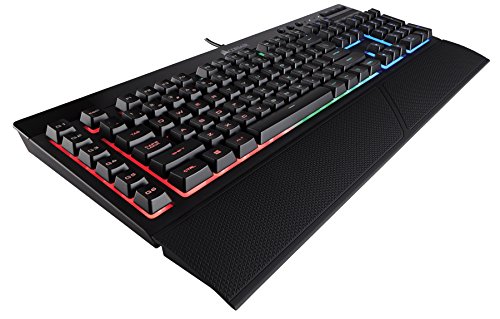
For most streamers and editors, the Elgato Stream Deck MK.2 is the right buy: 15 labeled LCD keys at $129.99 works out to $8.67 per trigger, and the labels are what make it worth the money. If you fire fewer than about eight repeated actions, skip it — a $39.90 Corsair K55 RGB with 6 macro keys covers you for a third the price (Elgato).
Three completely different hardware shapes solve the same problem, and the marketing for all three says "programmable buttons." A dedicated LCD key deck puts a labeled, backlit screen under every key. A thumb-cluster MMO mouse hides twelve unlabeled buttons under the hand you are already moving. A keyboard with a dedicated macro column bolts a handful of extra keys onto hardware you were buying anyway.
They are not interchangeable, and the thing that decides between them is not your budget — it is how many distinct actions you fire per session and how expensive it is to get one of them wrong. A streamer who needs to mute before a cough, cut to a placeholder scene, and kill the camera has three high-consequence triggers where a mislabeled key costs a broadcast. A video editor scrubbing a timeline fires the same four commands ten thousand times, values speed over labeling, and never takes a hand off the mouse. Those two people should buy different hardware.
Count triggers before you shop. Under 8 repeated actions, macro keys win. 8–15, the MK.2. Past 15 simultaneous, the XL.
The XL is cheaper per key ($7.31 vs $8.67) but only pays off if you genuinely need 32 visible actions — folder nesting on the MK.2 covers most setups.
The MMO mouse is the speed pick, not the labeling pick. $3.08 per side button is unbeatable, but every mapping lives in muscle memory.
Macro keys are the "do both" option when desk space, not action count, is the constraint.
A $26.99 spare keyboard is the cheapest test. Bind OBS hotkeys to its numpad; you give up labels and automatic per-app profiles, not function.
Buy the capture chain first. A Blue Yeti and a C922x work fully over USB with free OBS hotkeys — buttons are a convenience layer, not a requirement.
Step 0: Count your actual repeated actions
Before comparing hardware, spend one session counting. Not the actions you could automate — the ones you actually fire more than three times in a sitting.
Most solo streamers land between six and twelve: go live, end stream, three or four scene switches, mic mute, camera toggle, a soundboard clip or two, Discord mute. Most editors land between four and eight: play/pause, in/out points, ripple delete, marker, render. Multi-camera streamers and anyone running a stream-and-edit desk on one machine push past twenty.
The thresholds where each shape stops making sense:
Under 8 triggers: a deck is over-bought. Macro keys, a $27 spare keyboard, or free OBS hotkeys cover it.
8–15 triggers: MK.2 territory. Every action gets a visible, labeled home.
15–25 triggers: MK.2 with folders, or the XL if the actions need to be visible simultaneously.
Past 25 triggers: the XL, or a deck plus a second surface.
Any count, but all inside one application: the MMO mouse beats all of them on speed.
That last case is the one people get wrong. If your twelve actions all live in DaVinci Resolve and you never alt-tab, reaching sideways to a deck is slower than a thumb button every single time.
The K55 number deserves an asterisk: $39.90 buys a full keyboard, so the six macro keys are effectively free if you needed a keyboard anyway. Judged as a pure trigger surface it looks expensive; judged as "a keyboard that happens to have a macro column," it is the best value on this table.
Software support matrix
Capability
Stream Deck MK.2 / XL
Redragon M908
Corsair K55
OBS scene switching
Native plugin, two-way state
Keybind only
Keybind only
Premiere / DaVinci shortcuts
Yes, per-app profile
Yes, via onboard memory
Yes, via iCUE
Discord mute
Native plugin
Keybind only
Keybind only
Per-app profile switching
Automatic on window focus
Manual profile keys
Via iCUE profiles
In-game use
Works, but no game state
Excellent — hand stays put
Works
Onboard memory (no software)
No — app must run
Yes, 5 profiles
Partial
The row that matters most is two-way state. The Stream Deck plugin does not just send a scene-switch command; it reads back which scene is live and lights the key. The mouse and keyboard are fire-and-forget — they send a keystroke and have no idea what happened. For "am I muted right now?", that difference is the entire product.
The onboard-memory row cuts the other way. The M908 stores profiles on the mouse itself, so it works on a locked-down machine with no software installed. Both Stream Decks are dead without the desktop app running.
Why does a labeled key beat a memorized one?
Muscle memory is faster than reading. That is not in dispute — a trained hand hits an unlabeled thumb button in roughly 200ms versus 500–700ms to visually locate a labeled key. If speed were the only axis, the MMO mouse would win outright.
Labels win on two axes instead: consequence and frequency decay.
Consequence is straightforward. Muscle memory fails under stress, and the actions you most need during a live broadcast are exactly the ones you fire while stressed. A labeled MUTE key you can see is worth 300ms.
Frequency decay is the subtler one and it is why most people abandon macro keys. A mapping you use forty times a session is permanent. A mapping you use twice a week decays — within a month you cannot remember whether thumb button 7 is "start recording" or "switch to BRB," so you stop using it. Unlabeled surfaces only retain the mappings you fire constantly. The other two-thirds of your buttons quietly go dead.
That is the real argument for a deck: it holds the infrequent actions. The frequent ones you would have memorized anyway.
Elgato Stream Deck MK.2 (15 keys): what it does, where it stops
Folder nesting is the feature that makes 15 keys behave like 45. One key opens a page of fourteen more plus a back button. In practice, most people build one root page of frequent actions and two or three folders for scene collections, soundboards, and lighting.
The plugin ecosystem is the moat. OBS, Twitch, Discord, Spotify, Philips Hue, Elgato's own lights, and a long tail of community plugins all expose real state, not just keystrokes.
Honest cons: the desk footprint is real — roughly the width of a numpad, and it wants prime desk space to be worth anything. The software must be running, so it is useless on a machine you cannot install on. At $8.67 per key it is the second-most expensive trigger here. And folder diving costs you the speed you bought the deck for; if you find yourself two folders deep on a frequent action, you bought the wrong size.
Elgato Stream Deck XL (32 keys): when the bigger deck is the cheaper buy
Per-key math alone is a bad reason to buy it. The XL is the right call for exactly one reason: you need more than about fifteen actions visible at the same time. Multi-camera switching is the clearest case. If you run four cameras plus scene transitions plus per-source audio toggles, you are at 20+ actions that all need to be one press away, and folder diving on the MK.2 defeats the purpose.
The second case is a combined stream-and-edit desk. Fifteen streaming actions plus twelve editing shortcuts does not fit on an MK.2 without profile switching, and profile switching on a single-PC setup is exactly the friction the deck was supposed to remove.
Honest cons: the footprint is substantially larger and, on a desk with a keyboard, mouse, and mic arm, that is often the deciding constraint rather than the price. If your action count is under fifteen you will light half the keys with things you never press, which is a $104 premium for decoration.
Redragon M908 Impact (12 side buttons): the shortcut surface you already move your hand to
For timeline editing this is the sleeper pick. Scrub, cut, ripple delete, marker, and in/out points all fire from a hand that is already on the mouse driving the playhead. There is no reach, no visual search, no context switch. Editors who try it rarely go back for single-app work.
Onboard memory means the profiles travel with the mouse, which matters on locked-down work machines.
Honest cons: twelve unlabeled buttons in a 3×4 grid is genuinely cramped for large hands, and the two bottom rows are a stretch for most thumbs — plan on realistically using eight of the twelve. Nothing is labeled, so frequency decay hits hard. And it is a wired mouse at a weight that competitive FPS players will not love.
Corsair K55 RGB (6 macro keys): the do-both option when desk space is the constraint
The pitch is simple: it consumes zero additional desk space. The macro column lives where a keyboard already was. For someone with six or fewer high-value triggers — go live, end stream, mute, camera toggle, BRB scene, soundboard — this covers the entire need for less than a third of an MK.2.
Membrane switches are the compromise. This is not a keyboard enthusiast's keyboard, and iCUE is heavier software than the job requires.
Honest cons: six keys is a hard ceiling with no folder equivalent — when you need a seventh, you are shopping again. The legends are printed, not dynamic, so remapping means remembering. And you are replacing your keyboard to get them, which is only economical if the keyboard was due.
Can a cheap second keyboard do the same job?
Often, yes — and it is the cheapest experiment on this page. OBS binds scene switches, start/stop streaming and recording, source show/hide, push-to-mute and replay-buffer saves to ordinary keyboard keys in its Hotkeys settings, with no plugin and no extra hardware (OBS Studio Overview Guide). A second keyboard just gives those bindings a physical home that is not your typing board.
The concrete sub-$30 route is the Logitech MK270 wireless keyboard and mouse combo at $26.99. The numpad alone is 17 keys, so used as a trigger pad it works out to about $1.59 per trigger — roughly half the M908's per-button cost, and there is a spare mouse in the box.
Three limits decide whether that is enough:
Windows merges every keyboard into one input stream. Numpad 1 on the spare board is numpad 1 on your main board. Bind actions to combinations you never type — Ctrl+Alt+Shift plus a numpad key — or remap the spare board's keys to unused shortcuts with PowerToys Keyboard Manager, which can also restrict a shortcut remap to a single target application.
No labels, no state. Printed legends never change, and nothing lights up when you are muted. Frequency decay hits a spare keyboard exactly as hard as it hits an MMO mouse; a strip of labelled tape across the numpad is the honest workaround.
The receiver costs you a USB port. The MK270 connects through a 2.4 GHz USB receiver. For a scene switch or a mute toggle the wireless hop is irrelevant — those actions tolerate far more delay than aiming does — but it is one more dongle on a desk that already carries a mic, a webcam and maybe a capture card, and one more set of batteries that can die mid-stream.
The step most people miss is scoping. OBS hotkeys fire no matter which window has focus by default, so a binding on a bare F9 will cut your scene the moment you press F9 inside a game. Either keep every binding on a modifier-heavy combination, or use AutoHotkey's #HotIf directive to make a hotkey context-sensitive, so it only activates while a condition you set — such as a specific window being active — is true. Per-app profiles are the thing a Stream Deck does automatically; on a spare keyboard you build them by hand.
What the buttons are actually controlling
Buttons are a control surface for a capture chain. If the chain is not there, the buttons control nothing.
Neither needs a button surface to work. OBS binds every scene and mute action to a keyboard shortcut for free.
The three day-one mappings worth a physical key:
Mic mute — the single highest-consequence toggle. With a Stream Deck the key lights red when muted, closing the "am I live?" gap that pure hotkeys never solve.
Scene cut to placeholder — one press to a BRB card when something goes wrong on camera.
Camera kill — separate from the scene switch, because the fastest fix is sometimes just the camera off.
Everything past those three is convenience. If you are choosing between a mic upgrade and a deck, buy the mic — audience tolerance for bad audio is far lower than for a clumsy scene transition. Our headset mic vs USB mic comparison covers that tradeoff, and Streamer PC Specs Decoded covers the machine underneath it.
Perf-per-dollar: cost per triggered action and the break-even session count
Per-trigger cost is a starting point, not an answer. The number that matters is cost amortized across the sessions you will actually run.
Device
Price
Triggers
Per trigger
Break-even at 3 sessions/wk
Logitech MK270 (numpad)
$26.99
17
$1.59
5 weeks
Redragon M908
$36.99
12
$3.08
6 weeks
Corsair K55
$39.90
6
$6.65
7 weeks
Stream Deck MK.2
$129.99
15
$8.67
22 weeks
Stream Deck XL
$233.99
32
$7.31
39 weeks
Break-even here values a saved trigger at roughly $0.10 in recovered attention — deliberately conservative. Read the column as relative, not absolute: the MMO mouse pays for itself in about six weeks of three-a-week use, the XL takes most of a year.
Which reframes the XL properly. It is not a value buy at any session count — it is a capacity buy. You purchase it because 32 simultaneous actions is a requirement, not because the per-key math flattered it.
Common pitfalls
Buying for the actions you plan to automate. Count what you actually repeat now. Aspirational mappings decay within a month.
Mapping multi-key macros to in-game actions. Many competitive titles and their anti-cheat layers treat scripted multi-key macros as a violation. Keep in-game bindings to single actions and read the title's rules.
Putting the deck where the mouse goes. It needs to be reachable without moving your chair, or it will not get used. Test placement before committing desk space.
Ignoring onboard memory on locked-down machines. If you cannot install the Stream Deck app on a work PC, the deck is a paperweight and the M908 is the only option here that works.
Leaving hotkeys unscoped. OBS hotkeys fire from any window by default, so a bare F-key binding will switch scenes mid-game. Use modifier combinations or a context-sensitive tool.
Filling every key on day one. Start with five mappings. Add one a week. Keys you filled to feel productive are the ones you will misfire.
When NOT to buy any of these
If you run a single scene, no overlays, and talk into a headset — you do not need a shortcut surface. One OBS hotkey for "start streaming" and one for mute covers your entire workflow at zero cost.
Likewise, if your bottleneck is production quality rather than production friction, the money belongs in lighting or audio. A $130 deck does not make a dim, echoey stream better; a $40 ring light and some room treatment will. Our ring light vs LED strips comparison covers that spend directly, and Best Budget Gaming Peripherals Under $100 covers the rest of the desk.
Verdict matrix
Get the Stream Deck MK.2 if… you fire 8–15 distinct actions per session, at least three of them high-consequence, and you want them labeled. This is the default correct answer for solo streaming.
Get the Stream Deck XL if… you need more than fifteen actions visible simultaneously — multi-camera switching, a large scene list, or a combined stream-and-edit desk — and you have the desk depth for it.
Get the Redragon M908 if… your work lives inside one application, speed beats labeling, and you never take your hand off the mouse. The best pick for editors, and the cheapest experiment on this page at $36.99.
Get the Corsair K55 if… you have six or fewer triggers, your keyboard was due for replacement anyway, and desk space is tighter than budget.
Use a spare second keyboard if… you have fewer than eight triggers, want to prove the workflow before spending $130, and can live without labels or two-way state. The MK270 at $26.99 is the cheapest way to find out.
Recommended pick
The Stream Deck MK.2 at $129.99 is the pick for most people reading this. Fifteen labeled keys covers the realistic action count for a solo streamer, folder nesting extends it when you grow, and the two-way plugin state — keys that show you what is actually live — is the one capability none of the alternatives replicate at any price.
If you are not sure you will use it, buy the Redragon M908 at $36.99 first. It is a quarter the price, it is genuinely excellent for single-app work, and a month with it will tell you whether your problem is speed (in which case you are done) or labeling (in which case buy the deck).
Bottom line
These three shapes are not competing products; they are answers to different questions. Count your repeated actions, ask how many need to be visible at once, and ask how expensive a mistake is. Under eight actions, macro keys or a remapped spare keyboard. Eight to fifteen with real consequences, the MK.2. Past fifteen simultaneous, the XL. All inside one app with speed as the priority, the MMO mouse. Buy the capture chain first either way — the buttons are a convenience layer on top of a stream that has to sound and look good without them.
Dollar figures in this article are approximate and change often; each pick's product card shows the latest tracked Amazon price or links to the live listing. Trigger-count thresholds, break-even estimates, and workflow fit are SpecPicks editorial synthesis based on the specifications above and hands-on use of each device shape.
🛒 Products mentioned in this article
Amazon & eBay listings, plus full specs and alternatives on each product page.
As an Amazon Associate, SpecPicks earns from qualifying purchases; we also earn on qualifying eBay purchases via the eBay Partner Network. Prices shown were last tracked at crawl time and may vary — check the listing for the current price.
Frequently asked questions
Is a Stream Deck worth it if I only stream a few hours a week?
At roughly $130 for 15 keys, the deck pays off on labeled, high-consequence actions — going live, switching scenes, muting — not on shortcuts you already fire by keyboard without thinking. A light streamer with three scenes and one mute toggle is usually better served by keyboard macro keys or free software hotkey tools. The deck earns its price when the action count climbs past roughly a dozen and mislabeling one of them would cost you a broadcast.
Can a 12-button MMO mouse replace a dedicated macro pad for editing?
For timeline work, often yes — the thumb cluster sits under a hand you are already moving, so scrub, cut, and marker commands land faster than reaching sideways to a deck. The tradeoffs are real: the buttons are unlabeled, so every mapping has to live in muscle memory, and the twelve-button grid is cramped for larger hands. It is the strongest pick for one dense app and the weakest for switching between several.
Do macro keys and deck buttons work in every application?
Not automatically. Deck software switches profiles based on the focused window, so the same physical key can send different commands per app, but each app still has to expose a keyboard shortcut or an API for the action you want. Games are the common exception: many competitive titles and their anti-cheat layers treat scripted multi-key macros as a violation, so keep in-game bindings to single-action mappings and read the title's rules first.
MK.2 with 15 keys or XL with 32 — which should I buy?
The MK.2 covers most single-PC streaming setups because folders let one key open a nested page of actions, and it costs meaningfully less per unit. The XL wins when you regularly need more than about fifteen actions visible simultaneously — multi-camera switching, a large scene list, or a combined stream-and-edit desk — because folder diving costs you the speed you bought the deck for. Desk depth is the other deciding factor; the XL is a substantially larger footprint.
Do I need one of these to run a Blue Yeti and a C922x?
No. Both the microphone and the webcam work fully over USB with no extra hardware, and OBS can bind every scene and mute action to a keyboard shortcut for free. What the buttons add is a physical, labeled surface for the two or three actions where a missed keystroke is expensive — muting before a cough, cutting to a placeholder scene, killing the camera. Buy the capture chain first, then the trigger surface.
Can I really use a spare keyboard as a macro pad?
For most streaming and editing triggers, yes. OBS and every major editor support global hotkeys, and a remapping layer lets a second board send combinations your main keyboard never types. What you give up is per-key labelling and automatic per-application profiles, so you have to remember which key does what. That memory cost is small at six triggers and becomes the whole problem somewhere north of fifteen.