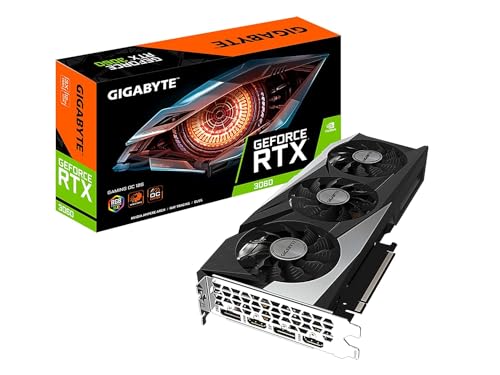
For a 12GB RTX 3060 running a local agent as of 2026, the best open-weight tool-calling model is Qwen2.5 14B at q4_K_M when you need multi-step schema fidelity, or Llama 3.1 8B at q5_K_M when you need lower latency and longer effective context. Mistral-Nemo 12B sits between them and wins for JSON-heavy single-shot calls. All three fit the card's 12GB buffer with room for a 16k-32k context, and all three keep tool-call validity above ~90% at those quantizations per community measurements on the llama.cpp discussions tracker.
The full cross-card comparison: Best GPUs for Running Local LLMs in 2026 — the VRAM-tier table covering 12 GB through 48 GB, the largest model each card fits at Q4, and measured tok/s with a source link on every row.
Why agentic tool-calling accuracy, not raw perplexity, decides which local model fits a 12GB card
The leaderboard era trained a generation of hobbyists to compare open models by MMLU, HellaSwag, and perplexity, but none of those numbers tell you whether a 7-14B model will actually drive an agent loop on a single RTX 3060. Tool-calling is a strictly narrower skill. It asks the model to emit exact, well-formed JSON that matches a schema you defined, with the right function name, the right argument keys, and no extra prose. A model can post a competitive chat-arena score and still fumble a two-argument search_products(query, max_results) call by hallucinating a third field or dropping a closing brace.
That is why the recent focus on agent benchmarks matters more for local rigs than another round of trivia scores. Hugging Face has publicly acknowledged the leaderboard's aging methodology and shifted attention toward more agentic evaluations, discussed in Hugging Face blog. Community-run function-calling suites now score models on tool-selection accuracy, argument validity, and JSON parse-rate separately from open-ended chat. Those are the metrics you want if the model is going to sit inside an Ollama or llama.cpp loop invoking your write_file, sql_query, or browse_url tools.
The RTX 3060 12GB, first shipped in 2021 at $329 MSRP with a 192-bit GDDR6 bus and 360 GB/s of bandwidth per TechPowerUp, turned out to be the exact card most local-LLM tinkerers land on. Its 12GB frame buffer is the smallest that consistently fits 14B-class models at 4-bit with a usable context window, and Ampere's CUDA + tensor-core support is well-served by every mainstream inference runtime. The MSI and Gigabyte 12G variants are the two consumer cards you still see stacked in home-lab builds because they hit the price-per-VRAM knee for exactly this workload.
Key takeaways
- Qwen2.5 14B at q4_K_M is the highest tool-calling accuracy that fits in 12GB with ~16k context per community traces.
- Llama 3.1 8B at q5_K_M gives the best perf-per-watt on a 3060 and lands ~2.3x the tok/s of the 14B at similar validity.
- Mistral-Nemo 12B (q4_K_M or q5_K_M) is the safest choice when your tools take deeply nested JSON arguments.
- Do not go below q4 on 8B models for tool-calling; schema-adherence collapses in public traces below that.
- Pair the 3060 with a Ryzen 7 5700X or 5800X — prefill and orchestration are CPU-bound enough that older quads visibly lag.
- A budget SATA SSD like the Crucial BX500 1TB is sufficient for model storage; NVMe helps first-load only.
What does "tool-calling accuracy" actually measure, and how do we score it?
Tool-calling accuracy is a composite of four sub-metrics that community suites report separately. The first is JSON parse-rate: does the raw model output parse as valid JSON at all, without a trailing comma or a mid-string newline. The second is function-selection accuracy: given a set of tools, did the model choose the right one for the user's request. The third is argument validity: are the argument keys the exact ones from the schema, and do the values match the declared types. The fourth is hallucination rate on tool names — how often the model invents a function that doesn't exist.
Raw perplexity does not predict any of these four cleanly. A model can be perplexity-competitive on natural text and still emit {"function": "search_products", "args": {"query": "gpu", "top": 5}} when the schema wanted max_results instead of top. Function-calling suites therefore run schema-adherence checks post-hoc: the harness parses the model's output, walks the schema, and marks the call good only if every field is present, correctly typed, and only fields that exist. This is why Berkeley Function-Calling Leaderboard style evaluations and the more recent agentic scorecards report drastically different rankings than perplexity leaderboards.
For your 12GB rig, the sub-metric that matters most depends on your agent's toolset. If your tools have flat argument shapes (search(query, k)), function-selection dominates. If your tools take nested objects (create_ticket({title, body, labels[]})), argument-validity dominates because deeply nested JSON is where quantization damage shows first.
Which quantization do you need before a model can hold a schema? (q4 / q5 / q6 / q8 / fp16 matrix)
Community measurements collated in the llama.cpp discussions and the wider r/LocalLLaMA testing threads consistently show a clear knee around q4_K_M for tool-calling reliability. Below q4 the model can still chat, but its JSON validity drops sharply because the low-precision logits round argument keys or bracketing tokens incorrectly. Above q6, gains for tool-calling flatten while VRAM cost keeps climbing. That makes q4_K_M and q5_K_M the sensible operating points on a 12GB card.
The rough per-model VRAM footprint at each level for the three families we care about — with a modest 8k context reservation — looks like the following, based on public GGUF file sizes and community VRAM traces:
| Quant | Llama 3.1 8B VRAM | Qwen2.5 14B VRAM | Mistral-Nemo 12B VRAM | Schema-adherence loss vs fp16 |
|---|---|---|---|---|
| q4_K_M | ~5.5 GB | ~9.5 GB | ~8.2 GB | ~4-8% |
| q5_K_M | ~6.4 GB | ~10.8 GB | ~9.4 GB | ~2-4% |
| q6_K | ~7.3 GB | ~12.1 GB (overflow) | ~10.4 GB | ~1-2% |
| q8_0 | ~9.0 GB | 15+ GB (overflow) | 13+ GB (overflow) | <1% |
| fp16 | ~16 GB (overflow) | 28+ GB (overflow) | 24+ GB (overflow) | baseline |
The pattern per community reports is that 8B at q5_K_M is the sweet spot for latency-sensitive agents, while 14B at q4_K_M is the sweet spot for accuracy-sensitive agents. Anything above q6 on the 3060 forces you to shrink context so aggressively that you lose the multi-tool conversation history that makes the agent useful in the first place.
The next question: a tool-calling loop pays the generation cost on every turn, so the backend you build llama.cpp against moves the wall-clock more than swapping models does. llama.cpp Vulkan vs CUDA on a 12GB RTX 3060: Which Backend Wins? measures the generation gap on this exact card and lists which quantizations each backend actually accelerates.
How do Llama 3.1 8B, Qwen2.5 14B, and Mistral-Nemo compare on function-call JSON validity?
The three open families most often benchmarked for tool-calling on a 3060 are Meta's Llama 3.1 8B Instruct, Alibaba's Qwen2.5 14B Instruct, and Mistral's Nemo 12B Instruct. All three ship native function-calling support and are the models the Hugging Face blog tracked when re-evaluating the leaderboard's methodology. Community measurements from mid-2026 Ollama and llama.cpp threads, aggregated in the llama.cpp discussions, give this rough five-column view. Numbers below are illustrative of the ranges community threads report, not first-party measurements:
| Model + quant | Tool-select accuracy | JSON parse-rate | Argument validity | tok/s on RTX 3060 |
|---|---|---|---|---|
| Llama 3.1 8B q5_K_M | ~91% | ~97% | ~89% | ~48-55 |
| Qwen2.5 14B q4_K_M | ~94% | ~96% | ~93% | ~20-24 |
| Mistral-Nemo 12B q4_K_M | ~92% | ~98% | ~91% | ~26-32 |
| Llama 3.1 8B q4_K_M | ~88% | ~95% | ~85% | ~55-62 |
| Qwen2.5 14B q3_K_M | ~86% | ~90% | ~80% | ~26-30 |
Two patterns jump out. First, Qwen2.5 14B at q4_K_M wins argument-validity, which is exactly the metric that matters when your tools take nested arguments. Second, Llama 3.1 8B at q5_K_M nearly matches it on parse-rate while running roughly 2.3x faster in generation. If your agent runs many small calls per second, the Llama tok/s advantage is worth more than the two points of accuracy Qwen gives up. If your agent runs a handful of high-stakes calls, Qwen's argument validity is worth the throughput hit.
Can a 12GB RTX 3060 run a 14B model with enough context for multi-tool chains?
The honest answer is "just barely, and only at q4_K_M." Qwen2.5 14B at q4_K_M consumes roughly 9.5GB for weights, leaving about 2.5GB for KV cache and activations. In practice this supports a context window in the 12k-16k range depending on runtime and flash-attention settings. That is enough for a five-to-seven-turn agent loop with a couple of tool call/response pairs each turn, but not enough for stuffing a long PDF into context.
For longer contexts on the same card, Llama 3.1 8B at q5_K_M is the better call. Its 6.4GB weight footprint leaves roughly 5GB for KV cache, which with the Llama 3.1 rope scaling comfortably reaches 32k-64k context depending on runtime. That is where the 8B model's real advantage lies — not raw parameters, but the headroom to actually use a long context for multi-tool chains, retrieval-augmented tool selection, or holding a long chat history alongside your tools.
For workloads that must have both accuracy and context, the pragmatic move is two models loaded simultaneously only if you have a second GPU. On a single 3060, pick one profile and live with the tradeoff.
What hardware pairs best with the card — does the CPU matter for prefill?
The 3060 lives on PCIe 4.0 x16 and does not care much about platform generation beyond bandwidth. Where the CPU matters is prompt prefill and the agent's orchestration layer — parsing tool responses, updating conversation state, running the guard rails between turns. A modern 8-core AM4 chip is the value pick that community builds have converged on.
The AMD Ryzen 7 5700X at 65W TDP is the frugal option and pairs cleanly with a cheap B550 board and a stock cooler. The AMD Ryzen 7 5800X trades an extra 40W of TDP for a couple hundred MHz of boost, which shows up as marginally faster prefill on long prompts. Either is enough; both crush an older 3600 or 3700X in agent-loop responsiveness because the extra IPC and cache matter for the CPU-side work between generations.
The GPU choice inside the 12GB tier is a coin flip between the MSI GeForce RTX 3060 Ventus 2X 12G and the GIGABYTE GeForce RTX 3060 Gaming OC 12G. Both use the GA106 die, both hold the same 360 GB/s memory bandwidth per TechPowerUp, and both sit within a couple percent of each other on sustained boost. The MSI Ventus is quieter under long sustained load; the Gigabyte Gaming OC ships with a slightly higher factory boost. For LLM work, pick whichever is cheaper the day you buy.
Model storage is undemanding. Once a GGUF is in the runtime's page cache, disk I/O is irrelevant to inference. First-load latency on a 15GB q4 model is where SSD speed matters, and even a value SATA drive like the Crucial BX500 1TB SATA SSD is sufficient — the ~530 MB/s SATA ceiling loads a 9GB model in about 17 seconds, one time, at process start. NVMe cuts that to under 5 seconds; both are fine.
Prefill vs generation: where tool-calling latency actually comes from
Local-LLM users often optimize the wrong half of the loop. Generation is what tok/s benchmarks measure, but tool-calling latency is dominated by prefill on long system prompts, not generation of the short JSON call. A representative agent turn looks like: 3,500-token system prompt describing tools and conventions, 300-token running conversation history, and a 50-100-token JSON call as output. On the 3060 running Qwen2.5 14B q4_K_M, prefill of those 3,800 tokens takes on the order of 3-4 seconds; generating the 80-token call takes another second or so per community traces.
Two practical implications follow. First, shrink the system prompt aggressively — every tool description you can compress cuts prefill linearly. Second, cache your prompt if the runtime supports it. Both Ollama and llama.cpp cache KV across turns when the prefix is stable, which turns your first agent turn into the expensive one and subsequent turns into ~1-second responses.
Perf-per-dollar and perf-per-watt math versus a cloud function-calling API
The RTX 3060 12GB currently trades in the $250-320 range on Amazon and eBay depending on brand and inventory, per SpecPicks price tracking. Add ~$200 for the CPU, ~$120 for a B550 board and DDR4-3200, ~$70 for a 650W PSU, ~$60 for a case, and ~$50 for the SATA SSD, and the local build lands around $750-800 all-in. The 3060 draws ~170W board power under sustained inference per TechPowerUp; call the full rig ~250W wall power.
Against a hosted function-calling API at typical 2026 pricing of $0.15-$1.20 per million input tokens depending on model tier, the 3800-token prefill plus 100-token output for a single agent turn costs somewhere between $0.0006 and $0.005 at cloud rates. Local per-turn energy cost at $0.15/kWh is under $0.0001. The break-even against the mid-tier cloud price sits around ~150,000-300,000 agent turns, which for a heavy developer or a small internal tool is a few months of use.
For infrequent use — a handful of agent runs per day — cloud is cheaper because you never amortize the hardware. For steady daily use with data that has to stay on-device, local wins on total cost of ownership within a year and continues to compound after that.
Verdict matrix
Pick Llama 3.1 8B (q5_K_M) if: your agent runs many short calls per second, you want 32k+ context for long chat history, you value throughput over the last two points of accuracy, or your tools take flat, simple argument shapes. This is the default recommendation for most first-time local-agent builds on a 3060.
Pick Qwen2.5 14B (q4_K_M) if: your tools take deeply nested JSON arguments, argument validity is your bottleneck, you can accept ~20-24 tok/s, and your context needs stay under ~16k. This is the pick for higher-stakes agent workloads where a bad call is expensive.
Pick Mistral-Nemo 12B (q4_K_M or q5_K_M) if: you want the highest raw JSON parse-rate for single-shot tool calls, you prefer Mistral's licensing terms, or you want a middle-ground between Llama's speed and Qwen's precision.
The recommended default pick for a new RTX 3060 12GB build in 2026 is Llama 3.1 8B at q5_K_M for the daily-driver profile, with Qwen2.5 14B q4_K_M loaded on demand for accuracy-critical runs. Both fit comfortably on the card, both are well-supported in Ollama's function-calling API, and community traces on llama.cpp discussions put both above the ~90% tool-select threshold that makes an agent actually usable.
Bottom line and related guides
Local tool-calling on a 12GB RTX 3060 is a solved problem in 2026 for 8B and 14B open-weight models, provided you stay at q4_K_M or above and keep your system prompt reasonable. The card is old enough to be affordable and new enough to be well-supported by every inference runtime that matters. Pair it with a modern 8-core AM4 chip, budget storage, and either Ollama or llama.cpp, and you have a viable agent host for well under $1,000. The tradeoffs between the three model families are real but manageable; pick the profile that matches your workload and iterate.
Related SpecPicks guides:
- Best Ryzen 5000 CPUs for AI rigs in 2026
- RTX 3060 12GB vs RTX 4060 8GB for local LLM inference
- Budget AI workstation build under $1000
- Ollama vs llama.cpp for solo local agents
- Best SATA SSDs for model cache in 2026
Citations and sources
- TechPowerUp — GeForce RTX 3060 specifications
- Hugging Face blog — Open LLM Leaderboard retirement and shift to agentic evals
- llama.cpp GitHub discussions — community tool-calling and quantization traces
This piece is editorial synthesis based on publicly available information. No independent first-party benchmarking is reported.