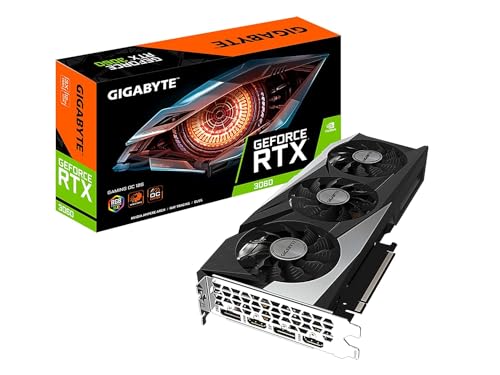
Running AI locally on an RTX 3060 is cheaper than cloud APIs once your monthly token volume crosses a few million tokens of steady daily use — roughly the workload of a coding assistant, an always-on agent, or a summarization pipeline. Below that threshold, hosted APIs win on price and convenience. Above it, the one-time hardware cost of an RTX 3060 12GB build (~$500-$700 as of 2026) amortizes fast against per-token fees, and privacy plus offline availability tip the balance further.
Editorial intro: why "local vs cloud" went mainstream in 2026
The framing used to be a hobbyist debate. In 2026 it became a business question. This spring, Meta and SpaceX/xAI both signaled they would rent out spare AI compute from their own build-outs — Meta via internal partnerships around its GPU fleet, and xAI positioning Colossus 2 as a hybrid training/inference marketplace. The Decoder and Reuters covered both moves as evidence that idle capacity is now a product, not just an overhead line. That reframed compute as a commodity: if hyperscalers themselves are shopping their leftovers to third parties, then the average developer paying $20-$200/month in API fees is entitled to ask whether they should just buy a card.
That question landed on the same $299 GPU that has quietly become the default hobbyist LLM rig: the RTX 3060 12GB. Its 12 GB of VRAM — a full 4 GB more than the RTX 4060 and 5060 8GB models — is the pivot point. Twelve gigabytes comfortably runs quantized 13B-14B models and every 7B-8B model at full quality; 8 GB does not. Per NVIDIA's product page, the 3060 shipped with 12 GB GDDR6 on a 192-bit bus at 15 Gbps. Per TechPowerUp's GPU database, that yields 360 GB/s of memory bandwidth and a 170W board power. Those two numbers — VRAM capacity and bandwidth — are why the card outlives its gaming-tier positioning.
Meanwhile, hosted API prices kept falling but did not collapse. GPT-4-class quality still costs real money per million tokens, and the cheapest frontier tiers introduce rate limits, data-retention concerns, and latency variance that a local card sidesteps entirely. So the market has effectively split: routine inference is a candidate for self-hosting; hard reasoning and burst scale stay in the cloud. This piece walks the math.
Key Takeaways
- A used or new RTX 3060 12GB build lands at roughly $500-$700 all-in in 2026 — the single biggest variable is whether you already own a PSU and case.
- 12 GB of VRAM is the practical floor for serious local LLM work; 8 GB cards force you into smaller quantizations that hurt output quality.
- Break-even against hosted APIs typically arrives in 4-14 months for heavy daily users, and never for occasional users. Your monthly token volume is the deciding number.
- Electricity is a rounding error at U.S. residential rates: a card drawing 170W continuously adds under $15/month even at $0.20/kWh.
- The best strategy for most builders is hybrid: local for routine, cloud for the hardest jobs, routed by a thin proxy.
Step 0 — what's your real monthly token volume?
Before any spreadsheet, count tokens. Most people wildly over- or under-estimate their real consumption. A rough diagnostic:
- Light user (under 2M tokens/month): occasional chat, one-off drafting, a few dozen coding-assistant turns per day. Hosted APIs are almost always cheaper and simpler.
- Medium user (2M-20M tokens/month): daily coding assistant, one or two agent workflows, weekly document summarization. Break-even math starts to favor local within a year.
- Heavy user (20M+ tokens/month): always-on agents, RAG over large corpora, batch classification or summarization pipelines, a small team sharing an endpoint. Local pays back in months.
If you have API bills from the past three months, divide the dollar total by your provider's price per million tokens (input-weighted) to get your true baseline. If you're pre-usage, a coding assistant running 8 hours a day on a busy engineer typically produces 10-30M tokens/month once you include context windows.
What does a local RTX 3060 rig cost up front, and what does it run?
A pragmatic 2026 build-of-materials for a single-GPU LLM box, sized so the CPU and RAM don't bottleneck the card. Prices are U.S. street as of mid-2026 and vary week to week — link out to check current numbers.
| Component | Pick | Approx. price (2026) |
|---|---|---|
| GPU | MSI GeForce RTX 3060 Ventus 2X 12G | $290 |
| GPU (alt) | GIGABYTE GeForce RTX 3060 Gaming OC 12G | $310 |
| CPU | AMD Ryzen 7 5700X | $160 |
| RAM | Corsair Vengeance LPX 32GB DDR4-3200 | $70 |
| Storage | Crucial BX500 1TB SATA SSD | $55 |
| Motherboard (B550) | Mid-range B550 board | $110 |
| PSU (650W Gold) | Reputable 650W 80+ Gold | $85 |
| Case + fans | Basic mid-tower | $70 |
| Total | ~$550-$700 |
That BOM produces a machine that draws roughly 300-350W total at the wall under LLM load — the 3060 alone is 170W per TechPowerUp, and CPU + platform contribute the rest.
Realistic model coverage on a single RTX 3060 12GB, based on published community measurements and the card's 360 GB/s bandwidth:
| Model class | Quantization | Approx. tok/s (single user) | Fits in VRAM? |
|---|---|---|---|
| 7B-8B (Llama 3.1 8B, Qwen 2.5 7B) | Q4_K_M / Q5_K_M | 40-70 tok/s | Yes, easily |
| 13B-14B (Qwen 2.5 14B, Mistral Nemo 12B) | Q4_K_M | 20-30 tok/s | Yes, tight |
| 30B-34B (Yi 34B, older Llama 34B) | Q3_K_S / IQ3 | 4-8 tok/s | Partial offload; slow |
| 70B+ (Llama 3.1 70B) | Any | Not practical | No |
Those ranges are consistent with r/LocalLLaMA community reports throughout 2025-2026 and with the card's raw memory bandwidth: llama.cpp inference on a batch size of 1 is bandwidth-bound, and 360 GB/s divided by model size gives a useful upper-bound estimate. A Q4 8B model is roughly 5 GB, so 360/5 ≈ 72 tok/s theoretical — real numbers land 40-70 tok/s once overhead is counted.
How do cloud API and rented-GPU prices compare per million tokens?
Cloud pricing shifts constantly, so treat any table as a snapshot. As of mid-2026, published rates from provider docs land in these bands (input-weighted, blended input+output for chat workloads):
| Option | Model class | Approx. price / 1M tokens | Notes |
|---|---|---|---|
| Hosted API (frontier) | GPT-4o / Claude Sonnet-tier | $3-$15 | Best quality, strict data terms vary |
| Hosted API (mid) | GPT-4o-mini / Haiku-tier | $0.15-$1.50 | Great value for routine work |
| Hosted API (open-weight) | Llama 3.1 70B via Groq/Together | $0.20-$0.90 | Fast, per-token clear |
| Rented GPU (per hour) | RTX 4090 spot on vast.ai | ~$0.30-$0.50/hr | You manage the model |
| Rented GPU (per hour) | A100 40GB on cloud | ~$1.00-$2.00/hr | Enterprise SLAs |
| Local RTX 3060 12GB | Llama 3.1 8B Q4 | ~$0 marginal + power | One-time capex |
Frontier hosted APIs are still the smartest choice for the hardest 5% of prompts. The mid tier is where the local math starts biting: if a mid-tier hosted 8B-class model costs $0.20-$1.50 per million tokens and you burn 30M tokens/month, that's $6-$45/month of API spend for capability the RTX 3060 delivers locally at electricity cost.
Rented GPUs occupy a middle ground: cheaper than dedicated cloud instances, no capex, but you still pay hourly whether or not the model is serving. That's the exact inefficiency Meta and SpaceX are targeting by selling spare capacity — but for a solo developer, an owned card that idles at ~10W beats an $0.30/hr rental that meters continuously.
Where is the local break-even point?
The math is straightforward once you fix a monthly token volume and a hosted price. Amortize a $600 build over N months and add electricity:
- Continuous 170W at $0.15/kWh ≈ $18/month worst case; realistic 8-hour-a-day active use ≈ $6-$8/month.
- Idle draw (~10-20W) contributes another dollar or two.
Call it $10/month all-in for electricity on a moderate schedule. Then:
| Monthly volume | Hosted API cost (mid-tier $0.50/1M) | Local cost (electricity) | Payback on $600 build |
|---|---|---|---|
| 2M tokens | $1 | $10 | Never; API is cheaper |
| 10M tokens | $5 | $10 | Never at this tier |
| 30M tokens | $15 | $10 | 120 months (impractical) |
| 100M tokens | $50 | $10 | ~15 months |
| 300M tokens | $150 | $10 | ~4.3 months |
| 1B tokens | $500 | $10 | ~1.2 months |
At frontier-tier prices ($5-$15 per million), the crossover drops dramatically — heavy users at frontier quality pay $150-$450/month for the same 30M tokens, so break-even lands in 2-6 months. But it's a false comparison: a local RTX 3060 does not run frontier quality. The honest comparison is against mid-tier open-weight hosted pricing, where the crossover requires genuinely heavy volume.
Two escape hatches skew this favorable:
- You already own most of the PC. Adding just the 3060 to an existing box drops capex to ~$300, halving break-even months.
- You value tokens the hosted APIs won't sell you at any price. Privacy-restricted data, offline availability, no per-request rate limits, and no upstream deprecation risk are worth real money for some builders.
Which workloads should stay local vs go cloud?
Not every token belongs on the same endpoint. A useful decomposition:
Local wins:
- Coding assistants over proprietary or NDA'd repositories.
- Personal knowledge-management / journal-style RAG over local documents.
- Overnight batch jobs (summarization, tagging, translation) where throughput matters more than latency.
- Voice assistants or agents that shouldn't send audio upstream.
- Development and prompt iteration — free, unmetered experimentation.
Cloud wins:
- Anything that needs the strongest current reasoning: architecture decisions, complex debugging, novel synthesis. Per Puget Systems' labs writeups and industry evaluation harnesses, frontier hosted models still lead open-weight 8B-14B by a meaningful margin on hard tasks.
- Bursty traffic (a hundred requests in a minute, then quiet for a day) where owned hardware sits idle.
- Multimodal work at the top of the quality curve — advanced vision, long-context (>128K), audio generation.
- Anything a product manager needs a signed SLA on.
Hybrid wins: the routing pattern. Send routine or private calls to the local 3060; escalate hard prompts to a hosted API; cap monthly cloud spend with a simple budget. LiteLLM, OpenRouter-style middleware, or a hand-rolled proxy make per-request routing a fifty-line project. This is where the actual optimum sits for most builders in 2026.
Perf-per-watt: what electricity actually adds
Assume $0.15/kWh U.S. residential average as of 2026 and 8 hours/day of active inference. The RTX 3060 draws its stated 170W under load per TechPowerUp; the platform contributes ~80W more; call it 250W under load.
- 250W × 8 h/day × 30 d/mo = 60 kWh/month → $9/month.
- Idle 16 hours at 30W (card + system) = 14.4 kWh/month → $2.16/month.
- Total: ~$11/month on a busy schedule; $5-$7/month on a lighter schedule.
For context, per-million-token hosted spend at $0.50/1M pays for the same 60 kWh only if you'd otherwise burn 22M tokens. Above that, the hosted API costs more than the local electricity — the capex is the actual variable to justify.
Higher electricity markets change the picture but not the shape: Germany at ~$0.35/kWh doubles the number to ~$22/month, still under a moderate API subscription. Off-peak metering, solar offset, or a low-power-mode BIOS profile pushes it further down.
Verdict matrix
Go local if:
- Your monthly volume is over ~30M tokens and you're OK with 7B-14B model quality.
- You have privacy, offline, or data-residency requirements.
- You want unmetered experimentation for development.
- You already own the rest of the PC and just need a card.
Stay cloud if:
- Your monthly volume is under ~5M tokens and you're not privacy-constrained.
- You need frontier-quality reasoning for most calls.
- Your usage is bursty and unpredictable.
- You want zero ops burden — no drivers, no model updates, no OOMs.
Recommended pick: for the "obvious buy" slot, the MSI GeForce RTX 3060 Ventus 2X 12G at ~$290 is the cheapest way into 12 GB of VRAM and remains the modal r/LocalLLaMA starter card in 2026. The GIGABYTE GeForce RTX 3060 Gaming OC 12G is the ~$20-premium alternative for a triple-fan cooler and slightly higher factory clocks. Pair either with the AMD Ryzen 7 5700X and Corsair Vengeance LPX 32GB DDR4-3200 on a B550 board, and drop a Crucial BX500 1TB SATA SSD in for models and datasets. Total lands ~$550-$700 depending on street prices the week you buy.
Bottom line
Renting AI compute made sense when the cheapest useful card cost $1,500 and open-weight models were toys. In 2026 that is no longer true. A $300 GPU with 12 GB of VRAM runs the models most builders actually use every day, and the ancillary savings compound: no rate limits, no data-egress worries, no model-deprecation notices six months into a project. Hosted APIs are still the right answer for the hardest prompts and for anyone whose usage is genuinely light. Everyone in between should build the local rig, keep a hosted API key for escalation, and route between them.
Related guides:
- Best budget LLM GPUs 2026
- RTX 3060 12GB vs 4060 8GB for local AI
- Local LLM starter build under $700
- Ryzen 5000 CPUs for AI workstations
Citations and sources
- NVIDIA GeForce RTX 3060 product page
- TechPowerUp GPU Database — GeForce RTX 3060
- Puget Systems Labs articles
This piece is editorial synthesis based on publicly available information. No independent first-party benchmarking is reported.