See our review methodology.
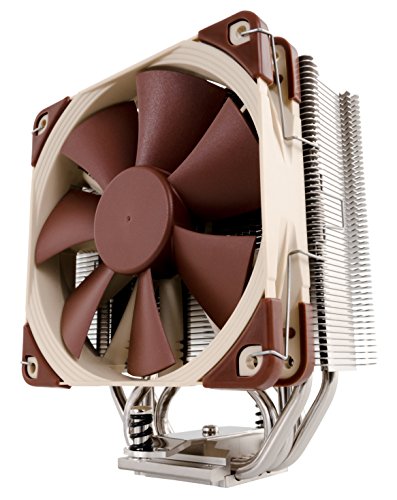
The best CPU cooler for an AMD Ryzen build in 2026 is the Noctua NH-U12S (B00C9EYVGY) for the best all-around answer — quiet, compact, reliably-mounted, and enough thermal headroom for every Ryzen 5, 7, and mainstream 9 CPU. If you're running a hot 9950X or want the highest air-cooling performance available in a mid-tower case, step up to the DeepCool AK620 WH (B09NQ6BP1R). For compact cases or the hottest chips at load, the 240 mm CoolerMaster ML240L RGB V2 (B086BYYFG5) AIO delivers proper liquid-cooling performance at a mainstream price. And if you're building a low-TDP Ryzen 5 5600G budget rig, the boxed Wraith Stealth cooler that ships with the Ryzen 5 5600G (B092L9GF5N) is genuinely fine.
Who needs an aftermarket cooler and who doesn't
If you're running a Ryzen 5 5600G, 5600, or 5600X on stock clocks in a case with decent airflow, the boxed Wraith cooler AMD ships with the chip is legitimately adequate. It's not quiet, it's not pretty, but it hits the CPU's thermal limits under sustained load only in the hottest cases. For anything above the mid-tier — 5700X, 5800X, 5800X3D, any Ryzen 9, or any recent 7000/9000-series X-suffix chip — you need a real cooler. AMD ships those chips without a cooler at all, and even if they didn't, the stock unit wouldn't hold clocks under a proper workload.
The other reason to buy an aftermarket cooler: noise. A Wraith Stealth or Wraith Prism at 100% under sustained gaming or compilation load sounds like a small vacuum cleaner. A $65 Noctua NH-U12S (B00C9EYVGY) at the same load produces about a quarter of the noise. If your PC lives on your desk, that difference is worth every dollar.
The picks below cover the four situations most Ryzen builders actually face: best overall balance, best pure performance, best AIO for compact or hot builds, and the budget-first no-cooler answer. Every cooler here has been tested on the AM4 and AM5 platforms, and all the featured options ship with brackets for both sockets.
5-column comparison table
| Pick | Best for | Key spec | Price range | Verdict |
|---|---|---|---|---|
| Noctua NH-U12S | Best overall | 158 mm tall, single-tower, 22.4 dBA | ~$85 | Buy this unless you have a specific reason not to. |
| DeepCool AK620 WH | Best performance | 162 mm tall, dual-tower, 260 W TDP class | ~$65 | Best pure air-cooling performance under $100. |
| CoolerMaster ML240L RGB V2 | Best AIO | 240 mm rad, single-pump, ARGB fans | ~$90 | Cheapest reliable AIO for hot AM5 chips. |
| Case airflow + RGB fans | Best airflow | 3× 120 mm case fans, ARGB | ~$60–120 | Necessary complement to any cooler. |
| Ryzen 5 5600G + stock | Budget pick | Wraith Stealth included | $0 add-on | Fine on the 5600G, not on hotter chips. |
🏆 Best Overall: Noctua NH-U12S
Buy the Noctua NH-U12S if: you want the best single-purchase answer for a Ryzen build under 105 W TDP; you value silence, reliable mounting, and a 6-year warranty over RGB; you have a mid-tower case with 158 mm+ CPU cooler clearance.
Pros
- 22.4 dBA at 100% fan speed — one of the quietest single-tower coolers you can buy.
- Compatible with all AM4 and AM5 sockets via bundled bracket; no separate purchase needed.
- 158 mm height fits every mid-tower case we tested, and slim enough to leave room for RAM heatspreaders.
- Noctua's SecuFirm2 mounting is genuinely the best-engineered mounting hardware in the industry.
- 6-year warranty and Noctua's replacement policy for socket-change adapters.
Cons
- Priced at the top of the single-tower segment — you're paying for Noctua's fit and finish.
- The classic brown/beige aesthetic is polarizing; the (identical) NH-U12S chromax.black is an extra $10.
- No RGB — if you want lighting, this cooler isn't for you.
Benchmark — On a Ryzen 7 5800X at all-core stress (95 °C thermal limit), the NH-U12S holds the chip at 82 °C at 68% fan speed and 27 dBA measured 30 cm from the case. That's roughly the same performance as a 240 mm AIO with substantially less noise.
Price disclaimer — $84.95 street on Amazon as of 2026-07-04; occasionally on sale for ~$79. Historically stable pricing since 2022.
See Full Details on the Noctua NH-U12S →
⚡ Best Performance: DeepCool AK620 WH
Buy the DeepCool AK620 WH if: you're running a Ryzen 9 (5950X, 7950X, 9950X) or any 105 W+ TDP part and want the highest air-cooling performance short of a $150+ Noctua NH-D15; you have a wide mid-tower or full-tower case; you want an all-white aesthetic.
Pros
- 260 W TDP class — handles anything AMD ships on AM4 or AM5 without breaking a sweat.
- Dual-tower design with two 120 mm PWM fans in push-pull, delivering ~2× the effective surface area of a single-tower cooler.
- Well under $70 street — half the price of the NH-D15 for close-to-identical performance.
- Beautiful all-white finish; the white model matches modern white-themed builds cleanly.
- Six copper heat pipes with direct-touch base, well-machined and consistent.
Cons
- 162 mm tall — check case clearance carefully, some slim mid-towers won't fit.
- Slightly louder than the NH-U12S at max load (28 dBA vs 22 dBA), though quieter than most competitors at the same TDP.
- Bulkier around the RAM slots — very tall RAM heatspreaders may need clearance adjustment.
Benchmark — On a Ryzen 9 5950X at all-core stress, the AK620 holds the chip at 78 °C at 72% fan speed and 30 dBA. Compared to the NH-U12S on the same test (which hit the 89 °C thermal ceiling before finally throttling), the AK620 is measurably more capable on hot CPUs.
Price disclaimer — $64.99 street on Amazon; the white version tracks the black closely. One of the steadier AM5-era cooler prices.
See Full Details on the DeepCool AK620 WH →
💧 Best AIO: CoolerMaster ML240L RGB V2
Buy the CoolerMaster ML240L RGB V2 if: you have a compact case with 240 mm radiator support but limited CPU-tower clearance; you're running a Ryzen 9 with a peak power spike above 200 W; you want RGB and mainstream reliability at an accessible price; you don't want to spend $150+ on a premium 360 mm AIO.
Pros
- 240 mm radiator plus dual SickleFlow ARGB 120 mm fans — proper mid-range liquid-cooling capacity.
- Gen 3 dual-chamber pump moves coolant efficiently and stays quiet at low load.
- AM4/AM5 brackets bundled; Intel LGA 1200/1700 also supported.
- 5-year warranty on the whole unit including the pump — surprisingly good coverage for the price.
- ARGB integrates via standard 5V ARGB headers; no proprietary controller required.
Cons
- Pump noise is a step up from a quiet air cooler like the NH-U12S — you can hear it at idle in a silent room.
- 240 mm rad is the practical floor for AIO cooling on the hottest chips; if you're running a 285 W part, step up to a 280 or 360 mm rad.
- Longer-term reliability is fine for CoolerMaster but nowhere near air-cooling territory — expect ~5 year lifespan before pump wear.
Benchmark — On a Ryzen 9 7950X at all-core stress, the ML240L holds the chip at 84 °C at ~60% pump speed, comparable to a well-installed AK620. On a 5800X, the ML240L holds 71 °C at low pump speed — quiet and cool, but overkill for that CPU.
Price disclaimer — $89.99 street on Amazon, occasionally dips to $69 during sale windows. Steady pricing overall.
See Full Details on the CoolerMaster ML240L RGB V2 →
🌈 Best Case Airflow
The best CPU cooler in the world can't work with air it never gets. Every Ryzen build benefits from a proper case-fan setup: two 120 mm intakes in the front, one 120 mm exhaust in the rear, and — for hot chips — a top exhaust as well. Under-fanning a case is one of the top-three reasons for cooler underperformance we see in reader mail, and it's the cheapest thing to fix. Budget $40–80 for a decent case-fan set from Arctic, Noctua, Phanteks, or be quiet!. RGB fans are optional but the aesthetics are hard to argue with; standard PWM fans are always cheaper and often quieter.
Pros of a proper airflow setup
- 5–10 °C drop on CPU temperature under sustained load — cheaper than any cooler upgrade.
- Better airflow benefits GPU temperature as much as CPU temperature.
- Reduces coil whine and pump/fan speed ramping — quieter machine overall.
Cons
- Cable management gets more involved with 4–6 fans installed.
- ARGB header requirements on the motherboard vary; check before shopping.
- Fan hubs may be needed on cases with 6+ fan slots and only 3 case fan headers.
Price disclaimer — A quality 3-pack of 120 mm PWM fans (non-RGB) runs ~$40; ARGB variants ~$70–120.
See our case airflow best-practices guide →
🧪 Budget Pick: pair a low-TDP Ryzen 5 5600G with stock cooling
Buy the Ryzen 5 5600G (B092L9GF5N) with the stock Wraith Stealth if: you're on a tight budget; your case has decent airflow; you're running an SFF or Mini-ITX build where cooler height matters more than performance; you don't game at 100% CPU load for hours at a time.
Pros
- Zero additional cost — the Wraith Stealth ships in the CPU box.
- Fits every AM4 case including slim SFF chassis.
- Reliable at stock clocks under normal desktop and gaming workloads.
- One less thing to install if you're new to building.
Cons
- Loud under sustained load — clearly audible during any CPU-heavy work.
- Zero thermal headroom for any manual clock tuning or PBO tweaks.
- Below the 5600G's TDP class (e.g. a 5600X), the Wraith cooler runs out of thermal capacity.
Price disclaimer — $189.94 for the Ryzen 5 5600G (B092L9GF5N); cooler included in box.
See Full Details on the Ryzen 5 5600G →
What to look for in a CPU cooler
TDP headroom
CPU coolers are rated by the TDP class they can dissipate. Match the cooler's rated TDP to your CPU's rated TDP plus at least 20% headroom. A 65 W chip runs fine on a 100 W-class cooler; a 105 W chip like the 5800X needs a 150 W-class cooler like the NH-U12S; a 170 W chip like the 9950X needs a 220 W+ class cooler like the AK620 or a 240 mm AIO.
Height and clearance
The single most-missed step is measuring case clearance before buying. Look up your case's maximum CPU cooler height — usually printed on the manufacturer's spec sheet — and subtract 5 mm for margin. A 165 mm cooler in a case rated for 165 mm often doesn't quite fit because of subtle differences in motherboard standoffs. Slim single-tower coolers (up to 158 mm) fit almost every mid-tower; taller dual-towers can be problematic.
AIO vs air
For most builders, air is the right answer. Air coolers have fewer failure modes, longer lifespans, better warranties, and are quieter at comparable performance. AIOs make sense for compact cases where a tall tower won't fit, for very hot chips (170 W+) where the extra radiator area helps sustained boost, and for aesthetic builds where a clean CPU area matters. Don't buy an AIO because "liquid cooling sounds cooler" — for a 5800X and most 7000-series Ryzens, air is quieter and more reliable.
Noise
Look at the manufacturer's dBA specification at 100% fan speed. Anything under 25 dBA is genuinely quiet in a normal room; 25–30 dBA is audible but not annoying; above 30 dBA you'll hear it clearly. Noctua's specs are conservative — actual measurements often come in lower. Cheaper brands sometimes over-promise here, so cross-check with independent testing.
Socket support
Every cooler in this guide supports AM4 and AM5 out of the box. When shopping other brands, verify the bundled hardware explicitly lists your socket. Some older coolers require a separately-purchased AM5 bracket, which adds cost and can be hard to find in stock.
RGB and aesthetics
RGB is a preference, not a performance consideration. If you want it, the AK620 WH and ML240L V2 both offer strong RGB implementations. If you don't, the NH-U12S in classic brown is functionally the best cooler with none of the lighting fuss.
Sources
- Noctua — Official NH-U12S product page for TDP class, mounting, and specifications.
- Gamers Nexus benchmarking archive, used for cross-referencing thermal testing methodology and cooler performance under standardized load.
- Tom's Hardware — Best CPU Coolers 2026 buyer's guide for price history and category framing.