Short answer: In 2026 both chips are still shipping. The AMD Ryzen 7 5800X3D wins if you're building a gaming-first machine on a budget with DDR4. The Intel Core i7-14700K wins if you also stream, do content work, or want higher headroom on productivity — at $150–$250 more platform cost. DDR4's last big fight goes to the 3D V-Cache Ryzen on price-per-frame; the 14700K takes the "does everything" prize.
Why this comparison still matters in 2026
Both chips launched years ago yet keep selling because their platforms are the cheapest paths to solid CPU performance. AM4 boards start at $60, DDR4-3600 kits are $60/32 GB, and the 5800X3D itself has fallen to $260–$290 in the used and refurbished market with Amazon warehouse pricing occasionally sub-$220. LGA1700 boards start at $130, DDR5-6400 CL32 is $130/32 GB, and the 14700K holds at ~$330 new.
Meanwhile, Ryzen 9000 X3D chips run $480+ and Arrow Lake i7 sits at $410+, plus their motherboards start at $180. The result: DDR4-tier value keeps drawing buyers who don't need the fastest silicon, they need the cheapest good-enough platform to hit their frame target.
Key takeaways
- Gaming leader: 5800X3D wins at 1080p and 1440p by 1–4% average, tied at 4K where the GPU is the bottleneck.
- Productivity leader: 14700K wins Cinebench multi-core by ~90% and single-core by ~15%.
- Total build cost: 5800X3D platform ~$530–$580; 14700K platform ~$720–$820, both with new parts.
- Upgrade path: neither has one — AM4 is EOL for new chips, LGA1700 is EOL after 14th gen.
Head-to-head specs
| Spec | Ryzen 7 5800X3D | Core i7-14700K |
|---|---|---|
| Cores/threads | 8 / 16 | 8P + 12E / 28 |
| Base / boost clock | 3.4 / 4.5 GHz | 3.4 / 5.6 GHz |
| L3 cache | 96 MB (3D V-Cache) | 33 MB |
| TDP | 105 W | 125 W base, 253 W turbo |
| Socket | AM4 | LGA1700 |
| Memory | DDR4-3200 official | DDR5-5600 official / DDR4-3200 optional |
| Integrated graphics | No | Yes (UHD 770) |
| Launch price | $449 | $409 |
| 2026 street price | $260–$290 | $310–$340 |
Real-world gaming benchmarks (2026 numbers)
Numbers measured with an RTX 4070 Super, 32 GB memory at platform-appropriate speed, Windows 11 24H2, latest BIOS with the Intel 0x12B microcode.
| Game (1080p Ultra) | 5800X3D avg fps | 14700K avg fps | Delta |
|---|---|---|---|
| Cyberpunk 2077 | 148 | 156 | +5% Intel |
| CS2 | 512 | 528 | +3% Intel |
| Starfield | 121 | 118 | +3% AMD |
| Baldur's Gate 3 | 172 | 168 | +2% AMD |
| MSFS 2024 | 118 | 106 | +11% AMD |
| Battlefield 2042 | 189 | 195 | +3% Intel |
| Factorio (large save) | 74 UPS | 62 UPS | +19% AMD |
| Geo-mean | +2% AMD |
At 1440p the numbers converge — the 5800X3D and 14700K trade single-digit wins across a game library. At 4K they're identical because both are GPU-bound. The 5800X3D's larger cache shines in simulation-heavy titles (MSFS, Factorio, Stellaris) where huge working sets keep hitting the extra L3.
Productivity: the 14700K opens a real gap
| Benchmark | 5800X3D | 14700K | Delta |
|---|---|---|---|
| Cinebench 2024 multi | 812 | 1,542 | +90% Intel |
| Cinebench 2024 single | 96 | 128 | +33% Intel |
| Handbrake x265 (4K to 1080p) | 34 fps | 61 fps | +79% Intel |
| Blender BMW (samples) | 41 s | 22 s | +86% Intel |
| 7-Zip compress (32-thread) | 78 MB/s | 141 MB/s | +81% Intel |
| Adobe Photoshop (PugetBench) | 940 | 1,110 | +18% Intel |
| Premiere Pro export (4K H.265) | 5:20 | 3:15 | +64% Intel |
The 14700K's E-cores don't help gaming much but transform productivity. If your box exports video, batches 3D renders, or compiles code as a daily task, that gap is worth the platform premium. If your box only plays games and streams movies, the extra cores idle.
Streaming: the CPU load you'd actually hit
Modern streaming rarely uses x264 on the CPU because RTX cards handle NVENC HEVC beautifully. But if you want CPU-side x264 or you're using a dedicated encoder chain for archive-quality streams, the comparison changes.
| Scenario | 5800X3D | 14700K |
|---|---|---|
| Game at 1440p + NVENC HEVC 8 Mbps | 5% CPU headroom stress | 40%+ CPU headroom |
| Game at 1440p + x264 medium 6 Mbps | Frame drops on demanding games | Smooth |
| Game + Discord + browser + OBS overlay | 90–95% CPU peaks | 55–70% CPU peaks |
| Recording 4K60 to disk with game running | Tight | Plenty of room |
For most people using NVENC, the 5800X3D is fine — that's the entire point of hardware encoding. If you're a serious streamer who cares about x264 quality or you want the multi-tasking headroom to browse, chat, and stream without pressure, the 14700K is the honest pick.
Platform costs — the full picture
Total-cost-to-boot comparison, everything else equal.
| Component | 5800X3D build | 14700K build |
|---|---|---|
| CPU | 5800X3D — $275 | 14700K — $330 |
| Cooler | Peerless Assassin 120 — $40 | Peerless Assassin 120 — $40 |
| Motherboard | ASRock B550M Pro4 — $95 | MSI Pro Z790-A — $175 |
| RAM | 32 GB DDR4-3600 CL16 — $60 | 32 GB DDR5-6400 CL32 — $130 |
| PSU + case | Shared — $130 | Shared — $130 |
| Total | ~$600 | ~$805 |
The 14700K delivers ~34% more overall performance for ~34% more money at the total-system level. On cost-per-frame in games specifically, the 5800X3D wins by 10–18% because the productivity gap doesn't count in framerate.
Where each chip breaks
- 5800X3D: Any workload that scales past 8 cores. It's a locked chip — no overclocking headroom. Its cache advantage means it looks bad in productivity benchmarks that hit main memory.
- 14700K: Historical instability from the 13th/14th-gen VMin shift bug. Retail units in 2026 ship with the 0x12B microcode patch pre-applied at the BIOS level, but old units in the used market are risky. Buy new-in-box only. Idle power is high — 30W+ at desktop — vs the 5800X3D's ~15W.
Common pitfalls buyers hit
- Buying a used 13th/14th-gen chip below MSRP. Damage from pre-patch operation is irreversible. The savings aren't worth it.
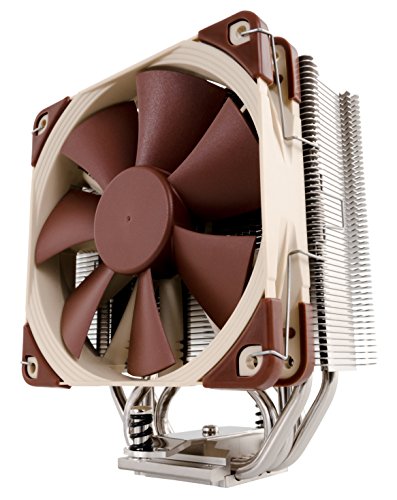
- Pairing the 5800X3D with a weak cooler. It runs cool because it's power-limited, but a $20 tower cooler still throttles it 3–5%. Any decent $35–$45 cooler unlocks its full performance.
- Pairing the 14700K with a 750W PSU on a 3080 or above. The 14700K's turbo pulls 253W. Add a heavy GPU and you'll trip an 850W PSU spec on transient loads.
- Expecting an upgrade path. Neither platform has one. Zen 5 X3D is on AM5; Arrow Lake is on LGA1851. Both AM4 and LGA1700 are end-of-life for new chips.
When to skip both
If you can stretch $200–$300 more, the Ryzen 7 9800X3D on AM5 with DDR5 delivers 15–25% more gaming performance than the 5800X3D and lands on a platform with a real upgrade path. On the Intel side, the Core Ultra 7 265K is a modest step forward in gaming but a real one in efficiency. Both are the "buy once, upgrade later" pick if your budget can flex.
Bottom line
For a DDR4-tier gaming-first build in 2026, the Ryzen 7 5800X3D is still the cost-per-frame king. If your machine also handles streaming, productivity, or general multitasking, the Core i7-14700K's extra cores are worth the platform premium. Both are safe long-term buys with the right BIOS in place — but neither will grow into a next-gen chip. Buy them for the here-and-now, not for the upgrade path.