Product picks below reflect what's readily available on Amazon in 2026 and match the interfaces our target builds actually use.
For most modern gaming builds in 2026, the WD_BLACK SN770 250GB NVMe is the value pick if your board has an M.2 slot, and the Crucial BX500 1TB SATA SSD is the practical default for anything using a 2.5-inch bay. For retro PC builds using IDE, the Transcend CF133 CompactFlash card in a CF-to-IDE adapter remains the go-to silent boot drive for Win98/2000/XP-era hardware. Below we walk through the five picks in detail, when to choose each, and what the ceiling actually is for gaming load times.
Key takeaways
- NVMe wins on raw numbers but the real-world gaming gap over SATA is smaller than the spec sheets imply.
- 1TB is the practical sweet spot for a modern game library; 480–500GB is fine if you rotate titles.
- A CompactFlash card in a CF-to-IDE adapter is a legitimate silent boot drive for period-correct retro PCs.
- Endurance ratings rarely matter for gaming — the more relevant factors are capacity, controller reputation, and price.
- Match the form factor to the machine: M.2 NVMe for modern boards, 2.5" SATA for older PCs and consoles, CF for pre-2005 hardware.
The comparison at a glance
| Pick | Best for | Key spec | Interface | Price range |
|---|---|---|---|---|
| 🏆 Crucial BX500 1TB | Best Overall | Up to 540 MB/s read | 2.5" SATA III | $199.95 on Amazon (checked 2026-10-20) |
| 💰 SanDisk SSD Plus 480GB | Best Value | Up to 535 MB/s read | 2.5" SATA III | $219.00 on Amazon (checked 2026-10-20) |
| 🎯 Transcend CF133 CompactFlash | Best for Retro Builds | Up to 30 MB/s, ECC | CompactFlash (Ultra DMA 4) | $32.99 on Amazon (checked 2026-10-20) |
| ⚡ WD_BLACK SN770 250GB | Best Performance | Up to 4,000 MB/s (Gen4) | M.2 NVMe (PCIe 4.0) | Check price on Amazon |
| 🧪 Samsung 870 EVO 250GB | Budget Pick with Durability | Up to 560 MB/s read | 2.5" SATA III | $164.95 on Amazon (checked 2026-10-20) |
🏆 Best Overall: Crucial BX500 1TB
Verdict: Best for most modern gaming builds and console upgrades. Right capacity, right price, name-brand controller, fits every case.
- Interface: 2.5" SATA III (6 Gb/s)
- Sequential read: up to ~540 MB/s (per Crucial's product page)
- Form factor: 2.5-inch, 7mm — fits standard drive bays and PS4/laptop caddies
- Endurance: consumer-grade, adequate for gaming use
- Warranty: 3-year limited
Pros: Cheap per gigabyte, wide availability, name-brand controller, drops into any 2.5-inch bay including consoles.
Cons: Consumer-tier endurance (fine for games, less ideal for scratch disks), sequential ceiling capped by SATA III on modern boards.
The BX500 is boring, which is the highest compliment you can give a gaming SSD in 2026. It hits the capacity sweet spot at 1TB, the price is low enough to be a no-brainer, and the controller has enough real-world reliability data behind it that failures are the exception rather than the rule. For a modern gaming PC without an M.2 slot, for a laptop upgrade, or for any of the current-gen consoles that use 2.5-inch SATA, this is the default recommendation.
Gaming load-time improvement over a spinning hard drive is dramatic — Tom's Hardware's SSD reviews archive documents load-time drops in the 40–60% range across a range of titles. The improvement over another SATA SSD is minimal, which is the point: any modern SATA SSD gets you to the same ceiling, so the deciding factor is price and capacity, not the drive's peak MB/s figure.
Price ranges shown reflect typical Amazon listings and may vary — check current listing before purchase.
💰 Best Value: SanDisk SSD Plus 480GB
Verdict: Best when the budget really is the deciding factor and 480GB fits your library.
- Interface: 2.5" SATA III (6 Gb/s)
- Sequential read: up to ~535 MB/s
- Form factor: 2.5-inch, 7mm
- Endurance: consumer-grade
- Warranty: 3-year limited
Pros: Cheapest of the picks with adequate capacity, from a name-brand storage manufacturer, works everywhere a SATA SSD works.
Cons: 480GB fills quickly with modern 60–100GB titles, TLC-tier endurance, no premium features.
The SanDisk SSD Plus 480GB is a "get any SSD into this build" pick. If you are upgrading a family desktop with modest gaming needs, if you are refreshing an older laptop, or if you are rotating a small library of active titles, the SSD Plus delivers 90% of the load-time benefit of a premium SATA SSD at a much lower price. The capacity constraint is real — plan on installing 4–7 modern titles at a time — but for a lot of gaming setups that is exactly right.
If the price gap to the 1TB BX500 is only $25–$30 in your region, buy the BX500 for the capacity headroom. The SSD Plus wins when the price gap is larger or when 480GB is genuinely enough.
Price ranges shown reflect typical Amazon listings and may vary — check current listing before purchase.
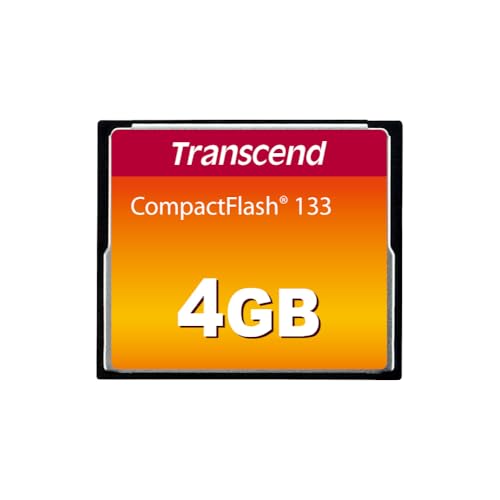
🎯 Best for Retro Builds: Transcend CF133 CompactFlash
Verdict: Silent, solid-state boot drive for period-correct Win98/2000/XP builds with IDE controllers.
- Interface: CompactFlash Type I (Ultra DMA Mode 4)
- Sequential read: up to ~30 MB/s (per Transcend spec)
- Form factor: CompactFlash card (needs a CF-to-IDE adapter for internal boot use)
- Endurance: MLC NAND, ECC protection
- Warranty: manufacturer limited
Pros: Truly silent, truly cool, no mechanical failure mode, fits period-correct cases without cable acrobatics, low power draw.
Cons: Slow by modern standards (30 MB/s max), CF-to-IDE adapter compatibility varies, capacity typically caps at a few GB unless you buy a modern CF card in this series.
For anyone building a period-correct 1998–2005 Windows PC — Voodoo3 rigs, Athlon XP boxes, early Pentium 4 builds — the failing 20-year-old IDE hard drives are the single biggest reliability liability in the case. A CompactFlash card in a CF-to-IDE adapter converts that failure mode into a genuinely silent, solid-state boot drive. The Transcend CF133 is a common recommendation because Transcend's CF line has been a reliable Ultra DMA-supporting card for years and the MLC/ECC construction is more robust than the cheapest bin.
Two practical notes. First, verify your CF-to-IDE adapter supports Ultra DMA mode on your specific chipset — some cheap adapters run in PIO mode only, which cripples throughput even further. Second, this is a boot drive for a period-correct OS, not a modern gaming drive. Nobody is playing 2024 titles off CompactFlash. But for retro builds where "silent and reliable" beats "fast," this is the right tool.
For a companion writeup on the target machine, see our 3dfx Voodoo3 Windows 98 build.
Price ranges shown reflect typical Amazon listings and may vary — check current listing before purchase.
⚡ Best Performance: WD_BLACK SN770 250GB
Verdict: Best for modern gaming builds with an M.2 slot and PCIe 4.0 support. Peak bandwidth where SATA cannot follow.
- Interface: M.2 NVMe (PCIe 4.0 x4)
- Sequential read: up to 4,000 MB/s
- Form factor: M.2 2280
- Endurance: gaming-tier TLC
- Warranty: 5-year limited
Pros: Order-of-magnitude sequential read over SATA, tight form factor, gamer-oriented firmware, competitive price at 250GB.
Cons: 250GB is tight — plan to pair with a larger SATA SSD for a game library. Higher-capacity SN770 variants are much better value if you can spring for them.
The WD_BLACK SN770 is the pick for a modern build where the motherboard has a PCIe 4.0 M.2 slot and the case has the airflow to keep the drive cool during long sessions. On paper the sequential read is nearly eight times a SATA SSD. In practice, gaming load times mostly do not scale that linearly — most game engines are bottlenecked by decompression and asset patching, not raw sequential read. The gap over a Crucial BX500 in real-world load times is often 15–30%, not 800%.
That said, DirectStorage-aware titles and future games that lean on the fast-storage path will show larger gaps, and the NVMe form factor keeps the case cleaner. If you have the slot and can afford the drive, the SN770 is the right modern default. Consider the 1TB or 2TB variant instead of the 250GB if capacity matters — the price per gigabyte flattens out significantly.
Price ranges shown reflect typical Amazon listings and may vary — check current listing before purchase.
🧪 Budget Pick with Durability: Samsung 870 EVO 250GB
Verdict: Best when reliability track record and MLC-tier endurance matter more than raw capacity.
- Interface: 2.5" SATA III (6 Gb/s)
- Sequential read: up to ~560 MB/s (per Samsung's 870 EVO product page)
- Form factor: 2.5-inch, 7mm
- Endurance: higher-tier consumer, well documented
- Warranty: 5-year limited
Pros: Samsung's storage reliability history is stronger than most consumer competitors, high sustained write performance, capacities scale up to 4TB in the family.
Cons: More expensive per gigabyte than the Crucial BX500 at similar capacities, 250GB fills quickly for gaming.
The 870 EVO earns its spot in this guide because of durability and sustained-performance behavior rather than peak spec numbers. It sits at the SATA III ceiling like every other quality SATA SSD, so its practical gaming performance is not meaningfully different from the BX500. Where it wins is on TBW rating, warranty length, and Samsung's long-run reliability data. If you plan to keep the drive in the build for the long haul, or if the machine also serves double duty as a light workstation, the 870 EVO's endurance and 5-year warranty are worth the small premium.
For a gaming-first budget build, the BX500 remains the more sensible pick. For a system you want to trust for 5+ years, the 870 EVO earns its price.
Price ranges shown reflect typical Amazon listings and may vary — check current listing before purchase.
What to look for in a gaming or retro SSD
Beyond the specific picks above, five factors actually matter when choosing an SSD for a gaming or retro build. Everything else is marketing.
Interface — match to your motherboard
The single most important compatibility check is the interface. A brand-new M.2 NVMe drive is useless in a build with only 2.5-inch SATA bays. A CompactFlash card is only useful if you have a CF slot or a CF-to-IDE adapter. Confirm your board (or console) accepts the physical connector before buying.
For a modern build with an M.2 PCIe 4.0 slot, prefer NVMe. For an older PC without an M.2 slot, or for a console upgrade, prefer 2.5-inch SATA. For a pre-2005 retro build, look at CompactFlash-to-IDE or SATA-to-IDE adapters — TechPowerUp's SSD spec directory is a good reference for finding drives compatible with legacy interfaces.
Capacity — match to your library, not to your ego
Modern AAA games run 60–120GB installed. A rough capacity guide:
- 250–256GB — Cramped for gaming; fine as a boot drive with games on a larger secondary.
- 480–500GB — Workable for a rotating library of 4–7 modern titles.
- 1TB — Sweet spot for most gaming builds. Fits a healthy active library.
- 2TB — Only worth it if you keep 15+ titles installed simultaneously.
Retro builds need far less capacity. A period-correct Win98 build with a 4–8GB CF card holds a striking amount of era-appropriate software.
Endurance — usually irrelevant for gaming
TBW ("terabytes written") ratings on modern SSDs are typically far higher than a gaming-only user will ever reach. A 1TB consumer SSD with a 300 TBW rating survives roughly 300 full drive rewrites, which for a gaming user takes many years of normal use. Endurance matters if the drive doubles as a video-editing scratch disk or if you run write-heavy workloads. For pure gaming, prioritize capacity, price, and controller reputation over chasing the highest TBW figure.
Form factor — the physical fit is non-negotiable
A 9.5mm 2.5-inch drive does not fit a PS4 Slim bay. An M.2 2280 drive does not fit a slot cut for M.2 2242. A single-sided drive works in more tight laptop bays than a double-sided drive. Read the machine's manual before you buy — the correct drive at the wrong form factor is a return, not an upgrade.
Controller — reputation trumps spec sheet
The best predictor of long-run SSD reliability is the controller, not the marketing bullet points. Sticking with mature controller families from Samsung, Western Digital, Crucial, SanDisk, and Kingston is usually the right call. Bargain-bin drives from unknown vendors often use recycled or repackaged controllers with weaker firmware — the price gap rarely justifies the risk. The AnandTech SSD tag archive is a useful cross-reference for controller history.
Comparison — SATA vs NVMe for actual gaming load times
The spec-sheet gap between SATA and NVMe is enormous (~540 MB/s vs ~4,000 MB/s sequential). The real-world gap in gaming load times is much smaller. Why?
- Load time is decompression-bound. Most game engines spend more time decompressing and unpacking assets than reading them from storage. NVMe helps, but the CPU is often the bottleneck.
- Small-file random-read IOPS matters more than sequential. Both NVMe and SATA SSDs crush spinning disks on random reads; the NVMe-over-SATA gap is smaller on this dimension than on sequential.
- DirectStorage is still a small share of titles. Games optimized for the fast-storage GPU decompression path do show larger NVMe gains, but as of 2026 they remain the exception, not the rule.
The honest takeaway: NVMe is a modest improvement over SATA for most gaming today. It is a real improvement, and worth taking if you have the slot, but it is not the 8× wall the spec sheets suggest. This is why the BX500 remains an excellent gaming pick on any system without an M.2 slot.
Common pitfalls
- Buying NVMe for a system without M.2. The drive will not fit anywhere except a PCIe adapter card, and even then it may not boot on older UEFI.
- Buying 9.5mm 2.5-inch for a modern laptop or PS4 Slim. The bays are 7mm. Modern drives are 7mm by default; do not buy 9.5mm from a bargain bin.
- Ignoring the CF adapter mode on retro builds. A CF-to-IDE adapter that only runs in PIO mode kills throughput. Confirm Ultra DMA support.
- Chasing peak sequential on a SATA III bus. Every quality SATA SSD hits the same ~540 MB/s ceiling. Paying more for a slightly higher sticker rating is wasted money.
- Buying too little capacity, then filling it, then buying again. The 1TB tier is nearly always the better long-run purchase than a 500GB drive you regret in six months.
Verdict — pick by machine
- Modern gaming build with M.2 PCIe 4.0: WD_BLACK SN770 250GB at 250GB is a great boot/OS drive; step up to the 1TB variant if it fits the budget.
- Modern gaming build without M.2: Crucial BX500 1TB. Right capacity, right price, right interface.
- Console (PS4/PS4 Pro/Xbox One): Crucial BX500 1TB internally; see our PS4 SSD upgrade guide for the swap procedure.
- Retro Win98/2000/XP build: Transcend CF133 CompactFlash in a quality CF-to-IDE adapter.
- Long-life family PC or light workstation: Samsung 870 EVO 250GB — pay a small premium for durability track record.
- Absolute-budget upgrade: SanDisk SSD Plus 480GB. Enough capacity for a modest gaming rotation, cheap enough to justify on nearly any system.
Bottom line
In 2026, "best SSD" is really "best SSD for this specific machine." For most modern gaming PCs with an M.2 slot, the WD_BLACK SN770 is the right pick. For anything with a 2.5-inch bay — including consoles and older laptops — the Crucial BX500 1TB is the boring, correct default. For retro builds, the Transcend CF133 CompactFlash remains a genuinely useful silent boot drive. Match the interface to the machine, buy enough capacity, and pick a name-brand controller. Everything else is spec-sheet noise.
Citations and sources
- Tom's Hardware — Best SSDs roundup archive
- AnandTech — SSD tag archive
- TechPowerUp — SSD specifications directory
- Crucial — BX500 product page
- Samsung — 870 EVO product page
This piece is editorial synthesis based on publicly available information. No independent first-party benchmarking is reported.
— Mike Perry