RTX 3090 24GB vs RTX 4060 Ti 8GB in 2026: Used VRAM or New Efficiency?
Ampere's 24GB memory ceiling against Ada's efficiency — the decision turns on what you load, not on what renders.
By Mike Perry, Founder & Editor-in-Chief · Published 2026-09-08 · Updated 2026-10-17 · 17 min read
24GB of used Ampere or 8GB of new Ada? Spec deltas, a quantization fit matrix, 1440p VRAM limits and worked cost-per-token math.
Quick answer
Buy the used RTX 3090 if you run local models. Its 24 GB of GDDR6X on a 384-bit bus moves roughly 936 GB/s against the RTX 4060 Ti's 8 GB and 288 GB/s (TechPowerUp). Buy the 4060 Ti if you only game, want a warranty, and value 160 W over 350 W.
Who this comparison is for
You landed on our ASUS TUF RTX 3090 vs ASUS TUF RTX 4060 Ti head-to-head and hit the thing that page cannot answer: these two cards are not on the same ladder. One is a 2020 flagship you can only buy second-hand, the other is a current-generation mid-range card you can buy new with a three-year warranty. Comparing them on a single performance number is the wrong frame.
The right frame is memory. Almost every meaningful difference between these cards in 2026 traces back to one number: 24 GB versus 8 GB, and the bandwidth that feeds it. That single gap decides which language models you can load at all, which texture settings survive at 1440p in current releases, and whether the card is still useful to you in three years or has become a 1080p-medium part.
This guide is written for the reader splitting a single budget between 1440p gaming and running models locally — the person who wants one card in one box, not a gaming rig plus a separate inference machine. If you only game at 1080p and never intend to run a model, this comparison is not close and you should stop reading and buy the new card. If you want to run anything above an 8B-class model at usable speed, this comparison is also not close, in the other direction.
Everything below is worked from published specifications and stated arithmetic. Where a number is an estimate derived from memory bandwidth rather than a measured benchmark, it is labelled as such — the method is stated so you can redo it with your own quantization and your own model.
Key takeaways
24 GB vs 8 GB is a 3× capacity gap, and it is a hard wall, not a slider. A model either fits in VRAM or it crosses PCIe and collapses.
936 GB/s vs 288 GB/s is a 3.25× bandwidth gap. Token generation is memory-bandwidth-bound, so this ratio propagates almost linearly into tokens per second for any model both cards can hold.
350 W vs 160 W TGP. The 3090 needs a 750 W system supply and two 8-pin connectors; the 4060 Ti needs 550 W and one (NVIDIA).
DLSS frame generation is the 4060 Ti's one exclusive architectural win, and it applies to supported games only — never to inference.
The 3090 has no warranty. You are buying a five-year-old card from a stranger. Price that risk in explicitly rather than pretending it is zero.
Read the ratio column carefully. The 4060 Ti wins exactly one row — clock speed — and loses the two rows that decide this article. That is what a mid-range current-generation card versus a previous-generation flagship looks like on paper.
What can each card actually hold?
This is the section that decides the article. A quantized model's weights have to fit in VRAM alongside the KV cache and a few hundred megabytes of runtime overhead. If they do not fit, layers spill to system RAM and every token has to cross the PCIe bus.
Approximate weight sizes for a dense model, in GB, at common quantization levels:
Model size
q4_K_M
q5_K_M
q6_K
q8_0
fp16
Fits 24 GB?
Fits 8 GB?
8B
~4.9
~5.7
~6.6
~8.5
~16.1
Yes, to fp16
Only to q4/q5
14B
~8.5
~9.9
~11.5
~14.9
~28.2
Yes, to q8_0
No
27B
~16.3
~19.0
~22.1
~28.7
~54.2
Yes, to q6_K
No
32B
~19.5
~22.7
~26.4
~34.2
~64.6
Yes, to q5_K_M
No
70B
~42.5
~49.5
~57.6
~74.5
~140.7
No
No
Add roughly 1–2 GB for the KV cache at an 8K context on a mid-size model, and more as context grows. Practically, subtract about 2 GB from each card's nameplate before deciding what fits.
The pattern is stark. The 8 GB card is a small-model card: 8B at q4 or q5 with a modest context, and nothing above that held entirely in memory. The 24 GB card comfortably holds a 32B-class model at q5_K_M with room for context, which is the tier where local models stop feeling like a toy. Quality loss below q4 is steep enough that dropping to q2 or q3 to squeeze a big model onto a small card is usually a worse experience than running a smaller model well.
Token generation on a single GPU is memory-bandwidth-bound: to emit one token the runtime reads the active weights once. The ceiling is therefore bandwidth divided by weight size, and real-world throughput lands at roughly 55–70% of that ceiling on llama.cpp-class runtimes once sampling, attention and kernel overhead are counted.
The figures below are bandwidth-ceiling estimates computed with that formula — 936 GB/s and 288 GB/s divided by the q4_K_M weight size, with the realistic band shown separately. They are not measured benchmark results, and your numbers will shift with quantization, context length, batch size and runtime.
Model (q4_K_M)
3090 ceiling
3090 realistic
4060 Ti ceiling
4060 Ti realistic
Notes
8B
~191 tok/s
~105–134 tok/s
~59 tok/s
~32–41 tok/s
Both hold it entirely in VRAM
14B
~110 tok/s
~61–77 tok/s
n/a
offloaded
Exceeds 8 GB — spills to system RAM
27B
~57 tok/s
~32–40 tok/s
n/a
offloaded
3090 holds it with context to spare
32B
~48 tok/s
~26–34 tok/s
n/a
offloaded
3090's practical ceiling at q4/q5
70B
n/a
offloaded
n/a
offloaded
Neither card holds it
The "offloaded" entries are the important ones. Once a meaningful share of layers lives in system memory, every token crosses PCIe, and throughput falls by an order of magnitude rather than a percentage. A 14B model partially offloaded on the 8 GB card is not a slightly slower 14B model — it is an unusable one for interactive work. The usable pattern on 8 GB is small models held entirely in VRAM.
Prefill behaves differently: it is compute-bound rather than bandwidth-bound, so the 3090's 10,496 shader cores stretch its lead further on long prompts. If you paste large documents into a local model, the gap you feel will be larger than the generation numbers above suggest.
For rasterised gaming the two cards are closer than the core counts imply, because Ada's higher clocks and larger L2 cache recover a lot of the deficit. Aggregate rankings put the 3090 ahead of the 4060 Ti 8 GB across a broad game suite, with the gap widening at higher resolutions where memory bandwidth and capacity matter more (Tom's Hardware GPU benchmarks hierarchy).
The relative positioning, expressed against the 4060 Ti as a 100 baseline rather than as per-game frame rates:
Scenario
RTX 4060 Ti 8 GB
RTX 3090
What drives the gap
1080p raster, competitive titles
100
~110–120
CPU-bound; clocks partly offset core count
1440p raster, mixed suite
100
~125–140
Bandwidth and ROP throughput start to tell
1440p, high-resolution texture packs
100
~140–170
8 GB begins to spill; stutter, not just lower fps
1440p with ray tracing enabled
100
~130–150
RT plus frame buffer pressure compounds
4K raster
100
~150–175
The 8 GB card is out of its class here
Treat these as bands, not measurements — the spread between individual games is wider than the spread between these rows.
The row that matters most is the third one. VRAM exhaustion is not a smooth degradation. Below the limit you get a frame rate; above it you get texture pop-in, sudden multi-hundred-millisecond frametime spikes, and stutter that no settings slider labelled "performance" fixes. The remedy is dropping texture quality one notch, which costs image fidelity rather than frames. That is a live constraint at 1440p in current texture-heavy releases and a growing one as of 2026. The 24 GB card simply never meets this failure mode at 1440p.
This is the 4060 Ti's genuine exclusive advantage and it deserves an honest accounting. Ada's optical flow accelerator supports DLSS frame generation, which synthesises intermediate frames and can substantially raise the displayed frame rate in supported titles. Ampere does not support it. In a supported single-player game, a 4060 Ti can present a smoother image than its raw render rate implies, and the 3090 cannot use the feature at all.
Three caveats keep it from closing the gap:
It does not raise the base render rate. Frame generation interpolates between rendered frames, so it needs a decent native frame rate — roughly 60 fps or better — to feel good. Turning it on to rescue a 30 fps scenario produces visible artefacts and mushy input.
It adds latency rather than removing it. The pipeline holds a frame to interpolate against, so input latency rises even as the displayed frame rate does. Reflex claws some of that back; it does not invert the sign.
It does nothing for inference. Not a fraction, not indirectly — the entire feature is irrelevant to running a language model.
The correct weighting: frame generation is a strong reason to pick the 4060 Ti if you play supported single-player games and do not run models. It is irrelevant to the VRAM-ceiling question this article is actually about.
What does a used RTX 3090 cost to run and to own?
The purchase price is not the whole cost. Four items belong in the budget.
Power supply. NVIDIA specifies a 750 W system supply for the 3090 against 550 W for the 4060 Ti, and Ampere flagships pull short transient spikes well above rated board power. An older ATX 2.x unit can trip over-current protection on those spikes even when average draw looks comfortable. If your current supply is a 550 W OEM unit, add the cost of a quality 850 W replacement to the 3090 column before you compare prices.
Connectors. Two PCIe 8-pin cables, not one. Some OEM supplies ship a single 8-pin with a daisy-chained second connector, which is not the same thing on a 350 W card.
Airflow and thermals. The 3090's GDDR6X modules sit on both sides of the PCB, and the backside modules run hot in a case with weak exhaust. Two intake fans and one exhaust is the realistic minimum. On a five-year-old card the thermal pads under the cooler have degraded regardless of how gently it was used, so budget for a pad and paste refresh as routine maintenance rather than a repair.
Seller risk. Fan bearings, backside memory pads and pad compound are the wear items, and none of them are visible in a listing photo. Cards from sustained-load rigs are not automatically worse than gaming cards — thermal cycling damages hardware more than steady heat does — but you are buying without a warranty. Buy through a platform with a returns window and stress-test memory inside that window rather than trusting a screenshot. Our longer treatment of this is in buying a used RTX 3090 for local LLMs.
Against all of that, the 4060 Ti column is short: it is new, it carries a three-year warranty, and it runs on the supply you already own.
What else does the build need?
A 24 GB card in a weak host is a bottleneck with extra steps.
CPU. The Ryzen 7 5800X remains the sensible AM4 pairing at this tier as of 2026: eight cores and sixteen threads, enough single-thread performance not to hold back a 1440p GPU, and a platform whose used prices have fallen far enough that it undercuts equivalent current-generation builds. Model loading, tokenizer work and sampling all touch the CPU, and eight strong cores keep them off the critical path. We compared it head-on against the previous-generation Intel option in Core i7-9700K vs Ryzen 7 5800X for 1440p gaming.
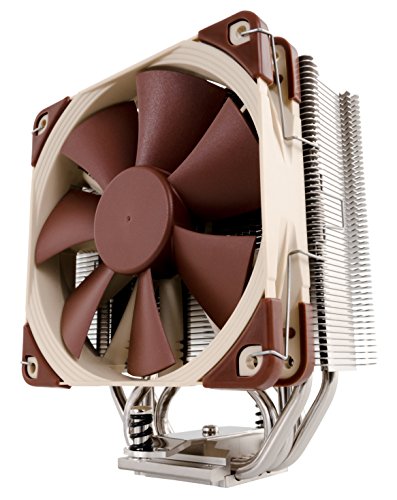
Cooling. A 350 W GPU dumps most of that heat into the case, and the CPU cooler then works in warmer intake air. The Noctua NH-U12S is the pragmatic answer for a 5800X sharing a case with a 3090: a 158 mm-tall single tower that clears the memory slots, holds a 105 W part under sustained load, and stays quiet on a machine that may be generating tokens for hours. Check the 158 mm height against your case's stated clearance before ordering — that measurement is the single most common cause of a return.
Storage for the model library. Quantized weights are large. A handful of 27B and 32B models at q4 and q5 will consume several hundred gigabytes, and they do not belong on the boot drive. The Kingston A400 960GB is the cheap way to add that capacity when the board's only M.2 slot already holds the OS drive. Model load time is a one-off cost per session, so SATA sequential speed is an acceptable trade for capacity per dollar here in a way it would not be for a boot drive.
None of these three is optional in the sense of being nice-to-have. A 3090 in a case with one exhaust fan, on a 550 W supply, with a 500 GB boot drive, will disappoint you — and the disappointment will look like the GPU's fault.
Perf-per-dollar and perf-per-watt
Transaction prices for a used card vary too much by region, condition and seller to publish as fact, so the tables below are worked at explicit assumed prices. Substitute your actual quote — the arithmetic is what matters, and both product pages carry live pricing that will be more current than any number written into an article.
Worked at an assumed $750 for a used 3090 and $400 for a new 4060 Ti 8 GB:
Metric
RTX 3090 @ $750
RTX 4060 Ti @ $400
Winner
Cost per 1440p relative point
~$5.60
~$4.00
4060 Ti
Cost per GB of VRAM
~$31
~$50
3090
Cost per 8B tok/s (realistic mid-band)
~$6.30
~$11.00
3090
Cost per 32B tok/s
~$25
not possible at any price
3090
Watts per 1440p relative point
~2.6 W
~1.6 W
4060 Ti
Watts per 8B tok/s
~2.9 W
~4.4 W
3090
Two clean conclusions fall out. On pure rasterised gaming per dollar and per watt, the newer card wins — it is more efficient silicon and it costs less. On anything involving model weights, the older card wins on every axis including watts per token, and on the 32B row it wins by default because the comparison does not exist for an 8 GB card.
At an assumed 4 hours a day of gaming, the 190 W TGP delta costs roughly 277 kWh a year, or about $42 at $0.15/kWh. That is real but it is not decisive at these purchase prices; it takes many years to repay a $350 price gap on electricity alone.
Verdict matrix
Get the RTX 3090 if:
You run local models above 8B, or expect to within the life of the card.
You game at 1440p with high-resolution textures and want headroom, not a settings compromise.
You already own or are willing to buy a quality 750 W-plus supply with two 8-pin connectors.
You are comfortable buying used, testing inside a returns window, and refreshing thermal pads.
Get the RTX 4060 Ti 8 GB if:
You game and do not run models, particularly at 1080p or in esports titles.
You want DLSS frame generation in supported single-player games.
Your PSU is a 550 W OEM unit and you do not want to replace it.
A warranty and a known-history part are worth more to you than 16 GB of VRAM.
Get neither if:
You need a 70B-class model at usable speed — neither card holds it, and this is a two-card or workstation-GPU problem.
Your budget is under roughly $350, where a 12 GB card at a lower tier is the better shape of compromise.
Your CPU or PSU is the actual bottleneck, in which case fixing that first buys more than either GPU will.
You game exclusively at 1080p in older titles, where both cards are overkill.
The recommendation
For the reader this article was written for — one machine, split between 1440p gaming and local inference — buy the used RTX 3090. The reasoning is not that it is faster in games, though it generally is. It is that 24 GB is a capability the 4060 Ti cannot reach at any settings, and 8 GB is a ceiling you will hit from both directions: in model size today and in texture budgets over the next two years. A capability gap does not shrink when the newer card gets a driver update.
The honest counter-case stands on its own merits. If you do not run models, the 4060 Ti is the better purchase: newer, cooler, warrantied, cheaper, and in possession of a frame-generation feature the 3090 will never get. Buying a five-year-old 350 W flagship second-hand to play the same games slightly faster is not a good trade. The 3090 earns its recommendation on the inference side, and if that side of your workload is hypothetical rather than real, buy the new card.
Bottom line
These cards are not competitors so much as answers to different questions. The 4060 Ti asks "what is the most efficient new card at this price," and answers it well. The 3090 asks "what is the cheapest way into 24 GB," and as of 2026 it is still the answer, with a maintenance bill and no warranty attached. Decide which question you are asking before you look at prices, because the prices will not tell you.
llama.cpp — ggml-org/llama.cpp — quantization formats and the single-GPU inference runtime whose behaviour the throughput model describes. Accessed 2026-09-08.
Throughput figures marked as estimates are computed from published memory bandwidth divided by quantized weight size, with a 55–70% efficiency band applied; they are editorial synthesis rather than measured benchmark results, and the method is stated so readers can reproduce it against their own configuration. Gaming positioning bands are our reading of published aggregate rankings, not per-game measurements taken in our lab.
— Mike Perry
🛒 Products mentioned in this article
Amazon & eBay listings, plus full specs and alternatives on each product page.
As an Amazon Associate, SpecPicks earns from qualifying purchases; we also earn on qualifying eBay purchases via the eBay Partner Network. Prices shown were last tracked at crawl time and may vary — check the listing for the current price.
📹 Watch a review
Friendly Fire: AMD Ryzen 7 5800X CPU Review & Benchmarks vs. 5600X & 5900X — Gamers Nexus on YouTube
Frequently asked questions
Is 8GB of VRAM still enough for 1440p gaming in 2026?
For most esports and older titles, yes. For recent releases with high-resolution texture packs and ray tracing enabled at 1440p, 8GB is the constraint that produces texture pop-in, sudden frametime spikes and hard stutter once the allocation spills to system memory over PCIe. The practical workaround is dropping texture quality one notch, which costs visual fidelity rather than framerate. A 24GB card never encounters this class of failure at 1440p, which is the durability argument for the older part.
What PSU and case airflow does a used RTX 3090 need?
Plan for a quality 850W unit as the floor for a single-GPU build, because Ampere flagships pull short transient spikes well above their rated board power and older ATX 2.x supplies can trip OCP on those spikes even when average draw is comfortable. Airflow matters as much as wattage: the 3090's memory modules sit on both sides of the PCB, and the backside modules run hot in a case with no rear or top exhaust. Two intake and one exhaust fan is the realistic minimum.
How risky is buying a used RTX 3090 from a mining or rendering rig?
The main wear items are fan bearings, thermal pads on the backside memory, and the pad compound under the cooler, none of which are visible in a listing photo. Cards run at sustained load are not automatically worse than gaming cards, because thermal cycling causes more damage than steady heat, but pads degrade regardless. Budget for a pad and paste refresh, buy through a platform with a returns window, and stress-test memory within that window rather than trusting a seller's screenshot.
Can the RTX 4060 Ti run larger models by offloading layers to system RAM?
It can, and llama.cpp-class runtimes make it easy, but the throughput penalty is severe once a meaningful share of layers lives in system memory, because every token then crosses the PCIe bus. The usable pattern on 8GB is small models at moderate quantization held entirely in VRAM, not large models partially offloaded. If your target is a 27B-class or larger model at usable speed, the 8GB card is the wrong tool regardless of how new it is.
Does DLSS frame generation close the gap between these two cards?
In games that support it, frame generation raises the displayed framerate substantially and that is a genuine, exclusive advantage for the newer card. It does not raise the base render rate, so it needs a reasonable native framerate to feel good, and it adds latency rather than reducing it. It also does nothing for inference workloads. Treat it as a strong reason to pick the 4060 Ti for supported single-player games, and as irrelevant to the VRAM-ceiling question.