Prices and availability were current at publication and may change.
The right starter streaming kit for a PC in 2026 is a USB cardioid microphone, a 1080p webcam, a soft light source, and monitoring headphones — total budget around $250–$450. Our best-overall pick is the HyperX QuadCast 2 because it delivers broadcaster-tier audio at plug-and-play simplicity, and audio is the single input viewers judge fastest. Skip 4K webcams; skip XLR at this tier; skip lighting kits above ~$120. Buy the four items below and get on stream.
Streamers overspend on their first kit because they optimize the wrong axis. Video quality is not what makes viewers stay — audio is. Watch any small stream that pops for a week and you'll notice one thing they get right: the host sounds like they're in a treated room, not a laundromat. A cheap ring light and a mid-tier cardioid mic buy you more retention than a $1,500 mirrorless camera every time. Our best-overall pick, the HyperX QuadCast 2, is what you buy first if audio matters most.
Comparison table
| Pick | Best For | Key Spec | Price Range | Verdict |
|---|---|---|---|---|
| HyperX QuadCast 2 | Best overall | USB-C, 4 polar patterns, tap-to-mute | $119.94 on Amazon (checked 2026-10-21) | The buy-once mic |
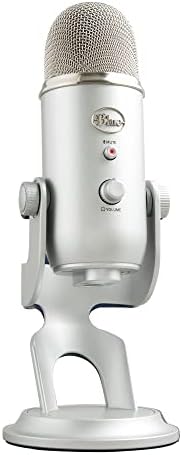
| Blue Yeti | Best value | USB, 4 patterns, 3-capsule array | $99.99 on Amazon (checked 2026-10-21) | The proven starter |
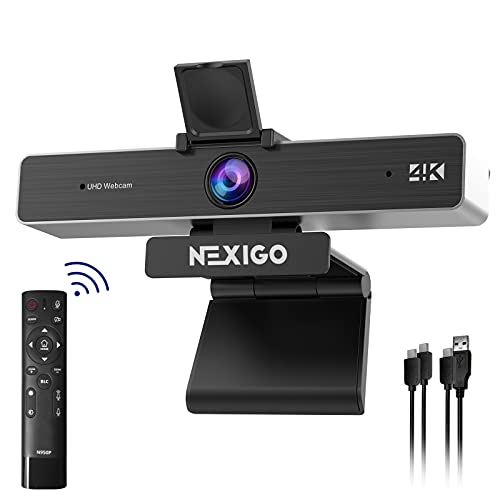
| NexiGo N950P | Best for video | 4K sensor with 1080p streaming, RF remote | Check price on Amazon | Sharper facecam without the 4K tax |
| NEEWER 18-inch Ring Light Kit | Best lighting | 55 W bicolor 3200–5600 K | $96.04 on Amazon (checked 2026-10-20) | Turns a webcam into a good webcam |
| TAGRY Bluetooth Earbuds | Budget monitoring | 60 h battery, Bluetooth 5.3 | $25.98 on Amazon (checked 2026-10-20) | Cheap monitoring done right |
🏆 Best Overall: HyperX QuadCast 2
Verdict: Broadcaster-tier USB mic for streamers who value plug-and-play. $100–$130.
Per HyperX's QuadCast 2 product page, the QuadCast 2 ships with a 14 mm dual-diaphragm condenser array, four polar patterns (cardioid, stereo, omnidirectional, bidirectional), an on-body gain dial, a tap-to-mute top pad with LED status, USB-C connection, and a built-in shock mount. It slots directly onto a boom arm or its included tripod stand.
The pitch: the QuadCast 2 fixes the two things the original QuadCast did wrong. First, the top pad now shows mute state at a glance — the exact "did I unmute?" problem every streamer has hit. Second, USB-C replaced Micro-USB, which was the connection cable that was most likely to be a problem in the first place. Cardioid mode is the pattern you'll use 95% of the time; the other three matter for two-person podcasts and ASMR-style content.
Pros: Broadcast-tier audio at $100. Plug-and-play — no interface, no ASIO drivers. Tap-to-mute with visible status. Cons: No XLR upgrade path. RGB is polarizing (dimmable). Larger footprint than a lav or headset mic.
Buy the See price & specs.
💰 Best Value: Blue Yeti
Verdict: The proven starter USB mic. $80–$110.
The Blue Yeti is the mic that trained an entire generation of streamers. Per Logitech G's streaming gear catalog, the Yeti packs a triple-capsule array delivering four polar patterns, a big desktop stand, and an on-body headphone jack for zero-latency monitoring. It's plug-and-play on Windows, macOS, and Linux.
The Yeti has one honest weakness: it picks up desk vibrations and keyboard noise more than the QuadCast 2 does. Community wisdom is to put it on a boom arm rather than the stock stand, which solves the problem for another ~$40. In cardioid mode with a boom arm and a modest amount of room treatment (a rug, a bookshelf, a blanket behind the mic), it sounds professional.
Pros: Universally recommended, low failure mode, cheap in used markets. Cons: Picks up desk noise on the stock stand. Older USB-A cable; USB-C hosts need an adapter.
Buy the See price & specs.
🎯 Best for Video: NexiGo N950P
Verdict: 1080p streaming with a 4K sensor and Zoom certification. $90–$120.
Per the reviewer roundup at Tom's Hardware — the site also covers webcams — a 1080p webcam with a modern sensor is the streaming sweet spot in 2026. The NexiGo N950P hits that with a 4K image sensor that pulls in more light than a native-1080p CMOS, then delivers a clean 1080p60 stream. It's Zoom-certified, ships with an RF remote (nice for solo streamers), and mounts on a standard 1/4"-20 tripod thread for adjustable framing.
The 4K-sensor-1080p-output pattern is what you actually want. Twitch and YouTube compress 1080p streams heavily; a native-4K camera's extra pixels get thrown away by the encoder. What you keep is the low-light performance from the bigger sensor. That's why this camera looks noticeably better than a $50 built-in laptop webcam even at the same output resolution.
Pros: Excellent low-light behavior for its class. RF remote. Zoom-certified. Cons: Autofocus can hunt in dim rooms. Software is basic.
Buy the See price & specs.
⚡ Best Lighting: NEEWER 18in Ring Light Kit
Verdict: 55 W bicolor ring light with stand + phone/camera clamps. $95–$130.
The single biggest visual improvement a new streamer can make is adding a front light. Webcams — even good ones — have limited dynamic range and struggle in the mixed lighting most home offices ship with. Per lighting-101 buyer guides across streaming YouTube, a bicolor ring light 12–18 inches across positioned just above the webcam solves 90% of "why does my face look grainy?" problems.
The NEEWER 18-inch Ring Light Kit is 55 W total at CRI 95+, adjustable 3200–5600 K color temperature, comes with a 6-foot light stand and phone/camera clamps, and can run off wall power or a Sony NP-F battery for portable shoots. 18 inches is bigger than you think — it dominates a desk — but the soft, even light it produces is worth the desk-real-estate cost.
Pros: Bicolor temp lets you match room lighting. Big enough to produce genuinely soft light. Cheap. Cons: 18-inch stand takes up desk space. Not dimmable to zero — a pinpoint of light remains at min.
Buy the See price & specs.
🧪 Budget Pick: TAGRY Bluetooth Earbuds
Verdict: Wireless monitoring earbuds that don't die in the middle of a stream. $25–$40.
Monitoring — hearing yourself as viewers hear you — is often skipped by beginners and always regretted. Bluetooth latency has finally reached the point where a $30 earbud can be a workable stream-monitoring device for solo streams (not for multi-person podcasts, where a wired option is still safer). The TAGRY Bluetooth Earbuds advertise 60 hours of playback across the earbuds + charging case, Bluetooth 5.3, and IPX5 water resistance.
Bluetooth 5.3 with modern codecs (aptX or AAC) puts latency under ~150 ms. For solo talking streams that's imperceptible. For rhythm games or twitch-timing, use wired earbuds instead — but for beginner voice-plus-facecam streams, these are fine.
Pros: Cheap. Long battery. Convenient for pre/post stream use. Cons: Bluetooth latency is real (~150 ms). No pro-tier codec support.
Buy the See price & specs.
Top picks
#1: HyperX QuadCast 2
Verdict: Best overall — buy this first, upgrade nothing about it for two years.
#2: Blue Yeti
Verdict: Best value — the reliable starter that's still a legitimate choice in 2026.
#3: NexiGo N950P
Verdict: Best for video — 4K sensor delivering clean 1080p output at streaming-friendly bitrates.
#4: NEEWER 18-inch Ring Light Kit
Verdict: Best lighting — the single cheapest upgrade that makes the biggest visible difference.
#5: TAGRY Bluetooth Earbuds
Verdict: Budget monitoring — get on-stream monitoring for the price of dinner.
What to look for in streaming gear
Microphone type
USB is the right starting point in 2026 — cheaper, simpler, and modern USB mics sound close enough to XLR at this tier that only advanced streamers hear the difference. Skip XLR until you also add a mixer or interface, at which point you're re-buying most of the audio chain. Dynamic vs condenser: cardioid condensers (Yeti, QuadCast 2) sound bigger and brighter; dynamic mics (Shure SM7B) reject room noise better. For most home offices with modest treatment, a cardioid condenser is the right call.
Polar patterns
Cardioid picks up sound from the front. Bidirectional (figure-8) picks up front and back — good for two-person mic-shared podcasts. Omnidirectional picks up in all directions — rarely what a solo streamer wants because it captures room noise. Stereo captures a left/right image — useful for ASMR or musical performance, not for talking streams. Most of your streaming will be cardioid.
Webcam resolution
1080p is the streaming sweet spot on Twitch and YouTube in 2026. Higher-resolution native sensors help low-light performance but their extra pixels get thrown away by streaming encoders. If you must have 4K on-camera, buy a used mirrorless with clean HDMI-out and a capture card — that's a $500+ project, not a starter-kit item.
Lighting
One key light in front of you, positioned slightly above eye level, dominates any lighting discussion at the beginner tier. A ring light or a small softbox does the job. Diffusion (a cloth or umbrella softening the light) matters. Match color temperature to your room to avoid mixed-lighting weirdness in the corners.
Monitoring and audio routing
Get one pair of monitoring headphones or earbuds you can hear yourself in real time on. OBS or Streamlabs can route your mic through a monitor bus. The habit of hearing what viewers hear will teach you more about your streaming audio in a week than any tutorial.
Related guides
- IPEX-LLM + Ollama on Intel Arc vs RTX 3060 12GB (2026)
- Best budget SSD for a gaming PC in 2026: BX500 vs 970 EVO Plus
- RTX 3060 12GB vs Intel Arc B580 for 1080p gaming: FPS per dollar (2026)
- Air vs AIO for the Ryzen 7 5800X: is the Noctua NH-U12S enough?
Sources
- HyperX — QuadCast 2 product page and specifications
- Logitech G — streaming gear catalog
- Tom's Hardware — Best USB microphones and streaming gear picks
— Mike Perry
This piece is editorial synthesis based on publicly available information. No independent first-party benchmarking is reported.