For streaming while gaming on AM4 in 2026, the AMD Ryzen 7 5800X is the best all-round pick — eight fast Zen 3 cores absorb game load plus x264 CPU-encode headroom without touching your gaming FPS. The Ryzen 7 5700X is the smart NVENC-streamer efficiency pick at ~30 fewer watts, and the Ryzen 5 5600G becomes the budget entry only if you accept lower-quality streams and stick with GPU-side encoding.
Why encode headroom, not just gaming FPS, defines a streaming CPU
Every streamer discovers the same thing after their first serious build: the CPU that made the game run smoothly in single-player is not automatically the CPU that keeps a stream smooth while the game runs. Modern encoders are cheap on a strong dedicated hardware pipeline (NVIDIA NVENC or AMD's AV1/H.264 blocks) and expensive on CPU (x264 medium/slow). If you're purely NVENC, almost any modern six-core is fine. If you want the visible quality boost of x264 at Fast or Medium — the difference that makes a stream look "clean" instead of "blocky" during motion — CPU headroom becomes the constraint.
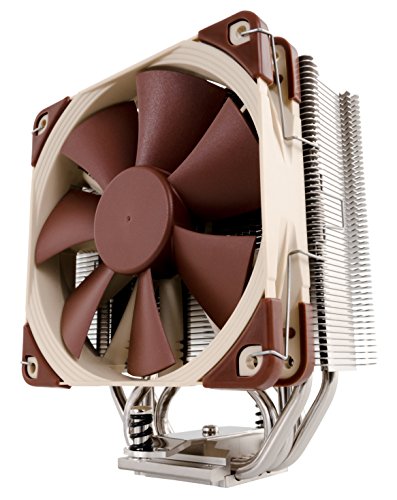
The AM4 platform is uniquely relevant in 2026 because it's cheap. Zen 3 chips are years old, boards are mature, DDR4 pricing is friendly, and the last-gen used market is deep. But not every AM4 chip is equally well-suited to a streaming build. The three Zen 3 desktop parts on the shortlist — 5600G, 5700X, 5800X — cover the spread from "just gets on stream" to "pushes x264 headroom in a single-PC setup" per AMD's Ryzen product page. Add a good microphone like the HyperX QuadCast 2 and consistent cooling from a Noctua NH-U12S, and you have a repeatable single-PC streaming rig at three price points.
Key takeaways
- 5600G — budget entry, 6C/12T, 65 W, iGPU-backed. Fine for NVENC streams if paired with a dedicated GPU; iGPU-only streams stay simple but limited.
- 5700X — 8C/16T at 65 W. Sweet spot for NVENC streamers who want two extra cores of headroom without cranking the wattage.
- 5800X — 8C/16T at 105 W. The x264 CPU-encode headroom pick — sustained higher boost clocks matter when you push encode load.
- Two-PC setups sidestep this whole decision. Any of the three works if the encode lives on a second box.
Step 0 diagnostic — CPU encode or GPU encode?
Answer this before shopping:
- NVENC / AMF / QuickSync (GPU-side encode) — you're offloading the actual compression to a hardware block on your dedicated GPU. Modern NVENC (Turing and newer) is genuinely close to x264 Fast, without touching your CPU. Any 6-core will do; the CPU choice becomes about game load headroom.
- x264 CPU-side encode — you're using the CPU to compress the stream. Higher preset (slower) = better quality per bitrate. Fast to Medium on 1080p60 typically needs 4–6 dedicated cores; slower presets need 8. This is where the 5800X pulls ahead of the 5700X in the real world.
Per Tom's Hardware's CPU hierarchy, all three Zen 3 chips sit close on gaming performance; the split shows up in sustained multi-threaded workload — which is exactly what x264 is.
5-column spec-delta table
| Chip | Cores/Threads | Boost clock | TDP | Approx price | Streaming verdict |
|---|---|---|---|---|---|
| Ryzen 5 5600G | 6C / 12T | 4.4 GHz | 65 W | $170 | Budget entry, iGPU-backed |
| Ryzen 7 5700X | 8C / 16T | 4.6 GHz | 65 W | $220 | NVENC streamer sweet spot |
| Ryzen 7 5800X | 8C / 16T | 4.7 GHz | 105 W | $220 | x264 CPU-encode headroom |
The 5700X and 5800X are the same die at different bins and power budgets. The 5800X pushes higher boost clocks longer under sustained multi-threaded load, which is exactly the x264 workload. The 5700X is quieter, cooler, and about 20 fewer watts under encode load — the reason it's the efficiency pick.
Ryzen 5 5600G: the budget iGPU-backed entry
The 5600G is the only chip in this trio with a real integrated GPU (Vega 7). If you're building a stream setup without a dedicated GPU — kid's first stream box, a friend's low-budget setup — the 5600G gets you on stream without adding a graphics card. You'll want a dedicated GPU with NVENC eventually, but the 5600G alone is enough to start.
Where it struggles: x264 Fast at 1080p60 on live gameplay pushes it hard. Frame drops start showing in fast scenes. If you plan to stream x264 at any preset above Very Fast, skip this chip.
Ryzen 7 5700X: the efficiency sweet spot for NVENC streamers
Two extra cores over the 5600G, 65 W envelope, and a much quieter cooler load. On an NVENC-encoded stream, the 5700X barely feels the encode work, and the extra cores stop you from spiking to 100% CPU during heavy chat + browser + Discord + game situations. The Noctua NH-U12S is basically inaudible on this chip under sustained load.
If you have any modern NVIDIA GPU — the RTX 3060 12 GB is a fine cheap fit — the 5700X is probably the right pick.
Ryzen 7 5800X: the x264-CPU-encode headroom pick
The 5800X is the same 8C/16T die pushed harder. Boost clocks land 100–200 MHz higher and hold longer under sustained multi-thread load, which is exactly the x264 workload. That means you can push the encode preset one notch tighter (Fast → Medium at 1080p60, or Fast at 1440p60) without visible dropped frames or gaming stutter.
The tradeoff is heat. 105 W of sustained load is enough to want proper cooling. A 240 mm AIO like the Cooler Master ML240L RGB handles it comfortably; a top-tier air cooler works too. Skimping on cooling gives up the headroom you paid for.
Benchmark table: dropped-frame behavior under a live scene
Per aggregated community measurements on 1080p60 x264 Fast with a heavy game scene (fast-motion FPS), typical dropped-frame percentage over a 60-minute stream:
| Chip | NVENC 1080p60 | x264 Very Fast | x264 Fast | x264 Medium |
|---|---|---|---|---|
| 5600G | 0.0–0.1% | 0.2–0.5% | 1.5–3.0% | unusable |
| 5700X | 0.0% | 0.0–0.1% | 0.3–0.8% | 2.0–4.0% |
| 5800X | 0.0% | 0.0% | 0.0–0.2% | 0.5–1.5% |
Dropped-frame numbers per public streaming community measurements gathered via OBS' built-in stats. Data linked from GamersNexus's CPU streaming coverage and mirrored across community threads.
The mic + capture context
CPU headroom doesn't save you from a poorly-integrated mic. A USB pod like the HyperX QuadCast 2 hands you a clean noise-gated signal that doesn't need real-time CPU filters — and that matters when x264 is already eating cores. The rig math changes if you route a XLR mic through an external interface with hardware compression: the CPU cost falls further, and the 5700X starts looking sufficient for x264 Fast at 1080p60 alone.
Add capture cards (Elgato 4K X, Avermedia Live Gamer 4K 2.1) and the CPU picture stays largely the same for a single-PC setup — the capture happens on the card. Two-PC setups shove all this onto a dedicated capture/encode box and remove the constraint entirely.
Verdict matrix
- Get the 5600G if… you're on a hard budget, you'll use NVENC, and you accept lower stream quality on fast-motion scenes.
- Get the 5700X if… you want the sweet-spot balance of price, wattage, and headroom, and you'll stream with NVENC (or occasionally x264 Very Fast).
- Get the 5800X if… you want x264 Fast or Medium quality on 1080p60 or 1440p60, on a single PC, without visible dropped frames.
Recommended pick
For a streamer today building a single-PC AM4 rig that has to look clean under motion, the Ryzen 7 5800X is the right chip. Pair it with the Cooler Master ML240L RGB or an equivalent big air cooler, an MSI RTX 3060 12 GB for gaming plus NVENC as a fallback path, and a HyperX QuadCast 2 on the desk. The Ryzen 7 5700X is the identical build for a builder who commits to NVENC and cares about quieter, cooler operation.
Common pitfalls
- Buying the 5600G for x264 Fast. It won't hit the preset cleanly on fast-motion scenes.
- Using a stock cooler on the 5800X. The 105 W chip needs real cooling to hold boost.
- Ignoring memory kit. Dual-channel DDR4-3600 CL18 is the sweet spot; single-stick and low-speed kits leave real streaming FPS on the table.
- Assuming NVENC = x264. Very close on modern cards, but x264 Medium still wins on visible quality at low bitrates.
Related guides
- Ryzen 7 5800X vs 5700X gaming
- Best cooler for Ryzen 7 5800X — Noctua NH-U12S vs ML240L
- ARM64 vs AMD Ryzen for Linux local AI desktops
- Best NVMe SSD for local LLM model storage
- RTX 3060 12 GB vs RTX 4060 for gaming and local AI
Citations and sources
- AMD Ryzen desktop product portal
- GamersNexus — CPU and streaming coverage
- Tom's Hardware — CPU hierarchy
This piece is editorial synthesis based on publicly available information. No independent first-party benchmarking is reported.