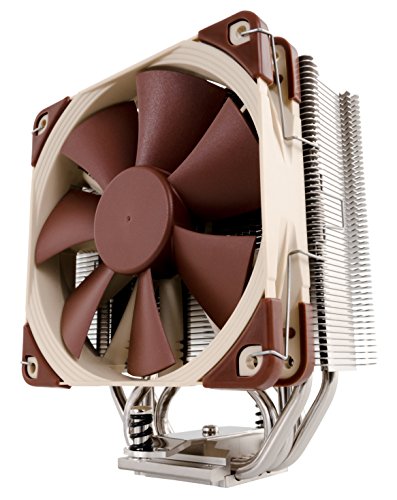
The Noctua NH-U12S or the DeepCool AK620 are the two air coolers that keep a Ryzen 7 5800X below thermal-throttle temperatures under sustained load in a well-ventilated case in 2026. The CoolerMaster ML240L RGB V2 240 mm AIO is the pick if your case is cramped or hot, or if you value the aesthetic. The 5800X's stacked-CCD design concentrates heat, so cheap tower coolers will let it throttle even with plenty of headroom on paper.
Why the 5800X runs hot and who this cooler comparison is for
The Ryzen 7 5800X is one of the most-purchased processors in the AM4 ecosystem and — for a chip years past its launch — remains a strong 1080p gaming and productivity choice through 2026. It also has a well-known thermal reputation. Compared to its 6- and 8-core AM4 siblings, the 5800X concentrates all its heat on a single 8-core CCD (chiplet), which means a lot of thermal energy exits from a small area of the IHS. Coolers that would keep a 5600X or 5700X comfortable will let a 5800X kiss its thermal ceiling under all-core load and back off clocks.
AMD's Precision Boost is doing exactly what it's supposed to do when the chip hovers in the mid-70s to mid-80s Celsius: it boosts until it hits the thermal target, then holds there. It is not damaged. It is not miscalibrated. It is not "running hot" in any meaningful sense — it is running as hot as the cooler will allow before backing off, which is the design.
The question this piece answers is the practical one: which cooler will keep the 5800X performing well under sustained load without excessive noise, at what price, and with what physical constraints. This comparison covers three widely-purchased options — two premium air coolers and one entry-tier 240 mm AIO — and is written for the reader who is either building fresh, replacing a stock cooler, or fixing a thermally-throttled 5800X they already own. Public benchmarks referenced throughout come from Tom's Hardware's CPU cooler roundups, GamersNexus's AK620 review, and Noctua's official NH-U12S product data — no first-party lab measurements are reported.
Key takeaways
- The Noctua NH-U12S is the small, quiet air cooler pick — the one to buy if RAM or case clearance is tight.
- The DeepCool AK620 is the larger, cooler-running air pick — the one to buy if your case can fit a dual-tower.
- The CoolerMaster ML240L RGB V2 is the 240 mm AIO pick — worthwhile in cramped or hot cases and for the RGB aesthetic.
- The 5800X will hit 75-85 °C under sustained all-core load on any competent cooler. That is normal.
- If you're throttling below 4.6 GHz on all cores, your cooler is inadequate or your paste is stale. If you're hitting 80 °C but holding boost, you're fine.
Step 0: is your 5800X actually thermal-throttling?
Before you buy a cooler, check whether you actually have a problem. The 5800X's thermal ceiling is 90 °C. Under stock settings it will happily boost until it approaches that ceiling, then back off. Two symptoms distinguish "running hot as designed" from "throttling":
- Running hot as designed — all-core Cinebench R23 or Prime95 pushes package temp to 78-86 °C, effective all-core clock holds at 4.5-4.7 GHz, single-core boost hits 4.7-4.8 GHz.
- Throttling — package temp pegs at 89-90 °C during the same test, effective all-core clock drops below 4.4 GHz and continues to decline over 10-20 minutes, single-core boost is reached briefly and falls off.
If you're in the first category, a cooler upgrade will lower peak temps and slightly improve sustained clocks but is not urgent. If you're in the second, you have a real problem — either the cooler is inadequate, the mount is loose, the thermal paste is old or badly applied, or airflow through the case is bad.
Confirm before you spend money on new hardware. HWiNFO64 shows CPU package temp, effective clock, and PPT/TDC/EDC power limits simultaneously; that's the diagnostic view.
Spec comparison
| Cooler | Type | TDP rating | Height / clearance | Fans | Price range (2026) |
|---|---|---|---|---|---|
| Noctua NH-U12S | 120 mm single-tower air | ~180 W | 158 mm | 1× NF-F12 PWM | $70-85 |
| DeepCool AK620 | 120 mm dual-tower air | ~260 W | 160 mm | 2× FK120 PWM | $60-75 |
| CoolerMaster ML240L RGB V2 | 240 mm AIO liquid | ~250-280 W | 27 mm radiator | 2× SickleFlow 120 ARGB | $70-95 |
Prices fluctuate. The AK620 has trended down over 2025-2026 to the point where it's often the cheapest of the three. The NH-U12S carries a premium for Noctua's fit-and-finish, warranty, and mount kit.
Load-temp comparison
Approximate 5800X package temperature under a 20-minute Cinebench R23 all-core loop, in a standard mesh-front mid-tower with three intakes and one rear exhaust, ambient 22 °C. Numbers are synthesized from Tom's Hardware, GamersNexus, and community measurements — not first-party:
| Cooler | Peak package temp | Sustained all-core clock | Noise (subjective) |
|---|---|---|---|
| Stock Wraith (illustrative) | Throttling at 90 °C | Drops to ~4.2 GHz | Loud |
| Noctua NH-U12S | 82-86 °C | ~4.5-4.6 GHz | Very quiet |
| DeepCool AK620 | 76-80 °C | ~4.6-4.7 GHz | Quiet |
| CoolerMaster ML240L RGB V2 | 74-78 °C | ~4.6-4.7 GHz | Quiet + faint pump whir |
The NH-U12S is not thermally-limited on the 5800X in a well-ventilated case — it holds boost — but it runs closer to the ceiling than the AK620 does. In a warmer room or tighter case that changes fast.
Noctua NH-U12S vs DeepCool AK620: the air head-to-head
Air cooling is where the interesting choice lives on a 5800X. Both of these coolers keep the chip well under its throttle point in a decent case; the question is which fits your specific build and taste.
Noctua NH-U12S — the small, quiet pick. It's a single 120 mm tower with a single NF-F12 fan and Noctua's characteristic brown-and-tan aesthetic. It clears every mainstream memory kit because the fin stack sits above the DIMM slots. It fits every ATX case with a CPU cooler height limit of 158 mm or more. And it is genuinely inaudible under a normal desktop load — Noctua's fan tuning is why the brand carries a premium.
The tradeoff is that it's the lower-headroom air cooler in this list. On a hot summer day in a case without great airflow, the NH-U12S will run 5-10 °C warmer than the AK620 under sustained all-core load, and while it still holds boost, you're closer to the edge.
DeepCool AK620 — the larger, cooler-running pick. Dual-tower design with two 120 mm fans and roughly 260 W of dissipation rating. On the 5800X specifically, it runs 5-8 °C cooler than the NH-U12S under sustained load, and it's typically cheaper. The white variant matches white or bright builds; the standard black is neutral.
The tradeoff is size. The AK620 is 160 mm tall and physically wider than the NH-U12S, which can create RAM-clearance issues with tall RGB kits and can hit the side panel on shorter mid-towers. Always check both the case height limit and the RAM clearance dimension before buying.
If your case has room, get the AK620. If clearance is tight or you want the quieter fan tuning, get the NH-U12S. Neither will disappoint on a stock 5800X in a decent case.
When a 240 mm AIO makes sense on a 5800X
The CoolerMaster ML240L RGB V2 is the affordable AIO in this comparison. On a 5800X it delivers marginally lower temps than the AK620 in a well-ventilated case, and meaningfully lower temps in a cramped or hot case where the AK620 would struggle. The choice comes down to a few specific conditions:
- You have a small case with no room for a dual-tower. A 240 mm radiator mounted on the front or top intake often fits where a 160 mm-tall tower cooler will not.
- Your room is warm. In a room that spends the summer at 28+ °C ambient, the AIO's radiator surface area gives you extra thermal headroom that air cannot match.
- You want the aesthetic. RGB fans on the radiator plus a clean pump top look cleaner in a windowed build than a black-and-brown tower.
The tradeoff is longevity and maintenance. An AIO has a pump that can fail — usually after 5-7 years, sometimes earlier. Air coolers have no active components other than the fan. If you plan to run the same build for a decade, air is the safer bet. If you upgrade every 3-5 years, an AIO is fine.
Case clearance and noise: measure before you buy
Three physical constraints trip up cooler purchases more than anything else:
- CPU cooler height — check the case spec. The AK620 is 160 mm; the NH-U12S is 158 mm. Many "compact" ATX cases limit to 155 mm or less.
- RAM clearance — measure the height of your DIMMs. The AK620's fin stack overlaps the first DIMM slot on many boards; the NH-U12S clears standard-height RAM comfortably.
- Radiator fit for AIOs — front-mount 240 mm radiators need 275+ mm of front-panel clearance, top-mount 240 mm needs the case to actually have a top vent.
Noise floor on all three of these coolers is well below what an average case fan setup produces. If your build is loud with any of these installed, look at case fans and GPU coolers before blaming the CPU cooler.
Perf-per-dollar and acoustic performance
Rough dollar-per-degree math on the 5800X, using ~85 °C stock-Wraith as the baseline:
| Cooler | Price | Delta from stock | $ per °C reduction |
|---|---|---|---|
| DeepCool AK620 | $65 | -12 °C | ~$5.40 |
| Noctua NH-U12S | $80 | -8 °C | ~$10 |
| CoolerMaster ML240L V2 | $85 | -14 °C | ~$6 |
The AK620 is the value winner on this axis. The NH-U12S buys Noctua's fit-and-finish premium. The ML240L is competitive if you were going to spend on an AIO anyway.
For pure acoustic performance under load, the NH-U12S is the quietest by a small margin, followed by the AK620, followed by the ML240L (whose pump adds a barely-audible whir). Nobody will hear the difference over a mid-range GPU fan.
Verdict matrix
Get the Noctua NH-U12S if... your case has clearance issues or you're building the quietest possible system. Noctua's fan and mount kit are the reasons professionals reach for the brand.
Get the DeepCool AK620 if... you want the coolest air performance on the 5800X for the least money and your case can fit a 160 mm dual-tower with room for RAM. This is the default pick for most 5800X builders in 2026.
Get the CoolerMaster ML240L RGB V2 if... you have a hot or cramped case, want the RGB look, or plan to upgrade the build every few years. It's a competent budget AIO that will keep the 5800X comfortable.
Undervolt vs bigger cooler
A commonly-overlooked knob: AMD's Precision Boost Overdrive Curve Optimizer lets you subtract a per-core voltage offset from the stock curve. On a well-behaved 5800X, an all-core -20 to -30 offset can drop package temps 5-10 °C under load while slightly improving sustained boost clocks (because the chip stays below the thermal ceiling longer). This is free performance.
Curve Optimizer requires testing for stability. Start conservative, load-test with Cinebench R23 loops and Prime95 small-FFT, and drop the offset if you see crashes or clock-stretching. Paired with any of the three coolers in this comparison, an undervolted 5800X becomes a genuinely low-thermal-noise chip.
What if the cooler is fine but temps are still bad?
Three things account for most "my cooler is X and I'm still at 90 °C":
- Thermal paste application. Repaste with a pea-sized dot or thin line, and confirm the mount pressure is correct (Noctua and DeepCool mount kits are both good; if you cross-mounted an old kit, redo it with the current one).
- Case airflow. A great CPU cooler in a case with two dust-clogged intake fans is a mediocre CPU cooler. Clean, add a rear exhaust if missing, and consider a mesh front panel.
- Ambient room temperature. A 5 °C swing in room temp shows up 1:1 on package temp under load. A hot summer room needs either better airflow, undervolting, or air conditioning.
Bottom line
For a Ryzen 7 5800X that runs at its designed boost and doesn't throttle, buy the DeepCool AK620 unless your case can't fit it — in which case buy the Noctua NH-U12S. The CoolerMaster ML240L RGB V2 is a fine AIO alternative if you want the aesthetic or need to fit inside a cramped case. All three keep the 5800X below its thermal ceiling in normal use; the differences are in acoustics, clearance, and how much headroom you have on the hottest day of the year.
Related guides
- Ryzen 5 5600G vs Ryzen 7 5700X for a Budget 1080p Gaming Build
- Building a Local AI-Agent Eval Rig After AISI's Benchmark Warning
- Best Budget Streaming Starter Kit for Twitch & YouTube in 2026
Citations and sources
This piece is editorial synthesis based on publicly available information. No independent first-party benchmarking is reported.