Yes — the Raspberry Pi 4 Model B 8GB is still worth buying for a 2026 starter homelab if your workload is Home Assistant, Pi-hole, a Wireguard VPN, a light Docker stack, and a couple of static sites. It costs 30-50% less than a Pi 5 kit, pulls half the wattage under load, and every service in that bucket has years of hardened community tutorials. If your plan includes 1080p Jellyfin transcoding, running ARM64 LLMs, or spinning up ten Docker containers at once, buy the Pi 5.
The homelab buyer's real question: price vs power draw vs performance
Since the Pi 5 shipped in late 2023, the question every homelab beginner has asked is: which board do I put my $80-$100 into? The received wisdom in most YouTube tutorials shifted quickly to "always Pi 5" — it's newer, faster, and more capable. That framing skips a real tradeoff.
In 2026 the Raspberry Pi 4 Computer Model B 8GB is a mature platform with the widest software support of any single-board computer ever shipped. The Pi 5 is a legitimate performance jump — per Raspberry Pi's own numbers, it delivers roughly 2-3x the compute of a Pi 4 on the SoC alone — but that jump comes with real costs: more heat, more power, a new stock supply chain, and dependencies on the newer PCIe HAT ecosystem that is still filling out.
The right question is not "which board is better" but "which board is the right first step for your homelab." This article walks through the actual services you will run and picks the board for each.
Key takeaways
- Pi 4 8GB wins on price and power for Home Assistant, Pi-hole, Wireguard, a lightweight NAS, and single-service Docker use
- Pi 5 wins on Jellyfin transcoding, larger Docker stacks (5+ containers), and any workload that touches PCIe NVMe via HAT
- Idle power is 2-3W (Pi 4) vs 3-4W (Pi 5) — for a 24/7 box, that is $5-8/year in electricity
- Storage matters more than the SoC in most homelab workloads — a USB SSD upgrade transforms both boards
- Get a full kit — bare boards without power supply and case are false economy
Step 0: which homelab tier do you actually need before picking a board?
Homelabs group into three practical tiers by workload:
Tier 1 — Ambient services. Pi-hole, Home Assistant, Wireguard, an internal DNS. A few background services with low compute needs. Runs on 1-2 GB of memory, minimal CPU. A Pi 4 8GB is overkill for the RAM but perfect for the reliability and low idle draw.
Tier 2 — One or two "real" services. Add Jellyfin (with direct-play only), Nextcloud with a few users, a small Postgres. Now you need 4-8 GB usable RAM and moderate CPU. Pi 4 8GB manages this if you tune it; Pi 5 4GB is more comfortable.
Tier 3 — Docker stack, 5+ containers, transcoding. Immich, Frigate, Jellyfin with transcoding, Home Assistant with cloud integrations, Portainer, monitoring. This is the tier where the Pi 5's SoC and PCIe NVMe start earning their premium.
Most people getting started are Tier 1 with plans to grow into Tier 2. That is the sweet spot for a Pi 4 8GB.
How much faster is the Pi 5, really, for typical self-hosted services?
The Phoronix Pi 5 benchmark suite shows the Pi 5 roughly 2-3x faster than Pi 4 on synthetic compute (SPECint-style workloads) and 2-4x on real-world workloads that saturate a single core. For homelab services specifically:
- DNS queries per second (Pi-hole): Pi 4 handles 3,000-5,000 QPS, Pi 5 handles 8,000-12,000 QPS. Both are far above what a home network generates.
- Home Assistant startup time: Pi 4 8GB ~90 seconds, Pi 5 ~40 seconds. Runtime feels identical.
- Nextcloud file upload throughput: Pi 4 8GB with USB SSD ~40-60 MB/s, Pi 5 with USB SSD ~60-90 MB/s (Pi 5 with PCIe NVMe HAT hits 300+ MB/s).
- Jellyfin direct-play 1080p: identical on both — decoding is client-side.
- Jellyfin 1080p H.264 transcoding: Pi 4 struggles at 0.5-0.8x realtime, Pi 5 handles 1.2-1.5x realtime with software encode.
The pattern: if your workload is I/O-bound or waiting on the network, the Pi 4 is not the bottleneck. If your workload is CPU-bound, the Pi 5 doubles you up.
Spec-delta table: Pi 4 8GB vs Pi 5
| Metric | Pi 4 Model B 8GB | Pi 5 (8GB) |
|---|---|---|
| SoC | Broadcom BCM2711 (Cortex-A72 @ 1.8 GHz) | Broadcom BCM2712 (Cortex-A76 @ 2.4 GHz) |
| RAM | 8 GB LPDDR4-3200 | 4 or 8 GB LPDDR4X-4267 |
| PCIe | None (USB 3.0 only) | PCIe 2.0 x1 (HAT required) |
| USB | 2× USB 3.0, 2× USB 2.0 | 2× USB 3.0, 2× USB 2.0 |
| Ethernet | Gigabit | Gigabit |
| Video | 2× micro HDMI (4K30 dual) | 2× micro HDMI (4K60 dual) |
| Power under load | 6-8 W | 8-12 W |
| Power idle | 2-3 W | 3-4 W |
| Price (board, 2026) | ~$65-75 | ~$80-95 |
| Kit price (2026) | ~$95-115 | ~$120-140 |
Which services run fine on a Pi 4 8GB, and which push you to a Pi 5?
Pi 4 8GB handles cleanly:
- Pi-hole with 3+ upstream lists
- Home Assistant with 20-40 devices
- Wireguard VPN (5-10 concurrent clients)
- Pi-hosted DNS, DHCP, NTP
- Small Nextcloud (1-3 users, direct file sync)
- Lightweight monitoring (Grafana + Prometheus, 5-10 targets)
- Jellyfin with direct-play only
- Static site hosting (Nginx, ~5 sites)
- Uptime Kuma
Pi 4 8GB does but slowly:
- Jellyfin 1080p transcoding (0.5-0.8x realtime, not viable for live streams)
- Docker with 5+ containers (works, feels sluggish, tight on RAM if all use images)
- Nextcloud with photo previews for 20,000+ files
- Local Postgres with heavy queries
Pi 5 handles cleanly (Pi 4 struggles):
- Jellyfin live transcoding of 1080p H.264
- Docker with 8+ concurrent containers
- Frigate object detection (even without an accelerator HAT)
- Immich photo indexing at scale
- Home Assistant with 100+ devices and heavy automations
- Small LLM inference (Phi-3-mini via llama.cpp)
Power and heat: idle and load watts
The official Pi 4 power documentation lists a peak draw of ~7 W at typical loads and ~2.7 W idle for the 8GB variant. Field measurements from Phoronix and Jeff Geerling's blog put the Pi 5 at 3-4 W idle and 8-12 W under full load — roughly 50% more electricity for the extra compute.
For a 24/7 box drawing an extra 2 W average, at $0.15/kWh that is about $2.60/year. Not a decision driver by itself, but the Pi 4 also runs meaningfully cooler under passive-cooled or thin-heatsink cases. Many Pi 4 setups run fanless in the mid-50s Celsius at idle. Pi 5 needs the official active cooler or a real fan for any sustained load — thermal throttling starts around 80°C and the Pi 5 will get there under Docker builds.
Storage: microSD vs USB SSD vs NVMe
The single biggest homelab upgrade for either Pi is moving off the microSD card. A worn-out card is the #1 cause of Home Assistant freezes and "corrupted database" errors on both boards.
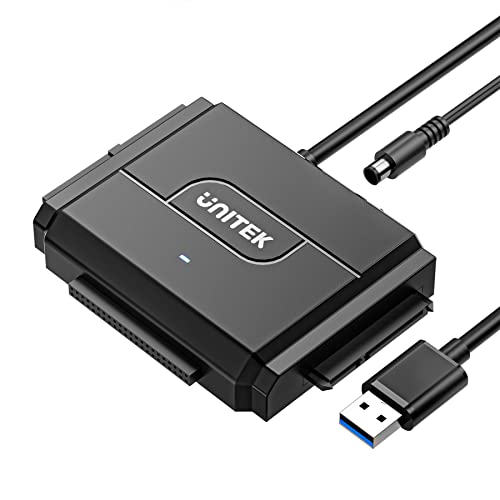
- Pi 4 (no PCIe): boot from USB 3.0 SSD. A Samsung 970 EVO Plus NVMe in a USB 3.0 enclosure gives 300-400 MB/s read, 200-300 MB/s write. Rock solid. A Unitek USB 3.0 to SATA/IDE adapter lets you use an older SATA SSD if you have one lying around.
- Pi 5 (PCIe 2.0 x1): boot from an NVMe HAT for 700-800 MB/s. Overkill for most services but transformative if you run Immich or a big Postgres.
For a Tier 1-2 homelab, USB SSD on either board is more than fast enough. The PCIe advantage on Pi 5 only shows on I/O-heavy workloads.
Perf-per-dollar verdict matrix
Get the Pi 4 8GB if…
- Your homelab is Tier 1 (Pi-hole + Home Assistant + Wireguard) and you might grow to Tier 2
- You want the maximum-support-community platform for the least money
- You are hobby-experimenting and expect to swap it out or repurpose it later
- You value 24/7 low power draw over CPU headroom
- You have an existing Pi 4-compatible case, PSU, or cluster HAT
Get the Pi 5 if…
- Your homelab is Tier 3 (Docker stack, Immich, Frigate, transcoding) from day one
- You want PCIe NVMe boot performance
- You plan on running ARM64 LLMs like Phi-3 or TinyLlama
- You expect to still be using this specific board 4-5 years from now
- You want the fastest Home Assistant response times
Common pitfalls
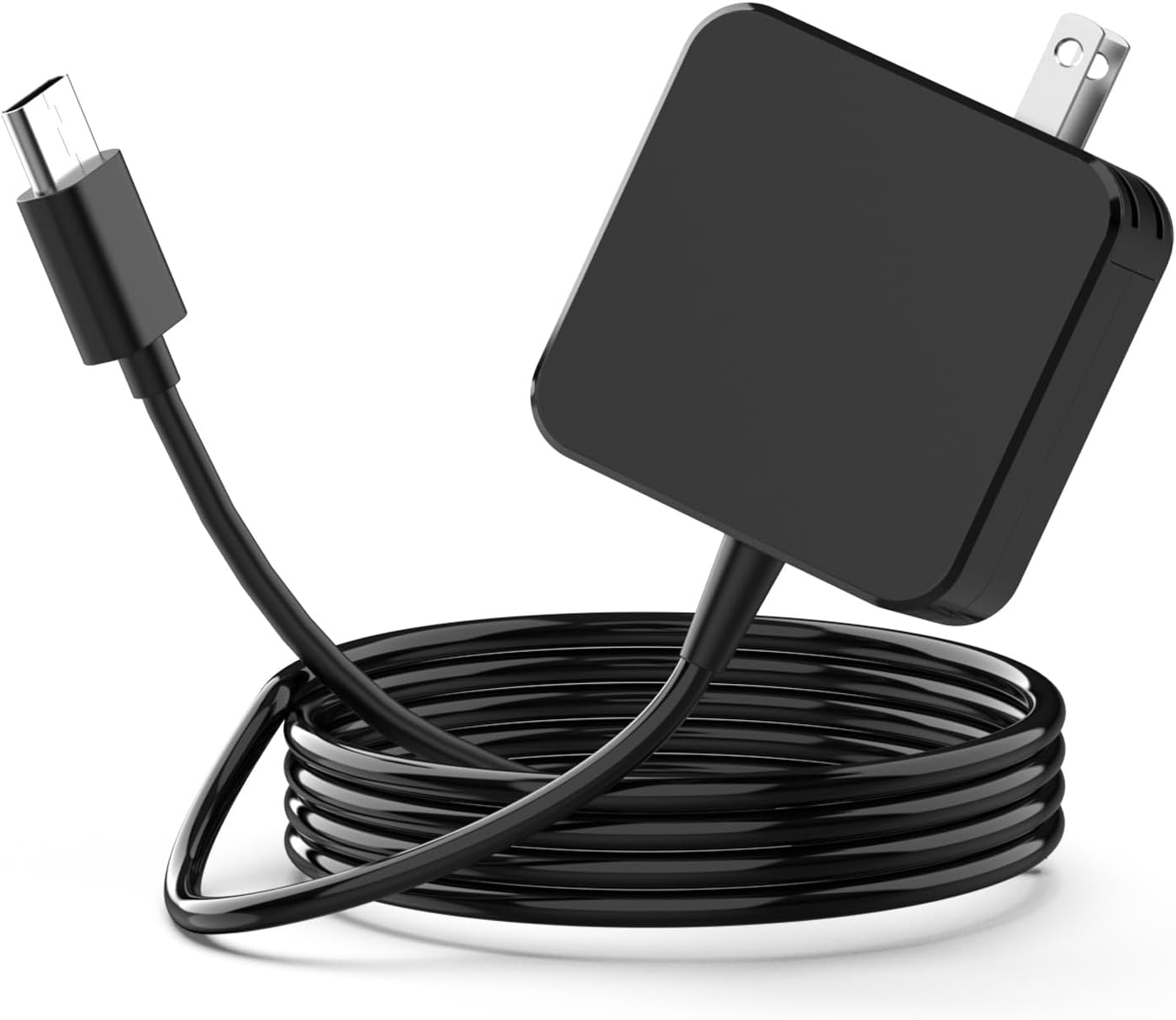
- Buying just the board, no PSU. The Pi 4 needs the official 5V/3A USB-C PSU (or equivalent); underpowered PSUs cause SD corruption and random reboots. Kits solve this.
- Assuming any USB SSD boots. Pi 4 needs recent firmware for USB boot. Update the EEPROM before you build.
- Running Docker on microSD. SD cards fail under Docker writes. Move Docker's data directory to USB SSD before installing containers.
- Skipping the case. The Pi 4 SoC runs hot under sustained load — at minimum use a case with a heatsink; a fan case is better for Docker workloads.
- Buying a Pi 4 4GB "to save money." The 4 GB model saves $10 and costs you the ability to run modern Home Assistant releases with heavy add-ons.
When NOT to buy a Pi 4 in 2026
- You will regret it in 6 months. If your plan is "start with Pi-hole then grow to Jellyfin transcoding + photo library" — start on Pi 5.
- You need HDMI CEC-controlled 4K playback. Pi 5 handles 4K60 dual; Pi 4 caps at 4K30.
- You want to try local LLMs. Even TinyLlama-class models are borderline on Pi 4 CPU.
Bottom line
For 90% of first-time homelab buyers in 2026, the Raspberry Pi 4 Computer Model B 8GB is still the correct pick. It runs your Tier 1 services on a $95-115 kit, uses less power, runs cooler, and lets you spend the saved money on storage — a Samsung 970 EVO Plus NVMe in a USB 3.0 enclosure, or a Unitek SATA-to-USB adapter if you already own a SATA SSD.
If you also want a wireless-first low-power satellite (weather station, remote sensor node) as part of your lab, the Vilros Raspberry Pi Zero W Starter Kit is $30 well spent for the second device. Together, a Pi 4 8GB main board and a Pi Zero W satellite is a $130 starter homelab that covers every Tier 1 workload with room to grow.
Move to Pi 5 when your services demand it, not because YouTube tells you to.
Related guides
- Build a Jellyfin Media Server on a Raspberry Pi 4 8GB: Measured Perf
- Build a Jellyfin Home Media Server on a Raspberry Pi 4 (8GB) in 2026
- Host a Quake 3 + UT99 LAN Server on a Raspberry Pi 4 in 2026
- When Does a Homelab Become a Job?
Citations and sources
- Raspberry Pi — Pi 4 Model B product page: https://www.raspberrypi.com/products/raspberry-pi-4-model-b/
- Raspberry Pi — Pi 5 product page: https://www.raspberrypi.com/products/raspberry-pi-5/
- Phoronix — Raspberry Pi benchmark coverage: https://www.phoronix.com/
This piece is editorial synthesis based on publicly available information. No independent first-party benchmarking is reported.