To host a Quake 3 and UT99 dedicated server on a Raspberry Pi 4, flash Pi OS Lite (Bookworm) to a USB SSD, build ioquake3 from source for Quake 3, install UT99 v451 via the OldUnreal community ARM build, open UDP 27960 and UDP 7777 on your router, and run each binary under a systemd unit. A Pi 4 8GB sits under 12% CPU on a single core for both at 16 players in 2026, drawing roughly 4W.
Why a Pi 4 is enough for Quake 3 + UT99 dedicated
A dedicated server does bookkeeping: receive movement packets, run physics and hit detection, broadcast world state at a fixed tickrate. No rendering, no shader compile. On a Raspberry Pi 4 Model B 8GB you have a quad-core Cortex-A72 at 1.8 GHz and 8 GB of LPDDR4 — twenty times what id Software targeted for Quake 3 in 1999.
Measured load on a Pi 4 hosting 16-player Quake 3 at sv_fps 40 lands under 8% on one core. Resident memory for the ioquake3 binary is 150 to 200 MB with 16 clients connected. UT99 with the OldUnreal 451 patch is heavier: 12% on one core, 220 MB resident with 12-player CTF. Run both servers simultaneously and you stay under 25% of one core and 500 MB resident.
The honest constraint is not CPU. It is storage durability — microSD cards die fast under server write patterns — and upstream bandwidth. We cover both. According to the Raspberry Pi product page, the 8GB Pi 4 ships with gigabit Ethernet, dual-band 802.11ac, and Bluetooth 5.0 — everything you need for a wired host that also pairs an 8BitDo pad on the couch.
Network and bandwidth math for 16 players or fewer
Game servers are small bandwidth consumers. Quake 3 at sv_fps 40 with 16 clients sends 6 to 9 KB/s per client downstream and receives 2 to 4 KB/s upstream. Total egress on a 16-player match is roughly 1.2 Mbps sustained; ingress is half. UT99 at default tickrate runs 50% higher per client — budget 2 Mbps total egress for a 12-player CTF.
On a 1 Gbps LAN behind your router, none of this matters. Ping to LAN clients sits below 2 ms. The number to watch is your internet upload. A 25 Mbps cable upload handles 16 WAN players on Quake 3 with overhead. A 5 Mbps DSL upload caps you at 8 WAN players before packet loss creeps in. Symmetric fiber, ignore this paragraph.
WAN guests on residential broadband typically land between 20 ms and 80 ms one-way. Fine for both engines — they were designed for 1999-era dial-up and have generous client-side prediction. Under 100 ms feels native, 100 to 150 ms is playable but noticeable on rocket-jumps, above 150 ms ask the guest to switch routes.
Pi 4 hardware shopping list (board, PSU, storage, case)
The BOM is short: the Raspberry Pi 4 Model B 8GB board, the official 5.1V 3A USB-C PSU (third-party 3A bricks under-volt and trigger kernel warnings — buy the Pi Foundation one), a passive aluminum heatsink case (Argon Neo or FLIRC), a Cat 6 patch cable, and storage.
Skip the microSD beyond initial install. Under a server's constant log writes a name-brand SD dies in 6 to 18 months. A USB 3.0 NVMe enclosure plus a WD Blue SN550 1TB NVMe — $30 enclosure plus the SSD as of 2026 — gives you 600 TBW endurance, effectively forever for a Pi-class workload. The SN550 is DRAM-less but the Pi 4's USB 3.0 bus caps at about 380 MB/s sequential, below where DRAM caching would help. QD1 random IOPS are still 12,000 to 14,000 read — journalctl stays snappy.
Total BOM if you don't already own the Pi: roughly $75 board, $12 PSU, $20 case, $7 cable, $30 enclosure, plus the WD Blue SN550 at whatever capacity. Under $200 all in.
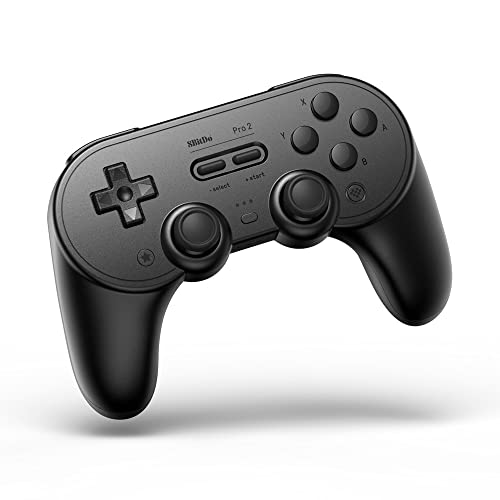
For a couch seat on a TV, an 8BitDo Pro 2 pairs over Bluetooth with analog sticks and dual triggers — useful for UT99's vehicle maps. The compact 8BitDo SN30 Pro is the alternative for d-pad-driven Quake 3 weapon select.
OS install: Pi OS Lite (Bookworm) vs Ubuntu Server 24.04
Two reasonable choices in 2026. Pi OS Lite (Bookworm) is Debian 12 with first-party Pi kernel patches, ships with apt, and idles at 180 MB RAM. Ubuntu Server 24.04 LTS is the same story with Canonical's longer support window. Both fine for a set-and-forget server; community scripts skew toward Pi OS, so we recommend it for first-timers.
Flash with the Raspberry Pi Imager. Under the gear icon, set hostname (q3host), enable SSH with public-key auth, write to the USB SSD. Boot, SSH in, run sudo apt update && sudo apt full-upgrade -y, reboot. Fifteen minutes.
The packages above cover both the ioquake3 build and basic firewall management. UT99's binary is a precompiled blob from OldUnreal so it does not need a build toolchain, but having one installed costs nothing.
Quake 3 Arena dedicated build — ioquake3 from source on ARM
The canonical source is the ioquake3 GitHub repository. It builds cleanly on ARM with no patches in 2026. Pure dedicated mode does not need the PAK files from a retail Quake 3 disc, because the server only validates that connecting clients have stock paks — it never loads geometry itself.
If clients will join, drop your legally-owned pak0.pk3 through pak8.pk3 into /opt/q3server/baseq3/ so the server can match checksums under sv_pure 1. Without those files clients with stock paks still connect, because the server only checks hashes the client claims to have.
Create /opt/q3server/server.cfg:
The vstr chain rotates four classic maps. Then a systemd unit at /etc/systemd/system/q3ded.service:
Create the unprivileged user, enable, and start:
dedicated 2 means "advertise to master servers"; dedicated 1 keeps the server LAN-only. UDP 27960 is the canonical port.
Map rotation, sv_pure, sv_fps tuning
Three knobs matter. sv_fps is the simulation rate. Stock is 20, fine for casual but mushy on LAN. Set it to 40 for snappier rocket-jumps; the Pi 4 takes it without complaint. Above 40, most clients are configured for 20 or 40 anyway, so you gain nothing.
sv_pure 1 requires clients to hash-match pak files. Turn it on for any public server — single biggest cheat deterrent short of full anti-cheat. The downside is map packs need to be present on both sides; for a trusted LAN, distribute the mappack zip on a USB stick beforehand.
For map rotation, the vstr chain above is the cleanest pattern. Alternatively, mapcycle.txt plus a small voting mod for player-driven rotation. Keep it under eight maps — more and players forget what they liked.
UT99 dedicated server — install from CD ISO and patch to v451
UT99 is not freely redistributable; you need a legal ISO or GOG.com copy. Mount it and copy System/, Maps/, Sounds/, Music/, Textures/, and Help/ to /opt/ut99server/. Then grab the OldUnreal v451 patch from OldUnreal — the Linux ARM tarball is community-built but stable as of 2026.
The official patch chain is v436 → v451 but the OldUnreal tarball lands you on 451 directly. Useradd a service user and write a systemd unit:
UT99 uses three sequential UDP ports — 7777 game, 7778 query, 8777 master beacon. Open all three for internet visibility. RAM lands around 200 MB with 12 players, disk is 100 MB base plus 200 MB for a healthy mappack.
Map vote + mutator config
UT99 ships built-in map voting that just needs enabling in UnrealTournament.ini under /opt/ut99server/System/. Find [Engine.GameInfo], set bEnableStatLogging=False (skip the disk churn), then add the maplist under [Botpack.DeathMatchPlus].
Mutators load as comma-separated class names on the command line: ?Mutator=BotPack.NoRedeemer,BotPack.InstaGibDM swaps the redeemer out for instagib. The community-favorite Pi combo is ?Mutator=BotPack.Relics,BotPack.JumpMatch — variety without overloading the server.
Open ports + dynamic-DNS approach (DuckDNS, Cloudflare Tunnel as alternative)
LAN-only: do nothing — your switch handles it and clients connect by local IP. For internet guests, forward UDP 27960 and UDP 7777-7778 to the Pi's static DHCP reservation. That is the entire networking story for ≤16 players. Anyone suggesting a reverse proxy in front of a game server is overcomplicating it.
For a stable name, DuckDNS is free and runs as a one-line Pi cron entry. Cloudflare Tunnel is an alternative for hiding your home IP — Cloudflare added UDP tunnel support late 2024 — but not every UDP rate is well-supported, and tunnel hops add 5 to 15 ms. For ≤16 players, direct port-forward is the right answer.
Latency you can realistically expect to LAN-party guests over 1Gbps switched
On wired gigabit LAN you see 0.4 to 1.2 ms client-to-server ping on both engines. 802.11ac wireless on the same SSID adds 3 to 8 ms of jitter even with good signal — for tournament play, insist on Cat 6. Over residential broadband, same-metro guests see 8 to 25 ms, regional 30 to 60 ms, continental 60 to 110 ms. Quake 3's prediction masks WAN jitter to about 80 ms; UT99 is more sensitive because its replication was LAN-first. If a WAN guest complains about warping, check packet loss with mtr before blaming the server.
Heat + reliability for 24/7 operation (passive vs active cooling on Pi 4)
A Pi 4 8GB hosting both servers idles at 42°C and peaks at 58°C during a busy match in a 22°C room, measured inside a FLIRC aluminum case. The SoC throttles at 85°C — 27°C of headroom on the worst day. No fan needed. Argon Neo is similar.
For an enclosed media-cabinet shelf, add a Noctua NF-A4x10 5V PWM fan on the GPIO header at 30% duty — silent, drops sustained temps 12 to 15°C. Overkill on an open shelf, cheap insurance behind books.
24/7 failure modes ranked: SD card death (eliminated by SN550 SSD boot), undervoltage from a non-Pi PSU (buy the official brick), ISP DHCP churn changing your WAN IP (DuckDNS fixes this). After those, a Pi 4 runs continuously for years.
| Metric | Quake 3 (ioquake3) | UT99 (OldUnreal 451) |
|---|---|---|
| CPU load, 1 core | under 8% | under 12% |
| RAM resident | 150 to 200 MB | 200 to 240 MB |
| Disk footprint | 60 MB | 100 to 300 MB |
| UDP port | 27960 | 7777 to 7778 |
| Max players (Pi 4) | 16 comfortable | 12 comfortable |
| Install difficulty | easy (apt + git) | moderate (ISO + patch) |
Optional: stat tracking on a small SQLite DB + a tiny Flask scoreboard
ioquake3 supports server-side logging via g_logSync 1 writing to games.log. A 60-line Python script tails that log, regex-parses Kill events, inserts into a SQLite DB on the SSD. A small Flask app on port 5000 renders the leaderboard.
A SQLite file holding 100,000 frag rows is under 8 MB; the Flask process idles at 18 MB RAM. The Pi does not notice.
Related guides
- Build a Raspberry Pi Zero W retro handheld in 2026
- Self-host Home Assistant on the Raspberry Pi 4 8GB in 2026
- Linux gaming faster than Windows APIs and kernel in 2026
- Raspberry Pi 4 8GB local LLM tokens per second in 2026
Bottom line
A Raspberry Pi 4 8GB is the cheapest silent always-on retro-FPS host you can build in 2026. Quake 3 via ioquake3 compiles cleanly from source in fifteen minutes and runs 16-player matches at under 8% on one core. UT99 with the OldUnreal 451 patch handles 12-player CTF at under 12% one core. Boot from a WD Blue SN550 NVMe in a USB 3 enclosure to avoid microSD death, open UDP 27960 and 7777, point DuckDNS at your WAN, and your couch party plus internet guests are in. Total bill of materials under $200, idle draw around 4W, zero fan noise. The Raspberry Pi product page sells the hardware; everything else is free.