The appeal of a homelab is control: your own cloud, your own rules, your own learning environment. But somewhere between racking a used server and fielding a 2 AM alert about a failed drive, the enjoyment can quietly drain out. Community threads on r/homelab and r/selfhosted return to the same question with uncomfortable regularity — at what point does a personal infrastructure project stop being a hobby and start feeling like unpaid IT work?
There is no single threshold, but there are measurable signals worth examining.
How Many Hours a Week Is Too Much?
Time is the clearest proxy for overcommitment. Community threads on r/homelab consistently surface a rough spectrum: casual tinkerers spending a few hours a month keeping services alive, engaged hobbyists investing several hours weekly on new projects and maintenance, and a third cohort that finds routine upkeep consuming entire weekend afternoons.
The distinction the community draws most often is between project time and maintenance time. Project time — building a new service, experimenting with container orchestration, migrating to a new hypervisor — is why most people build homelabs. Maintenance time — patching, monitoring, replacing failed hardware, chasing certificate renewals — is overhead. When maintenance time begins to dominate the weekly budget, the lab has shifted from hobby to operational burden.
A common self-diagnostic from r/selfhosted: if you feel guilty taking a weekend away because something might break, the lab is running you rather than the other way around.
This dynamic appears across AI-adjacent homelab builds as well. As documented in the cloud vs. local inference tradeoff analysis, the operational overhead of maintaining a local inference rig is a real cost that doesn't appear in the raw hardware math.
Hardware Complexity as a Leading Indicator
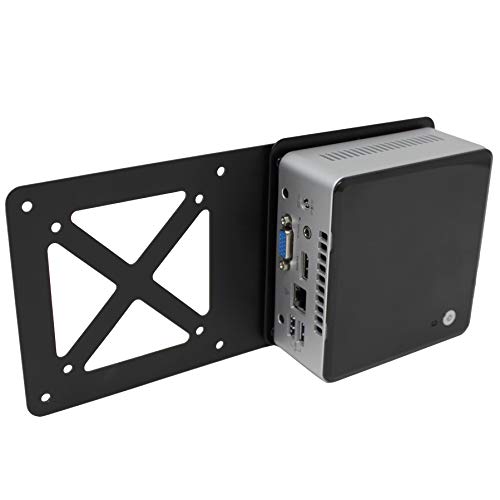
A single-node setup — a repurposed desktop or a compact Intel NUC mounted via a VESA bracket adapter — imposes finite maintenance scope. Adding nodes multiplies failure surfaces. Each additional service, storage volume, or network segment is a future incident waiting to be investigated.
The homelab community uses hardware profile as a rough proxy for operational maturity:
| Profile | Typical Scope | Maintenance Risk |
|---|---|---|
| Single mini-PC or NUC | Plex, Pi-hole, simple containers | Low — one failure point |
| 2–4 node cluster | Kubernetes, HA services, shared storage | Medium — networking and quorum complexity |
| Rack-mounted servers + NAS | Production-grade workloads, multi-TB storage | High — power, cooling, drive failure cycles |
| Dedicated networking gear + UPS | Firewall, VLANs, multiple uplinks | Very high — outages affect the whole home |
The pattern ServeTheHome and Hacker News infrastructure threads document repeatedly: hardware acquisition accelerates to match ambitions, and each tier upgrade imports the maintenance burden of the tier above it. A Wi-Fi router rebooter that automatically power-cycles a consumer gateway is a symptom, not a solution — it means the connectivity layer has become unreliable enough to warrant automation of what should be a non-event. Automating around instability adds a dependency rather than removing one.
For early homelab builders evaluating whether their hardware choices are proportionate, the 2026 hardware sanity check for a Ryzen 5 5600G build illustrates what a constrained, maintainable profile looks like before scope creep sets in.
Cost: Where Hobby Math Breaks Down
Electricity is the most underestimated recurring cost in homelab builds. Per U.S. Energy Information Administration residential rate data, the national average sits near $0.16/kWh. A single server drawing 150 watts continuously consumes approximately 1,314 kWh annually — roughly $210 per year before accounting for networking gear, NAS drives, UPS runtime, and any cooling.
Multi-server setups with high-wattage GPUs for local AI inference push that figure substantially higher. The break-even calculus depends heavily on the workload being displaced:
| Workload | Cloud Cost Analog | Annual On-Prem Power (est.) | Notes |
|---|---|---|---|
| Media server (Plex/Jellyfin) | $10–20/mo streaming subscriptions | $120–250 | Favors on-prem for large personal libraries |
| Local LLM inference | $20–100+/mo API spend | $300–600+ | Depends on GPU TDP and inference frequency |
| Self-hosted photo backup | $3–10/mo cloud storage | $100–200 | See Immich on a budget homelab |
| Kubernetes cluster | $50–200/mo managed cluster | $200–500 | Break-even requires sustained, heavy personal use |
When hardware depreciation, replacement drives, and the opportunity cost of maintenance time enter the equation, most homelab setups do not "save money" in any rigorous accounting sense. The honest framing is that the value is educational and recreational — and that framing is entirely valid, as long as the operator remains clear-eyed about it. The per-task cost analysis for Claude Sonnet 5 vs. a local RTX 3060 rig demonstrates how quickly the math changes when real electricity and hardware amortization costs are included.
Similarly, the DeepSeek V4 Pro cost-per-task comparison shows that the cloud-vs-local tradeoff is not static — it shifts with model efficiency, API pricing changes, and how much of the local rig's capacity is actually utilized.
Signs the Lab Has Crossed the Line
Community consensus on r/homelab, r/selfhosted, and Hacker News infrastructure threads identifies several concrete warning signals:
Maintenance consumes more time than new projects. The ratio of firefighting to building is an accurate diagnostic. If the past month's homelab activity consists entirely of incident responses rather than new capabilities, the lab has become operational work.
The lab creates obligations during personal time. Checking dashboards on vacation, fielding alerts during dinner, or structuring social plans around expected maintenance windows signal that the lab's implicit availability expectations have grown unrealistic for an unfunded hobby project.
Single points of failure now affect other people. The moment a homelab outage disrupts a partner's remote work connectivity or a family member's streaming session, the lab has acquired stakeholders who did not agree to hobby-grade SLAs. This is the most frequently cited trigger for the "it's become a job" feeling in community discussions.
The hardware investment creates psychological lock-in. Sunk-cost reasoning — "I've spent significant money on this, I can't let it sit idle" — drives continued maintenance past the point of enjoyment. The r/homelab community refers to this pattern as "rack creep": the gradual accumulation of gear that demands to be operated simply because it exists.
Troubleshooting dominates available lab time. Once a substantial fraction of available time goes to incident investigation rather than productive work or learning, the system generates more operational overhead than it returns in value. AI-assisted debugging workflows (as explored in the agentic Linux debugging piece) can reduce investigation time, but do not eliminate the underlying complexity.
Automation as the Primary Lever
The most durable solution to homelab burnout is not scaling back hardware — it is reducing manual intervention through automation. The Proxmox and Unraid communities document consistent patterns:
- Automated backups with Proxmox Backup Server or Borgmatic eliminate the most anxiety-producing maintenance task and reduce recovery time when — not if — drives fail.
- Container health checks and automatic restarts via Docker Compose restart policies or Kubernetes liveness probes handle the majority of transient service failures without human intervention.
- Monitoring with actionable alerts only — tools like Uptime Kuma with carefully tuned thresholds prevent alert fatigue. Alerting on every metric creates the perception of constant incidents where few real ones exist.
- Scheduled maintenance windows that batch updates and reboots prevent the drip of small interventions throughout the week.
Storage and hardware choices also affect long-term maintenance burden. The NVMe vs. SATA SSD analysis for local LLM model loading illustrates a broader principle: hardware that simplifies the operational profile — faster restarts, fewer bottlenecks — reduces the time cost of routine interventions. Similarly, understanding CPU offload behavior on a Ryzen 7 5800X with limited VRAM can inform whether a given workload is sustainable on existing hardware or whether it is generating instability that will require ongoing management.
For display and KVM management in multi-machine setups, even simple infrastructure like a VGA signal splitter can eliminate a category of manual switching overhead — a small example of the general principle that reducing friction in routine operations compounds over time.
Resetting the Lab to Hobby Status
For operators who have crossed the threshold and want to return the homelab to a hobby, the community playbook is consistent:
Scope reduction first. Identify which services are genuinely used versus which exist because the hardware can run them. Shutting down underutilized services removes monitoring surface and reduces the blast radius of any single failure.
Establish a "good enough" SLA. A personal homelab does not need five-nines availability. Accepting that a service can be down for hours without consequence eliminates an entire category of anxious monitoring behavior.
Treat hardware refresh cycles as optional. A modest, efficient platform that runs reliably is worth more for hobby purposes than a high-performance rig that requires constant attention. The first homelab hardware sanity check is worth revisiting periodically as a recalibration exercise.
Budget time explicitly. Setting a weekly cap on lab activity — and treating work that exceeds it as scope creep — is the same discipline applied in professional project management. The r/selfhosted community sometimes frames this as "treating your homelab like a product you do not own."
Use cloud for the boring parts. Offloading DNS, certificate management, or identity to managed services removes operational burden without ceding the interesting parts of the lab. The question is always which tier of the stack benefits from the control that self-hosting provides — and which merely inherits its maintenance burden. The cloud vs. local analysis applies well beyond AI inference.
The Sustainable Homelab
The homelab community's most satisfied long-term operators share a common characteristic: they run less than they could. A constrained, well-automated setup running three services reliably produces more satisfaction than a sprawling cluster that demands constant attention.
The transition from hobby to job is not a hardware threshold or a specific hours-per-week number. It is a psychological shift — from curiosity-driven exploration to obligation-driven maintenance. Identifying that shift early, and acting on it before burnout sets in, is what separates operators who still enjoy their labs years later from those who sold the gear and migrated everything to managed cloud providers.
FAQs
How many hours per week makes a homelab feel like a job? Community discussions on r/homelab suggest that when maintenance tasks — patching, monitoring, incident response — consume more time than new projects or learning, the lab has crossed from hobby into operational burden. The clearest behavioral signal is feeling obligated to monitor the lab during personal or vacation time.
Is running a homelab worth the electricity cost? It depends on the workload. Per U.S. Energy Information Administration residential rate data, a single server drawing 150 watts continuously consumes approximately 1,314 kWh annually — roughly $210/year at the national average of around $0.16/kWh. Media servers and self-hosted photo storage typically favor on-premises for large libraries. Local AI inference rigs require careful comparison with API pricing; the break-even varies significantly by GPU TDP and inference frequency.
How do I reduce homelab maintenance overhead without buying new hardware? Automation is the primary lever. Container restart policies, automated backup tools, and monitoring systems with carefully tuned alert thresholds eliminate the majority of routine manual tasks. Scope reduction — running fewer services — also reduces the number of potential failure points.
When should I consider scaling back my homelab? Common signals include: maintenance tasks dominating project time, lab outages affecting other household members who did not agree to hobby-grade availability, hardware investment creating psychological obligation to run underused services, and troubleshooting consuming the majority of available lab time.
Can automation fully replace manual homelab management? No. Automation handles routine tasks reliably but does not eliminate hardware failures, major version upgrades, or capacity planning — all of which still require direct operator involvement. The goal is eliminating unplanned interventions, not removing scheduled maintenance entirely.
What is the most common cause of homelab burnout? Community consensus points to scope creep: gradual accumulation of services and hardware beyond what the operator has time and interest to maintain. Each addition appears marginal in isolation; collectively they create a maintenance surface that exceeds available hobby hours.
Citations and sources
- https://www.reddit.com/r/homelab/
- https://www.reddit.com/r/selfhosted/
- https://www.eia.gov/electricity/monthly/
- https://www.servethehome.com/
- https://news.ycombinator.com/
- https://www.proxmox.com/en/proxmox-virtual-environment/overview
- https://github.com/louislam/uptime-kuma
This piece is editorial synthesis based on publicly available information. No independent first-party benchmarking is reported.