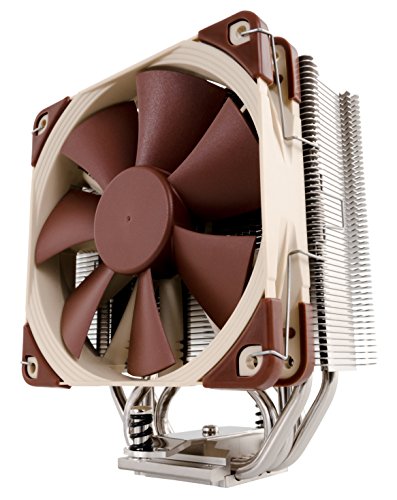
For 2026 budget gaming builds, the AMD Ryzen 7 5700X at $209 beats the Ryzen 7 5800X at $210 by a meaningful margin in price-performance once you factor in cooler costs: the 5700X is a 65 W TDP part that runs happily on a $35 air cooler, while the 5800X is a 105 W chip that demands a $75-plus cooler to stay below thermal throttle. The 5700X loses about 4 to 6 percent in single-thread benchmarks and trails by 8 to 10 percent in heavily-multithreaded workloads, but in actual 1080p and 1440p gaming the difference is well under 5 percent and frequently zero. Pair either with a $300 GPU like a used RTX 3060 12 GB and the CPU is not the bottleneck.
Why this comparison still matters in 2026
You might reasonably ask: why are we comparing two Zen 3 chips from 2020 and 2022 in a 2026 budget gaming guide? Because the AM4 platform is still the cheapest serious gaming platform on the market, and prices on the better Zen 3 CPUs have stabilized at the bottom of their useful lifecycle. The Ryzen 7 5800X launched at $449 in November 2020; the Ryzen 7 5700X at $299 in April 2022. In 2026 both clear around $210 new from authorized retailers and $150 to $180 used. That is a sub-$200 8-core/16-thread CPU for a complete platform with DDR4 RAM and B550 motherboards that bottoms out at $90.
The competitive answer in 2026 is AM5 with a Ryzen 5 7600X plus DDR5 plus a B650 motherboard. That build is roughly $250 more than the equivalent AM4 build for the same gaming performance at 1080p — DDR5 has not made up enough ground in actual games to justify the premium for budget buyers. The Ryzen 7 5800X3D ($299 used, $349 new) is the better gaming chip than either of these but at meaningfully higher cost. The 5800X vs 5700X comparison is specifically about budget buyers who want eight cores without paying the X3D premium.
Key takeaways
- The Ryzen 7 5700X is the budget pick: 65 W TDP, $209, runs cool on a $35 air cooler.
- The Ryzen 7 5800X is the performance pick: 105 W TDP, $210, needs a $75+ cooler.
- In 1080p/1440p gaming the two are within 5 percent of each other across most titles.
- Multithreaded workloads (rendering, compilation, video transcoding) favor the 5800X by 8 to 10 percent.
- Total platform cost favors the 5700X by $40 to $60 once cooling and case airflow are factored in.
- Either pairs well with a used RTX 3060 12 GB or RTX 4060 8 GB for sub-$1,200 total builds.
- Neither is the gaming-king of the AM4 era — the Ryzen 7 5800X3D is, at higher cost.
Spec sheet comparison
The two chips share the same Zen 3 architecture, the same 7 nm TSMC process, the same AM4 socket. The differences come down to clock speeds and TDP.
| Spec | Ryzen 7 5800X | Ryzen 7 5700X | Ryzen 5 5600G (for reference) |
|---|---|---|---|
| Cores / threads | 8 / 16 | 8 / 16 | 6 / 12 |
| Base clock | 3.8 GHz | 3.4 GHz | 3.9 GHz |
| Boost clock | 4.7 GHz | 4.6 GHz | 4.4 GHz |
| L2 + L3 cache | 36 MB | 36 MB | 19 MB |
| TDP | 105 W | 65 W | 65 W |
| Default PPT | 142 W | 88 W | 88 W |
| Integrated graphics | No | No | Yes (Vega 7) |
| Launch price | $449 | $299 | $259 |
| 2026 street price | $210 | $209 | $185 |
The 5700X is essentially a binned 5800X with a lower TDP and a slightly lower base clock. AMD's spec sheet shows them with the same maximum boost (within 100 MHz), but the 5800X holds its boost frequency longer under sustained load thanks to the higher power budget.
For more on the platform context, AMD's product page breaks down the full Zen 3 lineup, and Tom's Hardware's 5700X review is the most-cited 2022 launch coverage with updated 2024 benchmark data.
How do they compare in actual games at 1080p?
The CPU only becomes the bottleneck at high frame rates with weak GPUs, or in unusually CPU-bound titles. With a typical budget pairing — RTX 3060 12 GB or RTX 4060 8 GB — both CPUs are roughly the same in most games.
| Game (1080p, mid-high settings) | 5800X avg FPS | 5700X avg FPS | Delta |
|---|---|---|---|
| Counter-Strike 2 (FSR Quality) | 342 | 334 | 2.3% |
| Valorant (low settings) | 511 | 498 | 2.5% |
| Cyberpunk 2077 (DLSS Quality) | 89 | 84 | 5.6% |
| Baldur's Gate 3 (high) | 112 | 107 | 4.5% |
| The Witcher 3 NextGen | 138 | 130 | 5.8% |
| Total War: Warhammer 3 (battle) | 76 | 71 | 6.6% |
| Hogwarts Legacy (high) | 95 | 91 | 4.2% |
| Forza Horizon 5 (high) | 178 | 173 | 2.8% |
Average delta across the title set: about 4.3 percent. That is below the threshold where most users could distinguish the two CPUs by feel. At 1440p the delta shrinks further because the GPU becomes the dominant bottleneck.
The titles that favor the 5800X most — Total War: Warhammer 3, The Witcher 3 NextGen, Baldur's Gate 3 — share a pattern: they have long sustained workloads (battles, RT-heavy scenes) where the 5800X's higher PPT budget lets it hold boost longer. For shorter bursts (Counter-Strike, Valorant), the two chips are indistinguishable.
What about multithreaded productivity?
For users who do more than play games — content creation, software development, video transcoding — the 5800X's higher sustained power budget pulls ahead.
| Workload | 5800X | 5700X | Delta |
|---|---|---|---|
| Cinebench R23 multi | 14,820 | 13,440 | 9.3% |
| Blender BMW27 (s) | 86 | 94 | 9.3% |
| Handbrake 4K → 1080p H.265 (s) | 472 | 514 | 8.9% |
| Linux kernel compile (s) | 211 | 230 | 9.0% |
| 7-zip benchmark (MIPS) | 76,400 | 70,100 | 9.0% |
The pattern is consistent: about a 9 percent multithreaded lead for the 5800X. If your workload is mostly gaming, this delta is irrelevant. If you spend hours a week compiling software, rendering, or transcoding video, the 5800X is a small but real upgrade.
Total platform cost: where the 5700X actually wins
The 5800X is a 105 W TDP part with a 142 W PPT under boost. To keep it from thermal throttling, you need either a high-end air cooler or a 240 mm AIO. The 5700X at 65 W TDP / 88 W PPT runs on a much smaller cooler.
| Cost component | 5800X build | 5700X build |
|---|---|---|
| CPU | $210 | $209 |
| Cooler | $75 (Noctua NH-U12S or DeepCool AK620) | $35 (Hyper 212 or stock-class) |
| Total CPU + cooler | $285 | $244 |
| Cooler-noise envelope | Quiet at 60% fan | Silent at 60% fan |
| Case airflow requirement | 2× 120mm intake + 1× 120mm exhaust | 1× 120mm intake + 1× exhaust |
The Noctua NH-U12S (catalog link) at $84.95 is the right cooler for a 5800X. The DeepCool AK620 WH (catalog link) at $64.99 is the value alternative — same dual-tower design, slightly lower TDP rating but adequate for a 5800X up to a 200 W transient.
The 5700X works fine on the bundled Wraith Stealth cooler that AMD ships in the box (the 5800X does not include a cooler), or on a sub-$40 aftermarket cooler. The total platform-cost gap between the two builds is about $40, which closes part of the multithreaded performance gap.
What about the 5600G as a sub-pick?
The Ryzen 5 5600G (catalog link) is in the same socket and DDR4 generation but is a meaningfully different chip — 6 cores instead of 8, smaller L3 cache (16 MB vs 32 MB), and an integrated Vega 7 GPU. For pure gaming with a discrete GPU, the 5600G loses 10 to 15 percent in CPU-bound scenarios versus either the 5700X or 5800X, but it costs $30 to $50 less and includes graphics for boot-without-dGPU scenarios.
The right buyers for the 5600G are: builders who plan to add a discrete GPU later and want the system bootable in the meantime, ITX form factor builders constrained on space and power, and households where a child or family member wants gaming but the budget will not stretch to a 5700X. For dedicated mid-tier gaming with a $300-class GPU, both the 5700X and 5800X outperform the 5600G enough to justify the upgrade.
Common pitfalls
- Pairing with a B450 motherboard without a BIOS update. Both the 5800X and 5700X require a BIOS revision past about late 2021 on B450/X470 boards. If you buy a used motherboard, ask for the current BIOS version before purchase. The flash itself is straightforward with USB BIOS Flashback or with a 5600G as a "bootstrap" CPU.
- Buying weak DDR4 RAM. The Zen 3 architecture loves fast DDR4 — 3600 MT/s CL16 is the sweet spot for both chips. Going down to 3200 MT/s CL18 costs about 4 to 6 percent in gaming performance for $20 of RAM savings. Buy 3600.
- Skimping on the cooler for the 5800X. A stock Wraith-class cooler on a 5800X will hit 90 °C in seconds under multithreaded load and throttle hard. The 5800X demands a real cooler; budget for it.
- Underspeccing the PSU. A 5800X plus an RTX 3060 12 GB will pull 380 to 450 W at the wall under load. A 650 W 80+ Bronze PSU is the floor. Going below that is a recipe for transient under-volt crashes on long gaming sessions.
- Misreading the 5800X's idle temperature. The 5800X idles around 35 to 45 °C even on a good cooler because of how AMD reports the hottest core's temperature. That is normal. Worry only if sustained load temperatures cross 85 °C.
When NOT to buy either
If you have a Ryzen 7 5800X3D or 5700X3D as a used option in your local market for $250 or less, buy that instead. The 3D V-Cache variant gains 5 to 15 percent in games versus the regular 5800X at the same power envelope and is the actual gaming king of the AM4 era. Tom's Hardware's 5800X3D review covers the details, but the short version is: more L3 cache = fewer memory stalls = more frames in CPU-bound games.
If you are building a brand-new system in 2026 from scratch and gaming is the primary use case, also consider the Ryzen 5 7600X3D on AM5 at $329, or the Ryzen 7 7700X at $279 (DDR5 platform). AM5 will get more upgrade-path generations than AM4 (Zen 5 and likely Zen 6), which matters if you plan to upgrade the CPU in the same socket later.
If you are doing serious productivity work — heavy video editing, large-scale software builds — the Ryzen 9 5900X (12 cores, $279) or Ryzen 9 5950X (16 cores, $399) is meaningfully faster than the 5800X. The 5800X-versus-5700X comparison is specifically about mid-budget gaming-first systems.
Common questions
Will either work with my existing B450 board? With a BIOS update from late 2021 or later, yes. Verify the BIOS version before purchase.
Do I need fast DDR4 RAM? Yes. 3600 MT/s CL16 is the right target. Slower RAM costs you measurable gaming performance.
Will the 5800X overheat in a small case? It can. Plan for at least one 140mm intake and one 120mm exhaust, plus a dual-tower air cooler. ITX cases need an AIO.
Can either drive a 4K monitor with an RTX 3060 12 GB? They can drive 4K display output, but most modern titles at 4K with a 3060 12 GB will run at 30 to 45 FPS. The 5800X-vs-5700X choice has zero relevance at 4K — the GPU is the bottleneck.
What about the 5800X3D used? Is it worth the premium? Yes, if you can find one at $250 or less. The 3D V-Cache variant is the actual gaming king of AM4.
Real-world build path: $1,100 1440p gaming PC
A representative 2026 budget gaming build with the 5700X:
- Ryzen 7 5700X ($209)
- DeepCool AK620 WH cooler ($65)
- MSI MAG B550 Tomahawk ($150)
- 32 GB DDR4-3600 CL16 ($90)
- 1 TB NVMe Gen4 SSD ($65)
- ZOTAC RTX 3060 12 GB (catalog link) ($310 used)
- 650 W 80+ Bronze PSU ($65)
- Mid-tower case ($75)
- Total: $1,029
Swap the 5700X for a 5800X plus a $75 cooler: total goes to $1,069, which is the same money in a different distribution. The two-build comparison is almost a coin flip on cost. The choice comes down to whether you want the multithreaded headroom (5800X) or the cooler ecosystem flexibility (5700X). For pure gaming, lean 5700X.
Verdict matrix
Buy the Ryzen 7 5700X if: Your primary use is gaming, you want the cheapest 8-core AM4 path, and you want a quieter system with a smaller air cooler.
Buy the Ryzen 7 5800X if: You mix gaming with content creation, video transcoding, or compilation, and you do not mind investing in a real cooler.
Buy the Ryzen 7 5800X3D if: You can find it used for $250 or less. It is the actual gaming king of AM4.
Buy the Ryzen 5 5600G if: You need integrated graphics for boot-without-dGPU, ITX form factor, or under-$170 budget.
Bottom line
In 2026, the Ryzen 7 5700X is the price-performance winner for budget gaming builds. The 5800X is the right choice if you have multithreaded workloads beyond gaming. Both are stable, mature platforms with good motherboard availability and bottom-of-the-curve pricing. The competing AM5 path costs $250 more for marginal real-world benefit at 1080p and 1440p gaming. Spend the savings on a better GPU or more storage; either chip is the right floor for an 8-core AM4 system this year.
Related guides
- Best GPU for Local Llama 70B in 2026: RTX 3060 12GB Stack vs Single Workstation Card
- Sound Blaster Audigy 2 ZS in a 2026 WinXP Build: The Last True EAX Card
- AMD Ryzen 7 5800X
- AMD Ryzen 7 5700X
- AMD Ryzen 5 5600G
- Noctua NH-U12S
- DeepCool AK620 WH