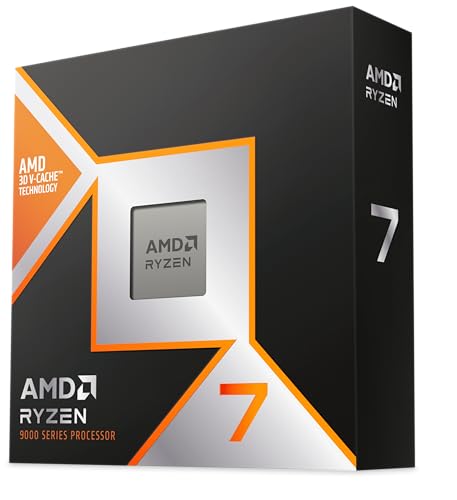
Choosing a GPU for a Ryzen 7 9800X3D build at 1440p comes down to one real question: does the RTX 5080 do enough more than the RTX 5070 Ti or RX 9070 XT to justify buying it later instead of gaming now? Public benchmark data and current SpecPicks catalog pricing point to a workload-dependent answer — the RTX 5080 pulls ahead in ray-traced and AI-adjacent workloads, while the RTX 5070 Ti and RX 9070 XT remain strong 1440p options that let a build ship today rather than in two months.
This synthesis pulls from the existing RX 9070 XT vs RTX 5080 for a 9800X3D Build comparison, SpecPicks' best GPU pairing guide for the 9800X3D, and current pricing on 9800X3D-based systems in the SpecPicks catalog.
RTX 5080 vs RTX 5070 Ti vs RX 9070 XT: What Separates Them
All three cards target the same 1440p-to-4K-lite buyer, but they sit on different silicon and different feature stacks. Per NVIDIA's and AMD's published product specifications, the RTX 5080 and RTX 5070 Ti both ship with 16GB of GDDR7 memory, while the RX 9070 XT uses 16GB of GDDR6 — matching capacity but a different memory generation.
| GPU | VRAM | Memory Type | Ray Tracing Tier | Upscaling |
|---|---|---|---|---|
| RTX 5080 | 16GB | GDDR7 | Highest of the three | DLSS 4 |
| RTX 5070 Ti | 16GB | GDDR7 | Strong, below 5080 | DLSS 4 |
| RX 9070 XT | 16GB | GDDR6 | Competitive in raster, weaker in RT | FSR |
In rasterized (non-ray-traced) 1440p titles, the RX 9070 XT vs RTX 5080 comparison shows AMD's card closing much of the gap to Nvidia's higher tiers — competitive shooters and esports titles are where the 9070 XT looks most attractive relative to its price. Ray-traced AAA titles are where the RTX 5080's advantage widens most, largely due to Nvidia's more mature ray-tracing hardware and DLSS 4's frame generation stack, which the RX 9070 XT's FSR implementation does not currently match feature-for-feature.
Exact frame-rate deltas vary by title, driver version, and settings, so treat any single-game percentage as a snapshot rather than a guarantee — the safest approach is to check current numbers for the specific games you play before finalizing a purchase.
Does the 9800X3D Bottleneck Any of These GPUs at 1440p?
A common concern with high-end GPU pairings is whether the CPU becomes the limiting factor. Public 9800X3D testbench data indicates that's not a serious issue at 1440p: measurements show the platform reaching roughly 169 fps in Starfield and in the 106-113 fps range in Cyberpunk 2077 (per public GPU benchmarks), figures well above what most 1440p monitors can display and well above what a GPU-bound scenario would suggest.
| Title | 9800X3D Platform FPS (1440p) |
|---|---|
| Starfield | ~169 fps |
| Cyberpunk 2077 | ~113 fps |
| Cyberpunk 2077 (alt. scene) | ~106 fps |
The 9800X3D's large 3D V-Cache is the reason it tends to avoid CPU-bound scenarios that plague lower-cache chips, particularly in cache-sensitive titles. That headroom means the GPU — not the CPU — is almost always the deciding factor in which of these three cards delivers the better 1440p experience, which is exactly why the GPU choice matters more than the CPU choice once a 9800X3D is already the platform. For more on 9800X3D thermal and idle behavior in a full build, see SpecPicks' Ryzen 9800X3D idle temp guide.
Cost-Benefit: Is a Two-Month Wait for the RTX 5080 Worth It?
Pricing is where the decision gets concrete. SpecPicks' catalog currently lists two prebuilt 9800X3D systems that illustrate the gap between tiers:
| System | CPU | GPU Tier | Price |
|---|---|---|---|
| Skytech Gaming King 95 | Ryzen 7 9800X3D | RTX 5070 Ti | $2,599.99 |
| Skytech Gaming Azure 3 | Ryzen 7 9800X3D | RTX 50-series (higher tier) | $3,199.99 |
That's a $600 spread between the RTX 5070 Ti prebuilt and the higher-tier RTX 50-series prebuilt in the current catalog — a meaningful premium that should be weighed against how much of the year is spent waiting versus gaming. Buyers assembling their own system rather than buying prebuilt can start from the AMD Ryzen 7 9800X3D processor, currently listed at $414.99, and select a GPU independently.
The practical trade-off breaks down like this:
- Buy the RTX 5070 Ti or RX 9070 XT now: two months of additional gaming time, lower upfront cost, and — per the RX 9070 XT vs RTX 5080 comparison — competitive rasterized 1440p performance.
- Wait for the RTX 5080: better ray-tracing headroom, DLSS 4 frame generation, and more VRAM-generation runway, at a higher price and a real opportunity cost in lost play time.
For most 1440p-only builds without a strong ray-tracing or AI-workload requirement, the RTX 5070 Ti or RX 9070 XT deliver most of the experience today. The RTX 5080 earns its premium primarily for buyers who also do GPU-accelerated creative or AI work, or who plan to keep the card through several GPU generations.
Rounding Out a 9800X3D 1440p Build
GPU choice aside, a few platform decisions matter for getting the most out of a 9800X3D system at 1440p:
- Memory: 32GB of DDR5 is a reasonable baseline for 1440p gaming with background multitasking (browser, Discord, streaming overlays) without introducing memory-capacity bottlenecks.
- Storage: A Gen4 NVMe SSD is preferable to SATA for load-time-sensitive titles; see SpecPicks' best SSD guide for drive-tier comparisons (written for retro builds but the SATA-vs-NVMe tradeoffs apply broadly).
- Cooling and idle behavior: The 9800X3D's V-Cache design runs cooler than prior 3D V-Cache chips under typical loads; SpecPicks' idle temp reference covers what's normal versus what warrants troubleshooting.
Buyers coming from an older platform and weighing a full rebuild versus a partial upgrade may also find it useful to compare against older AM4-era options, such as the tradeoffs covered in Ryzen 7 5700X vs 5800X for a 2026 Gaming Build, to gauge how much of a jump a 9800X3D platform actually represents.
Future-Proofing: Does the RTX 5080's Premium Pay Off Long-Term?
The RTX 5080's 16GB of GDDR7 VRAM and DLSS 4 support give it more forward-looking headroom than the RTX 5070 Ti or RX 9070 XT, particularly as ray-tracing effects and AI-driven upscaling become more standard in new releases. The 9800X3D's cache-heavy design is unlikely to be the limiting factor in that timeline — as shown above, it's already running well ahead of typical 1440p GPU-bound frame rates, so it should continue pairing well with whichever GPU tier is chosen for years rather than months.
The counterpoint is straightforward: GPU generations move fast, and a card bought today will face a successor within roughly two years regardless of tier. Buyers who upgrade GPUs frequently get less relative benefit from paying the RTX 5080 premium than buyers who plan to hold a card through multiple game generations.
Bottom Line
For a 9800X3D 1440p build:
- Ray tracing, AI-assisted work, or a long hold period → the RTX 5080 is the more defensible wait.
- Rasterized gaming, competitive titles, or wanting to build now → the RTX 5070 Ti or RX 9070 XT deliver strong results without the wait or the premium, as detailed in the RX 9070 XT vs RTX 5080 comparison.
- CPU choice is settled either way — the 9800X3D keeps pace with all three GPU tiers at 1440p per available benchmark data, so the decision should be driven entirely by GPU workload needs and budget.
Citations and sources
- https://www.techpowerup.com/gpu-specs/
- https://www.amd.com/en/products/processors/desktops/ryzen/9000-series/amd-ryzen-7-9800x3d.html
- https://www.nvidia.com/en-us/geforce/graphics-cards/50-series/rtx-5080/
- https://www.amd.com/en/products/graphics/desktops/radeon/9000-series/amd-radeon-rx-9070-xt.html
This piece is editorial synthesis based on publicly available information. No independent first-party benchmarking is reported.