Retiring a GTX 1080 for 1440p 180Hz gaming with an i7-13700K comes down to a short list of realistic pairings: the RTX 4070 for the strongest all-around 1440p performance, the RTX 4060 Ti 16GB or RX 7600 XT for a tighter budget, and enough PSU and cooling headroom to keep the 13700K's higher power draw in check. The 13700K itself is not the limiting factor at 1440p — the GPU generation gap between Pascal-era Nvidia and today's mid-range cards is.
Why the GTX 1080 Is the Actual Bottleneck, Not the 13700K
The GTX 1080 launched in 2016 on Nvidia's Pascal architecture with 8GB of GDDR5X, according to TechPowerUp's GPU specification database. It predates DLSS, hardware ray tracing, and the memory-bandwidth improvements found in every current-generation card. An i7-13700K paired with that GPU is spending most of its clock cycles waiting on a card that simply can't push modern titles past 100 FPS at 1440p in anything demanding, let alone sustain a 180Hz refresh rate.
The good news: the 13700K's 8 performance cores and 8 efficiency cores are not the constraint. At 1440p, frame rate scaling is overwhelmingly GPU-bound once you move past a modern 6-core CPU, which is a pattern consistently reflected in Tom's Hardware's GPU hierarchy rankings. Upgrading the GPU alone, without touching the CPU or motherboard, is the correct move here.
Top GPU Pairings for a 13700K at 1440p 180Hz
| GPU | VRAM | Segment | Best fit |
|---|---|---|---|
| RTX 4070 | 12GB GDDR6X | Upper mid-range | Best overall 1440p 180Hz consistency, DLSS 3.5 support |
| RTX 4060 Ti 16GB | 16GB GDDR6 | Mid-range | Budget-conscious build with headroom for VRAM-heavy textures |
| RX 7600 XT | 16GB GDDR6 | Mid-range | Value pick, strong in rasterized (non-ray-traced) titles |
Per TechPowerUp's listing for the RTX 4070, the card carries a 200W typical graphics power (TGP) rating and 12GB of GDDR6X on a 192-bit bus. It sits in the tier Tom's Hardware's GPU hierarchy places above both the RX 7600 XT and the RTX 4060 Ti 16GB in raw rasterized throughput, which is the single biggest factor in hitting a 180Hz target consistently across a game library rather than in cherry-picked titles.
The RX 7600 XT and RTX 4060 Ti 16GB trade blows depending on the title and API — AMD's card benefits from its extra VRAM in texture-heavy open-world games, while Nvidia's card carries DLSS Frame Generation support that specifically targets higher perceived frame rates in supported titles. Neither is a clean win over the other; the RTX 4070 is the safer buy if the budget stretches that far and 180Hz consistency matters more than saving $50-100.
For readers coming from an even older platform or working with a tighter budget, Best Budget PC Gaming Upgrades Under $200 in 2026 and RX 580 in 2026: Still Worth It for 1080p Gaming? cover lower rungs on the same upgrade ladder, though neither of those cards is a realistic 1440p 180Hz option.
DLSS, FSR, and Actually Hitting 180 FPS
A 180Hz panel doesn't require native-resolution 180 FPS in every title to feel smooth — upscaling and frame generation exist precisely to close that gap. Nvidia's RTX 4070 product page documents DLSS 3.5 support, including Frame Generation, in a growing list of titles. AMD's RX 7600 XT product page documents FSR support with similar goals, though AMD's frame-generation feature set has historically lagged Nvidia's in per-title adoption.
The practical takeaway: if the game library leans heavily on newer AAA titles with day-one DLSS or FSR support, the RTX 4070 or RTX 4060 Ti 16GB will hit 180Hz more reliably. If the library is older or esports-focused, native rasterization performance matters more and the gap between the three cards narrows considerably. For readers curious how a lighter esports-focused build compares, Ryzen 7 5800X vs Core i7-9700K for 1080p Esports in 2026 and RTX 3060 12GB vs Ryzen 5 5600G iGPU: Do You Need a GPU for 1080p Esports? tackle that lower tier directly.
Power Supply Requirements
| Card | Manufacturer-recommended PSU | Notes |
|---|---|---|
| RTX 4070 | 650W | Per Nvidia's RTX 4070 page |
| RTX 4060 Ti 16GB | 550W | Lower TGP than the 4070; check TechPowerUp for board-partner variance |
| RX 7600 XT | 650W | Per AMD's RX 7600 XT page |
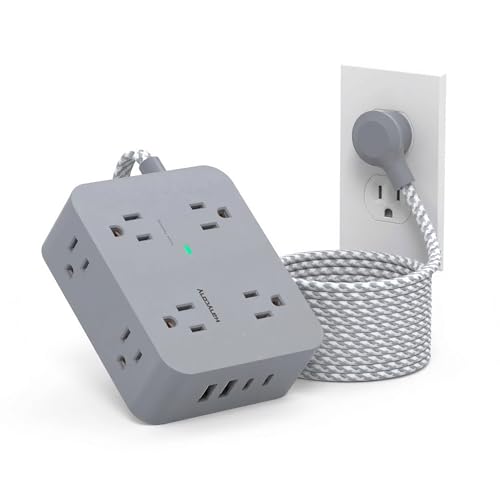
Those figures are manufacturer minimums for the GPU alone and don't fully account for an unlocked i7-13700K, which can draw well above its base TDP under sustained all-core load when left at stock power limits in a K-series motherboard's default profile. A GTX 1080-era PSU in the 550-650W range may technically survive an RX 7600 XT or RTX 4060 Ti pairing, but a fresh 750W 80+ Gold unit is the safer long-term choice for an RTX 4070 build, particularly with an aging PSU whose capacitors and rails have already logged years of use. A quality surge protector at the outlet is a cheap insurance policy on top of that, especially for a build that's about to draw meaningfully more power than the outgoing GTX 1080 system did.
Cooling and Storage While You're In There
An upgrade like this is also a reasonable point to address two adjacent bottlenecks: storage and thermals. If the current system is still running on a mechanical drive or an aging SATA SSD, adding a drive like this 2TB SATA SSD removes load-time stutter that a faster GPU won't fix on its own. On the thermal side, a 13700K under sustained gaming load benefits from solid case airflow; readers building in a small home office or bedroom sometimes supplement case fans with a standalone unit like this tower fan to keep ambient room temperature from creeping up during long sessions, which indirectly helps case intake temps stay lower.
For a broader look at what else is worth upgrading alongside the GPU on an aging platform, see Best Upgrades for a DDR4 Gaming PC in 2026. And if the 13700K itself ever becomes the question rather than the GPU, 7800X3D vs 5700X3D: Is the AM5 Upgrade Worth It? and Ryzen 5 5600G vs Core i7-9700K for 1080p Gaming cover CPU-side tradeoffs on adjacent platforms.
Don't Forget the Monitor Side
A 180Hz target is only as good as the panel receiving the signal. Readers still shopping for the display half of this build should check 1440p 500Hz QD-OLED Monitors: 2025 Round-Up — a panel with more headroom than 180Hz means the GPU choice here has room to grow into higher refresh rates on a future upgrade without another monitor purchase.
Bottom Line
For an i7-13700K targeting 1440p 180Hz, the RTX 4070 is the strongest all-around pairing per public GPU hierarchy rankings, with the RTX 4060 Ti 16GB and RX 7600 XT as credible budget alternatives depending on whether DLSS Frame Generation support or extra VRAM matters more for your game library. Budget for a 750W 80+ Gold PSU if going the RTX 4070 route, and don't skip a storage or airflow check while the case is open — the GTX 1080 was likely the bottleneck on more than just frame rate.
Citations and sources
- TechPowerUp — GeForce RTX 4070 Specifications
- TechPowerUp — Radeon RX 7600 XT Specifications
- TechPowerUp — GeForce RTX 4060 Ti 16GB Specifications
- Tom's Hardware — GPU Hierarchy
- Nvidia — GeForce RTX 4070 Family
- AMD — Radeon RX 7600 XT
This piece is editorial synthesis based on publicly available information. No independent first-party benchmarking is reported.