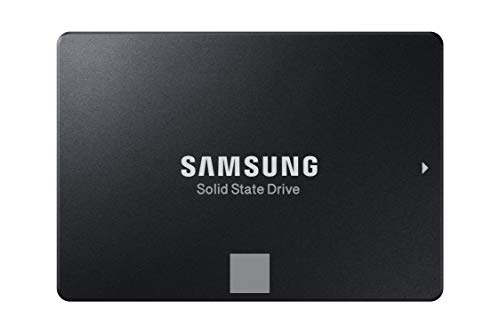
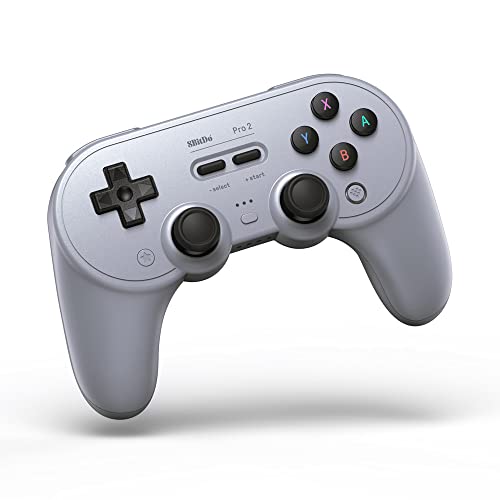
For a couch gaming PC in 2026, pair a 1TB SATA SSD such as the Crucial BX500 1TB (or step up to a Samsung 860 EVO 2TB if your library is bigger) with a wireless PlayStation DualSense for the mainstream pick, an 8BitDo Pro 2 for the Steam-heavy player, or a wired GameSir G7 SE for competitive input latency. Store the whole kit in an ivoler all-in-one carrying case if you move between rooms.
The couch PC audience: two things people get wrong
A living-room gaming PC is not a re-badged desktop. Sitting ten feet from a TV changes what actually matters — text becomes unreadable at desktop scaling, cable management becomes visible, and the two components you handle every session (the drive that loads your games and the controller in your hands) become the difference between "cool setup" and "annoying to use." Storage and input are exactly the parts people underspend on.
The tempting mistake on storage is to reuse the tiny 250GB SSD from a previous build because "games can go on external anyway." That works for two weeks, until the third AAA title fills the drive and you spend a Saturday moving 80GB across a slow bus. The tempting mistake on input is to grab whichever controller was on sale — usually a bargain-brand pad with sticks that develop drift inside a season. Both are false economies that show up every single time you sit down to play.
This guide is a straight look at the right SSD-plus-controller pairing for a 2026 couch gaming PC, with concrete part picks, the numbers that actually differ between them, and a "when to spend more" line that respects that this is a secondary rig, not a competitive esports desktop.
Key takeaways
- A SATA SSD is fast enough for the overwhelming majority of PC games — NVMe helps very few titles noticeably.
- Get to 1TB minimum; step up to 2TB the moment your library hits ~15 installed AAA games.
- Wireless controllers are the right default for couch use; the latency difference vs wired is small in single-player.
- The DualSense is the mainstream best-pick because of trigger feel, gyro, and Steam Input support.
- Wired controllers still win for competitive play and for anyone who hates changing batteries.
- Storing the whole kit (SSD upgrade parts, cables, spare controller, HDMI extension) in one small case pays for itself the first time you rearrange the room.
Step 0: diagnose your bottleneck — is it load times, library size, or input lag?
Before you buy anything, name the problem. There are three actual complaints about a couch PC, and they map to different parts:
- "Games take forever to load." Almost always a storage-tier problem — you are on a spinning drive, a very old SATA SSD, or a full drive that has run out of overprovisioning. Fix it with any current 1TB+ SATA SSD; you will see 3–10× improvement for zero configuration effort.
- "I can only fit five games." Capacity, not speed. Move to 2TB. This is the single biggest quality-of-life upgrade for anyone with a modern game library.
- "My controller feels laggy / drifting / dead battery." Input problem, and it is the one that ruins sessions. Skip the sub-$25 tier entirely; the price-to-durability curve is nonlinear below about $40.
Buy in that order. A blazing-fast NVMe on a system that boots to a controller with stick drift is a bad experience despite the storage upgrade.
Does a SATA SSD still make sense for a 2026 gaming library?
Yes, for almost every use case. The public conversation about PC storage has been about DirectStorage and PCIe 5.0 NVMe drives for two years, and it has left an impression that SATA is obsolete. It is not — it is the correct tier for a couch gaming PC in 2026, for three reasons.
First, the game engine bottleneck. Very few titles as of 2026 saturate SATA-III's ~550 MB/s ceiling for load-time reads. Most titles are limited by decompression on the CPU side, texture unpacking, or shader compilation — all of which happen after the read completes. Moving from SATA to NVMe collapses the read portion of that pipeline to milliseconds but does not touch the parts that dominate real load time.
Second, the couch use case rarely stresses the drive. You are not compiling code or running a database on it; you are booting Windows, loading a game once, and then reading textures on demand as you play. SATA handles that with plenty of margin.
Third, the cost delta at 1–2TB tiers is meaningful. A Crucial BX500 1TB or a Samsung 860 EVO 2TB costs a fraction of a same-capacity flagship NVMe — money you can put toward the controller or a larger monitor. Crucial's product page has the endurance and warranty numbers for the BX500; Samsung's 870 EVO page is a useful cross-reference for the current-gen SATA line and its five-year warranty. See Tom's Hardware for the load-time benchmarks that back up the "NVMe is small on games" claim.
Where NVMe wins: PS5-generation ports that were designed against console SSD bandwidth (a handful of first-party Sony titles), and any workload where cold-boot-to-menu time under three seconds matters. If neither of those describes your usage, SATA is the right tool.
Spec-delta table: the SATA options that make sense
Four drives cover the couch-PC storage range. The Samsung 870 EVO 250GB is included as a "what to skip" reference — 250GB is too small for a 2026 library, and the price-per-GB curve punishes small capacities. The SanDisk SSD Plus 480GB is a "when nothing else is available" fallback.
| Model | Capacity | Interface | Endurance (TBW) | Warranty | Price tier |
|---|---|---|---|---|---|
| Crucial BX500 1TB | 1TB | SATA III | 360 TBW | 3-year | budget |
| Samsung 860 EVO 2TB | 2TB | SATA III | 1200 TBW | 5-year | value |
| Samsung 870 EVO 250GB | 250GB | SATA III | 150 TBW | 5-year | skip |
| SanDisk SSD Plus 480GB | 480GB | SATA III | ~250 TBW | 3-year | fallback |
Read this as follows. The BX500 1TB is the correct starting point for a fresh build with a modest library. It is not the fastest SATA SSD ever made, but its sequential read comfortably saturates the interface for game loads and its 360 TBW endurance is far more than a gaming workload will ever touch in the warranty window. The 860 EVO 2TB is the value pick — the extra dollars per gigabyte are worth it if your Steam library is above 15 installed titles or if you are the household member who "just installs the whole franchise." The 870 EVO 250GB is too small to bother; you will replace it inside a year, and the small-capacity price penalty means you did not save money going in. The SanDisk SSD Plus 480GB is a "the store had one" pick — fine as a boot drive, not a great home for your library.
How big does your game library actually get?
Real numbers, mid-2026:
- Typical AAA action title: 60–90GB
- Modern open-world with high-res texture pack: 100–160GB
- Live-service shooter with multiple map packs: 90–120GB
- Indie title: 1–20GB
- Console-parity RPG with cutscene assets: 60–110GB
At 80GB per average AAA game, a 1TB drive holds roughly ten large games plus the Windows install and a couple of dozen indies. That sounds like a lot until you count the titles you actually play across a year — for many households it is exactly the boundary where you routinely uninstall something to make room for a new release. If that describes you, jump to 2TB and stop rearranging the digital furniture.
Genre matters too. Sim-heavy libraries (flight sims, driving sims with high-fidelity car packs) blow through storage faster than a shooter-only library. RPG-heavy libraries stay installed longer per title, so cumulative usage grows even without new installs.
Which controller fits couch play best?
Three controllers cover almost every 2026 couch-PC use case, and they are meaningfully different despite similar price points.
The <strong>PlayStation DualSense</strong> is the mainstream pick. Its haptic feedback and adaptive triggers work in every game with proper Steam Input support (which is nearly every modern title), its ergonomics are the best of the three for long sessions, and its gyro-aim is the standard for shooters that want extra precision. Battery life is fine but not remarkable — plan on a top-up every two to three long sessions. The main tradeoff is that Bluetooth pairing is fiddlier than the other two, and Steam's DualSense integration is polished but occasionally needs a driver refresh.
The <strong>8BitDo Pro 2</strong> is the Steam-heavy player's pick. It is smaller than the DualSense, has fully remappable back paddles and profile switches for per-game configurations, and its Steam integration is bulletproof — Big Picture recognizes it instantly. It has a switchable Xbox/Switch/Direct mode that matters if you also play emulated titles or Nintendo-first games. Its downsides: no rumble triggers, sticks are good but not DualSense-tier, and the buttons feel a touch mushier.
The <strong>GameSir G7 SE</strong> is the wired-only pick. Its input latency is the lowest of the three by a small but measurable margin, it has Hall-effect sticks that will not drift, and it is Xbox-standard so every PC game recognizes it without configuration. If your play skews competitive (shooters where reaction time is scored) or if you have burned through controllers with stick drift and want the last one you buy for a while, this is the answer. The obvious tradeoff is the cable — for a couch setup you need enough length to reach from the PC to the sofa, and USB-A extension cables above four meters get flaky.
Wired vs wireless latency: the honest number
Wireless controllers add roughly 4–8ms of input latency vs wired. In competitive shooters at high refresh rates that is measurable and, for the top few percent of players, meaningful. In single-player games, RPGs, and anything with turn-based or paced action, it is imperceptible. Do not choose wired because "it's lower latency" if your workload is single-player — choose wired because you like never worrying about batteries.
Verdict matrix: pick the controller by use case
- Get the DualSense if… you play a mix of games including modern AAA single-player titles that use adaptive triggers, you want the best ergonomics for long sessions, and you can tolerate charging it every few sessions.
- Get the 8BitDo Pro 2 if… your library is Steam-heavy, you value remappable back paddles for per-game profiles, you play a lot of emulated or older titles, and you want the smallest good controller.
- Get the GameSir G7 SE if… you play competitive shooters, you refuse to ever deal with stick drift again, you already have a cable-friendly setup, or you just prefer wired hardware on principle.
If you are buying two controllers for local co-op, mix them — a DualSense for player one and an 8BitDo Pro 2 for player two is a great couch loadout because Steam handles the mixed input without any fuss.
Storage and travel: keeping the setup tidy
The unglamorous problem with a couch PC is where all the accessories live between sessions. A wireless controller, a charging cable, a wired-mode USB cable, a spare HDMI, a small screwdriver kit, and the sleeve for whichever drive you have not installed yet — that pile grows fast. The ivoler all-in-one carrying case is a Switch 2 accessory but its layout works cleanly for a controller-plus-cables kit, and it stops the pile-on-the-coffee-table problem.
If you frequently move the PC between rooms (e.g. between a bedroom and living room), a case that holds every accessory turns a fifteen-minute reset into a two-minute one. That is not a spec upgrade, but it is why the couch setup gets used.
What you'll need checklist
Before you order parts, confirm:
- Free SATA port — modern motherboards typically have 4–6. If you are already at capacity, you need an M.2-to-SATA adapter or you should reconsider the NVMe route.
- Free 2.5" mounting bracket or cage — most cases include at least one. Some HTPC cases pre-2020 have only 3.5" bays; you will need a 2.5"-to-3.5" adapter tray ($5, universally available).
- SATA data cable and power cable — a data cable ships with most drives but not all. Confirm your PSU has a free SATA power connector.
- Controller pairing prerequisite — for Bluetooth pairing, Windows 10/11 with an internal Bluetooth adapter or a small USB dongle. Wired controllers just need a USB-A port.
- HDMI length — measure from PC to TV. A four-meter HDMI 2.1 cable covers most setups; an in-wall run needs an active cable.
Perf-per-dollar math: cost per terabyte and cost per hour of use
Storage cost math, mid-2026:
| Drive | Price | $/TB |
|---|---|---|
| BX500 1TB | ~$60 | $60/TB |
| 860 EVO 2TB | ~$150 | $75/TB |
| Entry-tier NVMe 1TB | ~$85 | $85/TB |
| Flagship PCIe 4.0 NVMe 2TB | ~$220 | $110/TB |
The 2TB SATA sits in a genuinely sweet spot: nearly the lowest $/TB in the market, plenty of endurance, no thermal throttling to worry about (unlike some hot-running NVMe drives in HTPC cases with poor airflow), and the interface is fast enough for gaming loads.
Controller cost per hour of use is silly to calculate directly, but consider durability. A $30 bargain controller that develops stick drift at four months is not cheaper than a $75 DualSense that lasts three years — it is more expensive on the timescale that matters.
Recommended pick paragraph
The default couch-PC bundle in 2026: a Crucial BX500 1TB if your library is under ten installed AAA games, or a Samsung 860 EVO 2TB if it is not; paired with a PlayStation DualSense for the mainstream player, an 8BitDo Pro 2 for the Steam-heavy player, or a GameSir G7 SE for anyone who plays competitive shooters or is done with stick drift. Add the ivoler carrying case if you move the setup between rooms.
Bottom line
- Storage: 1TB SATA is the correct floor; 2TB SATA is the right ceiling for most couch PCs. Skip NVMe unless a specific title in your library documents a benefit.
- Controller: wireless DualSense for the mainstream setup; wired GameSir G7 SE for competitive play; 8BitDo Pro 2 if you live in Steam Big Picture and want back paddles.
- Do not underspend the controller. It is the part you hold every session, and the bargain tier fails inside a season.
- Buy the accessory case. The setup gets used more often when it does not require assembly.
Related guides
- Best SSDs and Adapters for Retro PC Builds in 2026
- Don't Buy Cheap SSDs: Hidden Risks Explained (2026)
- Best Cooler for a Ryzen 7 5800X: ML240L RGB V2 vs Kraken M22
- WoW Mythic+ 3500 on Steam Deck: Is It Possible?
- No Wonder My CPU Was Hitting 100°C: 7 Build Mistakes