

EVGA
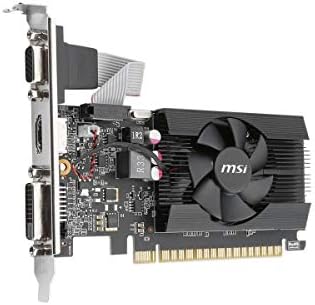
EVGA GeForce GTX 660 SUPERCLOCKED 2048MB GDDR5 DVI HDMI DP Graphics Card 02G-P4-2662-KR
Bottom line: The EVGA GeForce GTX 660 SUPERCLOCKED 2048MB GDDR5 DVI HDMI DP Graphics: Factory overclock: 1046 MHz base and 1111 MHz boost out of the box; main trade-off: 2GB of VRAM limits texture settings in modern games.
As an Amazon Associate, SpecPicks earns from qualifying purchases. Full disclosure →
Pros & Cons
Pros
- ✓ Factory overclock: 1046 MHz base and 1111 MHz boost out of the box
- ✓ 960 CUDA cores on NVIDIA's Kepler architecture
- ✓ 2048MB GDDR5 at a 6008 MHz effective memory clock
- ✓ DVI, HDMI and DisplayPort outputs on one card
- ✓ PCI-Express 3.0 interface suits period-correct Kepler-era builds
Cons
- ✗ 2GB of VRAM limits texture settings in modern games
- ✗ DirectX 12 support tops out at feature level 11_0
- ✗ Kepler-era architecture trails modern cards in raw performance
- ✗ Power draw and PSU requirements not listed in the product details
Manufacturer description
The EVGA GeForce GTX 660 Superclocked (model 02G-P4-2662-KR) is a Kepler-generation graphics card that comes overclocked from the factory. It runs at a 1046 MHz base clock and boosts to 1111 MHz without any tuning on your part. Its 960 CUDA cores pair with 2048MB of GDDR5 memory at an effective 6008 MHz, which suits period-correct gaming builds and older titles at sensible settings. Connectivity covers DVI, HDMI and DisplayPort, so you can drive a vintage monitor, a TV or a newer panel from the same card. It uses a PCI-Express 3.0 interface, which makes it a good match for Kepler-era Windows…
SpecPicks Verdict
SpecPicks has no buyer-rating or benchmark data for EVGA GeForce GTX 660 SUPERCLOCKED 2048MB GDDR5 DVI HDMI DP Graphics…, so this read rests on the manufacturer's listed specs (how we evaluate). Compare with similarly-priced alternatives in the retro graphics cards category before committing. On the listing's own facts, the case for it is "Factory overclock: 1046 MHz base and 1111 MHz boost out of the box"; the main trade-off is "2GB of VRAM limits texture settings in modern games". If those two points fit how you will use it, put it beside one or two close alternatives in the Compare tool to confirm the price.
Common buyer scenarios for retro graphics cards of this kind: matching it to an existing build, replacing a failing part, or upgrading from a previous-generation equivalent. Check the spec table below against your current setup — particularly socket / form-factor / power-rating fields — and confirm compatibility on the retailer's listing before purchase. Prices and stock are set by the retailer and may have moved since this page was last updated.
Frequently Asked Questions
How much video memory does the EVGA GTX 660 Superclocked have?
It has 2048MB (2GB) of GDDR5 memory with a 6008 MHz effective memory clock.
What display outputs does this GTX 660 have?
The card offers DVI, HDMI and DisplayPort outputs. Check the product listing for the exact number of each port before you plan a multi-monitor setup.
Does the GTX 660 support DirectX 12?
Yes. It supports the Microsoft DirectX 12 API at feature level 11_0. Games that require feature level 12_0 or higher are outside its support.
What clock speeds does the Superclocked version run at?
The EVGA 02G-P4-2662-KR has a 1046 MHz base clock and a 1111 MHz boost clock, set at the factory, along with 960 CUDA cores.
What power supply do I need for this graphics card?
The product details don't list power draw or PSU requirements. Check EVGA's spec sheet for model 02G-P4-2662-KR to confirm the recommended PSU wattage and power connectors before you install it.
Key Features
Quoted from the manufacturer's listing. Where it differs from the pros and cons above, those note the conditions the listing leaves out.
- Microsoft DirectX 12 API (feature level 11_0) Support
- Base Clock: 1046 MHz
- Boost Clock: 1111
- Memory Clock: 6008 MHz
- CUDA Cores: 960
- PCI-Express 3.0
Full Specifications
| Brand | EVGA |
|---|---|
| Weight | 02g |
| Base Clock | 1046 MHz |
| CUDA Cores | 960 |
| Model Name | GTX 660 |
| Unit Count | 1 Count |
| Boost Clock | 1111 |
| Memory Clock | 6008 MHz |
| Model Number | 02G-P4-2662-KR |
| Built-In Media | Video card, User manual, Driver disk |
| Number of Fans | 1 |
| Mfr Part Number | 02G-P4-2662-KR |
| Number of Items | 1 |
| Number of Packs | 1 |
| Video Processor | NVIDIA |
| Antenna Location | Gaming |
| Graphics Card Ram | 2 GB |
| Graphics Ram Size | 2 GB |
| Graphics Ram Type | GDDR5 |
| Compatible Devices | Desktop |
Benchmark data for other graphics cards
Ready to buy?
EVGA GeForce GTX 660 SUPERCLOCKED 2048MB GDDR5 DVI HDMI DP Graphics Card 02G-P4-2662-KR is vintage hardware; the used and vintage market on eBay carries most of the live inventory. Prices and condition vary by seller and move in real time, so we link the live listing rather than quote a cached price. It also has an Amazon listing — check it for current price and availability. SpecPicks earns a small commission on qualifying purchases — thank you for supporting independent review work.
Related Retro Graphics Cards


More guides & deep dives from the SpecPicks archive
Browse all articles & guides →- Best Retro Handhelds in 2026: Pocket, Mid-Tier and FPGA Picks
- Emulation Hardware in 2026: FPGA, Software, and Cart-Reader Ecosystems
- Best 1440p Gaming GPUs in 2026
- Best Budget Gaming PC Build 2026 — ~$1,000 Parts List
- How to Build a Windows 98 Retro PC in 2026
- The Complete Voodoo5 5500 AGP Driver Guide (2026 Edition)
- RTX 4070 Super vs RX 7800 XT — Which to Buy in 2026
More reviews from the SpecPicks archive
Browse all reviews →- 768GB Optane Ran a 1T-Param LLM: What It Means for Home Rigs
- Microsoft Mirage Adds Persistent Spatial Memory: Can a 12GB GPU Run Local Video Gen?
- Save $550 on iBuyPower RTX 5070 + 7800X3D 4K Gaming PC
- Corsair LL120 RGB vs Noctua NH-U12S: Cooling a 5800X for All-Day Gaming
- Mistral 7B vs Mistral Small 24B: GPU Requirements Compared
- Claude Opus 4.8 Tops the Intelligence Index: Cloud vs Local on a 3060
- Intel Arc Pro B60 AI Performance: 24GB VRAM Explained
- Self-Host Jellyfin on the Raspberry Pi 4 8GB: Transcoding Limits
- Mouse Wheel Scrolling Wrong Direction? Here's the Fix
- Shared ChatGPT and Claude Chat Links Are Spreading Malware (And Local LLMs Fix It)
- AI-Driven Win9x Driver Install: How Vision-LLMs Tame Vintage Installers (2026)
- Best Budget AMD Gaming PC Upgrades in 2026: 5 Parts That Move the Needle
- ChatGPT Full-Duplex Voice: What Real-Time Speech Needs on Your Desk
- Ryzen 7 5800X vs 5700X for 1080p High-Refresh Gaming
- Best Plug-and-Play Retro Gaming Consoles to Buy in 2026
- DualSense vs 8BitDo Pro 2 vs GameSir G7 SE: Best PC Controller in 2026
- Blue Yeti vs HyperX QuadCast 2 S: Best USB Mic for Streaming
- Blue Yeti vs HyperX QuadCast 2 S: Best USB Mic for New Streamers
- Best CPU Cooler for High-TDP Builds (2026)
- NVIDIA's AI Servers Run on Hot Tub Coolant — No Evaporators Neede
- Building a 2001 LAN Party Rig in 2026: GeForce 3, Pentium III, and Period-Correct Peripherals
- Best Streaming and Content-Creation Gear in 2026
- Sound Blaster Live! Restoration Guide: Period-Correct Audigy FX Bridge for Win98 Builds
- Imaging Vintage IDE and SATA Drives in 2026: The Vantec CB-ISATAU2 Workflow
Earliest SpecPicks reviews
Browse full archive →- Best GPU for Llama 3.1 8B (2026)
- Best GPU for Qwen 3 14B (2026)
- Best GPU for Qwen 3 32B (2026)
- Best GPU for Llama 3.1 70B (2026)
- Best GPU for DeepSeek-R1 32B (2026)
- Best GPU for Llama 3.1 405B (2026)
- How to run Llama 3.1 8B on NVIDIA GeForce RTX 5090
- How to run Qwen 3 14B on NVIDIA GeForce RTX 5090
- How to run Qwen 3 32B on NVIDIA GeForce RTX 5090
- How to run Llama 3.1 70B on NVIDIA GeForce RTX 5090
- How to run DeepSeek-R1 32B on NVIDIA GeForce RTX 5090
- How to run Llama 3.1 8B on NVIDIA GeForce RTX 4090