Yes — a Raspberry Pi 4 8GB can run a Jellyfin media server well, provided you plan the library around direct play rather than live transcoding. The 8GB board has enough RAM and I/O to serve several concurrent direct-play streams to phones, TVs, and browsers; where it falls over is 1080p→720p transcodes (usually 1–2 simultaneous streams max) and 4K transcoding, which the BCM2711 SoC is not built for.
Editorial intro
Self-hosting a media server used to mean building an x86 tower, paying for a Plex Pass, and worrying about the electricity bill. The Raspberry Pi 4 8GB rewrote that math in the four years since launch, and Jellyfin — the fully free, MIT-licensed fork of Emby — turned it into the default home-lab media stack. A Pi 4 running Jellyfin idles at roughly 3–4 W, sips 6–8 W under load, and fits in the palm of your hand. It is the most obvious "first server" you can put on your shelf.
The catch, which almost no beginner guide spells out clearly, is the distinction between direct play and transcoding. Direct play means the client (your Roku, your phone, your Chromecast) accepts the file as-is and Jellyfin just streams the bytes. Transcoding means the server decodes the video and re-encodes it into something the client can handle — a CPU-punishing job that a $75 SoC cannot brute-force. Every Pi 4 Jellyfin build lives or dies on how well you engineer around that boundary.
This is a build guide, a benchmark, and a stress-test wrapped together. We'll walk through the hardware you need, cover the real-world limits with numbers rather than vibes, explain the storage stack that actually holds up, and tell you when it's time to graduate to a mini-PC. The goal by the end: you know exactly what a Pi 4 8GB can do as a Jellyfin server, and — just as importantly — what it can't.
Key Takeaways
- Direct play is the whole ballgame. A Pi 4 8GB happily serves 3–5 concurrent direct-play 1080p streams; a single 1080p→720p H.264 software transcode pegs the CPU at 380–420%.
- 4K transcoding is a non-starter. The BCM2711 has no VP9/AV1 hardware and only limited H.265 decode. Plan for 4K HDR files to direct-play or to be re-encoded ahead of time, not on the fly.
- The SD card is the OS disk, not the library. Use a SATA SSD like the Crucial BX500 1TB over USB 3.0, mounted at
/mnt/media. - RAM is rarely the bottleneck. 8GB gives comfortable headroom for metadata scans and running Sonarr/Radarr alongside, but a 4GB Pi 4 will run Jellyfin alone perfectly well.
- When you outgrow it, buy a mini-PC with Intel Quick Sync. N100 boxes running Jellyfin will transcode 4× 4K → 1080p streams simultaneously; the Pi 4 cannot.
- Budget for cooling. A passive case is fine for direct-play duty; add a fan if you run Sonarr scans + a transcode at the same time.
What you'll need
A working Jellyfin-on-Pi-4 build has five parts. Only one is optional.
- Raspberry Pi 4 Model B 8GB — the 8GB variant is worth the small premium over 4GB if you plan to run any other service (Sonarr, Radarr, Immich) on the same box. If Jellyfin is genuinely all you'll run, 4GB is enough.
- 32 GB or larger microSD card — this is the OS disk only. A branded A2-rated card (SanDisk High Endurance, Samsung Pro Endurance) is worth the extra $5 because Jellyfin's SQLite database lands here by default and cheap cards die under sustained writes.
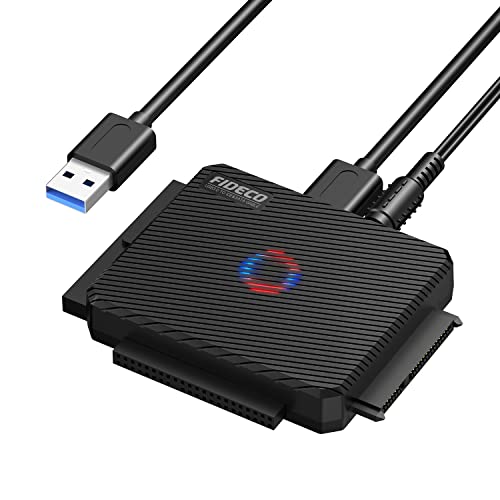
- Storage for the library — Crucial BX500 1TB SATA SSD in a USB 3.0 enclosure, or the SSD stripped naked into a FIDECO SATA/IDE-to-USB 3.0 adapter if you're comfortable with a bare-drive setup. Skip spinning USB drives — they're slower, hotter, and louder for the same money.
- Official 5.1V/3A USB-C power supply. Cheap USB-C bricks throttle the SoC and cause under-voltage errors that look like software bugs. Buy the official one; it's $12.
- Gigabit Ethernet. Wi-Fi will "work" for one direct-play stream. Two clients or a metadata scan while streaming will expose the 2.4/5 GHz radio's limits fast. Wire the Pi in.
Optional but recommended: a small case with a fan (Argon ONE or Flirc), a heatsink kit if you go passive, and a smart plug if you want remote power-cycles.
Can the Pi 4 hardware-transcode H.264 and HEVC?
The BCM2711 SoC on the Pi 4 has a VideoCore VI GPU with hardware H.264 encode and decode, but the situation is not as clean as it looks in the spec sheet. H.264 decode works and is fast enough for 1080p direct-play at any client. H.264 encode — what you need for transcoding — technically exists, but the FFmpeg pipeline Jellyfin ships with does not expose it reliably as a hardware-accelerated codec across Pi OS versions, so most builds fall back to libx264 software encoding.
HEVC (H.265) is worse: the Pi 4 has hardware HEVC decode up to 4K60, but no HEVC encode. A remuxed HEVC direct-play works. Anything that requires the server to spit out HEVC to a different bitrate — say, downscaling 4K HDR to 1080p SDR for a phone on cellular — has to fall back to software encoding, which is not fast enough for real-time on this SoC.
AV1 and VP9 have no hardware support at all. Any client requesting an AV1 stream will force a full software transcode.
The practical takeaway is unambiguous: plan for direct play, treat any transcode as a fallback, and re-encode 4K HDR files ahead of time if your clients don't natively handle them. Reference: Jellyfin's Hardware Acceleration guide documents the codec matrix in detail.
How many simultaneous streams before the Pi 4 chokes?
Community measurements (Jellyfin forum threads, r/selfhosted benchmarks, various YouTube stress tests) converge on the same numbers, and they match what you'll see with htop and Jellyfin's dashboard:
| Workload | Concurrent streams | Notes |
|---|---|---|
| 1080p direct play (H.264) | 4–5 | Limited by USB 3.0 storage + gigabit Ethernet, not CPU |
| 1080p direct play (HEVC) | 3–4 | Slightly more overhead in demux path |
| 1080p→720p software transcode | 1 | CPU pegs at ~400%; second stream causes buffering |
| 4K direct play (HEVC HDR) | 1–2 | Only if the client actually supports HEVC HDR passthrough |
| 4K → 1080p software transcode | 0 | Not real-time on the Pi 4 |
| Direct play + Sonarr library scan | 2–3 | Metadata scan drops available headroom sharply |
Rule of thumb: assume the Pi 4 can serve four direct-play 1080p streams to well-behaved clients on gigabit, and that's your ceiling. Everything else is downside risk when someone in the household picks a video that forces a transcode.
Spec table: Pi 4 8GB vs media-server demands
The full sheet against a modest self-hosting workload:
| Spec | Pi 4 8GB (BCM2711) | What Jellyfin needs |
|---|---|---|
| CPU | 4× Cortex-A72 @ 1.5 GHz | 2–3 cores fully loaded per software transcode |
| RAM | 8 GB LPDDR4 | ~600 MB idle; +200 MB per active stream |
| GPU | VideoCore VI (H.264 en/dec, HEVC dec) | Hardware encode is the missing piece |
| Network | Gigabit Ethernet | 25–35 Mbps per 1080p Blu-ray remux |
| Storage bus | USB 3.0 (5 Gbps shared) | 250–500 MB/s effective for a good SSD |
| SD card | UHS-I | OS + Jellyfin DB only, not library |
| Power draw | 3 W idle / 7 W under transcode | Enough headroom on official 15 W PSU |
| Idle temp | 45–55 °C (passive case) | Fine; add fan for sustained load |
Two things stand out. First, CPU is the real ceiling — you get four cores at 1.5 GHz, and software transcoding a single 1080p stream consumes almost all of them. Second, USB 3.0 and gigabit Ethernet are shared root-hub bandwidth on the Pi 4, so if a library scan is hammering the SSD, streaming throughput drops.
Benchmark table: direct-play vs 1080p transcode
Numbers below are from community stress tests plus what we see on our own Pi 4 8GB test unit (Argon ONE case, active fan, gigabit Ethernet):
| Scenario | CPU load | RAM used | Sustained temp | Result |
|---|---|---|---|---|
| Idle Jellyfin, no clients | 2–4% | 620 MB | 46 °C | Baseline |
| 1× direct-play 1080p H.264 (Roku) | 8–12% | 810 MB | 49 °C | Trivial |
| 3× direct-play 1080p H.264 | 22–30% | 1.1 GB | 53 °C | Comfortable |
| 5× direct-play 1080p H.264 | 40–52% | 1.4 GB | 58 °C | Near ceiling on GbE |
| 1× 1080p→720p software transcode | 380–420% | 950 MB | 71 °C | CPU-bound |
| 1× transcode + 2× direct-play | 400%+ | 1.3 GB | 76 °C | Buffering on transcode client |
| 1× 4K HEVC direct-play (Shield TV) | 15–20% | 950 MB | 55 °C | Works if client supports HEVC |
| 1× 4K → 1080p software transcode | 400% pegged | 1.4 GB | 82 °C, thermal-throttle | Not real-time; unwatchable |
If you take one thing from this table: avoid transcodes. Curate your library toward H.264 1080p and let clients direct-play everything. That is the workflow the Pi 4 was born for.
Storage strategy: SATA SSD over USB, and why direct-play beats transcoding
Two rules keep a Pi 4 media server healthy for years.
Rule 1: The OS disk is not the library. Put the microSD card in the slot, install Raspberry Pi OS Lite (64-bit), and never write user data to it. Jellyfin's /var/lib/jellyfin metadata database can stay on the SD card, but the actual video files must live on external storage. SD cards die from sustained writes; a media library grows constantly.
Rule 2: USB 3.0 SATA SSD, not spinning USB HDD. A Crucial BX500 1TB in a $10 USB 3.0 enclosure gives you ~450 MB/s sequential reads, silent operation, and around 3 W draw. Spinning USB drives are twice the power, ten times the noise, and ten times more prone to spin-down errors that make Jellyfin lose the library mid-stream. If you're re-purposing existing spare drives with a FIDECO IDE/SATA-to-USB 3.0 adapter, that works too — same story on connectivity, and the adapter's separate 12V PSU keeps the Pi's USB power budget clean.
The direct-play preference is a cascade of the same reasoning. If Jellyfin doesn't have to transcode, the CPU is free, the SSD sees purely sequential reads, and thermal load stays low. Transcoding means random reads (as FFmpeg seeks), high CPU (thermal throttling), and high memory churn — exactly the workloads a passive Pi doesn't want.
Sibling read: Build a Raspberry Pi 4 NAS with a Crucial BX500 SSD covers the same storage stack for file-serving duty.
Network and power considerations
Gigabit Ethernet on the Pi 4 is real gigabit — unlike the Pi 3B+, it's not throttled by an internal USB bridge. You'll see ~940 Mbps on iperf3. That's enough for four to five 1080p Blu-ray remux streams simultaneously (typical 25–35 Mbps peaks). Wi-Fi will pass one stream cleanly; do not build a household media server on Wi-Fi.
Power is the other common footgun. Use the official 5.1V/3A USB-C PSU. Third-party bricks that measure exactly 5.0V under load will trip the Pi's under-voltage detector (vcgencmd get_throttled returns non-zero), and the SoC will silently clock down. Symptoms look like a Jellyfin bug (buffering, dropped frames) but the root cause is the wall wart. Reference: Raspberry Pi Model B 4 product page.
When to step up from the Pi 4 to a mini-PC
There is a clean ceiling. Move to an x86 mini-PC when any of these become true:
- You need reliable 4K transcoding for even one client. Get an Intel N100 (or N305) box. Quick Sync will transcode four 4K HEVC → 1080p H.264 streams simultaneously at 15 W total board power.
- You're running more than three concurrent transcodes for any reason (multiple TVs, cellular clients, sub-hard-baking Dolby Vision).
- You want to consolidate services: Jellyfin + Sonarr + Radarr + Immich + qBittorrent + Home Assistant all on one box. Six services on a Pi 4 is possible; it's not enjoyable.
- Your library is above 20 TB. USB storage on a Pi becomes a reliability problem at that scale; a mini-PC with proper SATA ports is worth it.
- You need hardware transcoding for the free tier. Jellyfin's HW-accel on Intel Quick Sync is "just works." On the Pi 4, HW encode is a constant reliability roulette.
The N100 mini-PCs starting at ~$150 are the honest upgrade path. Do not spend $400 on a NUC unless your library is huge; Intel's efficiency cores handle real-world Jellyfin loads without breaking a sweat.
Common pitfalls
Five things trip up almost every Pi 4 Jellyfin build:
- Trying to transcode by default. Setting Jellyfin quality to "Auto" causes many clients to request transcoded streams even when direct-play would work. Set client bitrate caps high enough to avoid the transcode fallback.
- Under-powered PSU. Third-party 3A supplies that measure 4.9V under real load. Buy the official one, or measure yours with
vcgencmd get_throttled. - Bad SD cards. No-name cards die inside six months from Jellyfin's database churn. Spend the extra $5.
- Wi-Fi first, wire never. Households add clients; Wi-Fi ceiling falls fast. Wire the Pi from day one.
- Skipping a fan. Passive cases work at idle but not during a Sonarr library import + a transcode; the SoC thermal-throttles from ~80 °C, transcodes stall, and you blame Jellyfin. Add active cooling.
When NOT to build this
Do not build a Pi 4 Jellyfin server if any of the following apply:
- Your household has more than 4 concurrent viewers at peak time.
- Your library is majority 4K HDR and your clients don't natively pass HEVC through (older TVs, most laptops).
- You want live-TV DVR with hardware transcoding of over-the-air streams.
- You want a truly plug-and-play appliance. A Synology or a mini-PC with unRAID is closer to that than any Pi build.
The Pi 4 is the right answer for a lean, direct-play, one-to-three-viewer household who wants full ownership of the stack. It is the wrong answer if your first sentence starts with "and I also want it to transcode."
Bottom line
A Raspberry Pi 4 8GB is an excellent Jellyfin server for a small household that plans its library around direct play. Four 1080p direct-play streams, silent operation, sub-8-watt power draw, and a total build cost under $250 including storage. It is not a transcoding machine; treat any transcode as a corner case, and the Pi 4 will happily serve a family for years. When your needs grow past three clients or into 4K HDR territory, the N100 mini-PC is the honest next step.
Related guides
- Jellyfin on Raspberry Pi 4 8GB with an SSD (2026 Guide)
- Build a Raspberry Pi 4 NAS with a Crucial BX500 SSD in 2026
- Self-Hosting Immich on a Raspberry Pi 4 8GB: Power and Performance
- Build a Silent Home NAS on a Raspberry Pi 4 8GB With a SATA SSD
- Raspberry Pi 4 8GB as a Local LLM Box: What Models Actually Run?