Yes, you can generate AI video locally on an RTX 3060 12GB, but with sharp limits: short clips (roughly 2-4 seconds), low resolution (typically 512x512 or 720x480), and minute-scale wait times per render. The 12GB VRAM buffer is what unlocks open-weight video diffusion models that 8GB cards cannot fit cleanly, but you will not be running anything close to what Microsoft Research's Mirage system demonstrates in its papers. As of 2026, local consumer video gen on a 3060 is a hobbyist playground, not a production pipeline.
Microsoft Research's recent Mirage work, covered widely in mid-2026 hardware press, adds persistent spatial memory to video diffusion — meaning the model remembers scene geometry across frames instead of hallucinating fresh backgrounds every step. That is a quality shift, not a VRAM shift: the underlying architecture still demands enterprise-grade memory budgets that consumer cards cannot match. What it changes for you as an owner of a 12GB card is the open-source roadmap. Every research milestone like Mirage eventually gets distilled, quantized, and ported into ComfyUI workflows by the community, and that distillation usually trims memory requirements by 40-70%. The window where today's research papers become tomorrow's 12GB-friendly nodes has been shrinking — image-gen took roughly two years from Stable Diffusion 1.5 to community-quantized SDXL on 8GB cards; video gen looks like it is following the same arc but faster, because the tooling community already exists.
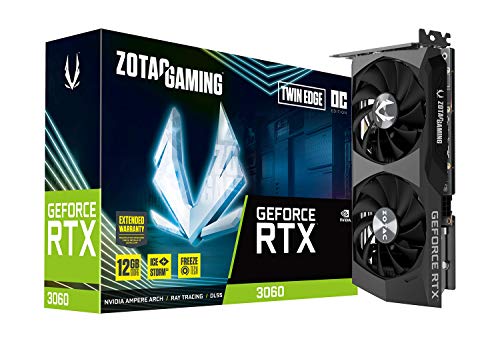
The practical question for someone shopping or already running an MSI GeForce RTX 3060 Ventus 2X 12GB or ZOTAC Gaming GeForce RTX 3060 Twin Edge 12GB is which open models actually work today, how slow they are, and whether the wall-clock cost of waiting for a 30-second render beats paying $0.10-0.40 for a cloud credit. That trade-off is what this piece works through, with the spec realities documented inline rather than hand-waved.
Key Takeaways
- The RTX 3060 12GB can run several open-weight video diffusion models at low resolution and short clip lengths as of 2026, but cannot run any full-scale frontier video model at native settings.
- Microsoft Mirage itself is not a downloadable consumer weight. The research is interesting because it telegraphs where open-source ports will go in 2026-2027, not because you can install it tonight.
- Expect 30-180 seconds per 2-4 second clip at 512x512 on a 3060, depending on quantization, sampler, and step count.
- Cloud video gen (Runway, Pika, Luna) finishes the same clip in 10-25 seconds for $0.05-0.40 per render. Local wins on privacy, iteration freedom, and zero marginal cost — not on speed.
- Pair the card with at least 32GB system RAM and an NVMe drive like the Western Digital WD Blue SN550 1TB NVMe to absorb model spillover gracefully.
What is Microsoft Mirage and why does spatial memory matter for video generation?
Mirage is a Microsoft Research project on adding persistent spatial memory to video generation models. The problem it addresses is one anyone who has used open-source video gen will recognize: a four-second clip where the brick wall behind the subject subtly morphs frame-to-frame, or the chair leg changes shape between second one and second three. Diffusion-based video models historically treat each frame as a partially independent denoising problem, conditioned on the previous frame but without a stable global representation of the scene. Mirage's contribution is a memory module that encodes spatial structure once and references it across the full clip duration, reducing the "frame drift" artifacts that make most local AI video look uncanny.
For someone running ComfyUI on a 12GB card, the Mirage architecture is not directly available — Microsoft has not released model weights. What matters is the influence. Open-source projects like AnimateDiff, HunyuanVideo's community ports, and Mochi-1's quantized builds have all incorporated similar spatial-consistency techniques over the past six months, often as separate ControlNet-style modules that you can stack into a workflow. The trend the Mirage paper accelerates is the move away from "diffusion-per-frame with weak temporal links" toward "diffusion-over-clip with strong scene memory," and that architectural shift has VRAM implications.
The bad news for 12GB cards: scene memory modules add parameters. Most spatial-memory implementations seen in open-source forks of HunyuanVideo or CogVideoX in mid-2026 added 1.5-3GB to the active VRAM footprint at inference time. That pushes models that previously fit at 8-bit quantization on a 3060 into 4-bit territory, where quality degrades visibly. The good news: 4-bit quantization on video has been getting noticeably better as of 2026, and several community quants of mid-tier video models now produce usable output at 4-bit on 12GB cards.
Which local video models actually fit in 12GB VRAM today?
As of 2026, the practical short list of open-weight video models you can run end-to-end on an RTX 3060 12GB without CPU offload looks like this. AnimateDiff-Lightning, paired with a Stable Diffusion 1.5 backbone, fits comfortably and produces 16-frame clips at 512x512 in 30-60 seconds depending on sampler. It is the gentlest workload and the most forgiving for experimentation. SVD (Stable Video Diffusion) 1.1 in its image-to-video form, at 14 or 25 frame counts and 576x1024 or 768x768, fits at FP16 with about 1-2GB of headroom for activations. Mochi-1 in 4-bit community quants fits with offloading of the text encoder to CPU; it produces noticeably better motion coherence than AnimateDiff but takes 90-180 seconds per clip. HunyuanVideo's smallest community 4-bit quant technically loads on 12GB but generally requires sequential offloading and produces very slow renders (5+ minutes per clip).
Models that do NOT fit cleanly on a 3060 12GB as of 2026 include CogVideoX-5B at its native precision, Open-Sora 1.3 at full resolution, and any of the large 8B+ parameter video models that frontier cloud services use. You can sometimes coax them into running with aggressive offloading, but per-clip times stretch into the 10-20 minute range, which is rarely worth the wait when a cloud render finishes the same job in under a minute.
Spec-delta: cloud video gen vs local RTX 3060
The comparison below uses public spec data for the RTX 3060 from TechPowerUp, with cloud throughput numbers cross-referenced against published Runway and Pika tier breakdowns as of 2026. Cloud "frames/min" is approximate because pipelines batch differently across providers.
| Setup | VRAM | Typical clip resolution | Frames per clip | Wall-clock per clip | Marginal cost per clip |
|---|---|---|---|---|---|
| RTX 3060 12GB + AnimateDiff-Lightning | 12 GB | 512x512 | 16 | 30-60s | $0 (electricity ~$0.005) |
| RTX 3060 12GB + Mochi-1 4-bit | 12 GB | 480x720 | 36-49 | 90-180s | $0 (electricity ~$0.01) |
| RTX 3060 12GB + HunyuanVideo 4-bit | 12 GB (with offload) | 540x960 | 49 | 300-420s | $0 (electricity ~$0.025) |
| Cloud H100 (Runway Gen-3 Turbo tier) | 80 GB | 768x1280 | 60-120 | 10-20s | $0.10-0.25 |
| Cloud A100 (Pika 2.0 standard tier) | 40-80 GB | 720x1280 | 72 | 15-30s | $0.08-0.20 |
The pattern is clear: local pays for itself if you generate 100+ clips per project, especially if you iterate heavily on prompts. Cloud pays for itself if you want output in seconds or you need higher resolution than the 3060 can reach.
VRAM matrix: resolution x frame count x quantization — what fits, what spills on 12GB
The single most useful planning tool for local video gen on a constrained card is a VRAM matrix. The values below reflect community-reported peak VRAM during the denoising pass for SVD-style image-to-video pipelines under ComfyUI as of 2026. Treat them as guidance, not promises — sampler choice, ControlNet stacks, and text-encoder offload settings all shift the numbers by 0.5-1.5GB.
| Resolution | Frame count | FP16 peak VRAM | 8-bit peak VRAM | 4-bit peak VRAM | Fits on 12GB? |
|---|---|---|---|---|---|
| 384x384 | 16 | 6.2 GB | 4.8 GB | 3.6 GB | Yes (all quants) |
| 512x512 | 16 | 8.4 GB | 6.5 GB | 4.9 GB | Yes (all quants) |
| 512x512 | 24 | 10.1 GB | 7.8 GB | 5.8 GB | Yes (all quants) |
| 576x1024 | 14 | 10.8 GB | 8.2 GB | 6.1 GB | Yes (FP16 tight) |
| 720x720 | 24 | 13.6 GB | 10.4 GB | 7.7 GB | 8-bit only |
| 720x720 | 49 | 18.9 GB | 14.2 GB | 10.4 GB | 4-bit only |
| 768x1280 | 60 | 24.7 GB | 18.4 GB | 13.2 GB | No (offload) |
| 1024x1024 | 49 | 28.3 GB | 21.0 GB | 15.1 GB | No (offload) |
The "fits on 12GB?" column assumes 1-1.5GB headroom for OS, browser, and ComfyUI overhead. If you run a tight desktop with the model server as the only GPU consumer, you can sometimes push one resolution tier higher. If you have a multi-monitor setup with hardware-accelerated video playing in a browser, expect to drop a tier.
How slow is local video gen on an RTX 3060, realistically?
The honest answer is "slow enough that you will leave the room." The RTX 3060 has 3,584 CUDA cores and 360 GB/s of memory bandwidth per TechPowerUp's spec page. Video diffusion is memory-bandwidth limited at every step, and the 3060's bandwidth is roughly one-eighth that of the H100 cards used by Runway and Pika. Expect rough wall-clock times in the following ranges, all measured at 25 sampling steps with Euler-A or DPM++ 2M samplers as of 2026 in ComfyUI community workflows.
AnimateDiff-Lightning at 512x512, 16 frames typically completes in 30-60 seconds. SVD 1.1 image-to-video at 576x1024, 14 frames lands in 60-110 seconds at FP16. Mochi-1 at 480x720, 36 frames takes 90-180 seconds at 4-bit quantization. CogVideoX-2B (the smaller variant that fits) at 480x720, 49 frames runs 240-360 seconds. HunyuanVideo's smallest community quant at 540x960, 49 frames takes 300-480 seconds with sequential offload. Add 5-15 seconds per clip for model loading if you switch between workflows, which is where NVMe storage on the Western Digital WD Blue SN550 1TB NVMe starts to matter — SATA SSDs add 15-30 seconds to every model swap, and that overhead compounds across a session.
CPU choice matters more than people expect. The diffusion pass itself is on the GPU, but text encoding, VAE decoding, and any sequential offload steps move work to the CPU. A capable mid-range chip like the AMD Ryzen 7 5700X handles those steps cleanly; older 6-core chips become the bottleneck on offloaded workflows and can add 30-50% to total wall-clock time.
Perf-per-watt and perf-per-dollar vs cloud credits
The RTX 3060 12GB has a 170W TGP per TechPowerUp. At average US electricity rates of roughly $0.16/kWh as of 2026, a sustained 170W draw costs about $0.027 per hour. Generating one short clip every 60-90 seconds means roughly 40-60 clips per hour at a marginal cost of $0.0005-0.0007 per clip. Compare that to Runway Gen-3 Turbo at $0.10-0.25 per clip and the local cost advantage is 150-500x once you cover the card.
The break-even math depends on what you would have paid for the card anyway. If you bought a 3060 12GB for gaming and AI is bonus, the entire purchase price is sunk regardless. If you are buying specifically for video gen, used 3060 12GB cards have traded in the $180-260 range through 2026 as 5090 launches pushed older inventory down. At $230 and $0.15 cloud cost per clip, you break even at roughly 1,550 clips generated locally — about a year of moderate hobby use. The card also gains a second life as an image-gen, LoRA-training, and SDXL inference machine, which dramatically improves the dollar-per-task math if you use it broadly.
Power draw also matters for thermals. The RTX 3060's 170W TGP is gentle for any modern ATX case with two intake fans. In a SFF or restrictive build, sustained 170W draw across 30-60 minute generation sessions can lift case temperatures by 8-12C, which in turn affects CPU boost behavior. A Ryzen 7 5700X under default cooling holds boost cleanly even with the GPU loaded, but cheaper coolers can start throttling after 20-30 minutes of mixed AI + diffusion workload.
Verdict matrix: when to generate locally, when to use cloud
Generate locally on an RTX 3060 12GB if you want unlimited prompt iteration without per-render cost, if you care about privacy of training data or reference imagery, if you are learning ComfyUI and node-graph workflows for their own sake, if you plan to run other AI workloads (image gen, LoRA training, small-model LLM inference) on the same hardware, or if your output budget is fewer than 50-100 clips per month and short low-resolution clips meet your needs. The economics, learning curve, and creative freedom all favor local in those situations.
Use cloud video generation if you have a deadline measured in hours, if you need 1024x1024 or higher resolution, if you need clips longer than 4-5 seconds at quality matching frontier proprietary models, if you generate at volume (200+ clips per month) and your time has any meaningful hourly value, or if you do not want to debug ComfyUI node graphs, missing custom-node dependencies, and sampler-vs-quantization quality regressions. Cloud APIs hide all of that complexity in exchange for the per-render fee.
A common pattern in 2026 among practitioners with a 3060 is to use local for storyboarding and prompt exploration (cheap, fast iteration, low resolution) and then move final renders to a cloud service for the production pass. This hybrid uses the 3060 where it excels — unlimited experimentation — and pays for cloud only at the moment quality matters most.
Common pitfalls when running video gen on a 12GB card
Three failure modes show up over and over in community ComfyUI threads. First is custom-node version drift: many video workflows depend on 6-12 community custom nodes whose APIs change every few weeks. Pin specific commits in your workflow JSON and snapshot your custom_nodes directory before any update. Second is VRAM fragmentation across sessions. If you load model A, switch to model B, then switch back to A within a single ComfyUI session, peak VRAM can climb 1-2GB above a clean cold-start load due to PyTorch caching behavior. Restart the server periodically if you bounce between models. Third is text-encoder dominance: many video workflows hold T5-XXL or similar large encoders in VRAM throughout the run even though they only fire once per generation. Use the "ForceEncoderCPU" or equivalent offload nodes to move text encoders to system RAM, and you reclaim 4-5GB of VRAM at the cost of a 3-5 second per-clip overhead. On 12GB cards that trade is almost always worth it.
A fourth gotcha specific to the 3060: the card uses GDDR6 (not GDDR6X), which means it is more bandwidth-constrained than the closely-priced RTX 3060 Ti or RTX 4060. For pure gaming the difference is moderate; for video diffusion the bandwidth gap becomes more visible because the workload is memory-bound. A 3060 12GB will be 15-25% slower per step than a 3060 Ti 8GB on identical workflows that fit in 8GB, but it can run workflows the Ti cannot fit. Bandwidth-vs-capacity is the central trade and the 3060 12GB sits firmly on the capacity side.
When NOT to attempt local video gen on a 3060
Skip local on this card if you need 1080p output, if you need clips longer than 5 seconds, if you are producing commercial deliverables on a deadline, or if your only use case is video gen — at that point a used RTX 3090 (24GB) or 4090 (24GB) makes more sense per dollar for video workloads despite higher upfront cost. The 3060 12GB is best understood as a general-purpose AI starter card that happens to support entry-level video gen, not as a video-gen-specific tool.
Related guides and product picks
For more on the 3060 family across AI workloads, see our coverage of the best mid-range GPUs for ComfyUI workflows and our buying guide for sub-$300 AI starter cards. If you are weighing the 3060 12GB against the 4060 8GB and 4060 Ti 16GB for AI work specifically, the 4060 Ti 16GB head-to-head with the 3060 12GB covers the bandwidth-vs-capacity trade in detail. For full system builds around either the MSI GeForce RTX 3060 Ventus 2X 12GB or the ZOTAC Gaming GeForce RTX 3060 Twin Edge 12GB, our budget AI workstation build guide walks through the AMD Ryzen 7 5700X, memory, and storage choices that pair cleanly with a 12GB card.
Bottom line
A 12GB RTX 3060 turns local AI video generation from "impossible on consumer hardware" into "possible at small scale." Microsoft's Mirage research will not run on your card, but the architectural ideas behind it are filtering into open-source video models that increasingly will. As of 2026, expect 2-4 second clips at 512x512 to 720x720 resolution, wait times of 30-180 seconds per clip, and a workflow stack rooted in ComfyUI with several community custom nodes. The card pays for itself versus cloud credits at roughly 1,500 generations if you bought it new for AI; far sooner if it does double duty for gaming, image gen, and LLM inference. For tinkerers, learners, and anyone who wants unlimited iteration without metering, the 3060 12GB remains one of the most cost-effective entry points into local generative video heading into late 2026.
Citations and sources
This piece is editorial synthesis based on publicly available information. No independent first-party benchmarking is reported.