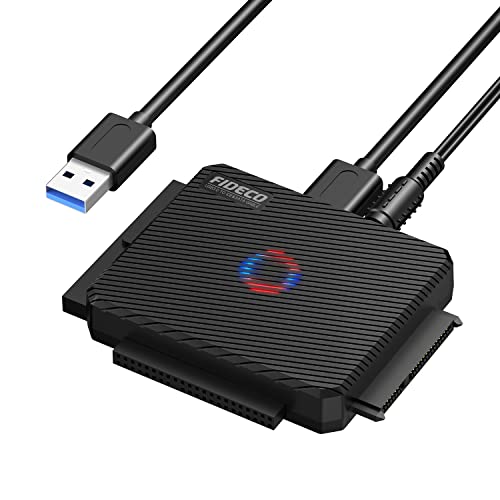
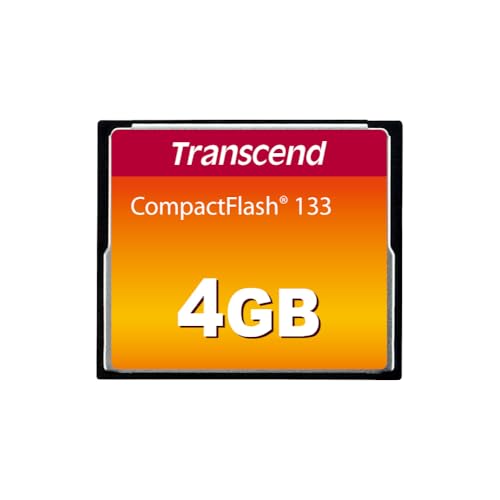
To read and image a vintage IDE drive on a modern PC in 2026, you need a USB-bridging adapter that speaks 40-pin IDE (and ideally SATA too), an external power source for 3.5-inch drives, an imaging tool that handles bad sectors gracefully, and a modern target SSD large enough to hold the byte-for-byte copy. The Vantec CB-ISATAU2 covers the adapter side for under $30 and is the standard pick in retro communities, with the FIDECO USB 3.0 adapter as the faster alternative when the source drive supports higher throughput. For CompactFlash media — common as a solid-state boot drive on Windows 98 and earlier-era machines — a card like the Transcend CF133 lets you mount the original card on a modern reader to back it up before edits.
Why retro builders should image old drives now, not later
Spinning IDE drives from the 1990s and early 2000s are well past their design lifespan. Mechanical hard drives have spindle motors, head actuators, and lubricants that all degrade over time, and the older the drive, the closer it is to a stiction failure that can render the data unreadable without a clean-room recovery. The same drives that booted Windows 95, ran a school's Quicken setup, or held the family photos before iPhones existed are now 20–30 years old. Every spin-up is a coin flip you don't want to keep playing.
The professional advice in any data recovery context is identical: make a byte-for-byte image as early as possible, verify it, and then work from the image rather than the original. The image gives you a reproducible artifact that doesn't degrade and that you can analyze, mount, or convert without touching the original media again. For retro builders, that pattern is doubly important — you may need that drive's contents not just for personal reasons but to revive a build, dump a custom utility someone shipped on it 25 years ago, or extract source code from a project nobody else preserved.
This guide walks through the period-correct workflow for imaging a vintage IDE, SATA, or CompactFlash drive in 2026 using gear that retro communities consistently recommend. We anchor on the Vantec CB-ISATAU2 because it's the cheapest, most reliable bridge that handles both IDE pinouts (2.5-inch and 3.5-inch) and SATA, with proper external power for the desktop-class drives. The FIDECO adapter shows up when you specifically want USB 3.0 speeds on a newer SATA drive. We also cover the CompactFlash case because so many late-90s and 2000s retro PCs were modified to boot from a CF card via an IDE adapter, and the recovery workflow there is slightly different.
What you'll need: the actual checklist
- Adapter that bridges your source drive to USB. Vantec CB-ISATAU2 for the broadest compatibility (2.5" IDE + 3.5" IDE + SATA), or the FIDECO USB 3.0 adapter for faster SATA throughput.
- External power supply. Almost always included with the adapter. Required for 3.5-inch IDE and 3.5-inch SATA; 2.5-inch drives run on USB bus power.
- Modern host PC. Any reasonably current Linux, macOS, or Windows machine works. Linux is the path of least resistance for imaging because the standard tools are excellent.
- Imaging software.
ddrescueon Linux is the canonical choice for failing media — it handles read errors gracefully and keeps a log so you can resume an interrupted image.ddis fine for healthy drives. On Windows, HDDSuperClone or the various Win32 ddrescue ports work. On macOS, ddrescue installs cleanly via Homebrew. - Target storage for the image. Plan for the source drive's capacity at minimum, and ideally double it so you have room for a verified copy. A modern SATA SSD like the Crucial BX500 is a fine target — it's fast enough that the source drive will be the bottleneck, and it's cheap enough to dedicate to recovery work.
- A second target for the verified copy. Any external drive will do; the discipline is what matters.
- For CompactFlash imaging: the original CF card plus either a USB CF reader or a card slot reader. The Transcend CF133 ships with a card; a generic UHS-I reader will read it.
How do you connect a 40-pin IDE or 2.5-inch drive with the CB-ISATAU2?
The Vantec adapter has three connector positions on one end: a 40-pin IDE socket sized for 3.5-inch desktop drives, a 44-pin IDE socket sized for 2.5-inch laptop drives, and a 7-pin SATA connector. The other end is a single USB-A cable. The external power brick splits into a Molex (4-pin) connector for 3.5-inch IDE drives and a SATA power lead for SATA drives.
For a 3.5-inch IDE drive, plug the drive into the 40-pin socket, connect the Molex power lead from the brick into the drive's power input, plug the brick into the wall, then plug the USB cable into the host. Listen for the drive to spin up — that's your first checkpoint. If the drive spins, give it 5–10 seconds to come fully online, then let the host enumerate it.
For a 2.5-inch IDE laptop drive, use the 44-pin socket and skip the external power; bus power is enough. For a SATA drive (2.5" or 3.5"), use the SATA data connector and the SATA power lead from the brick. Either way, the host machine should detect a new USB mass storage device. On Linux, lsblk or dmesg | tail will show what was just attached.
Adapter spec-delta: which one for which job?
| Adapter | Interfaces | USB version | External power | Best for |
|---|---|---|---|---|
| Vantec CB-ISATAU2 | 2.5" IDE + 3.5" IDE + SATA | USB 2.0 | Included | The all-rounder for vintage drives |
| FIDECO USB 3.0 | 2.5"/3.5" IDE + SATA | USB 3.0 | Included | Faster SATA work; healthy SATA SSDs |
| Transcend CF reader | CompactFlash only | USB 2.0/3.0 (model-dependent) | None | CF cards from retro PC boot setups |
Notes on the choice. USB 2.0 caps at roughly 30–35 MB/s in real transfers, which is fine for IDE drives — most early-2000s IDE drives top out around 20 MB/s sustained read anyway, so the bus isn't the bottleneck. For SATA drives in healthy condition, USB 3.0 gives you a meaningful speedup, and the FIDECO is the better pick for imaging a working SATA SSD. For failing drives, the bus speed is irrelevant — ddrescue will spend most of its time waiting for the drive itself, not transferring data.
Step 0 diagnostic: is the drive spinning, and should you image before browsing?
Before you even mount the drive in software, listen and feel. A drive that doesn't spin up at all has either a stuck spindle (stiction) or a dead control board. A drive that spins but clicks repeatedly has head or actuator problems and should be powered off immediately. A drive that spins and then settles to a quiet hum is the best case — image it before you do anything else.
The rule is: image first, browse second. Always. Even on a drive that appears healthy, every additional spin-up cycle risks something. Once you have a verified image, you can mount the image read-only on the host and explore at leisure, knowing the source is preserved. If the image acquisition fails partway through (ddrescue exited with read errors on some sectors), you still have most of the data, you have a log of what failed, and you can re-run later with different parameters to try again on the bad sectors.
The corollary: never let Windows or macOS auto-mount and start indexing the drive while you're imaging it. Both operating systems will happily walk the filesystem and trigger many additional reads, which is exactly what you don't want on a fragile drive. On Linux, mount the source as read-only or simply don't mount it at all — ddrescue reads the raw block device.
How do you make a byte-for-byte image safely, and verify it?
The canonical command on Linux is straightforward. With the source drive at /dev/sdc and a target SSD mounted at /mnt/recovery:
The -d flag uses direct disk access, bypassing the kernel's buffer cache. The -r3 retries failed reads three times. The two file arguments are the target image and the log file. The log file is crucial — if ddrescue is interrupted or you decide to try again on the bad sectors, the log tells it where to pick up.
Verify the image once it completes. The simplest verification is a SHA-256 checksum of the source and the image:
If they match, you have a perfect copy. If they don't, ddrescue's log file will tell you which sectors failed. For a drive with bad sectors, you may need multiple passes with different read strategies — ddrescue's documentation has a recommended progression. For a one-time recovery, what matters is that you have a verified image and a record of what was unreadable.
Always make a second copy of the image immediately. A single SSD is one drive failure away from losing everything you just recovered. Copy the .img and .log files to a second disk, and ideally to an off-site location too. Vintage data is irreplaceable.
Mounting a CompactFlash card from a Win98 build with the Transcend CF133
Many retro PCs in the late 1990s and early 2000s ran a CompactFlash card in an IDE adapter as a quiet, lower-power boot drive. The CF card slots into a passive IDE-CF adapter, and the BIOS sees it as a regular IDE hard drive. To image one of those cards on a modern PC, you just need a CF reader on the host machine.
The workflow is similar to imaging an IDE drive. Pop the CF card out of the retro PC's IDE adapter, plug it into a USB CF reader, and image it with ddrescue or dd. Because CF is solid-state, you don't have the same urgency as a spinning drive — no spindle to fail, no heads to crash. The risk is more about controller wear and the fact that NAND flash slowly loses charge over decades, so prioritize imaging cards that have been sitting unpowered for a long time.
After you have the image, you can mount it loopback on the host to browse the original filesystem, or you can write the image to a new CF card to make a working clone of the original retro boot drive. Both workflows assume the original filesystem is something the host OS understands — usually FAT16 or FAT32 for these vintage builds, which any modern OS reads cleanly.
Gotchas: power, bad-sector handling, and read-only safety
A few specific things go wrong often enough to be worth listing.
- Underpowered 3.5-inch drives. A 3.5-inch IDE drive that spins for a second then stops is almost always a power problem. Confirm the Vantec power brick is connected and the wall outlet is live. Don't try to power a 3.5-inch drive from USB only — it won't work and you'll think the drive is dead when it isn't.
- Drives that need warm-up time. Some failing drives spin up reliably only after sitting unpowered for a long stretch. If your first attempt sees ddrescue fail with read timeouts, power the drive off, let it sit for an hour, and try again. The freezer trick — sealing a drive in a ziploc and freezing it for a few hours to shrink mechanical clearances — is a last resort that occasionally buys one more successful read, but it's destructive and should be used only when you've tried everything else.
- Auto-mount sabotaging your image. Disable auto-mount in your file manager before you plug the source drive in. Both GNOME and KDE will happily mount the drive and start reading metadata, which is exactly what you don't want.
- Writing back to the source drive accidentally. When in doubt, use a USB-to-SATA bridge with a hardware write-blocker switch, or use
blockdev --setro /dev/sdcon Linux to mark the device read-only at the kernel level before you start. - Truncated images from interrupted sessions. If ddrescue or your host crashes mid-image, do not delete the partial image. Re-run ddrescue with the same image and log file paths — it picks up where it left off.
Bottom line: the period-correct data-recovery kit
For under $100 you can assemble a complete vintage-drive imaging kit. A Vantec CB-ISATAU2 at around $26 covers every IDE drive you're likely to encounter plus SATA. A FIDECO USB 3.0 adapter at around $24 gives you a faster path for healthy SATA drives, and pairs well with the Vantec as a backup. A Transcend CF133 or any generic CF reader handles CompactFlash media from late-90s retro builds. A Crucial BX500 at around $170 for the 1TB version gives you a fast, cheap target SSD that can hold many recovered images.
The non-hardware pieces matter as much. Get comfortable with ddrescue on Linux — it's the right tool for failing media, and the Linux live-USB approach lets you image drives without touching the source through a Windows shell. Adopt the discipline of imaging first, browsing the image second, and always keeping at least one verified copy on separate media. The hardware is cheap. The data you're rescuing is not.
For builders running a daily retro workflow — restoring period-correct PCs, dumping old drives for emulation, archiving the family photo CDs that have been in the garage since 2003 — this kit is a one-time purchase that earns its keep across dozens of recoveries. If you have a single drive you care about, buy the adapter once, image the drive, and the gear is ready the next time someone in your circle has a 20-year-old hard drive they're trying to read.
Related guides
- FIDECO vs Unitek SATA/IDE-to-USB Adapters: Imaging and Rescuing Vintage Drives
- Samsung 870 EVO vs Crucial BX500: Best Budget SATA SSD
- From AWE32 to BlasterX G6: The Sound Blaster Lineage for Modern Retro PCs
- When a Game Boy Clone Runs Too Fast: The Crystal-Swap Fix