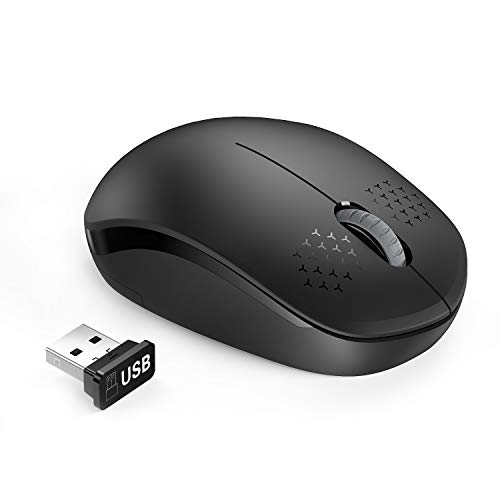
A scroll wheel that suddenly spins the page the wrong way is one of those small but maddening PC problems. The good news: the cause is almost always software, not hardware. This guide works through every fix in order of likelihood — from a single settings toggle that resolves the issue in under 60 seconds, to driver fixes, USB port troubleshooting, and finally hardware diagnostics when everything else checks out.
Why Is My Mouse Wheel Scrolling Backwards?
Three root causes account for the vast majority of cases:
- An inverted scroll setting in Windows — Windows 11 and Windows 10 both carry a 'natural scrolling' (reverse scroll) toggle that is usually off, but OS updates can reset it. This is the most common cause and the easiest fix.
- A driver or companion-software conflict — GPU driver suites (particularly AMD Adrenalin) ship with input-management components that can interfere with HID (Human Interface Device) event processing. A driver update or rollback resolves this class of issue.
- Optical encoder wear — the scroll wheel's internal encoder produces direction signals that degrade over time. When the encoder starts failing, it can send inverted or erratic directional data regardless of software settings.
Work through the fixes in order — most users stop at Fix 1.
Fix 1: Reset the Scroll Direction in Windows Settings
Per Microsoft's support documentation, the scroll direction setting was separated from the touchpad scroll direction during the Windows 11 22H2 update cycle, which is why some users find it unexpectedly toggled after a feature update.
Windows 11: 1. Open Settings (Win + I) → Bluetooth & devices → Mouse 2. Under Scroll & cursor speed, find the Scroll direction dropdown 3. Confirm it reads Down motion scrolls down — if it reads the reverse, change it
Windows 10: 1. Open Settings → Devices → Mouse 2. Look for Scroll direction or Roll the mouse wheel to scroll and verify the setting is not inverted
Changes apply immediately without a reboot. If the setting appears correct but scroll direction is still wrong, open Task Manager (Ctrl + Shift + Esc) → Processes tab → right-click Windows Explorer → Restart. This refreshes the shell and flushes cached input settings without a full reboot.
Fix 2: Update or Roll Back Mouse and Chipset Drivers
HID driver rollback (any mouse)
Windows Update occasionally pushes new Human Interface Device driver versions. If your scroll direction reversed on the same day a driver updated, a rollback is worth trying before anything more complex:
- Open Device Manager (Win + X → Device Manager)
- Expand Mice and other pointing devices
- Right-click your mouse → Properties → Driver tab
- Note the Driver Date — if it is very recent, click Roll Back Driver
- Restart when prompted
AMD Adrenalin users (RX 6000 / RX 7000 series)
Per AMD's driver release notes, certain 2024–2025 Adrenalin releases adjusted how peripheral input events are processed alongside display-driver changes. If you're running an AMD GPU and scroll direction flipped after an Adrenalin update, AMD's support page recommends:
- Downloading the latest Adrenalin package from AMD's official driver download page
- Selecting Clean Install when prompted during setup — this removes conflicting registry entries from the previous install
- If the latest package does not resolve the issue, using Adrenalin's built-in rollback tool (accessible in the Adrenalin interface under Settings → System) to revert to the prior version
Fix 3: Test Different USB Ports
This one surprises people, but USB interference is a documented and well-understood cause of erratic peripheral behavior. Per Intel's USB 3.0 coexistence white paper, USB 3.x ports emit radio-frequency noise in the 2.4 GHz band — the same band used by most wireless mice and keyboards.
What to try:
| Scenario | Recommended action |
|---|---|
| Wireless mouse + USB 3.x front-panel port | Move receiver to a rear USB 2.0 port on the motherboard |
| Wireless mouse receiver on a USB hub | Connect directly to the motherboard — hubs can corrupt HID packet streams |
| Wired mouse on front-panel USB | Try a rear I/O port; front-panel cables are often lower quality |
| Receiver close to a USB 3.x device | Move receiver or device at least 5–10 cm apart |
Wireless mice like the seenda 2.4G Noiseless Wireless Mouse ($11.98) and the seenda Wireless Mouse with USB Receiver ($12.99) are particularly sensitive to receiver placement. The standard recommendation for 2.4 GHz receivers is: rear USB 2.0 port, within one meter of the mouse, away from USB 3.x ports or hubs.
Fix 4: Run a Scroll Encoder Diagnostic
If the first three fixes haven't worked, it's time to determine whether the problem is hardware. MouseTester is a free, widely distributed utility (available on GitHub and the peripheral enthusiast community) that logs raw HID scroll events and charts the directional data in real time.
How to use it: 1. Download MouseTester from its GitHub repository and run the executable (no install required) 2. Select your mouse from the dropdown list 3. Scroll slowly and steadily upward for 20–30 seconds, then downward for 20–30 seconds 4. Examine the chart — a healthy encoder produces clean, consistently-signed spikes. An encoder producing occasional inverted spikes during a single-direction scroll confirms hardware wear, not a software issue
If the chart shows consistent inversions regardless of scroll direction, the encoder is failing. At that point, software fixes will never produce reliable results.
When to Replace the Mouse
For mice where the encoder diagnostics confirm failure, replacement is almost always more practical than repair — optical encoders are soldered components on most consumer mice, and disassembly voids any warranty.
Budget replacement options
If you need a functional replacement today while evaluating a longer-term upgrade:
- seenda Noiseless Wireless Mouse — $11.99, plug-and-play 2.4G, solid for everyday desktop use
- seenda Wireless Mouse (dark variant) — $12.99, same platform with an alternate colorway
- seenda Wireless Mouse (compact) — $9.98, the lowest-cost option in the same family for travel or backup use
- Logitech MK270 Wireless Combo — $23.99, bundles a replacement mouse with a full wireless keyboard, useful if you're refreshing an entire desktop peripheral set
For gaming mice specifically, Prime Day and back-to-school sales frequently bring premium options to budget prices. The current Logitech Prime Day gaming mouse deals roundup covers active discounts worth checking before buying at full retail.
Peripheral reliability in context
Scroll encoder lifespan is consistent with a broader pattern in gaming peripherals: budget and mid-range parts wear faster under high-cycle use. The same principle applies to force-feedback mechanisms in sim racing wheels — a topic covered in depth in the SpecPicks guides for best sim racing setup 2026 and Logitech G29 vs HORI Force Feedback for sim racing beginners. Whether the component is a scroll encoder or a steering wheel motor, the failure modes of budget hardware under sustained use follow predictable curves. The best sim racing wheel for beginners: G29 vs HORI vs Thrustmaster and best sim racing wheel and pedal setup 2026 guides apply the same durability lens to force-feedback hardware — worth reading if you're building out a full peripheral kit.
macOS: Natural Scrolling Toggle
macOS users encounter the identical symptom via the Natural Scrolling toggle. Per Apple's support documentation:
- Open System Settings (or System Preferences on older macOS) → Mouse
- Find the Natural scrolling (or Scroll direction: Natural) toggle
- Disabling it makes the scroll wheel behave in the Windows-conventional direction
This setting resets for some users after major macOS version upgrades. Sequoia (macOS 15.x) users have reported this in Apple's community forums — checking it after any major update is a quick first step.
Summary: Fastest Path to a Fix
| Symptom | Most Likely Cause | First Fix |
|---|---|---|
| Backwards scrolling after Windows update | Scroll direction setting reset | Settings → Mouse → Scroll direction |
| Backwards scrolling after GPU driver update | AMD Adrenalin HID conflict | Clean reinstall of Adrenalin |
| Erratic scrolling near USB 3.x ports | RF interference | Move receiver to rear USB 2.0 port |
| Backwards scrolling on any PC, any settings | Encoder hardware failure | MouseTester diagnostic → replace mouse |
| Backwards scrolling after macOS upgrade | Natural Scrolling toggled | System Settings → Mouse → Natural scrolling |
The vast majority of cases resolve with Fix 1 (Windows scroll direction setting) in under two minutes. Hardware failure is the exception, not the rule — but when it is the cause, no amount of software adjustment will produce a lasting fix.
Citations and sources
- https://support.microsoft.com/en-us/windows/mouse-settings-in-windows-10-and-11 — Microsoft support: scroll direction settings and HID configuration in Windows 10 and Windows 11
- https://www.amd.com/en/support/downloads/drivers.html — AMD driver download portal and Adrenalin release notes
- https://www.intel.com/content/www/us/en/io/universal-serial-bus/usb3-frequency-interference-paper.html — Intel USB 3.0 Radio Frequency Interference Impact on 2.4 GHz Wireless Devices white paper
- https://support.apple.com/guide/mac-help/change-mouse-preferences-mchlp1021/mac — Apple support: Change Mouse settings including Natural Scrolling direction
This piece is editorial synthesis based on publicly available information. No independent first-party benchmarking is reported.