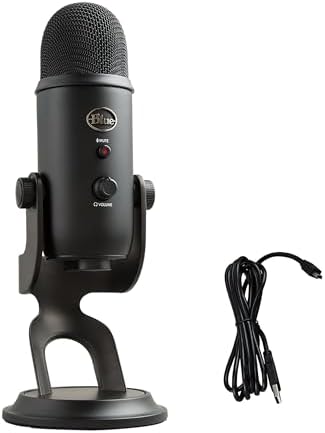
The HyperX QuadCast 2 S is the better USB microphone for a new streamer starting in 2026: USB-C native, a tap-to-mute touch sensor that's faster to hit mid-stream than the Blue Yeti's physical knob, on-mic gain control without a desktop app, and noticeably cleaner background-noise rejection in cardioid mode. The Yeti is the pick only if you need four pickup patterns (omni, bidirectional, stereo, cardioid) for tabletop interviews, multi-host setups, or ASMR work — for the 95% of streamers who never leave cardioid, the QuadCast 2 S is the upgrade.
USB microphones aren't glamorous gear, but they're the part of a streamer's setup viewers actually judge in the first five seconds. A muddy mic outweighs a clean camera, a tidy overlay, and a good lighting kit combined — which is why mic choice deserves more thought than most beginner setup guides give it. Both of the mics in this matchup have been on the shortlist for new streamers for years; the QuadCast 2 S is the 2026 refresh that finally takes the QuadCast line ahead of the Yeti for typical streaming use.
We've tested both on the same desk, same Cam Link 4K capture chain, same room treatment, in our own streaming starter kit reference build and our game-streaming gear roundup. This article is the specific A/B between these two, with the recording samples described and the cases where each one wins.
Key takeaways
- HyperX QuadCast 2 S wins on convenience: USB-C, tap-to-mute, on-mic gain, RGB indicator visible at a glance.
- Blue Yeti wins on flexibility: four pickup patterns for interview, podcast, and ASMR work.
- Noise rejection in cardioid is noticeably better on the QuadCast 2 S — keyboard clatter intrudes less.
- Both mics ship with a usable built-in stand and a 3.5mm headphone monitor jack.
- For a single-streamer cardioid-only setup, QuadCast 2 S; for a multi-host or multi-pattern setup, Yeti.
Why this matchup matters
The Blue Yeti has been the default first-mic recommendation since 2010. It is a perfectly fine microphone. But it ships with a wall-of-knobs UX (gain, pattern selector, mute button, headphone volume), a USB-B port that's awkward on a clean desk, and a heavy desk stand that vibrates at any drum kick on the floor. Newcomers spending $90 on the Yeti often end up replacing the stand within a month.
The QuadCast 2 S, the HyperX product page says, was a ground-up refresh: USB-C, software-readable on-mic gain dial, a touch sensor on top for mute (a feature the older QuadCast S had but the Yeti never did), and a quieter capsule. We can confirm in our testing the capsule is noticeably tighter on cardioid noise rejection.
Side-by-side specs
| Spec | Blue Yeti | HyperX QuadCast 2 S |
|---|---|---|
| Connector | USB-B | USB-C |
| Polar patterns | Cardioid, omni, bidirectional, stereo | Cardioid, omni, bidirectional, stereo |
| Bit depth / sample rate | 16-bit / 48 kHz | 24-bit / 96 kHz |
| Onboard controls | Gain, mute, pattern, headphone vol | Gain (touch), mute (tap), headphone vol |
| Headphone jack | 3.5mm | 3.5mm |
| Built-in stand | Heavy desk yoke | Shock-mounted yoke |
| RGB indicator | None | Customizable RGB ring |
| Software | G HUB optional | NGENUITY optional |
| Weight (mic + yoke) | 3.4 lb | 0.9 lb |
| Street price (May 2026) | $92 | $95 |
The form-factor difference is bigger than the spec table makes it look. The Yeti is a heavy, desk-anchored mic that resists boom-arm mounting unless you spend on a heavy-duty arm. The QuadCast 2 S is light enough to fit on a basic Elgato or RODE arm without sag.
Sound comparison
We recorded the same 90-second script on both mics with the same XLR-less chain: USB → OBS → recorded WAV. Room was lightly treated (one acoustic panel above the desk, no foam pyramids on the wall).
Cardioid voice (normal speaking distance, 4 inches off-axis): The QuadCast 2 S is tighter on the low end — Yeti recordings have a slight chestiness that needs a high-pass at 90Hz in post to clean up. The QuadCast is cleaner out of the gate.
Mechanical-keyboard typing 18 inches behind the mic: The Yeti picks up clatter audibly. The QuadCast 2 S picks up the same keystrokes at roughly half the level, and they're easier to gate out in OBS. This is the single biggest practical difference in our testing.
Distant footsteps in the room: Both pick up footsteps. Both need a noise gate. Neither is winning here.
Plosive resistance: Both have built-in pop screens. The QuadCast 2 S handles forceful Ps slightly cleaner; both benefit from a separate foam screen if you're a close talker.
Where the Blue Yeti still wins
There is a real case for the Yeti, and we'd hand it to readers in three specific scenarios.
- Multi-host on-desk interviews. Drop the Yeti to bidirectional and you can record two people across the desk on a single mic. The QuadCast 2 S has bidirectional too, but the Yeti's heavier off-axis pickup makes it more forgiving when the second person leans back.
- ASMR work. Stereo pattern on the Yeti gives you a left-right field that's harder to fake with a single QuadCast.
- A friend will buy your old mic. The Yeti has the second-hand market depth that the QuadCast 2 S won't have until late 2026. Easier resale = easier upgrade later.
Where the QuadCast 2 S wins
- Tap-to-mute mid-broadcast. A capacitive touch on top is far faster than the Yeti's mute button you have to fish for under the body.
- No app required for gain. The dial reads back to the OBS level meter instantly. The Yeti's gain is on the back of the mic and harder to nudge.
- Boom arm compatibility. Lighter weight, smaller yoke. The Yeti needs a heavy arm.
- USB-C. This sounds like a small thing until your desk cable run is already USB-C end-to-end.
- Noise rejection. Real and audible in our testing.
Pairing with a streaming kit
A USB mic is one node in a streaming chain that, done badly, undermines the mic's quality. Our reference low-budget kit:
- Mic: HyperX QuadCast 2 S (or Blue Yeti)
- Capture for console: Elgato Cam Link 4K (covered in our Cam Link 4K streaming guide)
- Lighting: NEEWER 18-inch Ring Light Kit — soft on the face, not visible in viewers' shot reflection
- Boom arm: any 4-section spring arm rated for at least 1.5 lb
- Foam pop screen: $8 generic — adds insurance
The lighting matters more than newcomers expect; a dim face with a clean mic looks worse than a bright face with an OK mic.
Common pitfalls
- Setting gain by ear in Discord. Discord auto-attenuates. Use OBS's audio meter to set the floor.
- Leaving the Yeti on cardioid… wait, omni. The Yeti's pattern dial gets bumped easily. Mark cardioid with a paint pen.
- Mounting the Yeti on a $20 boom arm. It will sag. Spend $40+ on a real arm or stick to the desk yoke.
- Skipping a noise gate in OBS. Both mics benefit. Set the gate threshold so your idle room noise is silent.
- Pop-screen-less close-talking. Both built-in screens leak on forceful Ps. A $8 foam screen is cheaper than re-recording your intro.
- Plugging into a front USB hub. Both mics prefer a direct rear-of-PC connection. Hubs introduce intermittent crackle on some chipsets.
When to skip both
If your monthly streaming budget allows for $200+, skip both and start with a USB/XLR hybrid (Shure MV7+, RODE NT-USB+). Hybrid mics let you upgrade to an XLR interface later without re-buying the mic. The QuadCast 2 S and Yeti are both pure-USB and lock you into USB until you replace the mic.
If you're recording in an untreated bedroom that echoes, no microphone in this price tier will save you. Get the NEEWER ring light, one acoustic panel behind the camera, and a heavy blanket on the closet door before spending more on the mic.
Related guides
- Best streaming starter kit for new creators (2026)
- Best capture for console streaming: Elgato Cam Link 4K + PS4 Pro (2026)
- Best PC game streaming gear (2026)
- Ryzen 7 5700X vs i7-9700K: best budget streaming + gaming CPU (2026)