
Samsung
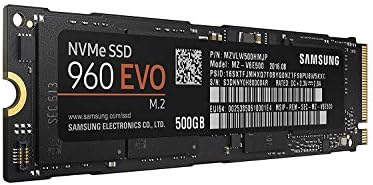
Samsung 960 EVO Series - 250GB PCIe NVMe - M.2 Internal SSD (MZ-V6E250BW)
Bottom line: The Samsung 960 EVO Series ($240.77 on Amazon as of 2026-10-07): Sequential reads up to 3200MB/s over PCIe 3.0 x4 NVMe; main trade-off: 250GB fills fast once Windows and a few modern games land.
As an Amazon Associate, SpecPicks earns from qualifying purchases. Full disclosure →
*Price sourced from Amazon.com. Last updated 2026-10-07. Price and availability subject to change.
Pros & Cons
Pros
- ✓ Sequential reads up to 3200MB/s over PCIe 3.0 x4 NVMe
- ✓ Sequential writes up to 1900MB/s for large file transfers
- ✓ Samsung V-NAND flash in a client-grade M.2 2280 form factor
- ✓ Samsung Magician handles firmware updates and drive monitoring
Cons
- ✗ 250GB fills fast once Windows and a few modern games land
- ✗ M.2 2280 slot required, so older boards are out
- ✗ No SATA fallback if the board lacks an NVMe-bootable slot
- ✗ PCIe 3.0 x4, not the 4.0 speeds newer drives hit
Manufacturer description
This M.2 2280 drive posts sequential read speeds up to 3,200MB/s and sequential write speeds up to 1,900MB/s, roughly six times what a SATA SSD delivers on the same board. Samsung's V-NAND flash sits behind the controller, and the drive is built as a client SSD aimed at high-performance tower desktops and small form factor PCs where a 2.5-inch bay is not an option. Installation is a single M.2 slot and one screw, with no data or power cabling to route. Samsung Magician software handles drive management and automatic firmware updates once you are booted, so you can monitor health and keep the…
SpecPicks Verdict
SpecPicks scored Samsung 960 EVO Series using a rating × review-volume × price-fit model applied to published specs and reviews across the ssds & storage category. Samsung's ssds & storage lineup sits within the broader category mid-tier; price and specs are the deciding factors over brand loyalty here. Judge it on the specification table and the price rather than on sentiment: check the figures that decide your use case, then put it side-by-side with two or three close alternatives in the Compare tool before clicking through.
Common buyer scenarios for ssds & storage of this kind: matching it to an existing build, replacing a failing part, or upgrading from a previous-generation equivalent. Check the spec table below against your current setup — particularly socket / form-factor / power-rating fields — and confirm compatibility on the retailer's listing before purchase. Prices and stock are set by the retailer and may have moved since this page was last updated.
Frequently Asked Questions
How fast is the Samsung 960 EVO 250GB?
Samsung rates it at up to 3200MB/s sequential read and up to 1900MB/s sequential write over PCIe 3.0 x4. Samsung notes performance may vary based on your system hardware and configuration.
Will this fit my motherboard?
It is an M.2 2280 (80mm) card using PCIe 3.0 x4 NVM Express. Your board needs a free M.2 slot wired for PCIe NVMe rather than SATA-only. Check your motherboard manual for the slot's supported mode.
Is 250GB enough for a boot drive?
For Windows plus everyday applications and a few games, yes. Large game libraries or video projects will outgrow it, so most buyers pair it with a larger secondary drive for bulk storage.
What software comes with it?
Samsung Magician provides SSD management and automatic firmware updates. It is a free download from Samsung and works after you have installed and booted from the drive.
Key Features
- M.2 (2280) - PCIe 3.0 x4 NVM Express SSD for Client PCs
- V-NAND Client SSD ideal for high-performance tower desktops and small form factor PC’s
- Sequential Read Speeds up to 3200MB/s and Sequential Write Speeds up to 1900MB/s
- Samsung magician software delivers SSD management and automatic firmware updates
- Performance may vary based on system hardware & configuration
Full Specifications
| Brand | Samsung |
|---|---|
| Color | Black |
| Model Name | 960 EVO |
| Read Speed | 3200 megabytes_per_second |
| Form Factor | Compact M.2 |
| Media Speed | 1900 megabits_per_second |
| Model Number | MZ-V6E250BW |
| Compatibility | PC |
| Built-In Media | NVMe M.2 (2280) SSD & User Manual (All Other Cables, Screws, Brackets Not Included) |
| Item Type Name | MZ-V6E250BW |
| Hard-Drive Size | 250 GB |
| Mfr Part Number | MZ-V6E250BW |
| Number of Items | 1 |
| Special Feature | Portable |
| Hardware Platform | PC |
| Installation Type | Internal Hard Drive |
| Compatible Devices | Laptop, PC |
| Data Transfer Rate | 3938 megabits_per_second |
| Enclosure Material | NAND flash memory, PCB |
| Additional Features | Portable |
Ready to buy?
Samsung 960 EVO Series - 250GB PCIe NVMe - M.2 Internal SSD (MZ-V6E250BW) is listed on Amazon. Price, availability, shipping and returns are set by Amazon and its sellers — check the listing for current terms. SpecPicks earns a small commission on qualifying purchases — thank you for supporting independent review work.
*Price sourced from Amazon.com. Last updated 2026-10-07. Price and availability subject to change.
Related SSDs & Storage



More guides & deep dives from the SpecPicks archive
Browse all articles & guides →- RTX 4070 Super vs RX 7800 XT — Which to Buy in 2026
- The Complete Voodoo5 5500 AGP Driver Guide (2026 Edition)
- Best Budget Gaming PC Build 2026 — ~$1,000 ($800 on Sale)
- How to Build a Windows 98 Retro PC in 2026
- Best Retro Handhelds in 2026 — From $35 to $500
- Best 1440p Gaming GPUs in 2026
- Emulation Hardware in 2026: FPGA, Software, and Cart-Reader Ecosystems
More reviews from the SpecPicks archive
Browse all reviews →- RTX 3060 12GB vs RTX 3090 for Local LLMs (2026)
- How to run Qwen 3 32B on NVIDIA GeForce RTX 5080
- Build a Silent Home NAS on a Raspberry Pi 4 8GB With a SATA SSD (2026)
- 768GB Intel Optane DIMMs Running a 1-Trillion-Parameter LLM: How the Build Actually Works
- Best SSD for a Local LLM Model Library in 2026: Capacity vs Load Speed
- Best Parts for a Budget Ryzen + RTX 3060 Gaming PC Build in 2026
- GTX 1660 VRAM: Why 8GB Doesn't Exist (Real Specs)
- Best GPU for 1080p Esports in 2026: High-Refresh Without Overspending
- Raspberry Pi 4 8GB vs Pi 5 vs Mini-PC for Local LLMs
- Cheap 80s Keyboard Gets a Modern Brain Upgrade
- Debugging Vintage Windows with Claude: SYSFIX Patterns for Win98 vcache, MSNP32, and Glide Hangs
- Best Noctua and Quiet-Tier CPU Coolers in 2026
- Raspberry Pi 4 8GB vs Pi Zero W for RetroPie: Which Board Wins?
- Muse Spark 1.1 Beats GLM-5.2 at Coding — Does It Change the Local-Rig Question?
- 8BitDo SN30 Pro on SNES Classic and Genesis Mini: Bluetooth Setup Guide
- Microsoft's Copilot Goes Agentic — Run Your Own Agent Locally on an RTX 3060
- A 4B Local Coding Agent That Hits 87%: Does It Run on a 3060?
- Best Controller for PC Emulation in 2026: Pro 2 vs DualSense
- Qwen 3.6 27B with MTP: 2.5x Throughput on Local Hardware (Real Benchmarks)
- Best Budget Gaming Laptops of 2026: Buyer's Guide
- Build a PiKVM V3 Device for Remote Server Management (2026)
- Qwen3 0.6B: Raspberry Pi 4 8GB vs Ryzen 5 5600G for Tiny-Model Hosts (2026)
- Best Buy Cuts $900 Off an Asus 64GB Gaming Laptop — Is a Desktop Smarter?
- Sound Blaster AWE64 vs Aureal Vortex 2: The Win98 Audio API War, Revisited
Earliest SpecPicks reviews
Browse full archive →- Best GPU for Llama 3.1 8B (2026)
- Best GPU for Qwen 3 14B (2026)
- Best GPU for Qwen 3 32B (2026)
- Best GPU for Llama 3.1 70B (2026)
- Best GPU for DeepSeek-R1 32B (2026)
- Best GPU for Llama 3.1 405B (2026)
- How to run Llama 3.1 8B on NVIDIA GeForce RTX 5090
- How to run Qwen 3 14B on NVIDIA GeForce RTX 5090
- How to run Qwen 3 32B on NVIDIA GeForce RTX 5090
- How to run Llama 3.1 70B on NVIDIA GeForce RTX 5090
- How to run DeepSeek-R1 32B on NVIDIA GeForce RTX 5090
- How to run Llama 3.1 8B on NVIDIA GeForce RTX 4090