
ADATA
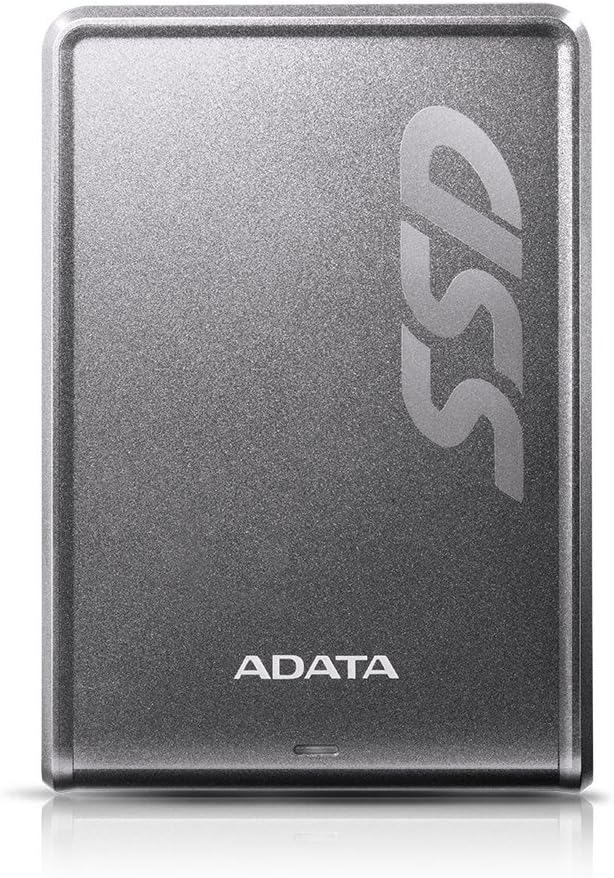
ADATA SV620H 256GB USB 3.0 External Solid State Drive (ASV620H-256GU3-CTI)
Bottom line: The ADATA SV620H 256GB USB 3.0 External Solid State Drive: Rated up to 440MB/s read and write, about 4x an average external hard drive; main trade-off: 256GB fills quickly with 4K video, disk images or large game libraries.
As an Amazon Associate, SpecPicks earns from qualifying purchases. Full disclosure →
Pros & Cons
Pros
- ✓ Rated up to 440MB/s read and write, about 4x an average external hard drive
- ✓ 3D stacked TLC NAND for better reliability and power efficiency than 2D NAND
- ✓ No moving parts: lighter, quieter and more shock resistant than a portable HDD
- ✓ Works with Windows, Mac OS and Android devices
- ✓ Sandblasted titanium finish with raised edges that protect surfaces from scratches
Cons
- ✗ 256GB fills quickly with 4K video, disk images or large game libraries
- ✗ 440MB/s ceiling trails newer NVMe-based portable SSDs
- ✗ Only 256GB and 512GB versions; no 1TB or larger option in this line
- ✗ Title says USB 3.0 but features cite USB 3.1; a slower port will cap speeds
Manufacturer description
The ADATA SV620H 256GB external SSD replaces a spinning portable hard drive with flash storage. It is lighter, quieter and more shock resistant. ADATA rates it at up to 440MB/s for both read and write over USB 3.1, which it says is about four times faster than an average external hard drive. Large photo folders, project files and video clips copy in a fraction of the time a mechanical drive takes. Inside, the SV620H uses 3D NAND, which is stacked TLC flash. According to ADATA, this layout is more reliable and more power efficient than older 2D NAND. Because there are no moving parts, it is…
SpecPicks Verdict
SpecPicks has no buyer-rating or benchmark data for ADATA SV620H 256GB USB 3.0 External Solid State Drive, so this read rests on the manufacturer's listed specs (how we evaluate). Compare with similarly-priced alternatives in the ssds & storage category before committing. On the listing's own facts, the case for it is "Rated up to 440MB/s read and write, about 4x an average external hard drive"; the main trade-off is "256GB fills quickly with 4K video, disk images or large game libraries". If those two points fit how you will use it, put it beside one or two close alternatives in the Compare tool to confirm the price.
Common buyer scenarios for ssds & storage of this kind: matching it to an existing build, replacing a failing part, or upgrading from a previous-generation equivalent. Check the spec table below against your current setup — particularly socket / form-factor / power-rating fields — and confirm compatibility on the retailer's listing before purchase. Prices and stock are set by the retailer and may have moved since this page was last updated.
Frequently Asked Questions
How fast is the ADATA SV620H 256GB external SSD?
ADATA rates the SV620H at up to 440MB/s for both read and write over USB 3.1. It says that is about four times faster than an average external hard drive. Real speeds depend on your port, cable and file sizes.
Does the ADATA SV620H work with a Mac and with Android phones?
Yes. ADATA lists the SV620H as compatible with Android, Mac OS and Windows. You may need to reformat it for the file system your devices share, and an Android device must support USB storage through an adapter or the right port.
What type of flash memory does the SV620H use?
It uses 3D NAND, which is stacked TLC flash. ADATA says this gives better reliability and power efficiency than older 2D NAND.
Is the SV620H more durable than a portable hard drive?
It has no spinning platters or moving heads, so ADATA describes it as lighter, quieter, more shock resistant and more durable than an external hard drive. Its raised edges also stop the casing from scratching the surface it sits on.
What capacities does the SV620H come in, and what warranty does it have?
The SV620H comes in 256GB and 512GB versions. This listing is the 256GB model, ASV620H-256GU3-CTI. The product context does not state warranty terms, so check the product listing or ADATA's support site for current coverage.
Key Features
Quoted from the manufacturer's listing. Where it differs from the pros and cons above, those note the conditions the listing leaves out.
- Upgrade to SSD today to enjoy lighter, quieter, and more durable operation
- USB 3.1 Achieves up to 440MB/s read and write or four times faster than an average external Hard Drive
- Incorporates 3D NAND Flash for increased reliability and better power efficiency compared to 2D NAND
- Compatible with Android, Mac OS, and Windows
- Capacities available in 256GB and 512GB
Full Specifications
| Brand | ADATA |
|---|---|
| Color | Slim |
| Model Name | SV620H |
| Read Speed | 440 Megabytes Per Second |
| Form Factor | Portable |
| Media Speed | 440 megabits_per_second |
| Connectivity | USB |
| Model Number | ASV620H-256GU3-CTI |
| Compatibility | Android, Mac |
| Built-In Media | SV620H, USB 3.1 Cable, User Manual |
| Item Type Name | ADATA SV620H Portable Solid State Drive 3D NAND Flash 256GB USB 3.1 External SSD (ASV620H-256GU3-CTI) |
| Hard-Drive Size | 256 GB |
| Mfr Part Number | ASV620H-256GU3-CTI |
| Number of Items | 1 |
| Special Feature | Shock Resistant, 3D NAND Flash, Lighter, Quieter, Durable, Faster Speeds |
| Hardware Platform | PC; Mac;Unix;Linux |
| Installation Type | External Hard Drive |
| Compatible Devices | PC, Mac, Unix, Linux |
| Data Transfer Rate | 440 Megabits Per Second |
| Additional Features | Shock Resistant, 3D NAND Flash, Lighter, Quieter, Durable, Faster Speeds |
Ready to buy?
ADATA SV620H 256GB USB 3.0 External Solid State Drive (ASV620H-256GU3-CTI) is listed on Amazon. Price, availability, shipping and returns are set by Amazon and its sellers — check the listing for current terms. SpecPicks earns a small commission on qualifying purchases — thank you for supporting independent review work.
Related SSDs & Storage



More guides & deep dives from the SpecPicks archive
Browse all articles & guides →- The Complete Voodoo5 5500 AGP Driver Guide (2026 Edition)
- How to Build a Windows 98 Retro PC in 2026
- Best Retro Handhelds in 2026: Pocket, Mid-Tier and FPGA Picks
- Best 1440p Gaming GPUs in 2026
- Emulation Hardware in 2026: FPGA, Software, and Cart-Reader Ecosystems
- Best Budget Gaming PC Build 2026 — ~$1,000 Parts List
- RTX 4070 Super vs RX 7800 XT — Which to Buy in 2026
More reviews from the SpecPicks archive
Browse all reviews →- Best Capture Device for Recording Retro Consoles and Old PCs in 2026
- VibeThinker-3B: A 3B Reasoning Model on RTX 3060 and Raspberry Pi 4
- Kimi K3 Open Weights: What It Takes to Run It Locally
- N100 Mini PC vs Raspberry Pi 4 for Home Assistant in 2026
- FIDECO vs Unitek vs Vantec: Best IDE-to-USB Adapter for Dumping Retro Drives
- RTX 3060 12GB vs Arc A770 16GB for Stable Diffusion in 2026
- Gemma 4 31B Abliterated on a Single RTX 3060 12GB: Quantization, VRAM, and Real Tok/s
- Jetson Orin Nano Super vs Coral USB: Which One Runs an LLM?
- Raspberry Pi 4 8GB Homelab in 2026: Jellyfin, Pi-hole and Home Assistant on One Board
- Ryzen 5 5600X vs Ryzen 5 5600G for CPU-Only Gemma 3 12B
- First PC Build Guide: Components, Budget & Aesthetics
- Air vs AIO for the Ryzen 7 5800X: Noctua NH-U12S vs CoolerMaster ML240L
- Build a Raspberry Pi Zero Cyberdeck in 2026: Parts, Wiring and a Working BOM
- Prime Intellect's $130M raise: build your own agent rig
- Best Streaming Starter Kit for New Creators in 2026
- Best Webcam for Streaming Under $200 (2026)
- Local RTX 3060 rig vs Kimi K3's cheap API: the 2026 cost-per-task math
- llama.cpp vs vLLM for Single-User Local Chat in 2026: Which Wins on a 12GB GPU?
- Intel Plans Two 22-Core Nova Lake-S SKUs With Game-Boosting Cache
- Blue Yeti vs HyperX QuadCast 2 S: Best USB Mic for Streaming in 2026
- Best Budget GPU for Local LLMs Under $300 in 2026: Why the RTX 3060 12GB Still Wins
- Mistral 7B vs Mistral Small 24B: GPU Requirements Compared
- Active Quake 3 and OpenArena Servers in 2026: How to Find, Join, and Host
- Crucial BX500 vs Samsung 870 EVO for an Emulation Box
Earliest SpecPicks reviews
Browse full archive →- Best GPU for Llama 3.1 8B (2026)
- Best GPU for Qwen 3 14B (2026)
- Best GPU for Qwen 3 32B (2026)
- Best GPU for Llama 3.1 70B (2026)
- Best GPU for DeepSeek-R1 32B (2026)
- Best GPU for Llama 3.1 405B (2026)
- How to run Llama 3.1 8B on NVIDIA GeForce RTX 5090
- How to run Qwen 3 14B on NVIDIA GeForce RTX 5090
- How to run Qwen 3 32B on NVIDIA GeForce RTX 5090
- How to run Llama 3.1 70B on NVIDIA GeForce RTX 5090
- How to run DeepSeek-R1 32B on NVIDIA GeForce RTX 5090
- How to run Llama 3.1 8B on NVIDIA GeForce RTX 4090