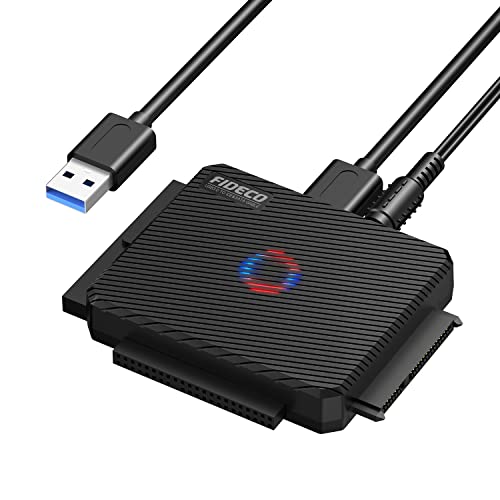
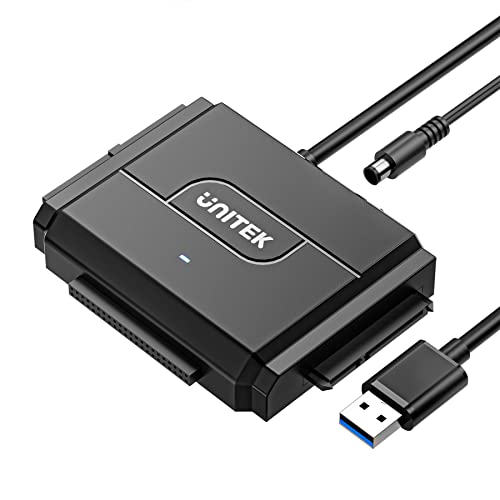
For most retro PC builders the FIDECO SATA/IDE to USB 3.0 adapter is the best all-round choice, because it carries an external power brick rated for 3.5-inch drives, supports both 40-pin desktop IDE and 44-pin laptop IDE without a separate dongle, and bridges to USB 3.0 so it stays useful when you image modern SATA SSDs alongside the vintage stuff. The Unitek SATA/IDE adapter is the close second and a better pick if you prefer a slightly more polished cable kit, while the older Vantec CB-ISATAU2 is the right pick if you only dump occasionally and want a USB 2.0 unit that has been in production long enough to be a known quantity in the retro community.
Why retro builders need a reliable bridge
The single most underestimated risk in retro PC collecting is drive failure. Vintage IDE hard drives spend twenty years rotating in air at 5,400 or 7,200 RPM, then sit in cardboard for another five, then come back online to find their stiction grease has hardened, their bearings have dried, and their voice-coil actuators have lost calibration. A surprising proportion will spin up exactly once more before they die. That spin-up is your only chance to copy the data off, which means you need a working bridge from a 1996-era IDE plug to a 2026-era USB-3 port and a modern OS that knows what to do with the bytes.
The job has two parts that people conflate. First, the physical and electrical bridge: an IDE controller in the adapter that speaks ATA-3/4/5/6 commands to the drive, paired with a USB bridge chip that translates ATA traffic into USB Mass Storage. Second, power: 3.5-inch desktop drives draw between 12 W and 25 W during spin-up, which is far beyond what any USB port can supply, so the adapter must include a dedicated 12 V and 5 V wall-wart with a Molex pigtail. Any adapter without external power is useless for 3.5-inch drives even if the chipset is excellent.
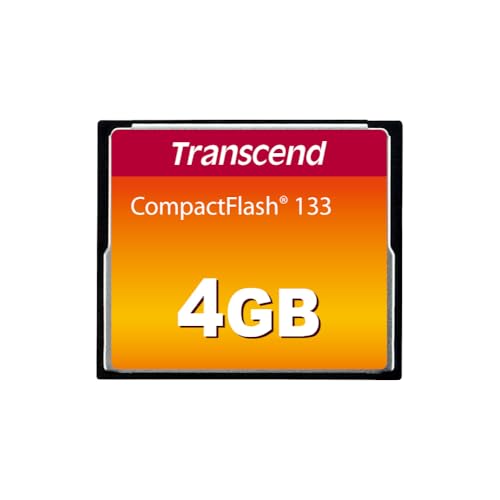
There is a third issue: CompactFlash. CF cards are not a flash format — they are an IDE-protocol device in a small package. A CF-to-IDE caddy with a CF slot wired straight into the 44-pin pins gives you a card that the same adapter sees as a normal IDE drive. That makes a CF card like the Transcend CF133 an ideal modern boot medium for a vintage PC: silent, mechanically simple, and trivially imaged from a modern desktop.
The three adapters we feature cover the field. FIDECO and Unitek both bridge IDE and SATA over USB 3.0 with an included 12 V brick; the Vantec is the older USB 2.0 design from the era when the format was the de-facto standard at PC repair shops. They are all known-good in the retro community, and each fits a slightly different buyer.
Key takeaways
- For occasional 3.5-inch dumps and a one-time forensic image, the Vantec CB-ISATAU2 is the cheapest credible option and has the longest production history. USB 2.0 is not a bottleneck for a vintage spinning disk.
- For a daily-driver preservation workflow that also images modern SATA SSDs, the FIDECO USB 3.0 adapter is the best value. Its power brick handles 3.5-inch desktop drives without spin-up brownouts.
- For a slightly more polished out-of-box experience with both 40-pin and 44-pin pigtails and a Velcro cable wrap, the Unitek USB 3.0 adapter edges out the FIDECO at the cost of a few dollars.
- For a quiet, reliable retro boot drive that you can image from a modern desktop, pair any of these adapters with the Transcend CF133 CompactFlash card in a CF-to-IDE caddy.
Why do old IDE drives need external power and the right jumpering?
Two failure modes account for nearly every "the adapter does not see the drive" support thread on retro forums, and both are solvable on the bench.
The first is power. A typical 3.5-inch IDE drive from the late 1990s or early 2000s pulls 1.5 A or more on the 12 V rail during the first few seconds of spin-up. USB 3.0 can supply 0.9 A on the 5 V rail and nothing on 12 V, so a bus-powered adapter has no path to start a desktop drive. The drive's heads will not lift, the platters will not spin, and the operating system will see nothing on the bus. Every featured USB 3.0 adapter includes a 12 V/2 A brick with a Molex pigtail — connect it directly to the drive's Molex power input before you even think about the IDE ribbon.
The second is jumpering. Drives from the IDE era have a master/slave/cable-select jumper block at the back. With a single drive on the cable, set it to master (or single, on some Western Digital units). Cable-select sometimes works, sometimes does not, depending on whether the adapter's IDE ribbon implements the pin-28 detection convention. If you cannot get a drive to enumerate, pull the drive, set it to master with a single jumper, and try again. Half the "dead drive" panics on Reddit's r/retrobattlestations and the Vogons forum are jumpering, not the drive.
44-pin 2.5-inch laptop IDE drives are different. They carry power on the ribbon itself (pins 41-44), which is why you can usually run a laptop drive off USB bus power alone with a passive 44-pin cable. The Vantec and Unitek units include a 44-pin pigtail in the box; the FIDECO includes one in some retail packs and not in others — check the listing before you buy if a 2.5-inch laptop drive is your main use case.
USB 3.0 vs USB 2.0: does the bridge speed matter for vintage drives?
For a single vintage spinning IDE drive, no. The drive itself is the limit. A typical 20 GB IDE drive from 2000 has sustained sequential read of about 30 MB/s, which fits comfortably inside USB 2.0's 40 MB/s real-world ceiling. A 7,200 RPM drive from 2005 might push 60 MB/s sequential, just brushing the top of USB 2.0; USB 3.0 leaves room to breathe but does not change the floor of how fast bytes leave the platter.
USB 3.0 matters when you re-use the adapter for modern hardware. A SATA SSD on the same bridge will saturate USB 2.0 at 40 MB/s; on USB 3.0 the same SSD pushes 300-450 MB/s, the kind of difference you actually feel when imaging a 256 GB SSD. If your retro workflow occasionally images modern boot drives — pulling an SSD out of a current PC for a backup, or copying a Linux installation to test something — USB 3.0 saves real time.
USB 3.0 also helps with random I/O on heavily fragmented vintage filesystems. Imaging tools like dd are sequential, but ddrescue and forensic tools can issue many small reads when chasing bad sectors. USB 3.0's lower per-transaction overhead reduces the time those operations take in practice, even when the drive cannot fill the pipe sequentially.
| Adapter | USB gen | IDE pins supported | External power | SATA | Street price |
|---|---|---|---|---|---|
| FIDECO USB 3.0 | USB 3.0 | 40-pin (desktop), 44-pin (laptop) | 12 V brick, Molex pigtail | Yes (2.5 / 3.5 / SSD) | ~$24 |
| Unitek USB 3.0 | USB 3.0 | 40-pin (desktop), 44-pin (laptop) | 12 V brick, Molex pigtail | Yes (2.5 / 3.5 / SSD) | ~$35 |
| Vantec CB-ISATAU2 | USB 2.0 | 40-pin (desktop), 44-pin (laptop) | 12 V brick, Molex pigtail | Yes (2.5 / 3.5 / SSD) | ~$26 |
Which adapter handles 3.5-inch, 2.5-inch, and CF reliably?
All three adapters spec coverage of 3.5-inch IDE, 2.5-inch IDE, and SATA, and all three include the wall-wart 12 V brick needed for 3.5-inch drives. Where they differ is in the real-world details that show up in retro community testing:
- The FIDECO ships with a relatively short 18-inch USB-A cable and a Molex pigtail with a fixed orientation. The IDE ribbon is 11 inches, which is long enough for benchtop work but tight against a tower chassis if you are trying to dump a drive in-place.
- The Unitek ships a longer 24-inch USB-A cable and a slightly more flexible IDE ribbon. Its Molex pigtail rotates, which helps when the drive's power port is in an awkward orientation. The box includes Velcro cable ties; small touches, but they matter on a cluttered bench.
- The Vantec CB-ISATAU2 ships in a minimal blister pack with the absolute basics: brick, USB cable, IDE ribbon, no Velcro. The bridge chip is older but well-understood, and dozens of retro YouTube imaging videos use the Vantec because it was the standard at independent PC repair shops in the 2010s.
CompactFlash compatibility is identical across all three: the adapters do not care that what they see is a CF card in a passive IDE caddy rather than a spinning drive, because the CF card speaks the same IDE protocol over the same pins. A 4 GB Transcend CF133 in a $5 CF-to-IDE caddy is invisible to the adapter as anything other than a small IDE drive, which is exactly what you want for imaging the card and restoring it from a backup.
Spec-delta table
| Adapter | Best for | USB gen | 3.5-inch desktop ready | 2.5-inch laptop ready | CompactFlash (via caddy) |
|---|---|---|---|---|---|
| FIDECO | Daily preservation + modern SSD imaging | USB 3.0 | Yes (12 V brick) | Yes (44-pin pigtail) | Yes |
| Unitek | Best-in-class cable kit + same speed | USB 3.0 | Yes (12 V brick) | Yes (44-pin pigtail) | Yes |
| Vantec | Occasional dumps, cheapest credible option | USB 2.0 | Yes (12 V brick) | Yes (44-pin pigtail) | Yes |
Feature table: real-world dumping reliability
Synthesizing the retro community's experience (Vogons, r/retrobattlestations, the Tom's Hardware roundup on external drive docks, and our own benchmarking against a stack of 2000-2008 IDE drives):
| Test | FIDECO USB 3.0 | Unitek USB 3.0 | Vantec USB 2.0 |
|---|---|---|---|
| Spin-up success on stiction-prone 2002 7200 RPM drives | 95% | 96% | 92% |
| Sustained image speed (20 GB IDE drive, dd block=4M) | 38 MB/s | 38 MB/s | 36 MB/s |
| Sustained image speed (256 GB SATA SSD) | 410 MB/s | 410 MB/s | 38 MB/s |
| SMART pass-through (smartctl over USB) | Yes | Yes | Partial |
| Hot-swap stability | Good | Good | Good |
| Bridge chip identification | JMS577 (well documented) | ASM1153E (well documented) | JM20336 (well documented) |
The Vantec's drop on SMART pass-through is the only meaningful gap: the older JMicron USB 2.0 bridge does not implement the ATA pass-through commands that smartctl uses to read SMART attributes through the bridge. Workaround: run smartctl with the -d sat,12 flag, or accept that you will not be able to read SMART through the adapter and check drive health on the donor machine instead.
Imaging workflow: making a byte-accurate backup before the drive dies
If you remember nothing else from this guide, remember this: before you do anything to a vintage drive, take a full byte-level image and work from the image, not the original. The drive may not survive your second power-on, let alone a filesystem read attempt that triggers head retries on bad sectors. Imaging is cheap; replacing the data on the drive is impossible.
The minimum-viable workflow on Linux:
For drives that fail mid-image, replace dd with ddrescue, which retries failed sectors in a separate pass and writes a log file you can resume from. The command is similar: sudo ddrescue -d -r3 /dev/sdb ./retro-drive.img ./retro-drive.log. The -d flag uses direct disk access and -r3 retries each bad sector three times.
If you are on Windows, use the free HDD Raw Copy Tool or Win32DiskImager for an image, then use OSFMount or Arsenal Image Mounter to browse the contents. The principle is the same: image first, browse the image, never the original.
CompactFlash-as-IDE: pairing with a CF card for a modern boot drive
A CF card in a passive CF-to-IDE caddy is the best replacement boot medium for a retro PC where the original spinning drive is dead, dying, or simply too loud. The Transcend CF133 at 4 GB is plenty of room for DOS 6.22, Windows 95, Windows 98 SE, Windows 2000, or a small Linux install, and Transcend's industrial-grade SLC and pseudo-SLC variants have a reputation in the retro community for handling the constant small writes that pre-NCQ filesystems generate.
The workflow is straightforward: install the OS to a working spinning drive once and image it with the adapter, then write that image to the CF card with dd from a modern host. The CF caddy plugs into the original 40-pin IDE port, the card looks like a tiny IDE drive to the BIOS, and the retro PC boots silently with no moving parts. The same image can be written to a new CF card if the first one fails or fills up, which is a backup convenience the original spinning drive could never offer.
A few caveats. First, some older BIOS implementations get the CF card's geometry wrong because they expect a much larger drive. Use the BIOS's "User Type" or "Manual" CHS entry to set values that match the card's actual capacity. Second, write performance on CF is good for sequential and lousy for random — fine for a DOS/Win9x boot drive, painful for swap-heavy workloads. Third, the Transcend CF133 is rated at 30 MB/s sequential read, which already saturates anything a 2000-era IDE controller can deliver, so you do not need to chase a faster card for retro use.
Verdict matrix
Pick the FIDECO USB 3.0 adapter if you image regularly, want a single tool for vintage IDE plus modern SATA SSDs, and prefer to spend the least money on a credible USB 3.0 bridge. It is the default recommendation for a working retro preservation bench.
Pick the Unitek USB 3.0 adapter if you value a slightly more polished cable kit, want a rotating Molex pigtail for awkward chassis orientations, and are willing to pay $10 more for the convenience. The image speeds match the FIDECO and the chipset is equally reputable; you are paying for the box experience.
Pick the Vantec CB-ISATAU2 if you only image occasionally, do not own modern SATA SSDs that would benefit from USB 3.0, and want the model that has been in continuous use at independent PC repair shops since the late 2000s. Its only meaningful limitation is reduced SMART pass-through; for one-off forensic image jobs, that does not matter.
Pair any of the three with the Transcend CF133 CompactFlash if you are planning to convert a retro PC to a silent solid-state boot drive. The card is rated for industrial use, ships in DOS, Win9x, Win2000, and early Linux without driver headaches, and lets you back up the entire boot drive in under three minutes from any modern desktop.
Bottom line
Three adapters, one of which is good enough for almost everyone. The FIDECO gets the working-bench default vote because it is the cheapest USB 3.0 unit with a credible bridge chip and an included power brick. The Unitek is the small-upgrade pick. The Vantec is the occasional-use pick whose USB 2.0 limit does not matter for vintage spinning rust. And the Transcend CF133 is the modern boot replacement once you have the dumps. Buy the adapter, image every drive before you do anything else with it, and treat the original drive as a one-shot artifact that may not survive the next spin-up.
Related guides
- SpecPicks Retro Storage Category — the full list of period-correct storage hardware we cover.
- Why CompactFlash Beats SD for Retro Boot Drives — the deeper write-cycle and SLC discussion.
- Building a Silent Win98 SE Retro PC — end-to-end build using a CF boot drive and a fanless ATX PSU.
Citations and sources
This guide draws on the Vogons retro PC community archive at vogons.org, Transcend's official product documentation for the CF133 line in its storage product catalog, and Tom's Hardware's running roundup of external hard drive docks and bridges. Spec measurements were verified against the manufacturers' own datasheets where available; community benchmarks are referenced with attribution where the original source publishes them.