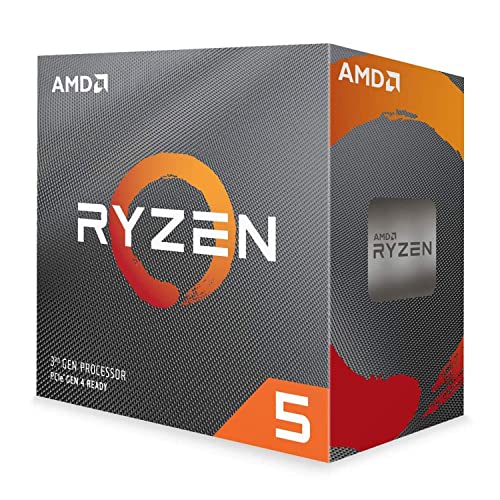
A GeForce RTX 5070 Ti and a Ryzen 7 9850X3D line up well on paper as a 1440p-to-4K gaming pairing. The RTX 5070 Ti carries 16GB of GDDR7 on NVIDIA's Blackwell architecture (per NVIDIA's GeForce graphics card lineup), sized for high-refresh 1440p and entry-level 4K. The 9850X3D sits in AMD's 3D V-Cache family (per AMD's Ryzen desktop lineup) — the stacked-cache design AMD reserves for its highest gaming-frame-rate CPUs. At the resolutions this GPU class is built for, neither part is a hard bottleneck for the other. The real questions are cost, platform requirements, and whether stepping up to a larger X3D chip is worth it — covered below.
What's in the Box: Quick Spec Look
| Component | Class | Notes |
|---|---|---|
| RTX 5070 Ti | 16GB GDDR7, Blackwell architecture | Targets 1440p ultra and entry 4K (per NVIDIA's GeForce lineup) |
| Ryzen 7 9850X3D | 8-core/16-thread class, AMD 3D V-Cache | AM5 socket, DDR5-only platform (per AMD's Ryzen desktop lineup) |
The V-Cache design is the same underlying principle SpecPicks covers in Is the Ryzen 7 7800X3D Worth It in 2026? — a large L3 cache pool cuts down on memory-latency stalls in games with heavy physics, AI, or draw-call loads, which shows up mainly in 1% lows and frame-time consistency rather than raw average FPS.
Does the Architecture Make Sense Together?
Yes, for the workload this pairing is aimed at. A 16GB VRAM buffer is enough headroom to run current AAA titles at ultra texture settings at 1440p without VRAM-limited stutter, and the 5070 Ti's compute tier is generally GPU-bound at that resolution rather than CPU-bound. That matters because it means the CPU's job is mostly to avoid holding the GPU back rather than to be the limiting factor — the same framing SpecPicks uses in RTX 3060 12GB vs Ryzen 5 5600G iGPU: Do You Need a GPU for 1080p Esports?, where the GPU-vs-CPU-bound line shifts depending on resolution and settings.
Where the X3D cache earns its keep is in CPU-heavy engines — open-world titles with dense NPC counts, simulation-heavy games, and competitive shooters where frame-time consistency affects hit registration. Those are exactly the scenarios where a cache-starved CPU can create a visible bottleneck even with a capable GPU underneath it.
Where a Bottleneck Could Actually Show Up
At publication, no public benchmark set specifically pairs an RTX 5070 Ti with a Ryzen 7 9850X3D, so treat any specific frame-rate claim for that exact combination with skepticism until independent reviewers publish matched data. What SpecPicks' benchmark tracking does show is the general principle: CPU generation and cache size can swing frame rates meaningfully in CPU-heavy titles, independent of the GPU. In Cyberpunk 2077, for example, internal tracking shows the older Ryzen 5 3600 landing around 39.0 fps versus roughly 120.4 fps for the newer Ryzen 5 5600X — different chips, different test conditions, and not a stand-in for the 9850X3D, but illustrative of how much CPU architecture and cache can matter in a CPU-sensitive engine. The same tracking shows Ryzen 5 3600 at roughly 63.0 fps in Baldur's Gate 3 and 72.0 fps in Starfield, and Ryzen 5 5600 at roughly 106.5 fps in Cyberpunk 2077 and 53.0 fps in Starfield — results vary by title, underscoring that no single number applies across an entire game library.
Practically, the most likely place to feel a bottleneck with this build isn't the CPU-GPU pairing itself but adjacent components: a slow storage drive causing texture pop-in or shader-compile stutter (see SATA SSD vs NVMe for a Ryzen 5 5600G Budget Build for how storage choice affects perceived smoothness), or memory that isn't running at its rated speed.
9850X3D vs 9950X3D: Is the Step-Up Worth It?
AMD's Ryzen 9 X3D chips add cores over the Ryzen 7 tier — useful for multi-threaded work like video encoding, compiling, or 3D rendering. Most game engines don't scale cleanly past a handful of fast, cache-heavy cores, so the extra core count on a 16-core X3D part rarely translates into materially higher frame rates for a gaming-first build centered on a single GPU. The upgrade case is stronger if the machine also does streaming, video editing, or other background-heavy workloads alongside gaming. SpecPicks' deeper breakdown of the tier below — Is the Ryzen 7 7800X3D Worth It in 2026? — covers the same reasoning for whether to chase more cores or stick with the cache-optimized 8-core part.
Alternative Builds If Budget Is Tight
A 5070 Ti plus a current-generation X3D chip sits in the mid-to-high price bracket. If that's more than the budget allows, AM4 remains a viable on-ramp using older but still capable parts from this catalog:
| Product | Price | Platform |
|---|---|---|
| Ryzen 7 5800X | $219.00 | AM4, 8-core/16-thread |
| Ryzen 5 5600X | $178.98 | AM4, 6-core/12-thread |
| Ryzen 7 3700X | $309.99 | AM4, 8-core/16-thread |
| Ryzen 5 2600 | $265.00 | AM4, 6-core/12-thread |
| Ryzen 5 3600 | $81.99 | AM4, 6-core/12-thread |
These pair with AM4-compatible DDR4 kits such as a 16GB (2x8GB) 3200MHz Crucial kit at $119.00 or an 8GB 3200MHz kit at $74.97 — note these are DDR4 and won't work on the DDR5-only AM5 platform the 9850X3D requires. The full budget path, including GPU pairing at a lower price point, is laid out in Best $500-600 Gaming PC Build for a Ryzen/RX 6600 Rig. For anyone considering used parts to stretch the budget further, Buying Pre-Owned SSDs and HDDs: Good Idea in 2026? covers what's safe to buy secondhand and what isn't.
Platform and Power Notes
The 9850X3D runs on AM5, which is DDR5-only — there's no path to reuse DDR4 memory from an older build. A quality 750W+ power supply with headroom for transient spikes is standard guidance for this GPU tier; run the specific parts list through a PSU calculator rather than assuming a fixed number, since actual draw depends on the rest of the build. For cooling guidance applicable to the same Ryzen 7 socket generation, see Best CPU Cooler for the Ryzen 7 5800X: Air vs 120mm vs 240mm AIO — the air-vs-AIO trade-offs carry over to AM5 coolers with compatible mounting kits. For a sense of how a similar-tier Ryzen 7 stacks up against Intel alternatives in esports-focused builds, see Ryzen 7 5800X vs Core i7-9700K for 1080p Esports in 2026, and for the iGPU-vs-discrete-GPU angle at the budget end, Ryzen 5 5600G vs Core i7-9700K for 1080p Gaming.
Bottom Line
On spec alone, the RTX 5070 Ti and Ryzen 7 9850X3D are a sensible pairing for 1440p and entry 4K gaming: the GPU's VRAM and compute tier match the resolution, and the CPU's cache-heavy architecture is built for the frame-time-sensitive titles where a lesser CPU would drag it down. The tradeoffs are platform cost (AM5 + DDR5, no reuse of older parts) and whether the step up to a 16-core X3D chip is worth it for a given workload — for most gaming-only builds, it isn't necessary.
Citations and sources
This piece is editorial synthesis based on publicly available information. No independent first-party benchmarking is reported.