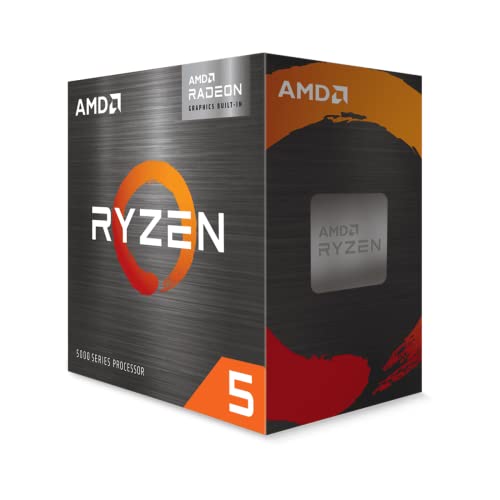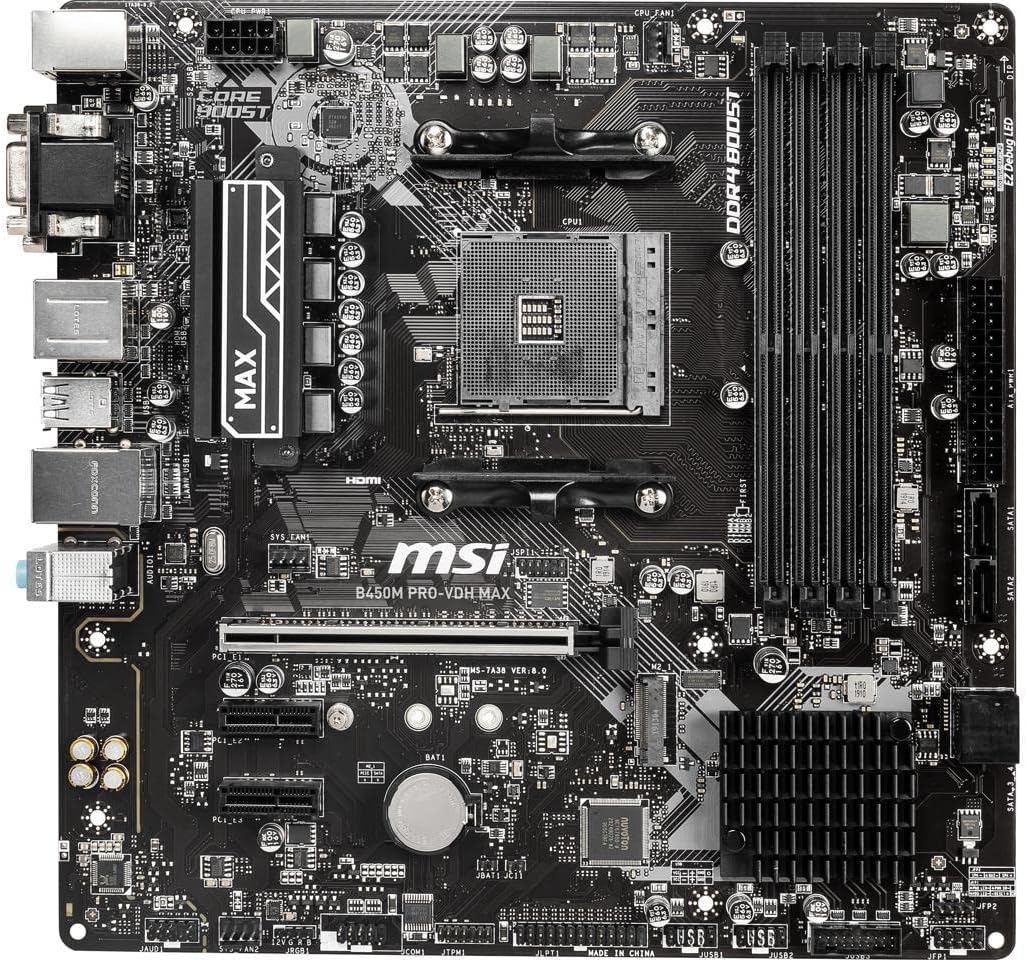
For most budget AM4 builds, the Samsung 870 EVO 250GB is the OS-drive winner and the Crucial BX500 1TB is the game-library winner. The 870 EVO's DRAM cache and 5-year warranty make it the most consistent SATA option in this tier — see Samsung's product page for spec details — while the BX500's price-per-GB is unbeatable for bulk storage (Crucial BX500 page). The WD Blue 3D NAND 500GB sits between them, and the SanDisk SSD Plus 480GB is a fine cheap secondary drive. This is a two-drive build, not a one-drive dilemma.
Who this is for
You're putting together a first PC around a Ryzen 5 5600G or a value AM4 setup, you don't need NVMe headline speeds, and you'd rather spend the SSD budget where it actually moves the needle. Every drive in this comparison is 2.5-inch SATA, which is genuinely the pragmatic tier for budget AM4 builds — the platform's early A320/B450 boards still shine here, and the M.2 slot (if you have one) can be reserved for a later NVMe upgrade. This guide compares four widely available consumer SATA SSDs on the specs that matter for a budget rig: sustained write behavior, endurance (TBW), DRAM cache presence, warranty, and price-per-GB.
Key takeaways
- Best all-round: Samsung 870 EVO 250GB — DRAM cache, MLC-tier consistency, 5-year warranty, high TBW.
- Best bulk storage: Crucial BX500 1TB — DRAM-less but cheapest per GB, great for game libraries.
- Best "middle" pick: WD Blue 3D NAND 500GB — DRAM cache, WD's SLC caching, solid warranty.
- Cheapest secondary: SanDisk SSD Plus 480GB — DRAM-less, entry-level, fine for backup or media storage.
- Any of these drives will make a Ryzen 5 5600G build feel modern versus a spinning HDD — the differences between them are second-order for typical desktop use.
What actually matters in a budget SATA SSD?
Four things separate a $30 SATA SSD from a $70 one, and they aren't headline sequential read speed.
DRAM cache vs DRAM-less. DRAM cache stores the flash translation table (FTL) — the map from logical block addresses to physical NAND locations. DRAM-less drives store this map in host memory (via HMB on newer NVMe drives) or in slower NAND. The consequence is random-write consistency. A DRAM drive holds steady write speed under mixed workloads; a DRAM-less drive can slow noticeably once a small SLC cache fills. For an OS drive, DRAM matters. For a game-library drive that mostly reads, it doesn't.
Endurance (TBW). Terabytes written before the warranty expires. A 1 TB BX500 at 360 TBW handles far more writes than a 250 GB 870 EVO at 150 TBW — but the workloads differ, so the raw numbers matter less than the ratio to how you use the drive. For a typical desktop that writes ~50 GB per day (heavy), even the smallest drive here lasts a decade before crossing its rated TBW.
Sustained write speed. SATA tops out around 550 MB/s sequential. Every drive here hits that in bursts. What varies is what happens after the SLC cache fills — on a bulk write of 30+ GB, a DRAM-less DRAM-cache-less drive can drop to 100-150 MB/s while a full-featured drive holds 400+ MB/s. For occasional large writes (game installs, backups) this matters; for typical desktop use it rarely appears.
Warranty. A 5-year warranty on the 870 EVO or WD Blue is a meaningful vote of manufacturer confidence versus a 3-year warranty on entry drives.
Spec-delta table
Below, TBW and warranty figures are drawn from the manufacturers' spec sheets (Samsung and Crucial); sequential figures reflect published SATA-III rated numbers for the capacity tier.
| Drive | Capacity | Sequential R/W | TBW (endurance) | Warranty | DRAM |
|---|---|---|---|---|---|
| Samsung 870 EVO | 250 GB | 560 / 530 MB/s | 150 TBW | 5 yr | Yes |
| Crucial BX500 | 1 TB | 540 / 500 MB/s | 360 TBW | 3 yr | No |
| WD Blue 3D NAND | 500 GB | 560 / 530 MB/s | 200 TBW | 5 yr | Yes |
| SanDisk SSD Plus | 480 GB | 535 / 445 MB/s | ~150 TBW | 3 yr | No |
Price-per-GB varies with retailer promotions. As of 2026, the Crucial BX500 1TB typically wins on that metric; the Samsung 870 EVO 250GB is a small-capacity premium OS drive.
How they compare on real sustained-write and boot benchmarks
Reviews at Tom's Hardware's SSD best-picks index and other reputable outlets consistently place the 870 EVO ahead of the BX500 on sustained-write and mixed-workload benchmarks — the DRAM cache is doing exactly what it's designed to. The WD Blue 3D NAND falls close to the 870 EVO on well-tuned mixed workloads. The BX500 and SSD Plus fall behind in that specific test, but in real desktop use (boot, app launch, game load), all four drives feel effectively identical.
The other pattern worth naming: SATA is the floor of SSD performance in 2026. The gap between the fastest SATA drive and the slowest budget NVMe drive is enormous on paper but small in perceived responsiveness for typical desktop use. If you're building a Ryzen 5600G box today, SATA is a genuinely sensible choice — you save money for other components, and you can add an NVMe drive later if a workload demands it.
Which drive is the best boot/OS disk vs the best cheap game-library disk?
Split the roles. It's the single biggest quality-of-life change you can make in a budget build.
Boot/OS disk: Samsung 870 EVO 250GB. It runs the OS and your key applications with the tightest consistency, and its 5-year warranty is peace of mind for the drive that holds your working environment. Alternately, the WD Blue 500GB if you want a bit more headroom for apps and pre-installed favorites.
Game library: Crucial BX500 1TB. Games are read-heavy after install, so DRAM-less is a non-issue, and 1 TB gives you enough space for a modern library without constantly juggling installs. A game install is a one-time write; a game session is thousands of reads. The BX500 is the right drive for that pattern.
Cheap secondary: SanDisk SSD Plus 480GB. Fine as a backup target, media library, or scratch drive. Do not put your OS on it if the 870 EVO or WD Blue is available.
Does your Ryzen platform care which SATA SSD you pick?
Not meaningfully. AM4 boards from the B450/X570 era onward implement SATA-III at full 6 Gb/s across every drive port, and there's no chipset-specific compatibility quirk to worry about. The Ryzen 5 5600G or Ryzen 7 5700X or Ryzen 7 5800X all present the same SATA interface. The only platform-side thing worth noting: if your board has M.2 slots that share bandwidth with SATA ports, using an NVMe drive can disable specific SATA connectors — check the manual and use the SATA ports that aren't shared.
Perf-per-dollar — the price-per-GB math
Price-per-GB drives the answer for bulk storage. As of 2026:
- The BX500 1TB is consistently the lowest price per GB in this comparison and wins bulk storage on cost.
- The 870 EVO 250GB is a small premium per GB but earns it on consistency and warranty — the right drive for the role.
- The WD Blue 500GB sits in the middle on both.
- The SanDisk SSD Plus 480GB is often the cheapest per drive, but check per-GB — the BX500 1 TB frequently beats it once you normalize on capacity.
Prices may vary by retailer and change frequently — check current listings before you buy.
Verdict matrix
- Get the Crucial BX500 1TB if: You want cheap bulk storage for a game library and don't need premium sustained-write performance.
- Get the Samsung 870 EVO 250GB if: You want the most consistent, longest-warrantied OS drive in this tier — the pragmatic default.
- Get the WD Blue 500GB if: You want one drive that plays both OS and modest game library duty.
- Get the SanDisk SSD Plus 480GB if: You want the cheapest possible secondary drive and don't need DRAM caching.
Recommended pick — the two-drive combo
For a fresh Ryzen 5 5600G build, buy both: the 870 EVO 250GB as the OS drive and the BX500 1TB as the game/media library. This costs less than a single premium NVMe drive of similar total capacity and gives you the responsiveness split that separates a good budget build from a great one. Six months into the build, when you have money for an M.2 NVMe upgrade, add it as a third drive; the SATA setup keeps working.
Sources and citations
- Tom's Hardware — Best SSDs — reference benchmark methodology and drive rankings
- Crucial BX500 product page — official capacity, endurance, and warranty figures
- Samsung 870 EVO product page — official TBW, sequential speeds, warranty terms
This piece is editorial synthesis based on publicly available information. No independent first-party benchmarking is reported.