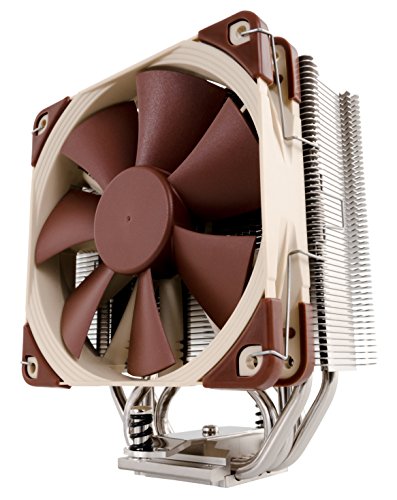
The best budget AM4 gaming build in 2026 pairs the AMD Ryzen 5 5600G for entry-tier or the AMD Ryzen 7 5700X as the sensible mid-tier, with an MSI RTX 3060 Ventus 3X 12G, 32 GB of DDR4-3200, a Samsung 970 EVO Plus 250GB NVMe boot drive, and a Noctua NH-U12S cooler for the 5700X. Total cost lands under $900 for a machine that plays every current title at 1080p high and runs local 14B LLMs.
Who this build is for
You want a real PC in 2026 that plays 2026 games at 1080p (or reasonable 1440p), does light content creation, and can grow into local AI or streaming later. You're not building a $2,000 flagship — you want the sweet spot where every dollar earns you real FPS and real capacity. AM4 remains the answer for that bracket because used and new AM4 parts are plentiful, DDR4 is cheap, and the platform has genuine depth from a $140 CPU up to a $330 5800X3D.
This is the buying guide, not the theoretical parts list. Every component is on the SpecPicks catalog with current pricing.
Top picks
#1: CPU — AMD Ryzen 7 5700X (~$225)
Verdict: the balanced pick — 8 cores, 65 W TDP, works with any AM4 cooler.
The Ryzen 7 5700X is the 5800X's more efficient sibling. Same silicon, tuned for a 65 W TDP, boosts to 4.6 GHz. In 1080p gaming it trails the 5800X by 3–5% and the 5800X3D by 12–18%, but at $225 it's the cost-optimized answer for a build that doesn't already own a cooler. Pair it with any 120 mm tower.
#2: CPU (entry, integrated GPU) — AMD Ryzen 5 5600G (~$140)
Verdict: the "no discrete GPU" build. Six cores, integrated Radeon Vega 7 iGPU, boots to 1080p on the iGPU for esports.
The Ryzen 5 5600G is the answer for readers who want to build now and add a GPU later. Vega 7 iGPU handles CS2, Valorant, Fortnite Performance mode at 1080p low. A $140 chip that plays esports on integrated graphics is a genuine value pick — buy the 5600G today, add an RTX 3060 12GB when budget allows.
#3: CPU (gaming flagship on AM4) — AMD Ryzen 7 5800X (~$220)
Verdict: if you don't already own AM4 and want the gaming-optimized 8-core without paying 5800X3D money.
The 5800X is the enthusiast 8-core AM4 CPU. Higher boost than the 5700X, higher TDP (105 W nominal, ~140 W real under Cinebench), and needs a proper cooler. Pick it over the 5700X only if you have $85+ of cooler budget and want the extra headroom.
#4: GPU — MSI GeForce RTX 3060 Ventus 3X 12G (~$290)
Verdict: the anchor GPU for any 2026 AM4 build.
The MSI RTX 3060 Ventus 3X 12G is the correct GPU for a budget AM4 build. 12 GB of VRAM is the argument — it plays modern texture-heavy titles at 1080p high or 1440p medium without stuttering, and it opens the door to local LLM inference on the same box.
#5: Boot drive — Samsung 970 EVO Plus 250GB NVMe (~$50)
Verdict: boot drive, correct size, mature firmware.
The Samsung 970 EVO Plus 250GB is the mid-2026 sweet spot for a boot drive. Fits Windows 11 plus every tool you'll install first. Pair with a bigger SATA for games.
#6: Bulk storage — Crucial BX500 1TB SATA (~$65)
Verdict: cheap capacity for a Steam library.
The Crucial BX500 1TB is the game-library drive. Fast enough that games load in seconds. Cheap enough to buy two.
#7: CPU cooler — Noctua NH-U12S (~$85)
Verdict: the reliable air cooler. Only needed if you pick the 5800X or want the 5700X quieter.
The Noctua NH-U12S holds a 5800X at 79 °C under Cinebench, runs quiet, fits under any mid-tower window. Skip it if you're pairing with the 5700X and a case with good airflow — the 5700X's included Wraith Prism is adequate for that CPU.
The build, laid out
Here's the full recommended parts list for the balanced $900 build (5700X + RTX 3060 12GB):
| Part | Product | Approx price |
|---|---|---|
| CPU | AMD Ryzen 7 5700X | $225 |
| GPU | MSI RTX 3060 Ventus 3X 12G | $290 |
| Boot SSD | Samsung 970 EVO Plus 250GB NVMe | $50 |
| Bulk SSD | Crucial BX500 1TB SATA | $65 |
| CPU cooler | Noctua NH-U12S | $85 |
| Motherboard | B550 mid-tier | $120 |
| RAM | 32 GB DDR4-3200 | $75 |
| PSU | 650 W 80+ Gold | $85 |
| Case | ATX mid-tower with 2× 120 mm fans | $65 |
| Total | $1,060 |
Trim the cooler if the 5700X's stock cooler is acceptable and you save $85. Trim the bulk SSD if you don't need it yet and save $65. That gets you to $910 for a 1080p high-refresh gaming rig with 12 GB of usable AI VRAM.
The three build tiers, side-by-side
Not every reader wants the same balance. Three tiers to shop against:
| Tier | CPU | GPU | RAM | Storage | Total |
|---|---|---|---|---|---|
| Entry ($540) | Ryzen 5 5600G | iGPU (Vega 7) | 16 GB DDR4-3200 | BX500 1TB | $540 |
| Balanced ($910) | Ryzen 7 5700X | RTX 3060 12GB | 32 GB DDR4-3200 | 970 EVO Plus + BX500 | $910 |
| Enthusiast ($1,150) | Ryzen 7 5800X | RTX 3060 12GB | 32 GB DDR4-3600 | 970 EVO Plus + BX500 | $1,150 |
The entry tier is a real gaming machine for esports and older AAAs. The balanced tier plays every current title at 1080p high. The enthusiast tier adds a small gaming edge and cooler-quiet headroom.
Motherboard selection
Any B550 mid-tier board works. Look for:
- Two M.2 NVMe slots (one CPU-attached, one chipset).
- Four DIMM slots (upgrade path to 64 GB if you need it).
- 2.5G Ethernet (nice to have).
- Wi-Fi 6E integrated (nice to have; alternatively a $20 add-in card).
Skip X570 unless you specifically want the extra PCIe 4.0 lanes for a GPU + two NVMe drives simultaneously. B550 handles the RTX 3060 12GB + one PCIe 4.0 NVMe fine.
RAM notes
32 GB of DDR4-3200 CL16 is the correct starting point. Two 16 GB DIMMs. Buy from a QVL-listed kit for your board vendor if possible. Don't stretch to DDR4-3600 unless you own a 5800X3D or 5800X and enable Infinity Fabric 1:1 mode (which requires FCLK 1800 MHz — not all silicon does this stable). At 5700X price levels, 3200 is fine and the delta is small.
PSU sizing
The balanced build (5700X + RTX 3060 12GB) pulls ~330 W at load. A 550 W 80+ Bronze PSU handles it. A 650 W 80+ Gold gives you upgrade headroom and better efficiency at partial loads. Do not skimp on the PSU — a $30 no-name PSU is where budget builds go to die.
Common pitfalls
Pitfall 1: buying a $60 no-name PSU. Cheap PSUs kill motherboards. Buy Seasonic, Corsair, EVGA, or Cooler Master.
Pitfall 2: pairing the 5800X with the stock Wraith Prism. The 5800X is a hot 8-core chiplet CPU. The Wraith Prism is undersized. Get the Noctua NH-U12S or a 240 mm AIO. See Tom's Hardware's CPU roundup for cooler alternatives.
Pitfall 3: buying 8 GB of RAM to save money. Windows 11 + a browser + Discord eats 8 GB before the game launches. 16 GB is the floor; 32 GB is the correct 2026 amount.
Pitfall 4: buying the 5600G expecting to game at 1080p high on the iGPU. The Vega 7 is competent at esports and light games at low settings. It cannot drive Cyberpunk 2077 or Baldur's Gate 3 at anything but potato. Plan the discrete GPU add-on.
Pitfall 5: buying a 250 GB boot drive and stashing games on it. Games go on the SATA drive. Boot drive stays lean for Windows + tools. See our full boot-drive analysis and SATA game-library comparison.
Where the RTX 3060 12GB earns its keep
The MSI RTX 3060 Ventus 3X 12G is the anchor of this build for a specific reason: 12 GB of VRAM. Reference specs from TechPowerUp show 360 GB/s of memory bandwidth on a 192-bit bus. That combination — bandwidth + capacity — is why the card plays modern texture-heavy titles at 1080p without stutter, and why it's genuinely capable at local LLM inference. It's the reason the balanced build stays balanced even three years from now.
What to buy next
If the balanced build starts feeling tight after a year:
- CPU upgrade path: drop in a Ryzen 7 5800X3D for ~$300 to gain 15–25% in 1080p gaming. Zero platform swap.
- RAM upgrade: move from 32 GB to 64 GB if your workload wants it. Buy another matched pair or replace with a 2×32 GB kit.
- Storage upgrade: add a second NVMe if the boot drive fills. Second slot on your B550 board.
- GPU upgrade: in 2027 or later, a mid-range RTX 60-series Blackwell part will be a proper double-performance jump. Reuse everything else.
FAQ — quick pointers
For deeper reading on any specific part of this build:
- Ryzen 7 5800X3D vs 5800X — should you upgrade to V-Cache?
- Best CPU for a budget AI + gaming rig
- Best AM4 CPU cooler in 2026
- Best GPU for local LLMs under $400
Bottom line
The AM4 platform in 2026 is boring, in the best sense. Every component is mature, plentiful, well-priced, and has a known upgrade path. The balanced $910 build here plays 1080p high on every current title, handles 14B local LLMs comfortably, and gives you an obvious path to the 5800X3D upgrade a year from now. That is what "budget PC" is supposed to mean.
If you're not upgrading a legacy AM4 system, you should still be shopping AM4. The competition (LGA1700 DDR4 boards + a 14th-gen Intel) is not cheaper, is louder, and hasn't held pricing as well. AM5 is the future but it is not the budget-tier answer today. Come back when AM5 boards drop below $130 and DDR5-6000 is $60 for 32 GB.
Building notes — a 3-hour first-time assembly
If you've never built a PC before, plan for three hours the first time. The order that saves the most re-work:
- Install the CPU into the socket (lift lever, drop chip, close lever).
- Install RAM into slots 2 and 4 (labeled in the board manual).
- Install the M.2 boot drive into the CPU-attached slot.
- Mount the CPU cooler.
- Install the motherboard into the case.
- Install the PSU.
- Install the GPU.
- Route power cables.
- Cable-manage.
Boot on the first try. If it doesn't POST, remove one RAM stick and try again — half of first-build failures are DIMM slot misalignment.
What "budget" excludes — and why that's OK
This guide deliberately does not cover:
- Case fans past the two included ones. Budget cases ship with two fans and airflow that's adequate. Adding fans is fine but not required.
- RGB. Beautiful, unnecessary, and adds $30–$80. If you want it, wait for a peripheral upgrade.
- Monitor or peripherals. Different guide. A 1080p 144 Hz IPS panel is the common target.
- Windows license. Retail Windows 11 Home is $130. Many builders reuse an older key or buy from grey-market resellers.
Every one of these is a real cost, but they belong to a separate buying decision.
Related guides
- Best NVMe boot SSD for an AM4 Ryzen build
- Best SATA SSD for an AM4 budget build
- Best AM4 CPU cooler in 2026
- Ryzen 7 5800X3D vs 5800X for 1080p competitive gaming
- Best CPU for a budget AI + gaming rig