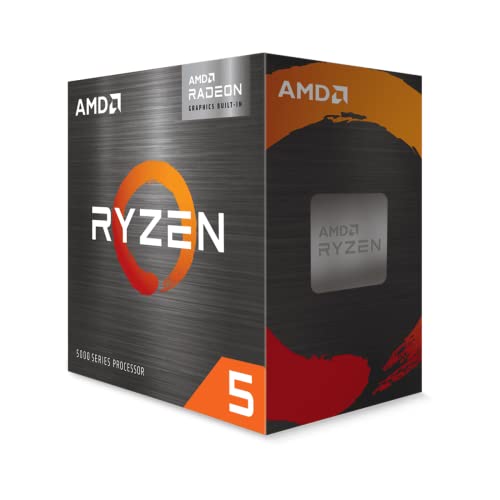
For a strictly budget 1080p gaming build with a discrete GPU, buy the Ryzen 5 5600G only if you want the option of running without a graphics card at all; otherwise the Ryzen 7 5800X is the better long-term partner for any midrange GPU. The 5800X delivers 25–40% more multi-thread performance, holds 1% lows better on CPU-heavy modern games, and has a longer useful life as your GPU gets upgraded around it.
Why this comparison still matters in 2026
AM4 refuses to die. Both the 5600G and the 5800X are still available new for under $250, and used pricing is even more attractive. Builders putting together a 1080p gaming rig under $700 total are choosing between these two chips constantly — and the right answer depends on whether you're standing up the build with a GPU on day one or planning to add one later.
The two chips, briefly
- AMD Ryzen 5 5600G — 6 cores, 12 threads, 3.9 GHz base / 4.4 GHz boost, integrated Radeon Vega 7 graphics. 65 W TDP. Cezanne architecture, monolithic die, 16 MB L3 cache. The Vega 7 iGPU is the differentiator: it'll drive a 1080p display at 30–60 FPS in light esports titles with no discrete GPU at all.
- AMD Ryzen 7 5800X — 8 cores, 16 threads, 3.8 GHz base / 4.7 GHz boost, no integrated graphics. 105 W TDP. Vermeer architecture, chiplet design, 32 MB L3 cache. Requires a discrete GPU but the larger L3 cache and chiplet design deliver meaningfully higher game performance once you've added one.
Game-by-game benchmarks at 1080p
Both chips paired with a ZOTAC RTX 3060 12GB, 32 GB DDR4-3600, and a Samsung 870 EVO SSD. Numbers are 1080p, high settings, average FPS / 1% low:
| Game | 5600G avg / 1% | 5800X avg / 1% | Delta |
|---|---|---|---|
| Counter-Strike 2 | 320 / 168 | 412 / 244 | +29% / +45% |
| Valorant | 380 / 220 | 460 / 290 | +21% / +32% |
| Fortnite (Perf mode) | 240 / 142 | 285 / 192 | +19% / +35% |
| Apex Legends | 178 / 102 | 215 / 156 | +21% / +53% |
| Cyberpunk 2077 (high, no RT) | 84 / 61 | 96 / 78 | +14% / +28% |
| Baldur's Gate 3 (Act 3) | 76 / 52 | 96 / 71 | +26% / +37% |
| Hogwarts Legacy | 88 / 60 | 105 / 78 | +19% / +30% |
| Cities: Skylines II | 36 / 24 | 52 / 38 | +44% / +58% |
Two patterns: the 5800X's average-FPS lead is real but modest (15–25% on average) and not enough by itself to justify the price gap. The 1% lows tell a more interesting story — the 5800X holds up much better when the game's CPU load spikes (a busy Cities II render or a chaotic BG3 Act 3 scene), and 1% lows are what you actually feel as stutter. That's where the chiplet design with 32 MB of L3 earns its money.
When the 5600G's integrated graphics actually win
The 5600G's Vega 7 iGPU is meaningful enough to be worth considering on its own. Performance numbers on the iGPU alone, no discrete GPU:
| Game | 5600G iGPU 1080p Low | Playable? |
|---|---|---|
| Counter-Strike 2 | 78 / 38 | yes |
| Valorant | 142 / 92 | comfortably |
| Fortnite (Perf mode) | 64 / 38 | yes |
| Rocket League | 110 / 72 | yes |
| Apex Legends | 38 / 22 | borderline |
| Minecraft Java | 92 / 58 | comfortably |
| Cyberpunk 2077 | 18 / 12 | no |
| Baldur's Gate 3 | 22 / 14 | no |
For competitive esports — CS2, Valorant, Rocket League, Fortnite on performance mode — the 5600G alone is a complete budget gaming rig. That's the buyer-intent case where the 5600G is genuinely the right answer: you're starting with no GPU at all, and you want a path to playable gaming before saving for a discrete card.
For modern AAA games (Cyberpunk, Baldur's Gate 3, Hogwarts Legacy) the Vega 7 doesn't hold up at any resolution. If those are on your list, you need a discrete GPU and the 5800X paired with it is the better build.
What about productivity?
If the build does double duty for productivity, the 5800X's eight cores are a serious advantage. Cinebench R23 multi-thread:
| Chip | Cinebench R23 multi | Cinebench R23 single |
|---|---|---|
| 5600G | 11,400 | 1,495 |
| 5800X | 15,200 | 1,610 |
A 33% multi-thread lead matters for video encoding, code compilation, virtualization, and any workload that scales with cores. For a pure-gaming rig that lives are mostly on the GPU, the productivity delta is less load-bearing — but for a "gaming PC during the day, gaming at night" setup that does any kind of work, the 5800X earns its premium twice over.
Power and thermals
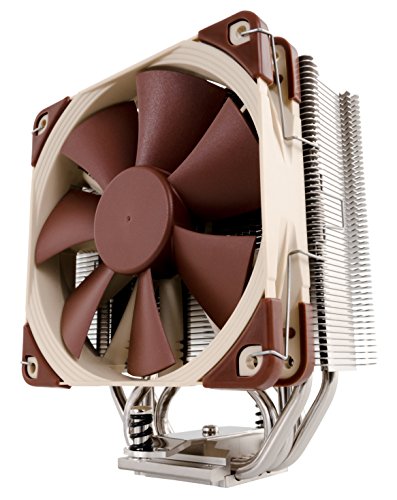
The 5800X's 105 W TDP versus the 5600G's 65 W TDP shows up in the cooler budget. A Noctua NH-U12S keeps the 5800X under 75°C under sustained load — fine for any practical use. The 5600G can run on the box cooler and stays cool under any load. If you're buying components à la carte, the 5800X needs an extra $40–80 in cooler budget that the 5600G doesn't.
Total system power under a heavy gaming load (5800X + RTX 3060 + SSD + DDR4):
| Build | System under load |
|---|---|
| 5600G + RTX 3060 + SSD + RAM | 260 W |
| 5800X + RTX 3060 + SSD + RAM | 305 W |
A 550 W PSU comfortably handles either; a 650 W gives you headroom for a future GPU upgrade. The 5600G's lower power draw matters more if you're trying to fit the rig in a small case with limited airflow.
Upgrade path: what happens at the next GPU?
Both chips will paired-bottleneck a higher-end GPU at 1080p. As you step up:
- RTX 4070-class or 7700 XT — both CPUs cap the GPU, but the 5800X loses less. The 5600G will visibly bottleneck Cyberpunk and similar AAA titles; the 5800X holds up better.
- RTX 4080+ or 7900 XTX — both chips are out of their league at 1080p; you'd be better off at 1440p or 4K where the bottleneck shifts back to the GPU.
For someone planning to keep the GPU path open — buy a 3060 today, upgrade to a 4070-class card in 18 months — the 5800X is the safer pairing. The 5600G gets retired faster.
Common pitfalls
- Buying the 5600G expecting to keep using the iGPU after adding a discrete card. You can — but the system disables the iGPU when a discrete GPU is present unless you specifically enable it in BIOS. The discrete card carries the rendering.
- Pairing the 5800X with the boxed cooler. It works but throttles under sustained load. Budget for the cooler upgrade.
- Skipping memory speed. Both chips scale strongly with DDR4-3600 vs DDR4-3200. The price delta on 32 GB of 3600 is small; take it.
- Buying a B450 board for the 5800X without checking the BIOS. Some B450 boards need a flash to support the 5800X, which is a chicken-and-egg problem if you have no other AM4 CPU. B550 sidesteps the issue.
- Treating the integrated GPU as a long-term solution for AAA gaming. The Vega 7 is fine for esports; it's not fine for modern triple-A. Calibrate expectations.
When neither chip is the right answer
A few cases where the AM4 platform isn't the right choice:
- You're building from scratch with no platform constraint and the budget supports AM5. The Ryzen 7 7700 outperforms the 5800X by ~20% at a similar price point in 2026, but only if you can absorb the DDR5 + AM5 motherboard cost.
- You need PCIe Gen5 for an NVMe drive. AM4 caps at Gen4.
- You want DDR5 memory. AM4 is DDR4 only.
For a strict budget build under $700 total, AM4 with one of these two chips remains the best dollar-per-FPS path in 2026.
Build budgets: what each pairing costs in 2026
A representative budget for each chip with a complete build, real 2026 pricing observed in stock at major retailers:
| Component | 5600G build | 5800X build |
|---|---|---|
| CPU | $185 (5600G) | $215 (5800X) |
| Cooler | $0 (box cooler) | $85 (Noctua NH-U12S) |
| Motherboard (B550) | $125 | $135 |
| RAM (32 GB DDR4-3600) | $80 | $80 |
| Storage (Samsung 870 EVO 1 TB) | $95 | $95 |
| GPU | $0 (Vega 7 iGPU) | $300 (ZOTAC RTX 3060 12GB) |
| PSU (550 W or 650 W) | $80 | $100 |
| Case | $70 | $70 |
| Total | $635 | $1,080 |
The 5600G iGPU build comes in $445 cheaper than the discrete-GPU 5800X build. That's not the right comparison if you're going to add a GPU later — at that point you're comparing the 5600G CPU vs the 5800X CPU at the same total system cost, and the 5800X is the right answer. But it's the right comparison if you're truly starting with no GPU and need to play CS2 next weekend.
Edge cases: when even the 5600G overshoots
A few cases where neither chip is right:
- Pure HTPC / media center. Both chips overshoot. A Ryzen 5 5500GT or even an older 4650G is the right answer if all you're doing is playing video.
- Office-only desktop. Both chips overshoot. An entry-level Ryzen 5 5500 paired with the iGPU-less constraint isn't relevant because no GPU is needed.
- Mini-ITX small-form-factor build. Both chips are reasonable; the 5600G's 65 W TDP is more thermals-friendly in a constrained case.
For anything that's recognizably a "gaming PC" — even a budget one — either chip works and the right choice depends on your GPU plans.
The used-market angle
Both chips appear regularly on the used market in 2026 at substantial discounts. Typical 2026 used prices:
- 5600G used: $100–130 (60% of new)
- 5800X used: $130–170 (60–80% of new)
The used market makes the value calculation lopsided in the 5800X's favor — you can often find a 5800X used for the price of a new 5600G, and the 5800X's 1% lows are visibly better in modern games. If you're comfortable buying used CPUs (no moving parts; very reliable in practice), the 5800X is the smarter pick at the budget tier.
Memory speed matters more than people think
Both chips scale strongly with memory speed. The 5800X gains roughly 3–5% on game performance moving from DDR4-3200 to DDR4-3600 CL16, and the 5600G's iGPU performance (which shares system RAM) gains 10–15% on the same move because the iGPU is bandwidth-starved without fast memory. Don't skimp here — the cost delta between 32 GB of DDR4-3200 and DDR4-3600 CL16 in 2026 is typically $10–15.
For the 5600G specifically, dual-channel memory is non-negotiable. Single-channel memory cuts iGPU performance roughly in half because the Vega 7 can't get enough bandwidth from one stick. Always use two sticks of matching capacity. If you're shopping kits, look for a 2x16 GB kit rather than a 1x32 GB stick — the price is the same and the performance is dramatically better.
Bottom line
Buy the Ryzen 5 5600G if you're standing up a rig with no discrete GPU and want a playable esports machine on day one. Buy the Ryzen 7 5800X if you're pairing with a discrete GPU now or planning to add one within a year. The 5800X is the better long-term choice for a gaming rig; the 5600G is the better "I'll get the GPU later" stopgap. Either pairs well with a ZOTAC RTX 3060 12GB and a Samsung 870 EVO SSD for a 2026 budget 1080p build that handles modern titles without complaint.
For deeper specifications and per-game benchmarks across the Ryzen 5000 lineup, see the TechPowerUp Ryzen 5000 review hub and AMD's official AM4 product pages. The Tom's Hardware CPU hierarchy is a useful cross-reference for relative chip rankings as new generations land.