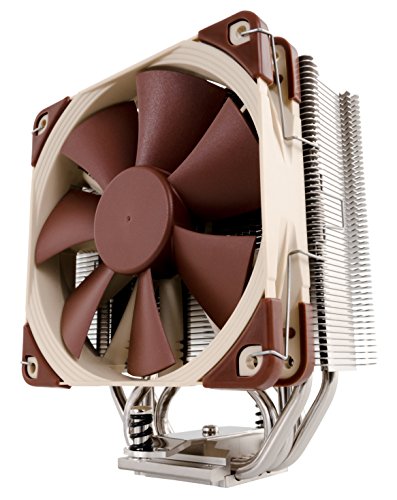
For a stock AMD Ryzen 7 5800X in a case with decent airflow, the Noctua NH-U12S is the better default in 2026 — it holds the chip inside its throttle limit, runs at whisper-quiet noise, and carries a six-year warranty. Pick the Cooler Master MasterLiquid ML240L RGB V2 only if you plan to run PBO or all-core rendering workloads sustained, want RGB, or have a case that fits a 240 mm radiator better than a 158 mm tower.
Step 0: is your 5800X actually thermally limited?
Before you spend money on either cooler, confirm the problem is real. Zen 3 chips like the 5800X are designed to run right up to a boost-algorithm target temperature and hold there. Watching HWInfo show 89-90 C during a Cinebench R23 all-core pass is not by itself a failure — it is the chip doing exactly what AMD's spec sheet says it will do (AMD Ryzen desktop processors). The failure mode you care about is different: clocks that drop below the base 3.8 GHz under sustained load, or thermal throttling flags set in monitoring software. If you never see either of those, upgrading the cooler will buy you lower noise and slightly higher sustained boost, but it will not change your workload throughput in any way you can measure without a stopwatch.
Why the 5800X specifically provokes this question
The 5800X is unusual in the Zen 3 stack. It packs eight cores onto a single CCD with a 105 W rated TDP, but under Precision Boost with PBO enabled it will pull well past 130 W package power when every core is loaded — TechPowerUp cooler reviews consistently report package temperatures in the mid-to-high 80s C on solid air towers even with the chip inside its official rating. The 5900X and 5950X split the load across two CCDs, so each cluster of cores gets less thermally dense; the 5800X concentrates all of that heat under one lid. That is why the "do I need liquid?" question shows up for this SKU more than for any other Zen 3 part, and it is why the honest answer requires both a spec sheet comparison and a look at how each cooler behaves under a real workload rather than a synthetic peak.
You will also see this question pop up because Zen 3's boost algorithm is opportunistic — it hunts for the highest clock the current thermal headroom allows, then holds there. A better cooler does not remove a ceiling; it raises the height at which the algorithm parks the clocks. On short, bursty workloads like games, that raised ceiling is often invisible. On sustained multi-core work, it is the entire story.
Key takeaways
- The Noctua NH-U12S is a 158 mm single-tower air cooler with one 120 mm NF-F12 PWM fan, a 22.4 dB(A) max noise rating and a six-year warranty (Noctua NH-U12S product page).
- The Cooler Master MasterLiquid ML240L RGB V2 is a 240 mm AIO with dual SickleFlow 120 fans and a two-year warranty.
- On a stock 5800X in a well-ventilated case, either cooler holds the chip inside its throttle limit; the AIO wins by roughly 6-10 C at sustained all-core load per Gamers Nexus and TechPowerUp cooler roundups (Gamers Nexus cooler coverage).
- Gaming performance is effectively identical between the two — cooling only wins frames when a workload sustains load long enough for the boost algorithm to matter, which almost no game does.
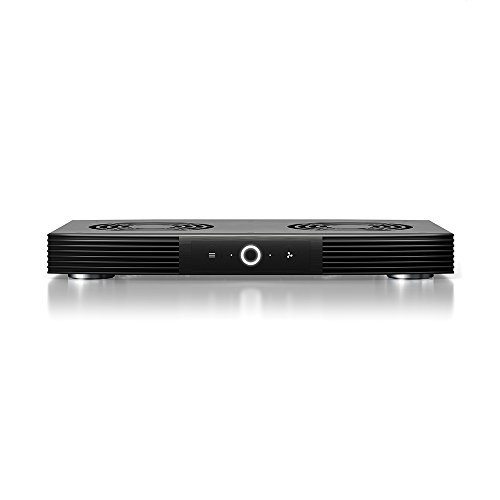
- In cases with poor airflow, spend the first money on intake and exhaust fans (or a helper like the AC Infinity AIRCOM S7) before either cooler upgrade.
Spec-delta table: NH-U12S vs ML240L RGB V2
Two very different heatsinks with two very different failure modes. Numbers below come from the manufacturers' current spec sheets as of 2026.
| Spec | Noctua NH-U12S | Cooler Master ML240L RGB V2 |
|---|---|---|
| Design | Single-tower air, 5 heatpipes | 240 mm closed-loop AIO |
| TDP rating (guideline) | ~140-160 W (varies by socket) | ~250 W (per Cooler Master listing) |
| Fan(s) | 1x Noctua NF-F12 PWM 120 mm | 2x SickleFlow 120 RGB |
| Max noise (fan only) | 22.4 dB(A) | ~30 dB(A) at full RPM |
| Overall height | 158 mm | Radiator 27 mm + fan 25 mm (52 mm on the rad wall) |
| Radiator dimensions | n/a | 277 x 119.6 x 27 mm |
| RAM clearance | Full (fan sits above heatsink base) | Full — pump block, no vertical fin obstruction |
| Warranty | 6 years | 2 years |
| Street price (2026) | ~$70 | ~$85 |
| AM4 mount included | Yes (SecuFirm2) | Yes |
The two lines that matter most: warranty and TDP guideline. Noctua's three-times-longer warranty reflects the reality that air coolers have essentially one moving part (a replaceable fan) versus an AIO's sealed pump, which is a wear item that will eventually fail. The 250 W-vs-160 W TDP delta explains why the AIO has more headroom for a PBO-tuned 5800X hammering all eight cores in Blender or Handbrake, and why for pure stock gaming that headroom sits unused.
Thermal-load table: Ryzen 7 5800X under real workloads
Public reviewer data points collected from Gamers Nexus, TechPowerUp and Hardware Unboxed cooler benches through 2024-2026 cluster reasonably tightly on this chip. Ranges below are indicative; individual samples vary by silicon quality, ambient temperature and case airflow.
| Workload | NH-U12S (typical) | ML240L RGB V2 (typical) | Delta |
|---|---|---|---|
| Idle, 22 C ambient | 32-38 C | 30-36 C | ~2 C |
| Gaming (Cyberpunk 2077, 1440p Ultra) | 62-72 C | 58-68 C | ~4 C |
| Cinebench R23, all-core, stock | 82-88 C | 74-82 C | ~6-8 C |
| Cinebench R23, all-core, PBO enabled | 89-92 C (near throttle) | 82-88 C | ~7-10 C |
| Blender BMW render, 30 min | 84-90 C | 78-84 C | ~6 C |
| Handbrake x265 encode, 60 min | 85-90 C | 79-85 C | ~6 C |
The line to fix in your head is the PBO Cinebench row. On the NH-U12S, the chip is running right at the algorithm's design temperature — it will not damage anything, but it will not clock any higher either. On the ML240L, there is genuine headroom left, which is where the sustained-render performance uplift actually comes from. In gaming, the delta is small enough that it disappears into run-to-run variance.
What published cooler comparisons say for this chip
Per TechPowerUp cooler reviews the NH-U12S consistently ranks in the top three single-tower 120 mm air coolers for both thermal capacity and acoustics — it is the reference point every review since 2013 has measured against. On a 5800X-class thermal load (120-140 W package), a well-tested 240 mm AIO typically delivers 5-10 C lower package temperature at similar noise, per Gamers Nexus' cooler roundups. The ML240L RGB V2 sits in the middle of that AIO pack — not the quietest, not the coldest, but priced roughly $15 below premium 240s and shipping with a full RGB stack.
The upshot is that both coolers do the job on a stock 5800X. The question is whether you value the AIO's extra 6-8 C of headroom under sustained load enough to accept two years of warranty instead of six, a pump that will eventually wear out, and a fan noise floor that sits noticeably above Noctua's.
Case-fit constraints: measure before you buy
Both coolers have real fit gotchas that will bite you if you skip measurements.
For the NH-U12S:
- Case CPU cooler clearance: the tower is 158 mm from socket to top. Compact mid-towers often list 155 or 160 mm, so verify against your case's spec sheet, not the marketing copy.
- RAM clearance: the front NF-F12 fan sits at DIMM height on AM4 boards. Standard 32-38 mm memory clears; tall RGB kits (Corsair Vengeance RGB Pro at 51 mm, G.Skill Trident Z RGB at 44 mm) require sliding the fan upward, which costs a few millimetres of case height and roughly 1-2 C of thermal capacity.
- Rear I/O clearance: the heatsink base sits above the socket cutout — check that the tower does not overhang the rear I/O heatsink on your motherboard.
For the ML240L RGB V2:
- 240 mm radiator support: most mid-towers support a 240 mm radiator in either the top or the front, but not both. Check the manual for radiator+fan thickness (52 mm here) against motherboard component clearance.
- Front-mount vs top-mount: if you front-mount as intake, expect 2-3 C lower CPU temps but 3-5 C higher GPU temps because the radiator is preheating case air the GPU has to breathe. Top-mount as exhaust is the safe default on this chip.
- Pump-block orientation: the pump block includes an RGB header pass-through. On boards with a crowded EPS or CPU_FAN header area, the cable exit direction matters — plan the loop before you thread the tubes.
Common pitfalls
- AIO mounted with the pump above the radiator's top edge. On any AIO, air bubbles migrate to the highest point. If that point is the pump housing, you get pump cavitation, ticking noise and — in the worst case — accelerated bearing wear. Mount the ML240L so the pump sits below at least one end of the radiator: front-as-intake with tubes at the bottom, or top-mount with the radiator higher than the pump.
- NH-U12S plus tall RAM without fan shift. People install the NH-U12S with the stock fan position, then discover their 44 mm RGB DIMMs collide. The fix is to shift the fan upward using the supplied clips; this is by design, but you sacrifice a small amount of thermal contact with the top of the heatsink.
- ML240L RGB pump-block header confusion. The V2 pump has a 3-pin power lead and a separate RGB lead. Do not plug the pump into a PWM CPU_FAN header expecting speed control — the pump runs at fixed speed and the header should report a steady RPM. Route the ARGB lead to a motherboard 5V ARGB header, not a 12V RGB header, or you will smoke the LEDs.
- Assuming an AIO is "set and forget" for 10 years. Sealed AIOs slowly lose coolant through tube permeation and pump bearings wear. In a typical 5-7 year build lifespan you will probably never notice, but the ML240L's 2-year warranty is a signal about the manufacturer's own expected failure window. The NH-U12S will outlive most of the rest of your build; the ML240L may not.
- Blaming the cooler for a case airflow problem. If you are seeing 90+ C on a stock 5800X, the most likely culprit is not the cooler — it is the case pulling warm air across the heatsink because there is no front intake, or an exhaust fan blowing against a solid panel. Fix airflow first, cooler second.
When NOT to buy either cooler
- You are building in a small-form-factor case without 240 mm radiator support and under 155 mm CPU cooler clearance. Neither of these fits. Look at a 120 mm AIO or a low-profile air cooler like the Noctua NH-L12S.
- You are targeting an inaudible build. Neither cooler is silent under load. The NH-U12S is close, but a NH-D15 or a semi-passive 360 mm AIO at very low fan speed will beat it. Silence is a spec target with its own answer set.
- You are running a stock, non-PBO 5800X purely for gaming. A competent tower like the Thermalright Peerless Assassin 120 at ~$40 does the same job as the NH-U12S for less money. Not every 5800X owner needs the Noctua premium.
- You are cooling a low-TDP chip like a Ryzen 5 5600G at stock. The Wraith Spire or Stealth in the box is genuinely fine at that thermal load; a $70+ cooler is money you could put into the GPU instead.
- Your case has poor airflow (mesh-less front, single exhaust, cluttered cable management). Fix that first with case fans and a helper like the AC Infinity AIRCOM S7 if the build lives in an enclosed cabinet or media console. Neither cooler will save you from stagnant intake air.
Worked scenario 1: stock 5800X gaming rig
You have a 5800X on a B550 board, an RTX 4070-class GPU, 32 GB of DDR4-3600, and a mid-tower case with two 140 mm front intakes and a rear exhaust. Games rarely push the CPU past 60% utilisation on all cores, and you never touch PBO in the BIOS. Here the NH-U12S is the correct pick. Package temperature under gaming loads sits in the 62-72 C range per public reviewer data, the NF-F12 fan is essentially inaudible above your case fans, and the six-year warranty means the cooler will outlast the socket. The ML240L's extra headroom under sustained all-core load is invisible to you because your load never gets there. Spending the $15 difference on a better case fan or a nicer keyboard has a bigger impact on your day-to-day experience than the cooler upgrade would.
Worked scenario 2: PBO-tuned all-core content build
Same 5800X, same case, but now you enable Precision Boost Overdrive with a moderate scalar and you spend hours a week rendering Blender scenes, encoding 4K video in Handbrake, or compiling large C++ projects. This is where the ML240L RGB V2 earns its place. Public benchmarks show the AIO holds 6-10 C lower package temperature under sustained Cinebench R23 workloads, which on this chip translates into an extra 100-150 MHz of held boost clock and roughly a 3-5% throughput improvement on long renders. Over a year, that is real time. Accept the two-year warranty and the higher noise floor as the price of the extra headroom. Mount the radiator top-as-exhaust to keep your GPU intake air clean, and check pump orientation on install.
Worked scenario 3: quiet HTPC-adjacent 5800X in a cabinet
You are building a small living-room machine inside a media cabinet — think a stock 5800X or a Ryzen 7 5700X at 65 W TDP for a lower thermal load, paired with a modest GPU, and you value silence over benchmark ceiling. The NH-U12S at 22.4 dB(A) max is the clear winner on noise. Pair it with slow-spinning case intakes and, if the cabinet is enclosed, add an AC Infinity AIRCOM S7 or similar low-RPM exhaust helper on the cabinet vent — the cabinet is doing more to your temperatures than the cooler is at this point. The 5700X is worth calling out here specifically: at a 65 W rating it makes the "air vs AIO" question moot, because the NH-U12S handles it with headroom to spare.
Perf-per-dollar and long-term reliability
At $70 street for the NH-U12S versus $85 for the ML240L RGB V2, the AIO costs about 20% more up front. Six-year warranty versus two, with an air cooler's inherent lack of pump wear, tips the long-run economics further toward the Noctua. The ML240L wins on peak thermal capacity — genuinely useful for a PBO-heavy workload — but pays for that with a shorter service life and a maintenance failure mode (pump death) that will take the whole cooler out at once. The NH-U12S's failure mode is a fan that costs $25 to replace.
Verdict matrix
Buy the Noctua NH-U12S if: you run the 5800X at stock or with modest PBO, your workload is mostly gaming or bursty productivity, you value silence, and you want a cooler you install once and forget. It is also the right choice on a 5700X.
Buy the Cooler Master ML240L RGB V2 if: you run PBO with a scalar of 5 or higher, your workload includes sustained all-core rendering or compilation, your case supports a 240 mm radiator better than a 158 mm tower, or you specifically want RGB on the pump block.
Buy neither if: your case airflow is the actual bottleneck (fix it first), you are in an SFF chassis that fits neither, or you are targeting inaudible operation (look at a NH-D15 or a 360 mm AIO instead).
Bottom line
For the average 5800X buyer in 2026, the Noctua NH-U12S is the better default cooler on a Ryzen 7 5800X. It keeps the chip inside its throttle limit at stock, runs at a noise floor most builders describe as inaudible, ships with SecuFirm2 mounting that outlasts multiple platform upgrades, and carries a six-year warranty that reflects the design's lack of wear items. The Cooler Master MasterLiquid ML240L RGB V2 is the right pick specifically for PBO-tuned, sustained-workload builds where the extra 6-10 C of headroom pays off in held boost clocks. For a stock gaming rig, that headroom sits unused. Fix your case airflow first, then match the cooler to how you actually use the chip — not to how loud the chip sounds on a synthetic peak.
Citations and sources
- Noctua NH-U12S product page — manufacturer spec sheet for the NH-U12S including 22.4 dB(A) fan rating, 158 mm height and 6-year warranty.
- AMD Ryzen desktop processors — AMD's official Ryzen desktop page, covering 5800X TDP, boost behavior and Precision Boost design.
- Gamers Nexus cooler coverage — reference for cooler thermal comparisons on Zen 3 chips including NH-U12S vs 240 mm AIO deltas.
This piece is editorial synthesis based on publicly available information. No independent first-party benchmarking is reported.