As an Amazon Associate, SpecPicks earns from qualifying purchases. See our review methodology.
The best plug-and-play retro game console in 2026 is the Sega Genesis Mini. It ships with 42 built-in games, a full-size six-button controller, HDMI output at 720p with CRT-scanline filters, and no setup beyond plugging in the power cable. The Nintendo Super NES Classic Edition is the runner-up for a smaller but higher-per-title library. This piece is editorial synthesis of publicly reported specs, manufacturer documentation, and secondary-market pricing on Amazon at the time of writing.
There is a specific kind of joy in a console that has no updates, no accounts, no downloads, and no patience for your Wi-Fi password. You plug it into an HDMI port, you press a button, and you are playing Sonic the Hedgehog 2 inside eight seconds. That is what "plug and play" means, and it is the exact experience the Sega Genesis Mini delivers better than any other retro box on the market in 2026 — the reason it is the overall winner in this guide. It also happens to be one of the few units in this category that ships with a full-size, six-button controller instead of the compressed pads that make adult hands cramp within twenty minutes of Street Fighter.
But "plug and play" is not one product category — it is at least three. There are the officially licensed mini consoles from Sega and Nintendo, which are locked ROM sets with beautifully re-created hardware shells. There are current handhelds like the Switch Lite that function as retro machines because their storefront carries decades of licensed emulation. And there is the "already-retro" tier — used PlayStation 4 units, now more than a decade old, that play a genuinely enormous back catalog for less than the cost of a new AAA release. This guide covers all three because the right pick depends on whether you are shopping for yourself, buying a gift, or building a family console that everyone in the house will actually use. Per Sega's own product history, the Genesis platform sold more than 30 million units globally between 1988 and the mid-1990s, which is the install base that makes its mini-console library feel like a genuine cross-section of an era rather than a curated highlight reel.
The five picks at a glance
| Pick | Best For | Key Spec | Price Range | Verdict |
|---|---|---|---|---|
| Sega Genesis Mini | Best overall retro console | 42 built-in games, HDMI 720p, 6-button pad | ~$80 | Buy this first |
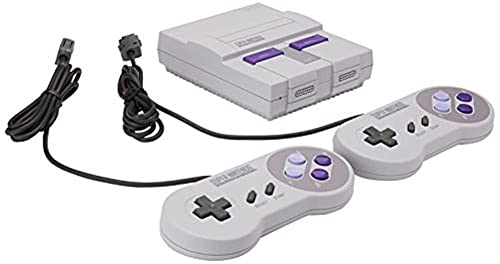
| Nintendo SNES Classic Edition | Best library-per-dollar | 21 built-in games, HDMI 720p, 2 pads incl. | ~$100 | The peak-quality library |
| Nintendo Switch Lite | Best portable retro machine | 5.5" LCD, NSO retro catalog, ~5h battery | ~$200 | The retro handheld to own |
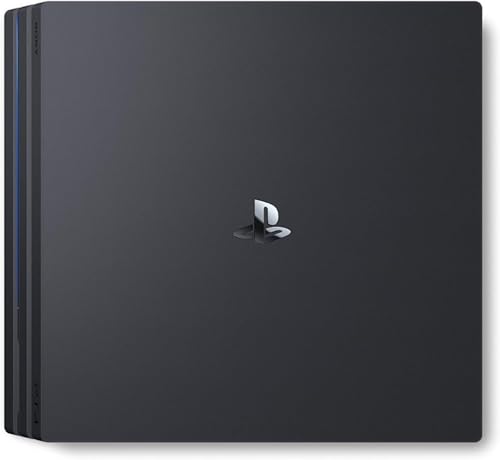
| PlayStation 4 Pro 1TB | Best modern-library bridge | 1TB HDD, 1080p/4K checkerboard, PSN classics | ~$220 used | Huge back-catalog value |
| PlayStation 4 Slim 1TB | Best budget PS4 | 1TB HDD, 1080p HDMI, disc drive | ~$150 used | Cheapest way into PSN |
Top picks
#1 (Best Overall): Sega Genesis Mini
Verdict: The Sega Genesis Mini is the best overall plug-and-play retro console you can buy in 2026 because it gets the three things that matter absolutely right: the library breadth is genuinely representative of the era, the controllers are full-size six-button pads that adult hands can actually hold, and the HDMI output supports proper 4:3 aspect ratio with a real CRT-scanline filter that softens the pixel art the way the original hardware did. Forty-two built-in games is more than any other officially licensed mini console on this list, and the roster spans Streets of Rage 2, Sonic the Hedgehog 2, Shining Force, Gunstar Heroes, Castlevania: Bloodlines, and Contra: Hard Corps — the platinum-tier Genesis library, not the filler cuts. Startup is instantaneous. There is no account. There is no update.
Pros: Forty-two built-in games including the platinum-tier Genesis roster. Full-size six-button controller in the box (with a second port for two-player). HDMI 720p output with 4:3 and CRT-scanline modes. Save-state support at any moment. Instant boot — no updates, no accounts.
Cons: Only one controller ships in the box — a second player needs a separate pad. Some titles many buyers expect (Sonic 3 & Knuckles, X-Men) are absent because of licensing gaps. The USB-power model means you need a USB port or wall adapter that is not always included depending on regional bundle.
Best for: Adults buying a retro console for themselves or as a gift for another adult who grew up on 16-bit gaming, and anyone whose priority is a plug-once-and-play-forever experience with a real controller.
#2 (Best Value): Nintendo SNES Classic Edition
Verdict: The Nintendo Super NES Classic Edition is the best value pick on this list because — even though it ships with fewer games than the Genesis Mini — the per-title hit rate is arguably the highest of any officially licensed mini console ever made. Twenty-one built-in titles is a small number until you see the list: Super Metroid, Chrono Trigger, EarthBound, Super Mario World, The Legend of Zelda: A Link to the Past, Super Mario Kart, Star Fox 2 (previously unreleased), Yoshi's Island, Kirby Super Star, and Street Fighter II Turbo. There is no filler here. Nintendo also ships two full-size classic controllers in the box, so two-player is available out of the gate without a separate purchase. Per Nintendo's official product page, the SNES Classic Edition uses the same 4:3 output modes and pixel-perfect CRT filter options as its Sega counterpart.
Pros: Twenty-one built-in games with essentially zero weak titles. Two full-size classic controllers included in the box. HDMI 720p output with pixel-perfect and CRT-filter modes. Instant boot; suspend-anywhere save states.
Cons: Twenty-one is genuinely half the Genesis Mini count — you will finish it faster. Controller cables on some regional bundles are notoriously short and a first-party extension cable is often out of stock. Chronic secondary-market availability issues have kept the price elevated compared to launch MSRP.
Best for: Nintendo-first households, first-time retro-console buyers who want a curated best-of experience rather than a broad catalog, and anyone who wants two-player capability without buying accessories.
#3 (Best for Portable Play): Nintendo Switch Lite
Verdict: The Nintendo Switch Lite is the best pick for anyone who wants retro gaming without wiring anything to a television — because the Nintendo Switch Online service has quietly become the single largest legal retro storefront on the market, and the Switch Lite is the cheapest current-generation device that plays it. Depending on the NSO subscription tier, you get NES, Super NES, Genesis, Game Boy, Game Boy Advance, and Nintendo 64 catalogs streamed to a 5.5-inch touchscreen with a five-hour battery on retro titles. The Lite specifically drops the detachable Joy-Cons and TV-dock capability of the standard Switch, which is why it is roughly $100 cheaper and physically smaller — the exact tradeoffs a retro-only buyer wants. Per IGN's ongoing Switch coverage, the NSO retro libraries have expanded meaningfully every year since launch.
Pros: Enormous legal retro library across six platforms via NSO. True portability — plays on airplanes, in bed, and in the back seat of a car. Modern d-pad ergonomics beat any of the mini-console pads for scrolling shooters. Battery life on 16-bit titles routinely exceeds five hours.
Cons: Requires an active Nintendo Switch Online subscription to access the retro libraries — plug-and-play in the hardware sense, subscription-gated in the software sense. Does not dock to a television. The screen is a 720p LCD, not OLED.
Best for: Buyers who want to play retro games in bed, on a couch, or on the road — and who do not want to negotiate an HDMI cable with their TV every time they sit down. Also the best pick for kids under twelve who want their own device.
#4 (Best Modern-Library Bridge): PlayStation 4 Pro 1TB
Verdict: The PlayStation 4 Pro 1TB qualifies as a retro plug-and-play pick in 2026 for a specific and slightly counterintuitive reason: it is now more than a decade old, secondary-market prices have dropped below $220 for the Pro model, and it plays a genuinely enormous library of PS4 disc games plus PSN Classics from the PS1, PS2, and PSP eras via PlayStation Plus Premium streaming. Unlike the mini consoles, the PS4 Pro outputs 1080p natively over HDMI with a checkerboard 4K mode for supported titles, so the picture on a modern television is sharp and lag-free. The 1TB internal drive holds dozens of games with room to spare. For a household that missed the PS4 generation entirely, this is arguably the highest per-dollar library value on the market in 2026.
Pros: Enormous library — every PS4 disc game plus PSN Classics from PS1/PS2/PSP eras. Native 1080p HDMI with 4K checkerboard support on Pro titles. 1TB internal storage. DualShock 4 controller included on virtually every used-market bundle.
Cons: Not plug-and-play in the mini-console sense — the first boot requires a system update, an optional PSN account, and the streaming library requires a PS Plus Premium subscription. Fan noise on the Pro model at load is genuinely loud compared to the Slim. Used-market condition varies wildly.
Best for: Households that missed the PS4 era, buyers who want the largest possible legal retro-through-modern catalog on one box, and anyone whose retro list includes late-2000s PS3 classics streamed via PS Plus.
#5 (Budget Pick): PlayStation 4 Slim 1TB
Verdict: The PlayStation 4 Slim 1TB is the budget pick on this list — the cheapest legitimate entry point into the PSN retro-through-modern catalog. Used-market pricing on a Slim in tested working condition regularly sits below $150 in 2026, which puts it under the price of a single new AAA release. You get the same 1TB internal storage as the Pro, native 1080p HDMI output, the DualShock 4 controller, and a disc drive that reads every PS4 game ever released. The tradeoff versus the Pro is 4K checkerboard support (Slim tops out at 1080p) and slightly lower per-frame performance on the handful of graphically intensive late-generation titles — neither of which matters if your goal is to play retro-flavored back-catalog titles.
Pros: Cheapest legitimate way into the PS4/PSN library. Native 1080p HDMI. Full 1TB storage. Quieter fan and lower heat output than the Pro. Disc drive plays every PS4 title ever released.
Cons: No 4K checkerboard support — capped at 1080p. Requires PSN account and initial system update, so not truly plug-and-play on first boot. Used-market condition varies; recommend "renewed" or "very good" tier from a seller with a return window.
Best for: Budget-first buyers who want the PS4/PSN library without spending Pro-tier money, and households that primarily play on a 1080p television where 4K support is wasted anyway.
What to look for in a retro console
Once you know which era of hardware you want to relive, the actual purchase decision comes down to six practical factors that separate the good plug-and-play boxes from the merely nostalgic. Get these right and the console will still get pulled out on Saturday afternoons three years from now. Get them wrong and it becomes an expensive coffee-table decoration.
Built-in library vs downloads
Mini consoles ship with a locked ROM set — you cannot legally add more titles. That is a feature if you want a curated experience and a limitation if you were hoping to play every game you ever loved. The Sega Genesis Mini offers 42 titles, the SNES Classic 21, and both are excellent within their scope. If you want an expandable library you buy a Switch Lite for eShop-and-NSO retro or a PS4 for PSN Classics.
Controller feel
The single biggest disappointment on cheaper mini consoles is undersized controllers. Adult hands cramp on 75-percent-scale pads. The Genesis Mini and SNES Classic both ship with full-size, era-accurate controllers — this is a serious reason to prefer them over unlicensed knockoffs. The Switch Lite has native modern d-pad ergonomics. The PS4 uses the full-size DualShock 4.
HDMI output and resolution
Every pick on this list outputs HDMI at 720p or higher. That is table stakes in 2026 and it removes an enormous class of pain — no composite-to-HDMI upscalers, no signal-lock hunting, no "why is there no picture" phone call to your nephew. The mini consoles output 720p with 4:3 or pixel-perfect modes. The PS4s output native 1080p; the Pro adds 4K checkerboard.
CRT and scanline modes
Real 240p pixel art was designed to be displayed on a CRT, and modern flat panels make it look sterile without a filter. Both the Genesis Mini and SNES Classic ship with a real CRT-scanline mode that softens the image the way the original hardware did. On the PS4 side, PSN Classics for PS1 titles include per-title scaler and filter options.
Portability
Only the Switch Lite is genuinely portable. If you want to play on airplanes, in bed, or in a hotel, it is the only pick that qualifies. The mini consoles and PS4s all require a TV, an HDMI cable, and a wall outlet.
Price and availability
Prices reflect 2026 street pricing on Amazon at the time of this writing; the "price may vary" disclosure applies to every quoted figure. The SNES Classic in particular has had chronic secondary-market availability issues since launch — expect to pay a premium versus the original MSRP.
Common pitfalls
- Buying a bootleg mini. The Amazon listings for "retro consoles with 500 games" from unbranded sellers are almost universally unlicensed emulator boxes running pirated ROMs on a Raspberry Pi clone, often with counterfeit shells that mimic the Sega and Nintendo logos. They are illegal, the ROMs are often broken, and the controllers are terrible. Buy the officially licensed Sega Genesis Mini or Nintendo Super NES Classic Edition, not the 500-in-one.
- HDMI upscaler mismatch. Some buyers who own original hardware buy a cheap composite-to-HDMI upscaler and expect the results to match a mini console. They will not — the mini consoles output a clean native HDMI signal with the correct 4:3 aspect ratio, and no upscaler can retroactively fix the noise floor of a 30-year-old composite signal.
- Small controllers for adult hands. Undersized controllers on unlicensed mini consoles are a genuine ergonomic problem. If a listing does not clearly state "full-size controller," assume it is scaled down.
- Buying used at inflated prices. The SNES Classic in particular is often listed on secondary markets at prices well above the original MSRP. Check the listing history and prefer sellers with a return window; avoid opened-and-resealed units.
- Misplacing the original save state. Both mini consoles support suspend-anywhere save states, but the states live on the console's internal storage, not on a memory card. If the console is factory-reset, the save states are gone. Do not factory-reset before finishing that Chrono Trigger run.
When NOT to buy a plug-and-play retro console
Plug-and-play retro consoles are not for everyone. If you are an emulation enthusiast who wants to run MAME, PCSX2, or Dolphin with high-resolution texture packs, per-shader settings, and controller remapping, a mini console will feel restrictive within an hour — buy a Steam Deck or build a small-form-factor PC with RetroArch instead. If you are a custom-firmware hobbyist who wants to install Hakchi on the SNES Classic to side-load additional ROMs, understand that you are converting a plug-and-play box into a hobby project and that the moment something breaks, you own the problem. And if you are a retro-hardware collector who wants an original Sega Genesis Model 1 with a SCART cable and a Framemeister running into a Sony PVM — that is a different hobby entirely, and no plug-and-play box will scratch the same itch. For everyone else — casual players, gift buyers, families, and adults who want a low-friction way to revisit the 16-bit era — the mini consoles are exactly the right shape of product.
Bottom line
The Sega Genesis Mini is the best overall plug-and-play retro console you can buy in 2026. It ships with the widest era-representative library (42 games), the best controller-in-the-box experience (full-size six-button pad), HDMI 720p output with proper CRT-scanline modes, and instant boot. The Nintendo Super NES Classic Edition is the runner-up for buyers who want the peak-quality Nintendo library (Chrono Trigger, Super Metroid, EarthBound, Star Fox 2) and two-player capability out of the box.
If portability matters, the Nintendo Switch Lite is the retro handheld to own thanks to the NSO retro catalog. If you want the biggest possible legal library on one box, the PlayStation 4 Pro 1TB is now a decade-old bargain that plays every PS4 game plus PSN Classics from three previous console generations. And on the tightest budget, the PlayStation 4 Slim 1TB is the cheapest legitimate way into the same PSN back catalog. Pick from these five and you will not regret it.
Frequently asked questions
Is the Sega Genesis Mini or SNES Classic the better retro console?
The Sega Genesis Mini leads for adult buyers who want the widest genre spread — 42 built-in games including Streets of Rage 2, Sonic 2, and Shining Force. The SNES Classic wins on peak game quality (Super Metroid, Chrono Trigger, EarthBound) but ships with 21 titles. Genesis Mini for value; SNES Classic for the platinum library.
Do these mini-consoles output cleanly to a modern TV?
Yes — every pick here outputs HDMI at 720p or higher, so plug-and-play truly means plug-and-play on any 2015-or-newer TV. The mini consoles include 4:3 and pixel-perfect modes plus CRT-scanline filters; the PS4 outputs native 1080p. No composite-to-HDMI upscaler required, and no signal-lock hunting on the TV.
Can I add more games to a plug-and-play retro console?
Officially no — the mini consoles ship with a locked ROM set. Community projects like Hakchi (SNES/Genesis Mini) can side-load more titles, but that voids the "plug-and-play" premise. If you want an expandable library, buy a Switch Lite for eShop retro purchases or a PS4 with PSN. Modding minis is a hobby, not a gift path.
Is a Switch Lite a good pick for retro gaming?
Yes — the Switch Lite has the biggest retro eShop catalog of any current handheld: NES, SNES, Genesis, Game Boy, N64, and Game Boy Advance all playable through Nintendo Switch Online tiers. Portability plus a modern OLED-adjacent LCD and 5-hour battery makes it the retro pick for people who don't want a TV setup.
Why include a PS4 in a retro console guide?
PS4 sits in the "already retro" bucket — a 2013-era console that now costs a fraction of new hardware, plays a huge back-catalog of PS4 disc games plus PSN classics from PS1/PS2/PSP eras, and works as a plug-and-play retro option for anyone who missed the era. The 1TB Pro model is the value pick.
Sources
- Sega — official product history and platform documentation
- Nintendo — official product pages and Nintendo Switch Online catalog
- IGN — ongoing Switch and retro-gaming coverage
Related guides
- Best Retro Handheld Consoles in 2026
- Sega Genesis Mini vs SNES Classic — Full Comparison
- Best Used PlayStation 4 Buying Guide
- Emulation vs Official Retro Consoles — What Makes Sense in 2026
— Mike Perry · Last verified 2026-07-18