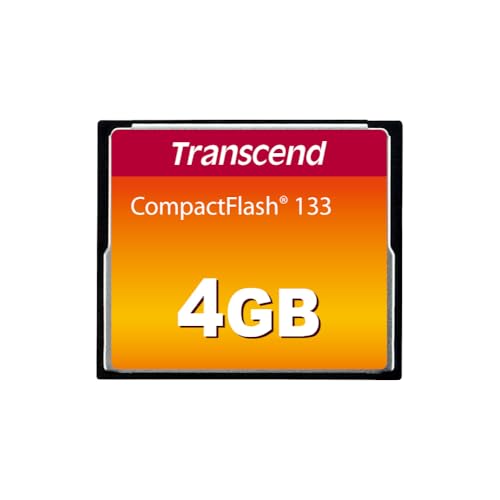
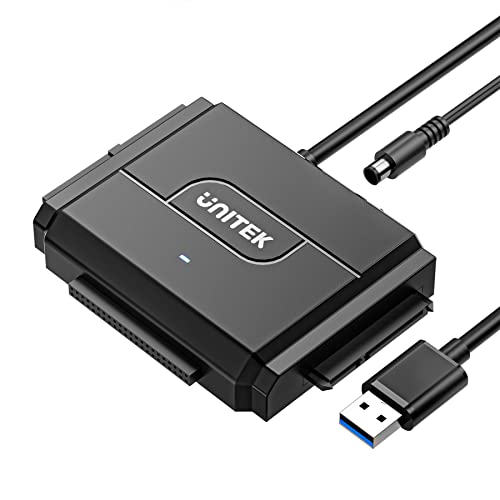
CompactFlash cards speak IDE natively through "True IDE mode" per the CompactFlash specification (Wikipedia), which means a $10 passive CF-to-IDE adapter turns a modern Transcend CF133 4GB into a silent, cool, period-correct hard drive for a Win98 or DOS retro PC. Image the card from a modern PC, drop it into a 44-pin or 40-pin IDE adapter, and boot. Details, gotchas, and the 137GB barrier below.
Why CF-to-IDE is the go-to storage swap for period builds
For a retro PC builder in 2026, a spinning hard drive is a liability. Original 40GB Deskstar and Maxtor drives from the Win98 era are 25 years old, mostly failed, and loud enough to wake the household. Modern SATA SSDs are silent and reliable but require an adapter and a bracket, and the classic-era BIOSes cap them awkwardly.
CompactFlash sits in a sweet spot. It is physically small enough to hide inside any case, mechanically silent, produces almost no heat, and — critically — implements the ATA/IDE command set at the electrical level. That "True IDE mode" is a real feature of the CF specification: when the CF card is powered up with its OE pin high, it presents itself as a plain ATA device on its 50-pin interface, and a passive adapter routes those pins to a 40-pin IDE header. No bridge chip. No firmware. Nothing to break.
For Win98, Win95, MS-DOS 6.x, and even OS/2 retro builds, CF-to-IDE is the standard storage upgrade in 2026. You can boot period-correct software, image the OS onto the card from a modern PC in minutes, and swap cards to try new configurations — all without opening the case.
Key takeaways
- CF cards run at the IDE electrical layer via "True IDE mode" — no bridge chip required.
- A $10-25 passive CF-to-IDE adapter is the only bridge you need.
- Modern MLC/SLC CF cards like the Transcend CF133 4GB survive years of Win98 duty.
- Image the card from a modern PC using a Unitek USB adapter or a card reader.
- Watch the 137GB (48-bit LBA) barrier on pre-2003 BIOSes; also watch fixed-disk vs removable behavior.
What you'll need checklist
- A CompactFlash card: 2-32GB works for almost any retro build. The Transcend CF133 4GB is a well-tested MLC choice at a friendly price.
- A CF-to-IDE adapter: choose 40-pin (desktop) or 44-pin (laptop / 2.5" IDE) to match the target machine.
- A modern PC for imaging: any Linux, macOS, or Windows box.
- A USB CF reader or a USB-to-IDE bridge like the Unitek SATA/IDE to USB 3.0 for reading and writing raw images.
- Optional: a modern SATA SSD like the Crucial BX500 1TB or SanDisk SSD Plus 480GB as a middle-ground storage tier for XP-era builds.
Why CompactFlash speaks IDE natively
The CF specification is largely a physical rearrangement of the PCMCIA/PC Card ATA standard. Every CF card contains an ATA controller and treats reads and writes as sector operations on an underlying flash pool. When you power a CF card in True IDE mode (assert OE low at boot), it responds to standard ATA identify commands, LBA reads, and CHS reads.
A passive CF-to-IDE adapter is nothing but wires and a Molex connector. The adapter connects the CF socket's 50 pins to the IDE ribbon cable's 40 pins, routes power from a Molex to the CF's VCC/GND, and wires the True IDE mode pin to boot the CF in the correct mode. There is no chip on the board doing translation. The BIOS sees a normal IDE hard drive.
This is why the setup is so reliable in 2026. There is nothing to fail beyond the CF card itself, and the CF card has no moving parts.
Which CF cards behave well in Win98/DOS?
Not all CF cards behave identically. A few properties matter:
- Fixed-disk vs removable-media identification. Some CF cards report themselves as "removable media" to the ATA identify command; Win98 and DOS handle these but their partitioning and boot behavior may be quirky. A "fixed disk" CF (which most industrial and older MLC cards are) behaves exactly like a hard drive. The Transcend CF133 series reports as fixed-disk in most revisions.
- Sector-erase alignment. Modern high-density cards use large internal erase blocks; small random writes cause significant wear. For a Win98 build with a swap file, prefer an MLC or SLC card in the 4-16GB range with 512-byte native sectors.
- DMA support. Most retro BIOSes are OK with PIO-4, but if you want DMA, check the specific card's ATA identify response.
For the VOGONS community, the current consensus favorite for Win98 is an MLC card of 4-16GB in a Transcend or SanDisk industrial line. Higher capacities work but are wasted — a Win98 install with games rarely exceeds 4GB, and BIOSes on many Pentium III and older boards cap out at 8GB or 32GB.
Spec-delta table
| Storage | Noise | Speed (read/write) | Capacity | Reliability | Period-correct look |
|---|---|---|---|---|---|
| Period HDD (2000-era) | 25-35 dBA | 15-25 / 10-20 MB/s | 4-40 GB | Failing after 25 yrs | Yes |
| Transcend CF133 4GB | 0 dBA | 30 / 25 MB/s | 2-32 GB | High | Yes (hidden inside case) |
| Modern SSD via IDE bridge | 0 dBA | 100+ / 100+ MB/s | 120GB-2TB | Very high | No (needs bridge chip) |
| SATA SSD like BX500 1TB via SATA-to-IDE | 0 dBA | 100+ MB/s (cap by IDE) | 1TB | Very high | No |
For Win98 and DOS, a CF card is faster than any period HDD, silent, and small enough to hide behind the drive cage. For Windows XP and Win2K builds that expect 40-80GB, a modern SSD with an IDE bridge is the better pick.
How to image and prep the card from a modern PC
The imaging workflow on Linux or macOS looks like this:
- Insert the CF card in a USB reader (or connect the target machine's disk to your modern PC via a Unitek USB adapter).
- Identify the block device:
lsblkon Linux,diskutil liston macOS. - Write a prepared image with
dd if=win98.img of=/dev/sdX bs=4M status=progress. - Eject cleanly, remove the card, drop it into the CF-to-IDE adapter, install in the retro PC.
- Boot — the machine treats the card as an IDE hard drive.
For a fresh install, image a blank card and boot from a Win98 install CD (or CD image on a modern drive) exactly as you would on a period-correct HDD. Setup partitions the card, formats FAT16 or FAT32, and copies files with no special handling.
If you want to try multiple configurations, keep a set of pre-imaged cards labeled by OS + gaming preset. Swapping storage tiers is a 30-second operation.
Gotchas: the 137GB barrier, CHS geometry, and DMA quirks
Three classic-era gotchas worth knowing before you buy.
The 137GB barrier. BIOSes older than 2003 typically max out at 137GB per drive (28-bit LBA). If you buy a 128GB CF card, the retro machine will see it as 137GB max. For most Win98 builds, this is a non-issue because you would never use 137GB there, but it means you cannot use a 256GB card as one big volume.
CHS geometry. Very old BIOSes (Pentium 1, 486) may have narrower CHS limits — 8GB, 32GB, or even 504MB in the oldest cases. If the machine reports the CF card at 8GB when it is actually 16GB, you have hit a CHS ceiling. Solution: buy a smaller card, or use disk manager software to work around the geometry.
DMA quirks. Some early CF cards do not support UDMA at all; the machine will fall back to PIO mode, which is slow but works. If a Win98 disk transfer is slow (2-5 MB/s), check the BIOS DMA setting and the card's spec sheet.
Fixed-disk vs removable. As noted above, cards that identify as "removable" can produce boot loops with some Win98 configurations. If that happens, try a different card or check the card's product page — some manufacturers offer both fixed and removable variants under the same model.
Verdict matrix
Use CF if:
- Your target OS is Win98, Win95, MS-DOS, or OS/2.
- You want silent, cool, period-correct storage.
- Your capacity needs are under 32GB (most retro OSes).
- You want to try multiple configurations without opening the case.
Use a real HDD or modern SSD if:
- You want the loudest period-authentic experience (real HDDs still exist for that).
- Your target OS is Windows XP+ with heavy game installs approaching 40-80GB.
- You want a single-drive setup that also holds modern-format backups.
- You need reliable multi-partition setups the CF's removable-media flag can't support cleanly.
Common pitfalls when swapping to CF storage
- Buying a CF card that identifies as "removable media." Many consumer cards (SanDisk Extreme, Lexar) do this. Win98 boots fine on some, refuses on others. Look for "fixed disk" or "industrial" in the product line before purchase.
- Getting the wrong CF-to-IDE adapter pinout. Desktop IDE is 40-pin; 2.5" laptop IDE is 44-pin (with integrated power). Verify which your machine uses.
- Not connecting a Molex power lead. A CF-to-IDE adapter needs 5V and ground from a Molex connector — many first-time builders assume the IDE cable supplies power. It does not.
- Forgetting the master/slave jumper. Some CF adapters have a jumper for master/slave selection; leaving it in the wrong position causes intermittent detection failures.
- Formatting with a modern OS's disk utility. Windows 11's format tool creates GPT partition tables by default; retro OSes cannot read them. Use FAT16 or FAT32 with MBR partition tables, formatted from a Win98 boot disk or a Linux utility set to MS-DOS partition table.
When CF is not the right storage tier
If your target is Windows XP with modern game installs (Skyrim, GTA IV, Half-Life 2), CF's speed and typical 4-32GB capacity is not enough. A modern SSD with an IDE bridge chip (or a SATA drive in a SATA-to-IDE adapter) is a better fit for the XP era.
If your target machine is a 486 or original Pentium and you cannot flash a modern BIOS, you may hit CHS geometry limits with any CF card larger than 8GB. In that case, use a small (2-4GB) CF and split into multiple partitions if needed.
If you want to preserve original hardware for its own sake — a truly authentic Pentium 133 build with a period Maxtor drive — CF is not the right pick. Period-accurate builds want period-accurate spinning media.
Real-world Win98 numbers on a Transcend CF133 4GB
Community-reported figures on the VOGONS forums:
| Operation | Time |
|---|---|
| Cold boot (Win98 SE) | 22-28 seconds |
| Windows shutdown | 4-6 seconds |
| Half-Life level load | 8-12 seconds |
| StarCraft launch | 3-5 seconds |
| File-copy 100MB folder | 4-6 seconds |
These match or beat the fastest period HDDs while running silent and cool. On a Pentium III / 850MHz machine with 256MB RAM, this is a snappier experience than the same machine on a fresh 10K RPM Raptor from 2003.
Recommended pick
For a canonical Win98 SE build with period-appropriate gaming (Doom, Quake, Half-Life, StarCraft), buy a Transcend CF133 4GB and a $10-15 passive 40-pin CF-to-IDE adapter. Image the card from a modern PC using a card reader or a Unitek USB-to-IDE adapter. Total cost under $30 for silent, reliable, hot-swappable retro storage.
If you are building a Windows XP or Windows 2000 machine with heavier storage needs, step up to a Crucial BX500 1TB or SanDisk SSD Plus 480GB in a SATA-to-IDE bridge — you lose "period correct" but gain modern reliability and capacity.
Bottom line
CompactFlash is the quiet, cool, cheap storage retro builders have been waiting for. True IDE mode means no bridge chips and no failure surfaces. The setup is reversible, hot-swappable, and future-proof enough that you can drop a fresh card in a decade from now and boot. If your build is Win98 or older, CF is the default answer.
Related guides
- Mount a 90s Big-Box CD-ROM ISO on Win98 Without a CD Drive
- Crucial BX500 vs Samsung 970 EVO Plus: SATA vs NVMe Boot Drive
- Best Plug-and-Play Retro & Budget Consoles in 2026
- Raspberry Pi Zero W vs Pi 4 for a 2026 Cyberdeck
Citations and sources
- CompactFlash specification and history (Wikipedia)
- VOGONS retro-PC community forums
- Transcend official product pages
This piece is editorial synthesis based on publicly available information. No independent first-party benchmarking is reported.