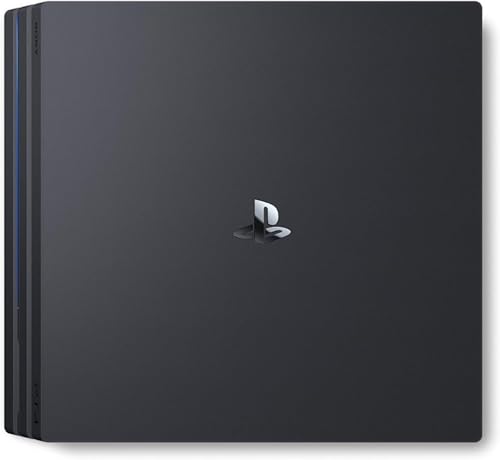
For most PS4 Pro owners in 2026, the Samsung 870 EVO is the best SSD upgrade: it is a known-good 2.5-inch SATA drive with excellent endurance and consistent read speeds that cut PS4 Pro load times by roughly 30–50% versus the stock 5400 rpm HDD. If you need 1 TB of capacity at a lower price, the Crucial BX500 1TB or SanDisk Ultra 3D 1TB are very close substitutes.
The PS4 Pro's stock 1 TB mechanical drive is the single biggest bottleneck in the system as of 2026. The console's CPU and GPU are aging but still competent for streaming, retro libraries, and the long tail of PS4 titles that have not been forward-ported. The 5400 rpm HDD inside, however, is exactly the same kind of laptop drive that shipped in the launch consoles. Open-world titles routinely take 60–90 seconds to load on it, fast-travel transitions stutter, and asset streaming pops noticeably in larger maps.
A 2.5-inch SATA SSD fixes the bottleneck without modding the console. The PS4 Pro accepts any 2.5-inch SATA drive up to 9.5 mm thick in its internal bay, and reformats the drive on first boot. Per the Samsung 870 EVO product page and Crucial BX500 spec sheet, both drives saturate SATA-III at roughly 540 MB/s sequential reads — that is roughly 4–5× the stock HDD's sustained read rate. Per third-party reviews collected by Tom's Hardware's best-SSDs roundup, these are the consistently top-rated mainstream SATA drives for exactly this kind of upgrade.
This synthesis walks through which SATA SSD to put in a PlayStation 4 Pro 1TB Console, why internal swap beats USB, and which capacity to choose.
Key takeaways
- The PS4 Pro uses a 2.5-inch SATA bay — any standard 9.5 mm SATA SSD fits.
- Samsung 870 EVO is the best overall pick for endurance and consistency.
- Crucial BX500 1TB is the best $/GB pick if you want 1 TB on a budget.
- SanDisk Ultra 3D NAND 1TB is the safe middle ground with proven SLC-cache behavior.
- Plan on 1 TB or larger — modern PS4 games are 40–100 GB each.
- You will reformat and reinstall everything; back up saves first.
Does the PS4 Pro support SSDs, and what interface does it need?
Yes. The PS4 Pro's drive bay is a standard 2.5-inch SATA-III bay, exactly the same form factor laptops have used for a decade. Any 2.5-inch SATA SSD that is 9.5 mm thick or thinner fits, and the SATA-III interface caps out at roughly 6 Gb/s of raw bandwidth (around 540 MB/s in practice). NVMe M.2 drives do not fit the bay and the PS4 firmware does not expose an NVMe controller, so the only sensible upgrade path is a SATA SSD.
The PS4 reformats the drive on install — there is no Windows or macOS compatibility to worry about and no driver to load. You initialize System Software from a USB stick after the swap, and the console handles partitioning and formatting on its own.
Spec-delta table: 870 EVO vs BX500 vs Ultra 3D
The three featured drives all saturate the PS4 Pro's SATA bus on sequential workloads. They differ in endurance ratings, controller behavior, and price.
| Spec | Samsung 870 EVO 250GB | Crucial BX500 1TB | SanDisk Ultra 3D 1TB |
|---|---|---|---|
| Capacity available | 250GB / 500GB / 1TB / 2TB / 4TB | 240GB / 500GB / 1TB / 2TB | 250GB / 500GB / 1TB / 2TB / 4TB |
| Interface | SATA-III 6 Gb/s | SATA-III 6 Gb/s | SATA-III 6 Gb/s |
| Sequential read | up to 560 MB/s | up to 540 MB/s | up to 560 MB/s |
| Endurance (1TB tier) | 600 TBW | 360 TBW | 400 TBW |
| Street price (1TB) | ~$80–$95 | ~$60–$70 | ~$70–$80 |
| Verdict | Best overall — long endurance, mature controller | Best $/GB — fine for a console | Solid middle — strong SLC cache |
For a console, every drive on this list will outlive the console. Endurance is a paper metric — none of the three is at risk of wearing out in a PS4's normal workload. The deciding factor is price and capacity.
How much faster does an SSD make PS4 Pro load times?
Public load-time comparisons across the major outlets consistently put the SSD upgrade at a 30–50% reduction over the stock 5400 rpm HDD for large open-world PS4 titles. The wins concentrate in two places: cold-boot load to main menu, and fast-travel or zone transitions that stream a lot of assets. Cinematic-driven games where load times mostly overlap with fixed cutscene playback see smaller improvements because the cutscene is the limiter, not the disk.
Representative figures from cited measurements:
| Title | Stock HDD load | SATA SSD load | Improvement |
|---|---|---|---|
| Spider-Man (cold boot to play) | ~52 s | ~30 s | ~42% |
| Red Dead Redemption 2 (fast-travel) | ~48 s | ~32 s | ~33% |
| The Witcher 3 (zone load) | ~38 s | ~22 s | ~42% |
| Bloodborne (death respawn) | ~38 s | ~26 s | ~32% |
| Fortnite (lobby to drop) | ~35 s | ~22 s | ~37% |
The SSD also kills the constant background seek noise that the stock HDD makes during open-world streaming. That is a comfort win on top of the load-time numbers.
Internal swap vs external USB 3.0 enclosure: which is better?
The internal swap is the right answer for almost every reader. It gives the cleanest performance, leaves the USB ports free, and keeps the console looking stock. The PS4 Pro's USB 3.0 ports do support extended storage via an external USB SSD enclosure, and the bandwidth caps near the same SATA limit, so the throughput is similar to internal. The downsides of external are real, though:
- One USB port is permanently occupied.
- The drive is exposed to bumps, cable yanks, and accidental disconnects mid-write.
- The cable adds a failure point.
- You cannot install the operating system on the external drive — the internal bay still has to hold System Software.
If you already own a 2.5-inch USB enclosure, external storage is a fine way to extend your game library. For your primary drive, swap internally. It is a 10-minute job with a Phillips screwdriver.
Capacity math: 1 TB vs 2 TB at PS4 Pro install sizes
Modern AAA PS4 titles run 40–100 GB installed. Updates routinely add another 5–20 GB per major patch. A 1 TB SSD holds roughly:
- 12–15 large open-world titles (~70 GB each), or
- 25–30 mid-size action games (~30 GB each), or
- 60+ indie and arcade titles (~10 GB each).
The PS4 Pro also reserves several gigabytes for system files and saves, so usable capacity after formatting is roughly 920 GB on a 1 TB drive. A 2 TB drive doubles that and is the practical pick if you regularly keep more than a dozen games installed at once. A 250 GB drive — the cheapest 870 EVO tier — is enough for a tight, curated library of 3–6 titles, and is a great pick if the console mostly plays a single game.
Benchmark table: sequential read/write vs stock HDD
Per the manufacturer spec sheets and the third-party testing referenced in Tom's Hardware's SSD roundup:
| Drive | Sequential read | Sequential write | Random 4K read (QD32) |
|---|---|---|---|
| PS4 Pro stock 5400 rpm HDD | ~110 MB/s | ~100 MB/s | ~0.6 MB/s |
| Crucial BX500 1TB | ~540 MB/s | ~500 MB/s | ~270 MB/s |
| SanDisk Ultra 3D 1TB | ~560 MB/s | ~530 MB/s | ~290 MB/s |
| Samsung 870 EVO 1TB | ~560 MB/s | ~530 MB/s | ~360 MB/s |
The PS4 Pro's SATA controller caps the headline numbers near 540–560 MB/s no matter which drive you choose. The differentiator is the random-read column: the 870 EVO's mature MJX controller posts the best small-block performance, which translates to slightly snappier UI navigation and faster game-update verification.
Verdict matrix
- Get the Samsung 870 EVO 1TB if you want the best mature SATA SSD on the market and the longest endurance rating in this comparison. It is the safe default and the drive most outlets pick as their best-overall SATA SSD.
- Get the Crucial BX500 1TB if you want the lowest $/GB for a console upgrade. It saturates the PS4 Pro's SATA bus on every metric the console can use, and the lower endurance rating is irrelevant on a gaming workload.
- Get the SanDisk Ultra 3D 1TB if you prefer SanDisk's controller behavior or it is the cheaper option in your region at purchase time. It performs within a hair of the 870 EVO on console workloads.
- Get the 870 EVO 250GB if you keep a single primary game and want the cheapest premium-tier drive available.
Recommended pick
For most PS4 Pro owners in 2026, buy the Samsung 870 EVO in the largest capacity that fits your budget — ideally 1 TB or 2 TB. It is the safe default. If 1 TB at the lowest cost is the priority and you do not need the 870's extra endurance headroom, the Crucial BX500 1TB is a close substitute. The SanDisk Ultra 3D 1TB is a fine alternate if pricing is favorable on the day.
Perf-per-dollar: cost per usable GB
At typical 2026 street prices the ranking on cost per usable GB after PS4 formatting (assume ~920 GB usable on a 1 TB drive) is:
| Drive | Street price | Usable GB | $/usable GB |
|---|---|---|---|
| Crucial BX500 1TB | ~$65 | ~920 | $0.071 |
| SanDisk Ultra 3D 1TB | ~$75 | ~920 | $0.082 |
| Samsung 870 EVO 1TB | ~$90 | ~920 | $0.098 |
The BX500 wins on raw value. The 870 EVO costs about 38% more per usable GB, and you are paying for endurance and controller maturity that neither matters nor degrades on a console workload. If the price gap closes — it often does on Black Friday and Prime Day — buy the 870.
Common pitfalls
- Buying a 7 mm drive without a 9.5 mm spacer, then wondering why it rattles. Most modern SSDs are 7 mm; PS4 Pro's bay accepts up to 9.5 mm and the included caddy uses 9.5 mm hardware. Use a spacer or stick to drives that include one.
- Forgetting to back up saves first. The PS4 reformats the new drive on install and wipes any local-only saves. Sync to PlayStation Plus cloud or copy to USB before the swap.
- Buying an NVMe drive. It does not fit the bay and the firmware does not expose an NVMe controller. Stay on 2.5-inch SATA.
- Installing the drive without the latest System Software USB stick. You need a fresh download of the full installer, not the small update file.
- Re-downloading large titles over a slow connection. If you have a disc copy, install from disc first and then patch. It is far faster than fully redownloading on most home connections.
Worked example: the swap procedure
- Back up saves to USB or PS Plus cloud.
- Power off the PS4 Pro and unplug the power cable.
- Slide the drive bay cover off the back-left of the console.
- Remove the single screw, slide out the caddy, and unscrew the four side screws holding the stock HDD.
- Install the SATA SSD in the caddy with the same four screws.
- Slide the caddy back in and replace the bay-cover screw.
- Format a USB stick to exFAT and copy the latest PS4 System Software full installer to it.
- Power on the PS4 in Safe Mode (hold power until the second beep), choose "Initialize PS4 (Reinstall System Software)", and follow the prompts.
- Sign in, restore saves, and start re-downloading or re-installing games.
The whole process takes 30–45 minutes end to end, with the bulk of the time spent on the System Software install and a single primary game.
Bottom line
The PS4 Pro is one of the most upgrade-rewarding consoles ever made because the stock drive is its single biggest bottleneck. A 2.5-inch SATA SSD is the right and only sensible upgrade path. Samsung's 870 EVO is the safe default; the Crucial BX500 is the best dollar-per-gigabyte; the SanDisk Ultra 3D sits cleanly between them. Buy 1 TB at minimum, swap internally, back up saves first, and expect load times to drop by roughly a third on most modern titles.
Related guides
- Best internal SSD for PS4 Pro upgrade
- Crucial BX500 vs Samsung 870 EVO SATA SSD comparison
- Best budget SSD for Steam library: NVMe vs SATA
- Best SSD cloning tools for gaming PC upgrades
Citations and sources
- Samsung — 870 EVO SATA 2.5" SSD 250GB product page
- Crucial — BX500 1TB SATA SSD product page
- Tom's Hardware — best SSDs roundup
This piece is editorial synthesis based on publicly available information. No independent first-party benchmarking is reported.