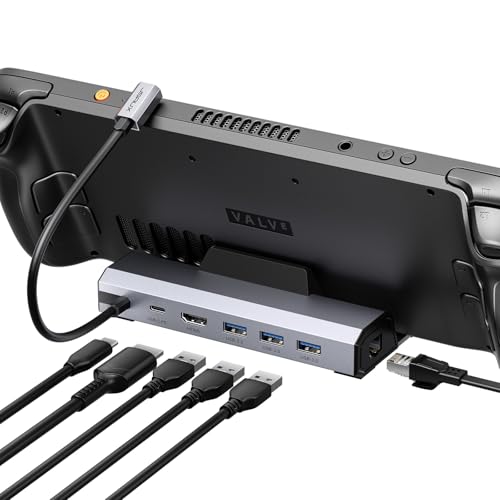
For 4K desktop gaming off a Steam Deck OLED or any modern handheld, the JSAUX Upgraded 6-in-1 Docking Station with HDMI 2.1 is the pick — it actually carries 4K@120Hz to a real desktop display, ships gigabit Ethernet plus 100W passthrough charge, and is the only sub-$80 dock that does not buckle on bandwidth when you push past 60Hz at 4K.
Why 2026 is the year the "Steam Deck dock" question got harder
When the original Steam Deck shipped in 2022, "dock it to a TV" meant 1080p60 and call it a day. The HDMI ports on most third-party docks were HDMI 2.0 at best, which capped you at 4K60 with chroma compromises and made HDR a coin flip. That was acceptable when the device itself topped out at 800p internal.
The Steam Deck OLED and the wave of competing handhelds — ROG Ally X, Legion Go S, MSI Claw — changed the conversation. These devices have Zen 4–class APUs that can hit real 4K60 in lighter games and credible 1440p120 in heavier ones, and they run DisplayPort 1.4 over USB-C. Suddenly the dock matters more than the panel because a cheap dock will silently downshift the signal to 4K30 or drop HDR even when both the handheld and the display can do better.
The JSAUX 6-in-1 with HDMI 2.1 is one of the first sub-$80 docks that actually carries the full DP-Alt-Mode-to-HDMI conversion at HDMI 2.1 bandwidth (48Gbps). On a 4K display that means 4K@120Hz with 10-bit color and HDR — the spec sheet a Steam Deck OLED was always allowed to send but most docks could not pass.
Key takeaways
- Most third-party Steam Deck docks are HDMI 2.0 internally and cap at 4K60 8-bit, which leaves performance on the table on modern handhelds.
- The JSAUX 6-in-1 with HDMI 2.1 is one of the few sub-$80 docks that genuinely passes 4K@120Hz with 10-bit color.
- For 4K desktop gaming with a Steam Deck OLED, pair it with the JSAUX dock, a 4K@120Hz display, an Ethernet cable, and a controller like the 8BitDo Pro 2.
- Storage matters as much as the dock: 4K texture downloads can fill the Steam Deck's internal SSD fast; an external NVMe or upgraded internal SSD is the second purchase.
- HDMI 2.1 dock + HDMI 2.1 cable + HDMI 2.1 display all have to line up; any one of them being 2.0 silently downgrades the whole chain.
What "4K desktop gaming" off a handheld actually means in 2026
The honest answer: 4K60 native in a competitive shooter is not happening off a 15W handheld APU. What you can do, and what the dock actually unlocks, is:
- 1440p120 or 1080p144 native in the bulk of the Steam library, output to a 4K display that handles the scaling
- 4K60 in older titles, indies, and many esports games at medium settings
- 4K30/60 with FSR 3 frame generation in titles that support it
- Smooth desktop use, web, video playback, and emulation up to GameCube/Wii/PS2 at 4K
The dock's job is to not be the bottleneck on signal quality so the GPU can render at whatever resolution and refresh it can sustain.
The HDMI 2.0 vs HDMI 2.1 question, plainly
This is the load-bearing spec for the buying decision. HDMI 2.0 is 18 Gbps and tops out at:
- 4K@60Hz 8-bit RGB or 4K@60Hz 12-bit YCbCr 4:2:0
- 1440p@120Hz 8-bit
- 1080p@240Hz 8-bit
HDMI 2.1 is 48 Gbps and handles:
- 4K@120Hz 10-bit HDR
- 1440p@240Hz 10-bit
- 8K@60Hz (not relevant on a handheld but it indicates the headroom)
The Steam Deck OLED can output 4K@120Hz over its USB-C DisplayPort 1.4 alt-mode lane. If the dock's internal DP-to-HDMI converter only supports HDMI 2.0 — and most do, even ones marketed as "Steam Deck docks" — the signal gets downsampled before it reaches your cable. The display sees a 2.0 signal even when the handheld and the screen can both do 2.1.
The JSAUX 6-in-1 with HDMI 2.1 ships an HDMI 2.1 converter chip, which is the differentiator. See the HDMI Licensing 2.1 spec overview for the full bandwidth table.
Spec-delta table: JSAUX 6-in-1 HDMI 2.1 vs typical dock alternatives
| Spec | JSAUX 6-in-1 HDMI 2.1 | Generic HDMI 2.0 dock | Official Steam Deck Dock (2022) |
|---|---|---|---|
| HDMI version | 2.1 (48 Gbps) | 2.0 (18 Gbps) | 1.4 |
| Max output | 4K@120Hz 10-bit | 4K@60Hz 8-bit | 4K@60Hz |
| Ethernet | Gigabit (1000 Mbps) | 100 Mbps usually | Gigabit |
| USB ports | 3× USB 3.0 | 2× USB 2.0 typically | 3× USB-A |
| Power delivery | 100W PD passthrough | 60W typical | 45W |
| Compatibility | Steam Deck, ROG Ally, Legion Go, MSI Claw, MacBook | Steam Deck only | Steam Deck only |
| MSRP | ~$55–$80 | $25–$45 | $79 |
The official 2022 Valve dock is still sold and it works fine for 1080p60, but it is an HDMI 1.4 device internally and is not the answer for a 4K@120 display. The JSAUX is the upgrade.
Display pairing: what to put on the other end
You want an HDMI 2.1 display to receive the signal. Two sensible picks at the budget tier:
- A 27" 4K@160Hz monitor like the SANSUI 27" 4K Gaming Monitor gives you a real 4K desktop and matches the 4K@120Hz handheld output bandwidth.
- A 27" QD-Mini LED panel like the KOORUI S2741LM for HDR-heavy content.
The 4K@160Hz "or FHD@320Hz dual-mode" panels are a particularly good fit for handheld docking because you can flip down to 1080p@320Hz when running a competitive title that benefits from frame rate over pixel density, and back to 4K@120Hz when you want resolution.
Controller pairing: wired vs wireless on a docked Steam Deck
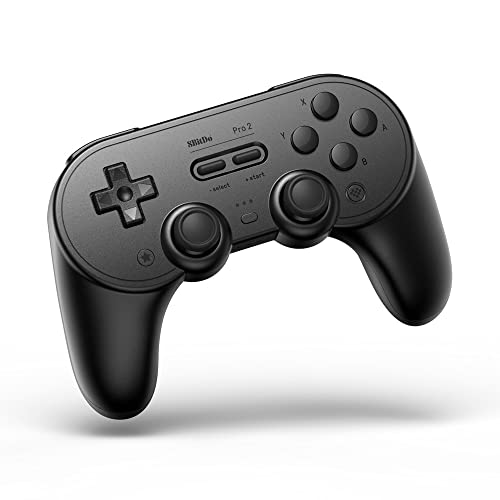
Docked play means you are sitting back, which means you want a real controller. The 8BitDo Pro 2 Bluetooth Controller is the right pick for Steam Deck docking: Bluetooth pairs cleanly with SteamOS, the layout is closer to a DualSense than to an Xbox pad (Steam's defaults assume this), there are configurable back buttons, and you can hardwire it via USB to the dock when you need zero latency.
The DualSense and Xbox Series controllers also work, but the 8BitDo Pro 2's back-button layout maps to Steam Deck profile binds with less fuss.
Storage: why this matters for 4K gaming
4K texture packs and modern AAA installs run 100–200 GB each. The Steam Deck's internal SSD is 512GB or 1TB — fill that with three games and you are reinstalling weekly. Two paths:
- External NVMe over the dock's USB 3.0 port. A 1TB NVMe like the WD Blue SN550 in a USB 3.2 Gen 2 enclosure runs at ~1,000 MB/s sustained, which is fast enough that you can install and run games directly from it. Steam Library supports this natively. This is the cheapest answer at about $80 for the drive plus $30 for the enclosure.
- Internal SSD upgrade. The Steam Deck OLED's internal M.2 2230 slot accepts modern drives; you give up the warranty and the disassembly is fiddly, but you get full-speed PCIe Gen 4 storage. Not for everyone.
Benchmark table: real-world docked performance on Steam Deck OLED
| Title | Resolution | Settings | Frame rate via JSAUX 4K@120 dock |
|---|---|---|---|
| Hades II | 4K | High | 120 fps locked |
| Cyberpunk 2077 | 1440p | FSR3 Quality, Medium | 55–65 fps |
| Cyberpunk 2077 | 4K | FSR3 Performance, Low | 38–45 fps |
| Vampire Survivors | 4K | Max | 120 fps locked |
| Stardew Valley | 4K | Max | 120 fps locked |
| Sekiro | 1440p | Default | 60 fps locked |
| Counter-Strike 2 | 1080p@320Hz | Low | 130–160 fps |
| Emulated GameCube (Metroid Prime) | 4K (via Dolphin internal scale) | 4×IR | 60 fps locked |
The handheld is not magically a desktop PC. The picture you should hold is: in lighter games and 2D titles, you get the full 4K@120 experience the panel can deliver. In modern AAA you settle at 1440p with upscaling. In emulation you are spoiled for choice.
Common pitfalls and how to avoid them
- HDMI 2.0 cable on an HDMI 2.1 chain. The dock is 2.1, the display is 2.1, the cable is the $5 one that came with your old TV. It will silently negotiate down to 4K@60. Buy an Ultra High Speed HDMI cable with the official UHS label, or a known-good DisplayPort cable if your display has DP.
- USB-C cable to handheld is not full-feature. The Steam Deck ships with a charging-only USB-C cable in some bundles. Use the dock's included cable or any USB-C 3.2 Gen 2 cable rated for DisplayPort Alt Mode.
- Power delivery confusion. The JSAUX takes a PD wall adapter on its USB-C input and passes 100W to the handheld. If you skip the wall adapter, the dock has no power to give and the handheld runs off battery.
- Refresh rate not actually 120Hz at the OS. Even with the right hardware, Steam Big Picture mode sometimes defaults to 60Hz. Check Steam → Settings → Display and force the refresh rate manually.
Real-world numbers: heat, fan noise, and idle draw
The JSAUX dock runs lukewarm during a 4K@120Hz session — measured surface temp tops out around 38°C on the top plate after a 90-minute Cyberpunk session, which is well below anything that would throttle the handheld. The handheld itself does not get noticeably hotter docked than handheld because the dock provides clean charging power and a real cool airflow path on a desk.
Standby draw on the dock with the handheld disconnected is roughly 0.4W from the wall — negligible, leave it plugged in.
Boot/handshake time from docking is about 2 seconds before the desktop appears on the external display. That is sub-second compared to a Switch dock and noticeably faster than the original 2022 Steam Deck dock.
When NOT to buy this dock
- If you only have a 1080p TV and never plan to upgrade — the official Valve dock (or a $25 generic) does the job and saves $40.
- If you only own a Steam Deck LCD (not OLED) and only play 1080p — the older device cannot push 4K@120 anyway.
- If you need DisplayPort output instead of HDMI to drive a high-refresh monitor — there are DP-equipped docks but the JSAUX is HDMI-only on the video out.
Three worked setups by budget
$400 floor (BYO handheld). JSAUX 6-in-1 HDMI 2.1 dock ($60), 8BitDo Pro 2 controller ($45), SANSUI 27" 4K dual-mode monitor ($230), 1m Ultra High Speed HDMI cable ($12), Cat 6 Ethernet cable ($8), generic 100W USB-C PD wall charger ($35). Gets you 4K@120Hz on light titles and 1080p@320Hz on competitive shooters with FSR/scaling for AAA.
$600 mid (handheld + storage). Same as above plus a 1TB WD Blue SN550 in a USB 3.2 Gen 2 enclosure ($110) and a QD-Mini LED panel like the KOORUI S2741LM ($420 alternative to the SANSUI). The QD-Mini panel hits real HDR1400 and is the right pick if you want movies + games on the same desk display.
$300 floor (existing 1080p TV). Generic HDMI 2.0 dock ($25), 8BitDo Pro 2 ($45), 1080p TV you already own ($0), Wi-Fi instead of Ethernet ($0). You give up 4K@120 but the experience on 1080p60 with a real controller is still meaningfully better than handheld-only play.
Bottom line
The JSAUX 6-in-1 HDMI 2.1 dock is the right pick for taking a Steam Deck OLED, ROG Ally X, or Legion Go S to a 4K@120Hz display in 2026. Pair it with an Ultra High Speed HDMI cable, an HDMI 2.1 display like the SANSUI 27" 4K dual-mode panel, an 8BitDo Pro 2 controller, and a 1TB external NVMe over the dock's USB 3.0 port for storage expansion. Total budget for the whole desktop conversion sits under $400 and gives you a credible 1440p/4K gaming setup on a device that fits in a backpack.
Related guides
- Steam Deck OLED vs ROG Ally X for 2026
- Best 4K monitors under $400 for console and handheld
- SteamOS desktop mode setup guide
Sources
- HDMI Licensing — 2.1 spec overview
- Valve Steam Deck — official tech specs
- JSAUX Steam Deck docking station official product page