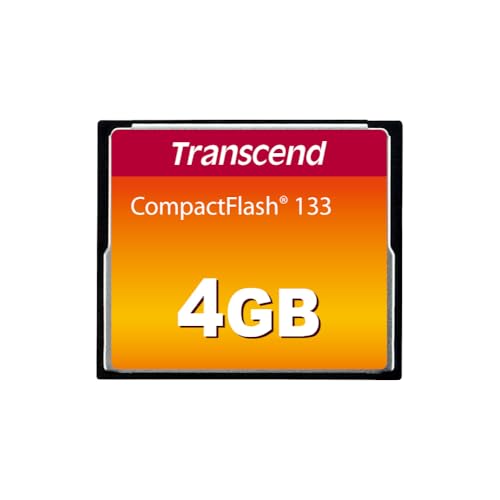
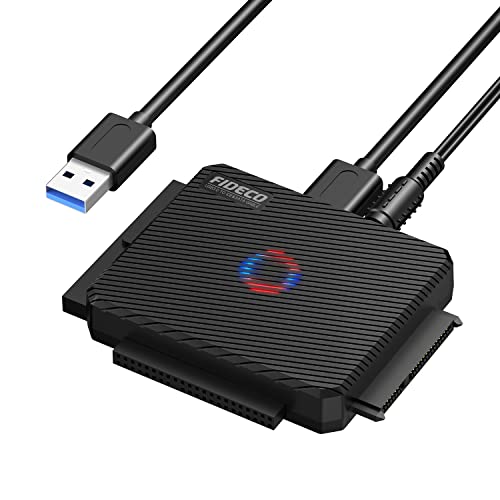
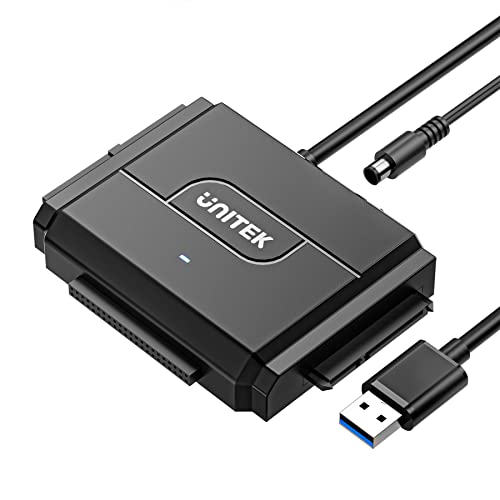
For a Windows 98 retro PC in 2026, the right boot drive is a 4-16 GB Transcend CF133 CompactFlash card on a passive CF-to-IDE adapter — silent, fast enough at UDMA-4 to saturate any era IDE bus, no rotating-mass failure, and roughly $20-$45 all-in for card and adapter. CompactFlash speaks the same ATA/IDE command set as a period hard drive, so Windows 98 sees it as a normal drive with no driver work. Pair it with a USB 3.0 SATA/IDE adapter to write the image from a modern host and a USB 2.0 universal adapter as the wide-compatibility backup, and the storage side of a Windows 98 build is solved for the next decade.
Windows 98 SE machines are statistically interesting in 2026 because the period IDE hard drives that came with them are statistically dead. Bearing wear, head crashes, and stiction from twenty-plus years of idle storage have killed most of the original drives. The traditional fix used to be a salvaged Western Digital or Maxtor pulled from another period box, but the supply of working pulls is shrinking and the failure rate on installation is high. CompactFlash flips the problem — a modern flash card on a passive adapter is cheap, available, silent, and runs forever. Per VOGONS' storage forum, CF on IDE has become the default Windows 98 storage recipe in retro-build threads.
Key takeaways
- CompactFlash cards present as standard IDE/ATA drives to any retro motherboard — no drivers, no BIOS gymnastics.
- The Transcend CF133 is the right model for retro use: MLC NAND for write durability, UDMA-4 (ATA-66) for saturated IDE transfer, in continuous production since 2009.
- Capacity: 4 GB is enough for a full Windows 98 SE install with games; 8-16 GB gives you headroom; 32 GB hits Windows 98's FAT32 size limits and needs partitioning workarounds.
- Total cost is $20-$45 for card and adapter — a fraction of a salvaged IDE drive's price, with no spin-down failure risk.
- BIOS-level limits on older boards (528 MB, 8 GB, 32 GB, 137 GB) are real; check your motherboard's BIOS revision before buying capacity you cannot use.
Why CompactFlash is the right Windows 98 boot drive
CompactFlash is a flash-memory form factor introduced in 1994 that uses the same electrical and command-level interface as IDE/ATA hard drives. The contract is set in the spec: a CF card on a passive adapter presents to the host system as a standard IDE/ATA drive, responds to the same Identify Device command, and accepts the same Read DMA / Write DMA commands. The host has no way to tell it apart from a rotating-platter drive, which means no drivers are required, no BIOS settings need to change, and no period operating system needs patching. Windows 95, Windows 98 SE, Windows ME, Windows 2000, and Windows XP all see a CF-to-IDE setup as a normal drive on boot. Per the CompactFlash entry on Wikipedia, this interface compatibility is the entire reason the format survived as a retro-PC storage standard long after consumer cameras moved on to SD.
The mechanical benefits are immediate. No spinning platters means no acoustic noise from the drive bay — a Pentium III system with a CF boot drive runs as loud as its case fans and nothing else. No spinning platters also means no head-crash risk if the machine is moved while running. Power draw drops from 6-8 W idle (typical IDE drive) to <1 W (CF card), so the PSU runs cooler and the case temperature drops. Boot times improve, although for Windows 98 the bottleneck is usually CPU and RAM rather than storage; expect a 5-15% boot-time reduction compared to a period drive.
The flash-specific benefits are less obvious but matter for retro use. A CF card has no seek time, so file-fragmentation that murders performance on a spinning drive is invisible on CF. The drive does not need defragmentation. Power-loss tolerance is much higher than a spinning drive (no mid-write platter desync), which matters in shop environments where the retro target gets unplugged frequently. And the read-write ratio of a typical retro use case (mostly reads, occasional small writes) is exactly where CF cards live longest — far less write traffic than a typical modern desktop.
Why the Transcend CF133 specifically
The Transcend CF133 is the right card for retro PC boot use, not a generic recommendation. Per the Transcend CF133 product page, it uses MLC NAND (not TLC or QLC), supports Ultra DMA mode 4 (UDMA-4 / ATA-66), has built-in ECC, and has been in continuous production since 2009. Three of those four properties matter for retro use specifically.
MLC NAND is the right chemistry for a drive that will run Windows 9x swap. Windows 95 and Windows 98 SE both thrash the swap file under any meaningful load, and modern TLC/QLC cards have endurance ratings tuned for consumer camera write patterns rather than swap patterns. MLC at 4-16 GB capacity has the write endurance to absorb years of swap thrashing without wear-leveling becoming a problem. The CF133's rated endurance comfortably exceeds what a Windows 98 boot drive will accumulate in its working life.
UDMA-4 / ATA-66 support is the second important property. Cards that only support PIO mode transfer at 3-4 MB/s, which makes Windows 98 boot times feel terrible and program-load times worse. Cards that support UDMA-4 transfer at the bus ceiling for any pre-2002 motherboard (Pentium III, Athlon Thunderbird, early Pentium 4), and the CF133 specifically negotiates UDMA-4 reliably on a wide range of period hardware.
ECC (error correction code) is the third. Cheap CF cards skip ECC to save controller die cost; the CF133 has it. For a boot drive that you want to last a decade with no failure events, ECC is the difference between "card silently fixes a bit-error every few months" and "card returns garbage that crashes the OS." Pay the few extra dollars for an ECC-equipped card.
The CF133 is in production at capacities from 4 GB to 32 GB. For a Windows 98 SE build with games, the 8 GB is the sweet spot: enough for Windows + Office 97 + 5-10 era games + utility software. For a minimal install (Windows + driver set + one or two games), the 4 GB is plenty and the cheapest. For a Windows 2000 or Windows XP build on the same hardware, step up to 16 GB.
The passive CF-to-IDE adapter
The other half of the boot drive is a passive CF-to-IDE adapter, which is a small PCB with a CF slot on one side and a 40-pin or 44-pin IDE connector on the other. There is no controller chip, no firmware, no driver — the IDE pins map directly to the CF card's IDE-mode pins on the connector. Generic adapters from any electronics supplier cost $5-$12 and work identically. The two things to watch for: (1) buy a passive adapter rather than an active one — active adapters add latency without adding compatibility; (2) for a desktop motherboard with a 40-pin IDE header, you want a 40-pin adapter; for a 2.5" IDE laptop with a 44-pin header, you want a 44-pin adapter.
Mounting is informal. The adapter PCB usually has two screw holes that match a 3.5" drive bay mounting pattern; some hobbyists prefer to use a 2.5"-to-3.5" drive bay adapter for cleaner cable routing. Hot-swap is supported per the spec but rarely useful in a fixed retro build.
Capacity choices and the FAT32 ceiling
Windows 98 SE supports FAT16 (max 2 GB per partition) and FAT32 (max 2 TB partition in theory, but with practical limits). Windows 98 itself caps FAT32 at 137 GB without third-party drivers; some early BIOSes cap at 8 GB or 32 GB regardless of OS support. The practical guidance:
| Capacity | Use case | Constraints |
|---|---|---|
| 4 GB | Minimal Windows 98 install + drivers + a few games | None — works on all era boards |
| 8 GB | Full Windows 98 SE + Office 97 + 8-10 games | Check that BIOS supports >8 GB drives (most boards 1999+) |
| 16 GB | Windows 2000 SP4 + full game library | BIOS must support >8 GB, partition as FAT32 |
| 32 GB | Windows XP + heavier loads | BIOS must support >32 GB; some early boards cap here |
| 64+ GB | Not recommended for Windows 98 | Exceeds 137 GB-safe operating range on some BIOSes |
Most Pentium III boards from 1999 onwards support 8 GB drives. Most Pentium 4 boards (2000-2005) support 32 GB or more. Pentium 4 boards from 2003 onwards typically support 137 GB. Check your motherboard manual or run the LBA Test Utility from a DOS boot disk to confirm BIOS-level support before buying capacity you cannot use.
Real-world install workflow
The full workflow from "empty case" to "working Windows 98 SE on CF" using the kit:
- Plug the Unitek USB 3.0 SATA/IDE adapter into your modern Linux or Windows host. Connect the Transcend CF133 via a CF-to-IDE adapter, then to the Unitek's IDE port. The card appears as
/dev/sda(Linux) or as a new drive in Disk Management (Windows). - Partition the CF card with
fdiskorparted(Linux) or with Windows Disk Management. Create one FAT32 partition spanning the whole card. Mark it active. - Copy your Windows 98 SE installation files to the CF card or boot the retro target from a Windows 98 boot floppy and run setup from a USB-attached CD-ROM.
- Install Windows 98. Use the standard setup procedure; Windows 98 will detect the CF card as a generic IDE drive. Reboot.
- Install motherboard chipset drivers, sound card drivers (for an Audigy 2 ZS or Sound Blaster 16), video drivers (for a GeForce 4 Ti 4600 / 9700 Pro era card), and any utility software you want.
- Test boot speed: expect 35-45 seconds from POST to a usable desktop on a Pentium III 933 MHz with a 4 GB CF card. Period drives typically post 50-65 seconds; CF is faster end-to-end.
- Make a backup image of the prepared CF card to your modern host via the Unitek adapter (
dd if=/dev/sda of=win98-cf-backup.img bs=4M). Restore from this image any time the build needs a clean state.
The Vantec USB 2.0 adapter is the spare for any host that has trouble with USB 3.0 controllers; the FIDECO USB 3.0 with 5.25" support is the optical-drive ripping tool if you need to convert period install CDs to ISOs first. Both are nice-to-haves for repeat retro builders rather than required for a single Windows 98 install.
Comparison: CF vs alternatives at the same job
| Storage option | Capacity | Cost | Acoustic | Reliability | Compatibility |
|---|---|---|---|---|---|
| CF card + passive IDE adapter | 4-32 GB | $20-$45 | Silent | Excellent | All IDE motherboards |
| SD card + SD-to-IDE adapter | 4-256 GB | $25-$60 | Silent | Good (SD wear) | Most IDE motherboards |
| mSATA SSD + mSATA-to-IDE adapter | 32-512 GB | $50-$120 | Silent | Excellent | Most IDE motherboards |
| 2.5" SATA SSD + SATA-to-IDE adapter | 64-1024 GB | $70-$140 | Silent | Excellent | Most IDE motherboards (BIOS support varies) |
| Salvaged period IDE drive | 20-160 GB | $20-$60 | Audible | Poor (age) | All IDE motherboards |
| CompactFlash via PATA bridge | 64+ GB | $35-$60 | Silent | Good | All IDE motherboards |
CF on passive IDE is the cheapest, simplest, most reliable answer for a Windows 98 build at typical install sizes (under 16 GB). SD-to-IDE works but the wear-leveling on consumer SD cards is tuned for camera write patterns and Windows 9x swap can chew through it faster than expected. mSATA and SATA SSDs work via active adapters and give you more capacity at higher price; for Windows 98 specifically the extra capacity is rarely useful because of the FAT32 and BIOS ceilings.
Common pitfalls
The most common pitfall is buying a CF card that does not support UDMA. PIO-mode-only cards work, but boot times feel 5-10x slower than UDMA-4 cards. Check the spec sheet for "UDMA mode 4" or "ATA-66" before buying. The CF133 advertises and delivers UDMA-4 on every batch.
The second pitfall is exceeding the BIOS's drive-size cap. A 32 GB card on a 1998 board that caps at 8 GB will either fail to detect or detect at the wrong capacity, and partitioning the visible portion is fiddly. Match the card capacity to what the BIOS supports; bumping the BIOS revision is sometimes possible but often not.
The third pitfall is forgetting to align partitions for CF performance. On a CF card, partition alignment to the card's internal erase block size (typically 64 KB or 128 KB) matters for write performance. Use parted with align=optimal on Linux or use a third-party alignment tool on Windows; the default fdisk alignment is fine for read but not for sustained write.
The fourth pitfall is mixing the CF boot drive with another IDE drive on the same channel as slave. Period IDE controllers serialize master/slave on the same channel, so a slow slave drags down the fast master. Put the CF on its own channel (primary master) and put any secondary IDE drive on the second channel (secondary master).
When NOT to use CompactFlash
If your build needs more than 32 GB and the BIOS supports it, an mSATA or SATA SSD via an active IDE adapter gives you more capacity. The price climbs to $80-$120 versus $30-$45 for the CF route, and you give up some of the simplicity (driver-free, passive, no failure points), but the storage is much larger.
If your build is pre-IDE (XT, AT, or earlier with MFM/RLL drives), CompactFlash will not plug in. You need an XT-IDE controller card to add an IDE channel to the system, or a Gotek floppy emulator for floppy-only storage.
If your build is a server or development machine that will see continuous heavy writes (database server, build farm), CF cards wear out faster than the use case warrants. A real SSD via SATA-to-IDE adapter is the right choice there.
Bottom line
The 2026 Windows 98 boot drive is a 4-16 GB Transcend CF133 on a passive CF-to-IDE adapter. Silent, fast enough, mature, $20-$45 total. Pair with the Unitek USB 3.0 SATA/IDE adapter for imaging from a modern host and keep a Vantec USB 2.0 adapter on the bench for wide-compatibility recovery work. For the optical-drive side of the install, the FIDECO USB 3.0 with 5.25" passthrough is the tool for converting period CDs to ISOs. The combination has been the default Windows 98 storage recipe on VOGONS for several years and is the right starting point for any 1998-2007 retro build in 2026.
Related guides
- Best retro PC building tools and adapters
- SATA SSD for Windows XP retro PC with IDE adapter
- Best budget 1TB SATA SSD 2026