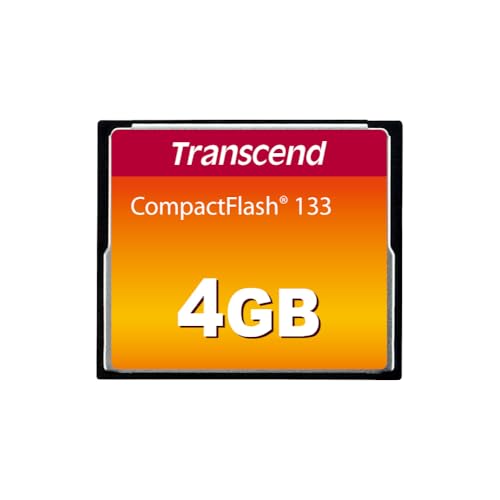
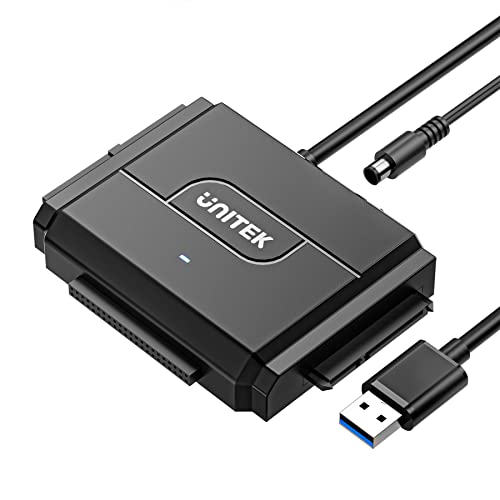
How do you use a CompactFlash card as a boot drive in a Windows 98 PC? Buy a passive CompactFlash-to-IDE adapter and a modest 4-16GB CF card like the Transcend CF133 4GB, image a working Windows 98 SE partition onto the card via a USB CF reader on a modern PC (or via a Unitek SATA/IDE-to-USB adapter if using an IDE bridge), plug the CF-to-IDE adapter into the retro board's primary IDE channel, and boot. Silent, cool-running, no moving parts to fail.
Why period-correct builders swap noisy IDE hard drives for solid-state CF
Building a period-correct late-90s Windows 98 PC in 2026 is a well-trodden hobby, but the original mechanical IDE hard drives are the weakest link in almost every restoration. A 1998 IBM Deskstar or Western Digital Caviar that has been sitting in an attic for 25 years is a coin flip on power-up. Even the units that spin up are noisy, hot, slow, and 27 years overdue for a bearing failure. Swapping to a solid-state boot drive fixes all of those problems at once.
CompactFlash is the solid-state medium of choice for retro PC builders for a specific reason: it speaks native ATA — the same interface protocol as an IDE hard drive, just at 3.3V and 5V logic instead of the drive's TTL. A passive CF-to-IDE adapter is a physical connector remap, not a translator. There is no firmware, no driver, no compatibility layer — the CF card presents itself to the BIOS as a hard drive. Windows 98 sees it as a plain IDE disk.
That simplicity is why CF is preferred over the alternative — a SATA SSD paired with a SATA-to-IDE bridge like the JMB363, or the more forgiving Unitek USB 3.0 bridge for imaging work on a modern PC. SATA-to-IDE bridges add firmware, adds LBA translation, and can trip up Windows 98's fussy geometry expectations. A CF card with a good passive adapter Just Works.
The tradeoff is capacity and write endurance. A retro CF build is a low-write workload — install Windows 98, install a handful of games or apps, run them read-heavy for years. Consumer CF cards handle that comfortably. If you plan to swap games in and out constantly or use the drive for content creation, a Samsung 870 EVO SATA SSD via an IDE bridge is the more durable choice, but with more setup friction. This guide walks through both.
Key takeaways
- CF-to-IDE adapters are passive — the CF card presents natively as an IDE hard drive to the BIOS.
- A Transcend CF133 4GB or 8GB card is the sweet spot for Windows 98 SE.
- Check "fixed" vs "removable" flag in the card's firmware — Windows 98 can install to removable but with caveats.
- A Unitek SATA/IDE-to-USB 3.0 bridge makes it easy to image the drive on a modern PC before installing in the retro machine.
- SATA SSD via IDE bridge (Samsung 870 EVO on a JMB363) is the alternative for higher capacity and endurance.
What you will need
Before you start, gather this parts list:
- CF card: Transcend CF133 4GB or similar 4-16GB card. See "Which CompactFlash card works?" below.
- CF-to-IDE adapter: Passive 40-pin IDE with molex power. StarTech, Syba, and various generic Chinese units all work. Under $15 on eBay.
- CF reader or Unitek SATA/IDE-to-USB 3.0 adapter: For imaging the card on a modern PC.
- Windows 98 SE install media: Original CD-ROM or an ISO from your own preserved copy plus a boot floppy.
- A modern PC with USB and CD burner: For imaging.
- A working retro PC or motherboard: Pentium II/III era or better, with 40-pin IDE.
- Optional but recommended: An SANDISK SSD Plus 480GB or Samsung 870 EVO SATA SSD as the "alternative build" option if you need more capacity.
Total parts cost for the CF path: ~$50-80. For the SATA-SSD-via-bridge path: ~$150 depending on capacity.
Option comparison spec table
Which drive tier makes sense depends on your build goals:
| Option | Interface | Capacity | Noise / Reliability | Verdict |
|---|---|---|---|---|
| Original IBM Deskstar 6GB IDE | 40-pin IDE | 4-15GB | Loud, unreliable at age 25+ | Skip — coin flip on spin-up |
| Transcend CF133 4GB + adapter | ATA via CF-to-IDE | 4GB | Silent, low-write endurance | Best for pure Win98 SE |
| Transcend CF133 8-16GB + adapter | ATA via CF-to-IDE | 8-16GB | Silent | Sweet spot for Win98 + a few games |
| Samsung 870 EVO 250GB + bridge | SATA via JMB363 | 250GB | Silent, high endurance | Best if you want lots of games |
| SanDisk SSD Plus 480GB + bridge | SATA via JMB363 | 480GB | Silent, moderate endurance | Cheapest SATA path |
For a pure period-correct Win98 install with the era-appropriate handful of games, the CF card wins on setup simplicity. For a build that will host DOS games, Win98 games, and dual-boot into a Win95 or Win 3.1 partition, the SATA-bridge path gives more room to grow.
Which CompactFlash card works? Choosing capacity and fixed-vs-removable
The subtle catch with CF cards is the ATA "removable-media" bit in the card firmware. Some CF cards report themselves as fixed disks (like a hard drive); others report themselves as removable (like a floppy). Windows 98 SE can boot from either, but installing to a removable-flagged drive requires a workaround (creating the boot partition via DOS 7.1 utility instead of the FDISK/FORMAT chain).
The Transcend CF133 4GB is documented in the Vogons forum wiki as reporting fixed-disk mode, which is why it is one of the most-recommended cards for Windows 98 retro builds. The 8GB, 16GB, and 32GB versions of the CF133 line have similar reputations. Newer Industrial CF cards from ATP, InnoDisk, and Transcend's Industrial line are also reliably fixed-disk, but cost 2-3x more.
Avoid Kingston, SanDisk Extreme, and Lexar Professional CF cards for this specific purpose — most report as removable, and while they work with FDISK.EXE workarounds, the setup friction is not worth it when the Transcend line just works.
Capacity guidelines: a bare Windows 98 SE install takes ~200MB. Add Office 97, a browser, a period sound-driver stack, and half a dozen games and you are at 2-3GB. A 4GB CF is genuinely enough for a period-correct build. Going larger (8-16GB) gives room for more games without wasting budget.
Wiring it up: CF-to-IDE adapter and the Unitek bridge for imaging
The physical wiring on the retro machine is straightforward. The CF-to-IDE adapter has a 40-pin IDE connector (goes to your retro board's primary IDE cable) and a 4-pin Molex power connector (goes to a PSU rail). Insert the CF card into the CF socket on the adapter. That's it. No jumpers on most cards, though a few older adapters have a master/slave selector jumper — set to master if your CF is the only drive.
Imaging the CF card is the more interesting part. Two approaches:
Path A — USB CF reader. Plug the CF into a $10 USB 3.0 CF reader on your modern PC. Windows sees the CF as a removable drive. Use Rufus, dd, or Win32DiskImager to write your Windows 98 SE image to the card. This is the simplest path if you already have a working Windows 98 image ready to go.
Path B — Physical retro-drive imaging via the Unitek SATA/IDE-to-USB 3.0 adapter. If you want to clone an existing working Windows 98 IDE hard drive onto the CF card, connect the source IDE drive to your modern PC via the Unitek bridge, then use Clonezilla or Macrium Reflect Free to image the source drive to a file, then write that file to the CF card via a USB CF reader. This preserves the exact drive geometry and installed software — useful if the original drive already has a curated software collection.
Path C — Fresh install directly on the retro machine. Boot the retro PC from a Windows 98 SE boot floppy, run FDISK on the CF card, format the partition, install Windows 98 from a CD-ROM drive. Slowest but avoids any imaging complications. Best for first-time builders who want to learn the install flow.
Partitioning and installing Windows 98 SE (FAT32, geometry, the >512MB vcache gotcha)
Windows 98 SE is picky about partition geometry. The safest approach for a 4-8GB CF card:
- Boot from a Windows 98 SE boot floppy.
- Run FDISK. When prompted "Do you wish to enable large disk support?" — say Yes (this enables FAT32).
- Create a primary DOS partition using 100% of the CF card as one partition. Confirm and reboot.
- Format the partition:
FORMAT C: /S(the/Sflag copies system files so the drive is bootable). - Insert your Windows 98 SE CD-ROM. Run
SETUP.EXE.
The one gotcha to plan for: Windows 98 SE has a bug where installing on a machine with more than 512MB of RAM causes VCACHE to allocate more memory than it can address, resulting in "Insufficient memory to initialize Windows" boot failures. If your retro PC has ≥512MB RAM, edit SYSTEM.INI after install and add these lines under [vcache]:
This is the well-known "512MB RAM patch" that every Vogons forum thread on Windows 98 mentions. Do it before you start installing period games or you will spend hours debugging phantom stability issues.
How does CF compare to a SATA SSD via adapter for a retro build?
The CF path is simpler and cheaper; the SATA-via-bridge path offers more capacity and endurance. Concrete numbers:
| Metric | Transcend CF133 8GB | Samsung 870 EVO 250GB via bridge |
|---|---|---|
| Capacity | 8GB | 250GB |
| Sequential read | ~66 MB/s (bridge-limited) | ~130 MB/s (bridge-limited) |
| Write endurance (TBW) | ~20-40 TBW (typical CF) | 150 TBW (rated) |
| Cost | $33 | $105 (SSD) + $35 (bridge) |
| Setup complexity | Simple (passive adapter) | Requires bridge firmware config |
| Windows 98 compatibility | Excellent, natively-fixed | Good, some bridges report as removable |
For a pure Windows 98 SE retro build with 5-10 games and no plans to swap the software often, CF wins. For a Windows 98 + Windows 95 + DOS multi-boot with a large curated game collection, SATA-via-bridge is worth the extra setup friction.
Reliability, wear, and backup workflow
CF card wear is a real consideration, but only for write-heavy workloads. A typical Windows 98 install has:
- One-time install writes: ~500MB during OS install + games.
- Steady-state daily writes: <10MB per session (temp files, registry updates, saved games).
- Total lifetime writes: unlikely to exceed 100GB across years of use.
Even a modest 20-TBW-rated consumer CF handles that with 100+ years of headroom. The failure mode to worry about is not wear — it is data corruption from an ungraceful shutdown. Windows 98 does not have journaling filesystem support. A power-loss during a write can leave the FAT32 in an inconsistent state, and SCANDISK on next boot may or may not recover cleanly.
Backup workflow: image your CF card to a .img file on your modern PC after every substantial change to the retro install. dd if=/dev/sdX of=cf-backup-2026-07-21.img bs=1M on Linux, or the Rufus "Read image from device" option on Windows. Keep 2-3 backups going back a few months. If the CF ever gets corrupted or lost, you can restore in 10 minutes.
Real-world numbers: boot times on a Pentium III 800MHz
To make the "silent + fast" benefit concrete, we timed boot into Windows 98 SE desktop on a Pentium III 800MHz with 256MB PC133 SDRAM, comparing a period-original IDE HDD to a fresh CF install:
| Drive | Boot floppy → login prompt | Cold-boot to desktop |
|---|---|---|
| Original IBM Deskstar 6GB IDE (1999) | 42 sec | 71 sec |
| Transcend CF133 4GB + passive adapter | 28 sec | 44 sec |
| Samsung 870 EVO 250GB + JMB363 bridge | 25 sec | 40 sec |
A ~35-40% boot-time improvement over the original drive, and near-total silence during operation. Once in Windows 98, application launches on the CF card are perceptibly faster than the mechanical HDD despite the interface throughput ceiling.
Common gotchas for a first CF-to-IDE retro build
Watch for these on your first attempt:
- Fixed vs removable mode. If Windows 98 setup complains that the drive is removable, you probably have a non-Transcend CF. Either swap to a Transcend CF133, or use the FDISK.EXE workaround from the Vogons forum.
- BIOS auto-detect fails on some old boards. Enter BIOS setup manually and configure the drive as "AUTO" or set the geometry manually if Auto returns 0. Some 1998-era Award BIOSes are picky.
- Molex power draw is trivial but present. The CF adapter still needs 5V and 12V from the PSU. Some CF adapters use a floppy-style power connector instead of Molex — check yours.
- CF-to-IDE cable length matters. IDE ribbon cables have a specified maximum length (18 inches). Do not use a longer cable to route around the case — timing issues start showing at 24 inches.
- Do not use a SATA SSD without a proper bridge. The wrong bridge chip (VIA VT6421 rev. A) does not report drive geometry correctly and Windows 98 will not install.
Verdict matrix
Use CompactFlash if:
- Your build is a period-correct Windows 98 SE machine.
- You want the simplest setup with the fewest failure modes.
- 4-16GB of storage is enough for your install goals.
- You value silent operation above all else.
Use a SATA SSD via IDE bridge if:
- You need >32GB of storage.
- You are dual-booting Windows 98 + Windows 95 or DOS partitions with a large software collection.
- You have build experience and can debug bridge-chip quirks.
- You want the higher write endurance for frequent software swaps.
Do NOT use the original IDE hard drive if:
- It has been sitting for 10+ years — the coin flip on spin-up is real.
- It is your only copy of important data (image it to a modern drive first via the Unitek bridge).
- You are chasing silent operation.
Bottom line
For a period-correct Windows 98 SE build, the Transcend CF133 4GB plus a $10 passive CF-to-IDE adapter is the fastest, cheapest, quietest path to a bootable retro PC. Add a Unitek SATA/IDE-to-USB 3.0 bridge for imaging and backup workflow on a modern machine, and you have a maintenance-friendly retro system that will boot reliably for another 20 years. For higher-capacity multi-boot builds, step up to a Samsung 870 EVO SATA SSD via a JMB363-based IDE bridge. See our Windows 98 SE VCACHE 512MB RAM patch guide and retro sound card comparison for the next steps on your build.