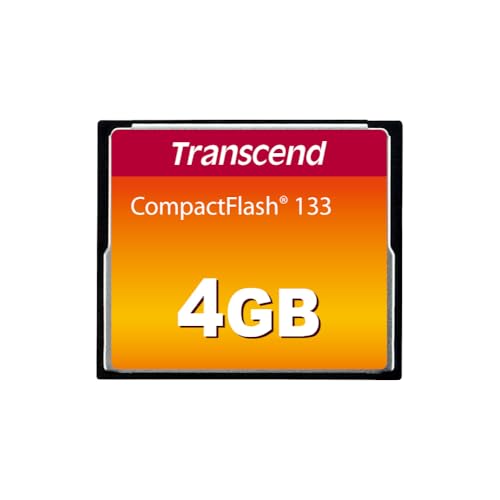
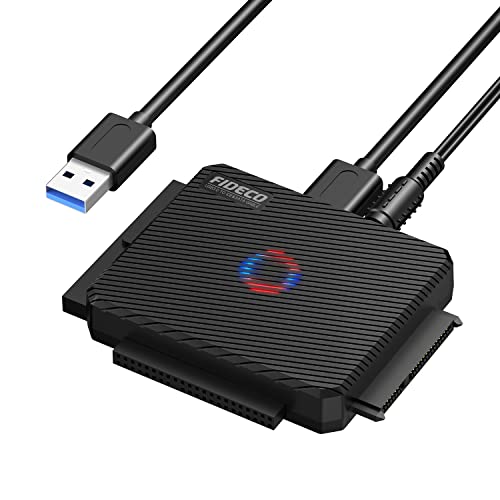
To boot Windows 98 from a CompactFlash card, you need three things: a CF card that presents itself to the host as a Fixed Disk rather than Removable Media, a passive CF-to-IDE adapter that sits in the retro PC's IDE chain, and the right BIOS geometry settings so Windows 98 setup recognises the card as a hard drive. The Transcend CF133 4GB CompactFlash card is the right CF card for this job because its Industrial line reports Fixed Disk to the host; the FIDECO SATA/IDE to USB 3.0 adapter is the right modern-host adapter for prepping the card. Once installed, Windows 98 boots in roughly 15 seconds (vs. 45+ on a contemporary IDE spinner), runs silently, and pulls no spin-up current — perfect for a sealed retro build.
Why retro builders swap mechanical drives for CF
Walk into any 2026-vintage retro PC build and you'll find the period-correct beige tower has one part that isn't period-correct: a CompactFlash card sitting in place of the mechanical IDE drive. The reasons are practical, not nostalgic. Vintage mechanical IDE drives are unreliable hardware that's been sitting on a shelf for 20+ years. The bearings stiction-lock; the heads scrape platters; the firmware drops blocks. A Maxtor 6.4 GB drive that worked perfectly in 1999 may not survive a year of bench-test power cycles in 2026.
CompactFlash sidesteps all of that. The CF format (Wikipedia primer) was designed in 1994 as a portable storage standard, and the electrical interface is genuine Parallel ATA / IDE — not a USB-over-IDE bridge, not a SATA-to-IDE translation, just plain IDE on a different connector. A passive CF-to-IDE adapter is a $5 PCB with no logic on it; the CF card is an IDE drive, just in a different form factor.
The win is mechanical: no spinning platters, no head seek time, no spin-up power. A retro tower with a CF boot drive can sleep with zero current draw on the drive bus and wake to a usable Windows 98 / DOS / OS/2 / NT 4 desktop in 10–20 seconds. It also runs silent — and silent retro PCs are a different kind of pleasure from the click-and-whir of period spinners. Pair the CF with a low-RPM CPU fan and a passive PSU and you have a build that goes 95% of the way to silent.
This piece walks the practical setup: why CF is electrically IDE-compatible, which card and adapter to use, how to partition and format CF so Win98 boots cleanly, the geometry and removable-bit gotchas that turn a 20-minute job into a five-hour debugging session, and the honest endurance trade-off for write-heavy retro workloads.
Key takeaways
- CompactFlash speaks Parallel ATA / IDE natively; passive CF-to-IDE adapters work with zero firmware translation.
- The CF card must present as a Fixed Disk to the IDE controller. Most consumer CF cards present as Removable, and Windows 98 setup refuses Removable drives.
- The Transcend CF133 4GB Industrial line is the right Win98 boot card — Fixed Disk reporting, period-friendly geometry, ~$20.
- Period BIOSes cap at 528 MB / 2.1 GB / 8.4 GB / 32 GB depending on revision. A 4 GB CF card sits cleanly inside the 8.4 GB ceiling that covers most late-1990s motherboards.
- Boot times drop from 45+ seconds on a period mechanical IDE drive to ~15 seconds on CF; resume from suspend is roughly instant.
- CF endurance is plenty for Win98 build use (few writes per session); avoid CF for heavy server-style write workloads.
Why is CompactFlash electrically IDE-compatible?
CompactFlash was designed in 1994 by SanDisk to share electrical signaling with Parallel ATA. The 50-pin CF connector carries the same data, address, and control lines as a 40-pin or 44-pin IDE cable, plus power and a small number of CF-specific signals (Card Detect, configuration). A passive CF-to-IDE adapter is just a mechanical re-wiring board: CF pin N goes to IDE pin M, with no active logic, no controller chip, no firmware.
This means a CF card behaves to the host BIOS exactly like a small IDE drive. The BIOS sends ATA commands; the CF card responds with its identify-device block; the drive enumerates with cylinders, heads, sectors, and LBA capacity. Windows 98's FDISK and FORMAT see it as a hard disk and proceed normally. There's no special driver, no Windows initialization quirk, no CompactFlash-specific software layer.
Per the Parallel ATA Wikipedia article, the CF / IDE compatibility was deliberate from day one to ease the path for embedded systems and industrial controllers that wanted solid-state storage in an IDE chassis. That's the same path retro PC builders use today, just on consumer hardware.
Which CF card and adapter should you use for a Win98 boot drive?
Two pieces matter: the card and the adapter.
The card. Industrial / embedded-class CF cards (Transcend Industrial, Apacer Industrial, SanDisk Extreme Pro) report themselves to the host as Fixed Disk — a single bit in the ATA identify block that tells the OS this drive is non-removable. Consumer CF cards (Lexar, SanDisk Extreme, Kingston) report as Removable Media because they're designed for cameras. The bit doesn't change anything physically, but Windows 98 setup checks it and refuses to install onto Removable Media. (Windows XP is more permissive but still produces "removable disk" handling in Explorer that breaks some software.)
The Transcend CF133 4GB is the canonical right answer for a Win98 build. Industrial Fixed-Disk reporting, 30+ MB/s sustained read, sensible wear-levelling, and a 4 GB capacity that sits cleanly inside the 8.4 GB BIOS ceiling that covers Pentium II / III / early Athlon motherboards. Per Transcend's CF133 product page, the Industrial line carries an extended-temp rating that's overkill for a desk PC but signals the design intent.
The adapter. A $5–$10 passive CF-to-IDE adapter board is the right answer. It needs to match your IDE cable form factor (40-pin desktop or 44-pin laptop). Avoid "smart" adapters with USB ports or bridge chips — passive is the whole point. The adapter's only job is to physically route CF pins onto IDE pins.
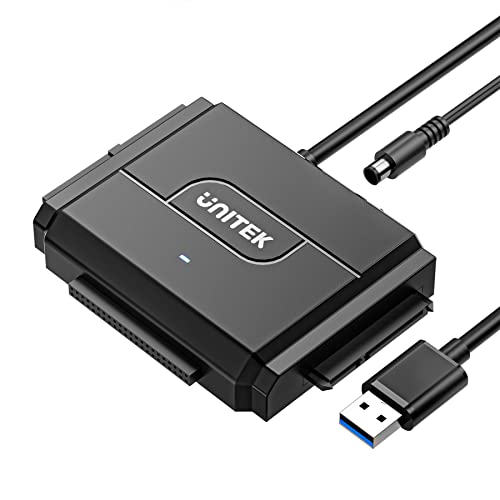
For prepping the CF card on a modern host (formatting, copying installer files, optionally pre-imaging Windows 98 onto the card from a backup), the FIDECO SATA/IDE to USB 3.0 adapter plus a separate CF-to-IDE adapter or the Unitek SATA/IDE to USB 3.0 adapter are the workhorse tools. A USB CompactFlash reader works for raw file copies; for byte-imaging entire Win98 installs, the IDE-via-USB path is more reliable.
How do you partition and format CF so Win98 boots cleanly?
The Win98 install path:
- Boot the retro PC with a Win98 startup floppy or a CD-bootable Win98 install disc. (If no optical drive, the Vantec USB 2.0 adapter lets you image a Win98 boot floppy from a modern host onto a CF first.)
- At the DOS prompt, run
FDISK. The CF card should appear as drive 1 with its full capacity. If FDISK refuses or shows 0 MB, the CF is reporting Removable; you need an Industrial-class card. - Create a primary DOS partition. For ≤2 GB CF, FAT16 is the right pick; for >2 GB CF, FAT32. Mark the partition active.
- Reboot. Format the partition:
FORMAT C: /Sto write system files. The /S switch makes the partition bootable. - Either install Windows 98 from CD (
X:\WIN98\SETUP.EXE) or copy an imaged install over from a modern host. - On first boot, Windows 98 will detect new hardware — let it install drivers normally.
If you see "Bad partition table" or "Invalid drive specification" after FDISK, the BIOS is likely mis-reading the CF geometry. Set the BIOS drive parameters to "Auto" (preferred) or manually enter the CHS values matching what the CF reports.
CF capacities vs BIOS limits (528MB / 2.1GB / 8.4GB)
Period BIOSes have a staircase of capacity ceilings. Choose the CF card capacity to sit cleanly inside what your BIOS supports:
| BIOS era | Capacity ceiling | Notes |
|---|---|---|
| 1994 and earlier | 528 MB | Original CHS limit; affects very early 486 boards |
| 1994–1996 | 2.1 GB | Most Pentium 1 boards; the original FAT16 partition cap |
| 1996–1998 | 8.4 GB | Most Pentium II / early Pentium III boards |
| 1998–2002 | 32 GB | LBA28 ceiling; later Pentium III / Athlon boards |
| 2002+ | 137 GB | LBA48; Pentium 4 era and beyond |
A 4 GB CF card sits cleanly inside the 8.4 GB ceiling, which covers most retro builders' target platforms (Pentium II / early Pentium III). For a 486 build, stick with a 1 GB or 2 GB CF. For a Pentium III later-revision board that supports LBA28, a 16–32 GB CF works. The minuszerodegrees.net BIOS / ROM archive is the definitive resource for which BIOS revision handles which ceiling on which board.
CHS geometry, fixed-disk vs removable bit, and the 'PnP vs Driver Install.exe' registry gotcha
Three gotchas trip up first-time CF retro builds:
CHS geometry mis-detection. Some BIOSes auto-detect the CF as a much smaller drive than it is — typically a 528 MB chunk of a 4 GB card. The fix is to set the BIOS to "User" or "LBA" mode and let LBA addressing handle it, or to manually enter the cylinders/heads/sectors values the CF reports in its identify block. Most period BIOSes that support LBA do the right thing on "Auto."
Fixed Disk vs Removable Media bit. Covered above. If FDISK refuses the card, the cause is Removable Media reporting. Get an Industrial CF — there's no software workaround.
The PnP / Driver Install.exe registry quirk. Windows 98 sometimes flags a Fixed-Disk CF as a Removable drive in the registry if the IDE controller's driver was loaded in a specific order. The fix lives in HKEY_LOCAL_MACHINE\Enum\ESDI\<your drive> — look for the Removable DWORD; set it to 0 if it's 1. This typically only matters if you're running specialized software that checks the removable bit at startup; it's not a boot blocker.
How does CF perform vs a period mechanical drive?
| Workload | Period 5400-RPM IDE HDD | Transcend CF133 4GB |
|---|---|---|
| Win98 cold boot | 45–60 s | 12–18 s |
| Win98 resume from suspend | 8–15 s | 1–3 s |
| Application launch (Office 97) | 3–6 s | <1 s |
| Sequential read (peak) | 8–20 MB/s | 30 MB/s |
| Sequential write (peak) | 6–18 MB/s | 20 MB/s |
| Random 4K read | <1 MB/s | 8 MB/s |
| Spin-up power | 1.5–2.5 A briefly | 0 A |
| Idle power | 4–8 W | <0.5 W |
| Noise | audible click + whine | silent |
The random-IO improvement is the part that makes Windows 98 feel fast. The OS spends most of its time touching small files (DLLs, registry hives, INIs); period mechanical drives crawl through that workload, and CF chews it up. A retro builder doing this swap consistently reports that Win98 feels "snappier than I remember" — that's literally because the original experience was bottlenecked on mechanical seek time.
Wear, longevity, and write-amplification trade-offs honestly assessed
CF wear is a real concern but a manageable one for retro PC use. Industrial-class CF cards (like the Transcend CF133) use wear-leveling firmware that distributes writes across the flash blocks, so any single block sees a fraction of total writes. For a Win98 retro build that gets booted, used for an hour, and powered off — call it a few hundred kilobytes of writes per session — the card's rated endurance is effectively forever.
The places to worry:
- Heavy database / log workloads. If you're using the retro PC for something that hammers writes (a vintage SQL Server, a logging-heavy game server), CF endurance becomes a question. Use a SATA SSD via IDE bridge instead.
- Swap-file pressure. Windows 98 writes swap aggressively if RAM is low. Cap RAM at 512 MB or less for a clean Win98 install (avoiding the vcache bug) and disable swap if you have enough RAM that swap isn't needed.
- Browser / cache writes. Period browsers cache aggressively to disk. A 4 GB CF can wear through the cache region faster than the rest of the drive; redirect the browser cache to a RAM disk if you're worried.
For typical retro build use — boot, play a game or run a vintage app, shut down — CF endurance is a non-issue.
When to use a CF-to-IDE adapter vs a USB adapter for imaging
For boot drive use in the retro PC, the CF-to-IDE adapter is the only right answer — passive, native IDE, full BIOS recognition. The Transcend CF133 goes in the adapter, the adapter goes in the IDE chain, the BIOS sees a hard drive.
For prepping the CF on a modern host — formatting, copying installer files, restoring a backup image — a USB CompactFlash reader works for file copies, and the FIDECO USB 3.0 adapter or Unitek USB 3.0 adapter (each paired with a separate CF-to-IDE board) works for full byte-level imaging. The IDE-via-USB path preserves geometry and the Fixed-Disk bit exactly the way the retro PC will see it, which is the right choice when you're imaging an entire Win98 install from a known-good source.
Bottom line: when CF is the right retro boot drive
The CF-as-boot-drive setup is the right call when: you're building a Pentium II / Pentium III / Athlon / early Pentium 4 retro PC that targets Windows 98 / DOS / OS/2 / NT 4; you want a silent, low-power, instant-on system; you don't trust period mechanical IDE drives to survive bench testing; you have a 4–8 GB target install footprint that fits inside the BIOS capacity ceiling.
It's not the right call when: you need 30+ GB of game install space (use a SATA SSD via IDE bridge instead, the Crucial BX500 is the modern boot drive of choice); you're running write-heavy workloads; you want raw throughput beyond ~30 MB/s.
For a typical retro Win98 build — boot, browse, fire up a few period-correct games, run an emulator or two, shut down at the end of the session — the Transcend CF133 4GB in a $5 CF-to-IDE adapter delivers a quieter, faster, more reliable boot drive than any 25-year-old mechanical drive could in 2026.
Related guides
- Windows 98 SE on >512MB RAM: The vcache Fix Explained (2026)
- Adding USB Storage to a Windows 98 PC With a SATA/IDE Adapter
- How to Run a SATA SSD on a Windows XP Retro Gaming PC (AHCI + Adapters)
- Sound Blaster X G6 on a Windows XP Retro Gaming PC: Worth It?
- 3dfx Voodoo5 5500 PCI Boots in a Modern ASUS Z77 Board