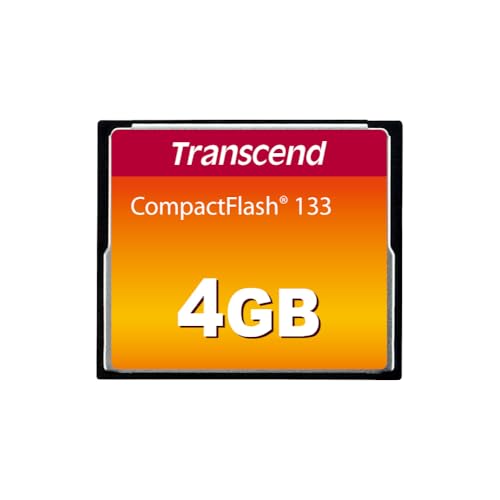
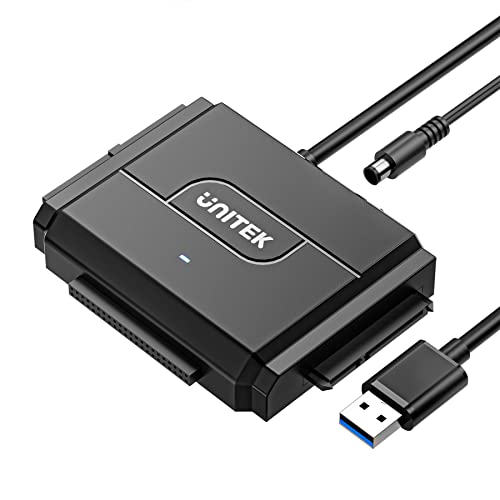
Yes — a CompactFlash card in a passive CF-to-IDE adapter presents to a Windows 98 machine as an ordinary IDE hard drive. It boots, installs games, and runs silently with no moving parts. The two catches are picking a card the vintage BIOS can size correctly and picking a card that reports as a fixed disk rather than removable media, both solved by the specific parts choices in this build.
Why builders keep swapping spinning IDE drives for CompactFlash
The Windows-98 retro-build scene has spent a decade migrating away from period-correct spinning IDE drives. The reason is simple: 25-year-old hard drives fail. Bearings seize, platters delaminate, and the ones that still spin up produce a whine that fills a small room. Community threads on Vogons have documented the transition in detail — first to IDE-to-SATA bridges, then to CompactFlash, and more recently to mSATA-to-IDE adapters and dedicated retro SSDs like the DOM (disk-on-module) options.
CompactFlash occupies a specific sweet spot in that lineup. Per public documentation on the format's ATA/IDE compatibility mode, CompactFlash speaks the IDE/ATA protocol natively at the electrical level. A passive CF-to-IDE adapter is literally just a pin re-routing PCB with no controller chip, no firmware, and no bridging — the card presents to the motherboard as an unremarkable IDE hard drive. That means BIOS auto-detection works, DOS boots, Windows 98 installs, and every period-correct utility (fdisk, format, ScanDisk, Norton Utilities) behaves exactly as it did on a 1998-era platter drive.
The Transcend CF133 CompactFlash card is the SKU featured here because it reports as a fixed disk (not removable media) — a small detail that matters enormously, because many CF cards report as removable, and Windows 98's tools then refuse to partition them as boot media. Combined with a Unitek SATA/IDE-to-USB 3.0 adapter to image the card from a modern PC, the two parts cover the entire silent-storage side of a period-correct build.
What you'll need for the build
- A CompactFlash card in the 4-32 GB range. The Transcend CF133 is the recommended part for its fixed-disk reporting and dependable behavior in older BIOSes.
- A passive CF-to-IDE adapter. Any 40-pin or 44-pin (2.5") adapter with a straight-through pinout works; the vintage-computing community on Vogons maintains up-to-date lists of adapters known to be trouble-free.
- A USB IDE/SATA adapter for imaging the card from a modern PC. The Unitek SATA/IDE-to-USB 3.0 adapter handles both drive types, so the same tool works with the retro CF card via a CF-to-IDE bridge and with a modern Crucial BX500 SSD if that ever becomes useful for archive duty.
- A Windows 98 install source — the original CD-ROM, an ISO burned to a CD, or a bootable image prepared per the community guides on retrocomputing.stackexchange.com.
- A period-correct or near-period motherboard with a normal IDE controller. Anything from a late Slot-1 Pentium II through a Socket-A Athlon XP motherboard is a reasonable target for a Windows 98 build.
- A modern PC for imaging and file transfer. A single-board computer like the Raspberry Pi 4 8GB works well here if a dedicated Linux machine is easier than commandeering the main desktop.
Key takeaways
- CompactFlash is electrically IDE. No bridging or protocol translation is happening; the card looks like a drive to the motherboard.
- Fixed-disk reporting matters more than speed. A CF card that reports as removable will not install Windows 98 as a boot volume without additional workarounds.
- Stay within period partition limits. Keep boot partitions under 32 GB to sidestep FAT32 tool limits and BIOS geometry surprises.
- Image the card on a modern PC. Installing Windows 98 by feeding files through a vintage machine over slow media is unnecessary suffering when a USB IDE adapter and 10 minutes of
ddon a modern host does the same job. - Write endurance is not a real concern for gaming. Games are read-heavy; the retro rig writes almost nothing compared to a modern OS.
Why use CompactFlash instead of a period IDE hard drive?
Four reasons, in the rough order builders name them:
Silence. A spinning 5,400 RPM 3.5" IDE drive from 1998 has a distinctive whine that a CF-based build entirely eliminates. In a small home office or a bedroom retro-gaming corner, this is the single largest quality-of-life upgrade.
Reliability. Period drives have already outlived their design life by decades. Bearings are the failure mode that ends builds. A CF card can also fail, but it fails predictably at the flash-cell level rather than mechanically, and — critically — the entire drive can be cloned to another card in under an hour.
Imaging and backup. Once a Windows 98 install is dialed in, dd (on Linux/macOS) or a Windows imaging tool captures the entire CF card to a file. Restoring after an experiment gone wrong is a five-minute operation, not the day-long reinstall a spinning drive requires. Community threads on Vogons treat this as the killer feature, not the silence.
Physical size and mounting. A CF card in a small 2.5" or 3.5" adapter mounts anywhere in a case, uses no power beyond the IDE bus's 5 V line, and generates zero heat. Modern minimalist retro builds in small cases benefit enormously.
The tradeoff is nostalgia — a retro build with a period-correct spinning drive sounds like a period-correct machine, and some builders value that texture. For a daily-driver retro-gaming rig, silence and reliability usually win.
How do you image and prep a CF card for Windows 98?
The imaging-on-a-modern-machine workflow, at a high level:
- Connect the CF card to the modern PC. Either use a CF-to-USB reader directly, or plug the CF card into a CF-to-IDE adapter, then plug the adapter into the Unitek USB IDE adapter. Both paths work. Direct CF readers are marginally faster.
- Partition and format. For a period-correct Windows 98 SE install, a FAT32 partition of 4-16 GB is the reliable sweet spot. Modern tools (fdisk on Linux, Disk Management on Windows, or the community-favored HDDGURU HDD Raw Copy Tool referenced across retrocomputing.stackexchange.com threads) all work. Keep the partition under 32 GB to avoid the format-tool ceiling on stock Win98 tools.
- Copy the Windows 98 install files. The
win98directory from the install CD is roughly 200 MB. Copy it into a folder likeC:\WIN98on the CF card so the vintage machine can install without needing the CD drive. - Prepare a bootable partition. The exact ritual depends on approach — a DOS boot floppy from the WinWorld archive or a bootable Windows 98 install CD both work. Community walkthroughs on Vogons cover the specific tool combos in more detail than fits here.
- Move the card to the retro machine. Plug the CF card into its CF-to-IDE adapter in the target motherboard, boot from the DOS floppy or install CD, run setup, point it at
C:\WIN98. Installation proceeds normally.
Spec table: CF card size limits, IDE modes, Win98 partition ceilings
| Limit | Value | Notes |
|---|---|---|
| Practical CF card size | 4-32 GB | Larger cards work but hit BIOS/FAT32 formatting edge cases |
| BIOS 137 GB barrier | 137 GB | Pre-2002 boards; irrelevant at CF sizes |
| FAT16 max partition | 2 GB | Skip; use FAT32 |
| FAT32 max partition | 2 TB (spec) | Win98 stock format tool caps at 32 GB — resize with third-party tools if needed |
| FAT32 max file size | 4 GB minus 1 byte | Irrelevant for period software |
| IDE PIO Mode 4 | 16.6 MB/s | Safe default in almost all vintage BIOSes |
| IDE UDMA/33 | 33 MB/s | Fine for most CF cards, occasionally causes issues |
| IDE UDMA/66+ | 66+ MB/s | Not supported by many CF cards; if unstable, drop to PIO 4 |
The first practical rule: keep boot partitions at or under 32 GB, and if the BIOS or format tool complains at a larger size, cut the partition down. The second practical rule: if the machine is unstable in UDMA mode, force PIO 4 in the BIOS. Speed is not the point of a CF build — silence and reliability are.
What CF card and adapters to buy for a reliable build
The tested BOM:
- Transcend CF133 CompactFlash card — fixed-disk reporting, dependable in period BIOSes.
- Unitek SATA/IDE-to-USB 3.0 adapter — the imaging bench for the CF card and any other IDE or SATA drive that comes through the shop.
- A passive CF-to-IDE adapter — 40-pin for full-size drive positions or 44-pin for 2.5" laptop-drive positions. The TAODAN CF-to-40-pin IDE bootable converter is a low-cost pick that works reliably in period BIOSes; the community on Vogons also maintains up-to-date compatibility lists for other adapters.
- Optional backup archive: a Crucial BX500 1 TB SSD in a USB 3.0 enclosure gives a reliable location for CF card images, ISO archives, and complete game backups. Not part of the retro machine — this lives on the modern imaging bench.
- Optional companion device: a Raspberry Pi 4 8GB makes a great always-on imaging and file-serving host for the retro workflow if the main desktop is not always available.
Gotchas: DMA vs PIO, sector alignment, write endurance
DMA vs PIO transfer mode. Some CF cards report DMA support and then behave badly under it, producing intermittent read errors or unexplained crashes. If the machine is unstable, force the BIOS to PIO Mode 4 for the CF card's IDE channel. Speed drops from ~33 MB/s to ~16.6 MB/s — imperceptible for retro gaming, worth it for stability. The Vogons forum has years of threads on which cards behave under which modes.
Sector alignment. Modern SSDs care about 4 KB alignment; period software does not, and CF cards internally handle whatever alignment they get. On a Windows 98 build with FAT32 partitions, the default alignment is fine. This is only a concern if the CF card is later reused as a modern drive.
Write endurance. A CF card has a finite number of write cycles per cell. For a Windows 98 gaming rig this is functionally not a concern — most activity is reading game files and executables, and Windows 98 writes far less than a modern OS. The one exception is the Windows swap file, which under low-RAM conditions can thrash a small card. The fix is to install enough RAM (128-512 MB for a period-correct build) that the swap file stays small.
Removable-media reporting. As noted, many CF cards report as removable rather than fixed. Windows 98 handles removable media differently — it will not install to a removable volume as a boot drive without additional steps. The Transcend CF133 reports as fixed, sidestepping the issue entirely.
Bottom line: is CompactFlash the right storage for a Windows 98 gaming build in 2026?
Yes, for almost every use case. The Transcend CF133 plus a passive CF-to-IDE adapter plus a Unitek USB IDE adapter on the imaging bench covers every step from initial install through recovery. The build is silent, mechanically reliable, and — the point that convinces most first-timers once they experience it — cloneable in five minutes, so an experiment that breaks the install is a trivially recoverable event rather than a full-day rebuild.
The alternative approaches (mSATA-to-IDE, SD-to-IDE, DOM modules) are all fine and have their own communities, but CompactFlash remains the default answer because the parts are cheap, the electrical compatibility is unimpeachable, and the community documentation is deep.
How CompactFlash compares to the other silent-storage paths
Three other approaches show up in build threads on Vogons alongside CF, and each has a use case.
mSATA-to-IDE bridges put an mSATA SSD (essentially a laptop SSD in a small form factor) behind an IDE-protocol converter chip. Speeds are higher than CompactFlash — an mSATA SSD in UDMA/66 mode outperforms most CF cards — and capacities scale into the hundreds of gigabytes. The tradeoff is complexity: there is a bridging chip in the path, which introduces its own firmware quirks, and the assembly is physically larger than a bare CF adapter. For a build that also wants to host a modern-scale game library (every CD-ROM classic imaged onto the drive), mSATA is a reasonable step up.
SD-to-IDE adapters are cheaper than CF-to-IDE but less reliable. SD cards were never designed to speak ATA; the adapter contains a bridging chip that fakes it, and the bridge quality varies wildly by vendor. For a build where the CF cost is unavailable or where the target machine has awkward drive-bay geometry, SD-to-IDE can work — but the community consensus on retrocomputing.stackexchange.com is to prefer CF when there is any choice.
DOM (disk-on-module) parts are industrial IDE flash modules that plug directly into the IDE header with no cable, powered from the IDE bus. They are the most physically compact option and were originally designed for embedded systems, which means they are engineered for the exact use case a retro-gaming build represents. The downside is cost — DOM modules run $30-$80 for small capacities that a CF card at $15 would match — and limited retail availability outside industrial-electronics channels.
For a first Windows 98 build with silent storage, CompactFlash remains the recommended path: cheapest, most electrically transparent, best-documented, easiest to swap and clone.
Common pitfalls
- Buying a CF card that reports as removable. Windows 98 refuses to install to removable media as a boot volume. Pick a card known to report as fixed disk.
- Oversizing the boot partition. Stock Windows 98 format tools cap at 32 GB. Even with third-party tools that go larger, staying at 16-32 GB avoids period-tool weirdness.
- Running UDMA on an unstable pairing. If the machine crashes randomly after a CF swap, drop to PIO Mode 4 in the BIOS before troubleshooting anything else.
- Installing from the retro machine's CD drive over slow media. Copy
WIN98to the CF card from a modern PC first; installation is dramatically faster and less error-prone. - Skipping the RAM upgrade. A CF card thrashed by a huge swap file wears faster and feels slower. Enough RAM to keep the swap file small is the single best pairing.
- Assuming every CF-to-IDE adapter is identical. They mostly are, but some have wrong pinouts, missing capacitors, or bad solder joints. Buy from a vendor with returns, or from a builder recommended on Vogons.
Related guides
- Build a Raspberry Pi 4 AirPlay Receiver in 2026
- SNES Classic vs Genesis Mini vs RetroPie in 2026
- Best SSD for Gaming in 2026
Citations and sources
- Vogons — vintage-computing forum, Windows 98 build threads
- retrocomputing.stackexchange.com — Windows 98 tag
- GitHub — retro-computing tools and archives
This piece is editorial synthesis based on publicly available information. No independent first-party benchmarking is reported.
Disclosure: SpecPicks earns from qualifying purchases as an Amazon Associate; prices and availability may vary.