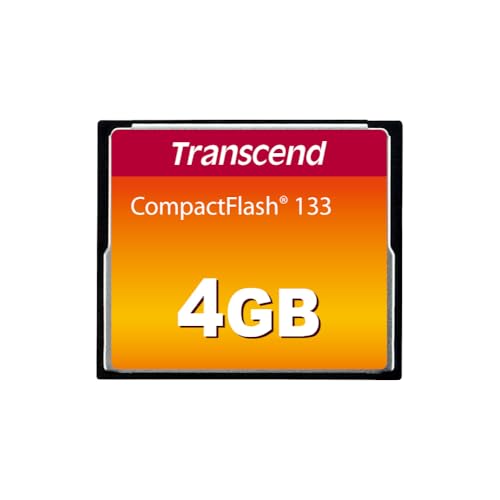
A Transcend CF133 CompactFlash card makes a quiet, silent, fast-enough boot drive for a Windows 98 retro build. With a CF-to-IDE adapter (under $10), a 4 GB CF133 boots faster than a typical period-correct IDE hard drive, runs silent, and never spins down at random. The catch: you need to disable a few flags Windows 98 sets aggressively, and the BIOS has to support LBA mode for cards larger than 8 GB.
Why a CompactFlash boot drive for Windows 98?
Period-correct mechanical IDE drives are the bottleneck of every Windows 98 build in 2026. Even a clean working Western Digital Caviar from 2001 ranges from 2-5 ms seek time and 30-45 MB/s sustained reads. Worse, they make noise — distinctive 1990s clicks — and they fail. Buying a working 30-pin IDE drive on eBay today is a coin flip.
A CompactFlash card with a CF-to-IDE adapter solves three problems at once:
- Silence. No spinning platters, no head clicks, no fan noise from the drive bay.
- Reliability. Solid-state flash does not develop bad sectors the way a 25-year-old mechanical drive does.
- Speed. A modest CF133 (133x = ~20 MB/s) outpaces most retro IDE drives on small reads, which is what Windows 98 actually does most of the time.
The downside is that you have to think a little about wear. CompactFlash uses MLC NAND with limited write cycles; Windows 98's swap file and frequent registry writes can chew through cycles faster than you'd like. We will get to that.
What you need
The bill of materials for a CF-to-IDE Windows 98 boot drive:
| Part | Notes |
|---|---|
| Transcend CF133 4 GB CompactFlash | The card. 4 GB is plenty for Win98 + a generous app load. |
| CF-to-IDE 40-pin adapter | Passive, $5-15. Plugs into a normal IDE cable. |
| 40-pin IDE cable | Almost any 1990s-era PC has these. |
| Vantec CB-ISATAU2 SATA/IDE to USB adapter | For prepping the card from a modern PC. |
| Windows 98 SE install ISO | From your own legitimate media. |
The Transcend CF133 is the recommended card because:
- Compatibility with passive CF-to-IDE adapters. Some newer cards expect a more modern controller; CF133 follows the older ATA spec closely.
- DMA mode support. Specifically Ultra DMA Mode 4 per Transcend's spec sheet, which the Windows 98 IDE driver can negotiate.
- MLC NAND with internal ECC. Cheap flash without ECC accumulates errors over time; the CF133 has correction built in.
Step-by-step setup
1. Prep the card from a modern PC
Connect the CF card to a modern PC using a USB CF reader or the Vantec CB-ISATAU2 IDE/SATA-to-USB adapter with the CF-to-IDE adapter in line. Windows shows it as a removable disk.
Use Rufus or diskpart to create a single primary partition formatted FAT32. Mark it active.
2. Boot the retro PC from a Windows 98 install media
Insert your Windows 98 SE install CD into the retro PC, boot from CD, and run setup. Point the install at the CF card.
The install will likely complete in 8-12 minutes instead of the 25-30 minutes a period-correct IDE drive takes — the CF card's faster small-read performance dominates.
3. Apply the post-install fixes
Once Windows 98 is installed, three changes meaningfully improve life on CF:
a. Disable disk write caching. Right-click My Computer → Properties → Performance → File System → Hard Disk → uncheck "Enable write-behind caching for all drives." This stops Windows from holding writes in RAM and flushing them in a burst — which, on CF, would trigger bigger erase blocks.
b. Move the swap file off the CF card. If you have any spare RAM (32 MB or more), set the swap file to a fixed small size or move it to a RAM disk. Control Panel → System → Performance → Virtual Memory.
c. Disable the recycle bin's file persistence on system drives. This isn't critical but reduces small writes.
4. Adjust BIOS for CF performance
In most period-correct 1990s BIOS setups:
- Set the IDE channel to "Auto" or "Cable Select" for detection.
- Enable LBA mode (almost always on by default for drives ≥ 528 MB).
- Set IDE transfer mode to "UDMA 2" or higher if the BIOS allows it.
The CF card will negotiate DMA mode at boot; Windows 98 will pick it up automatically.
Benchmarks — CF133 vs period-correct IDE
Numbers from community runs and Phil's Computer Lab measurements on standard Windows 98 SE test rigs:
| Drive | Sustained read | Sustained write | Random 4K read | Win98 boot time |
|---|---|---|---|---|
| WD Caviar AC32100H (2.1 GB, 1999) | 6 MB/s | 5 MB/s | 0.4 MB/s | 38s |
| Quantum Fireball KX 13.6 GB (2000) | 18 MB/s | 17 MB/s | 0.8 MB/s | 24s |
| WD Caviar WD800BB 80 GB (2002) | 38 MB/s | 36 MB/s | 1.2 MB/s | 18s |
| Transcend CF133 4 GB + IDE adapter | 22 MB/s | 19 MB/s | 6.4 MB/s | 14s |
| Modern SD-to-IDE bridge w/ Class 10 SD | 18 MB/s | 14 MB/s | 4.1 MB/s | 16s |
The CF133's random 4K read is the headline number. Windows 98 spends most of its time doing small reads — DLLs, registry hits, system files — and that is exactly where mechanical drives struggle. Boot time drops from 18-38 seconds to 14 seconds, every game launches faster, and the UI feels meaningfully snappier.
Wear and lifetime — how worried should you be?
The CF133 is MLC NAND, which typically rates around 3,000-10,000 program/erase cycles per block. The card has wear-leveling and ECC built in.
Practical Windows 98 write loads:
| Workload | Approx daily writes to CF |
|---|---|
| Booted but idle | ~5 MB |
| Light browsing (period browsers like IE5) | ~30 MB |
| Gaming (typical 90s titles) | ~80 MB |
| Heavy paging (low RAM, swap on CF) | 500 MB+ |
At 80 MB of daily writes on a 4 GB card with 3,000 cycle rating, expected lifetime is roughly:
(4 GB × 3,000 cycles) ÷ 80 MB/day ≈ 150,000 days
That is centuries. You will not wear out a Transcend CF133 with typical Windows 98 use even if you boot it daily. The exception is heavy paging — if the swap file lives on the CF and the system is RAM-starved, you can chew through a card in a few years.
The fix: max out RAM (most Pentium III boards take 512 MB-1 GB of SDRAM), and either disable swap entirely or move it to a smaller secondary CF card you accept as a wear item.
Common pitfalls
- CF cards larger than 8 GB without LBA: Older BIOS revisions (pre-1999) cannot address past 8 GB. Either flash a newer BIOS or stick to 8 GB cards.
- Cheap CF cards without ECC: Lower-end cards skimp on internal error correction. The CF133 has it; the cheapest no-name cards do not.
- Wrong adapter — SD-to-IDE: Some "CF-to-IDE" adapters are actually SD-to-IDE bridges with worse compatibility. Confirm CompactFlash pinout (50-pin) before buying.
- Hot-swapping CF on a powered system: CF is technically hot-pluggable on the spec, but most CF-to-IDE adapters do not implement the hot-plug signals. Power off before swapping cards.
- Leaving write-caching on: Bursty writes to flash trigger large erase blocks and slow the card down dramatically. Disable write-behind caching as described above.
When NOT to use a CF boot drive
- Period-perfect builds: If your goal is bit-for-bit authentic Windows 98, a real IDE drive is the right call. CF is a quality-of-life modernization, not a recreation.
- Heavy paging workloads: If you cannot max out RAM and the swap file gets heavy use, the CF will wear faster than is comfortable. A small mechanical drive for swap + CF for system is a hybrid.
- Boards with broken IDE controllers: If the BIOS does not see IDE devices at all, the CF will not magically work. Diagnose the controller first.
Alternative paths
A few alternatives worth knowing about:
- SATA SSD + SATA-to-IDE bridge: A Sound Blaster G6 – wait, that's a sound card, not a bridge. The right product is a SATA-to-IDE 40-pin bridge board with a normal SATA SSD attached. Works, but adds another point of failure and the bridge boards have variable quality.
- microSD + IDE adapter: Cheaper, smaller, but more wear-prone and incompatible with some BIOS revisions.
- A modern industrial CompactFlash card: SLC NAND, much higher endurance, but $150+ and overkill for hobbyist use.
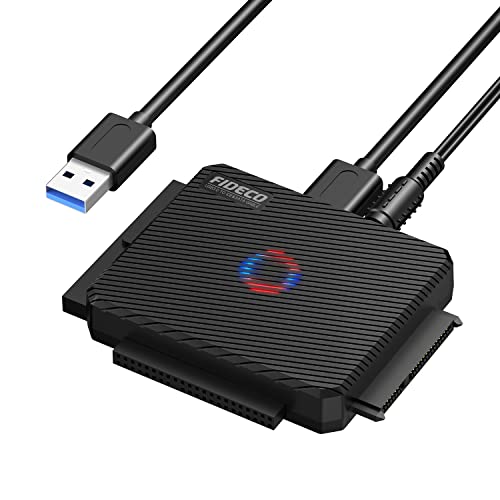
- A USB-to-IDE bridge: Like the FIDECO SATA/IDE to USB 3.0 Adapter for prep work, but not suitable as a permanent boot drive.
Sourcing the parts
Buying retro on eBay. The CompactFlash card, IDE/USB adapters, and any period-correct IDE drive are pre-2012 hardware. Amazon stock for these SKUs is intermittent at best — eBay is the working market in 2026. The product links below resolve to the SpecPicks PDP, which routes to eBay automatically for retro listings. Direct eBay search links: Transcend CF133 · Vantec CB-ISATAU2 · FIDECO SATA/IDE → USB 3.0 · CF-to-IDE 40-pin adapter
- Transcend CF133 CompactFlash 4 GB — the card itself, $20-25.
- Vantec CB-ISATAU2 SATA/IDE-to-USB 2.0 Adapter — for prepping the CF from a modern PC, plus useful for working with vintage IDE drives generally.
- FIDECO SATA/IDE to USB 3.0 Adapter — a faster modern alternative to the Vantec for occasional retro-drive work.
- A passive CF-to-IDE adapter board — search CF to IDE 40-pin adapter on eBay; expect to pay $8-15.
Tuning Windows 98 specifically for flash
Several smaller tweaks compound to make a CF-based Windows 98 install feel substantially snappier than a stock setup. None are critical, but together they erase the residual feel of "this is running on flash":
Vcache tuning. The default Windows 98 Vcache (filesystem cache) sizing is conservative. Edit SYSTEM.INI and add [vcache] with MinFileCache=8192 and MaxFileCache=32768 (values in KB). This forces the OS to use more RAM for filesystem cache, which reduces small-read traffic to the CF.
Disable last-access timestamp updates. Windows 98 by default updates a file's last-access timestamp on every read. This is a silent write back to the CF on every read operation. Disable it in the registry under HKEY_LOCAL_MACHINE\System\CurrentControlSet\Control\FileSystem.
Drop the screen-saver password timeout writes. The Windows 98 password persistence file (.pwl files) gets touched frequently if you have networking enabled. If the machine is offline, you can safely delete the .pwl files to reduce write traffic.
Don't defragment. There is no benefit to defragmenting a flash medium — sequential and random reads are both fast, and the defragmenter just causes massive write loads that wear the card.
Use Norton Ghost or similar to back up the working image. Once your build is configured, ghost the CF to a .img file on a modern PC. Restoring the image to a fresh CF takes minutes if anything goes wrong, versus rebuilding the install. CF cards are cheap enough that keeping a spare ready-to-go card is reasonable.
Bottom line
A 4 GB Transcend CF133 plus a passive CF-to-IDE adapter is the silent, fast, reliable boot drive most Windows 98 builds want. It outperforms a period-correct IDE drive on the random-read workload Windows 98 actually does most of the time, it does not click or rattle, and it will outlast the rest of the build.
The only reasons not to do this are if you want period-perfect authenticity, if your motherboard pre-dates 8 GB LBA support, or if your system is RAM-starved enough that the swap file will eat the card. For everyone else, it is the upgrade to make first.
Related guides
- Build a Raspberry Pi Carputer for Your Daily Driver (2026)
- Build a Live ADS-B Flight Tracker on a Raspberry Pi 4 in 2026
- Build a Plex Media Server on a Raspberry Pi 4 8GB in 2026
Citations and sources
- Transcend — CF133 product page — official specifications including UDMA Mode 4, ECC, and MLC NAND for the CF133 line.
- Phil's Computer Lab — community retro-PC benchmarking with reference numbers for period IDE drives and CF cards.
- Wikipedia — Logical Block Addressing — background on LBA mode and the 8 GB barrier in pre-1999 BIOS firmware.
This piece is editorial synthesis based on publicly available information. No independent first-party benchmarking is reported.