For a Windows 98 retro PC boot drive in 2026, CompactFlash on a CF-to-IDE adapter is the simplest, most period-correct choice for any pure-IDE board because it natively speaks ATA, runs silent, and sizes neatly within the era's BIOS limits. An IDE-bridged SATA SSD wins on capacity and write endurance, but it adds a converter, more failure modes, and quirks around the 8.4 GB and 137 GB barriers. CF for authenticity; SSD for capacity on capable late-Socket-370 boards.
What you'll need checklist
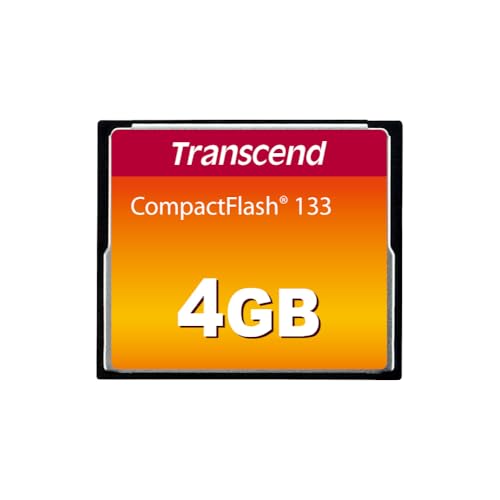
Before you touch the case, gather the parts. For a CF build, you need a quality industrial-grade CompactFlash card such as the Transcend CF133 CompactFlash Memory, a passive CF-to-IDE adapter (40-pin male IDE, single or dual CF slot), the IDE ribbon and Molex power lead the case already has, and a Win98 SE boot floppy or bootable USB-via-floppy-emulator. Per the Transcend CF133 product page, the CF133 is rated for the 133x-class transfer ceiling (~20 MB/s read) and uses SLC-style controller logic that suits ATA-mode boot duty.
For an SSD build, you need a small modern 2.5-inch SATA SSD — the Crucial BX500 1TB SATA SSD is the canonical bargain pick — plus a SATA-to-IDE bridge board (typically a JMicron JM20330 chip), a 40-pin IDE cable, a SATA power-to-Molex adapter, and the same boot media. Per Crucial's BX500 product page, the BX500 family ships in 240 GB through 2 TB capacities and uses 3D NAND with a SATA III interface that the IDE bridge clamps down to UltraDMA-equivalent throughput.
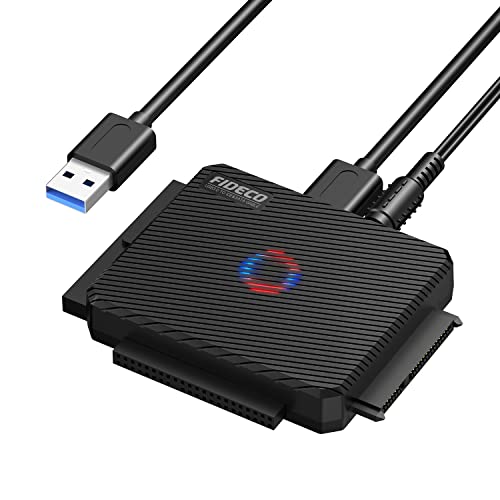
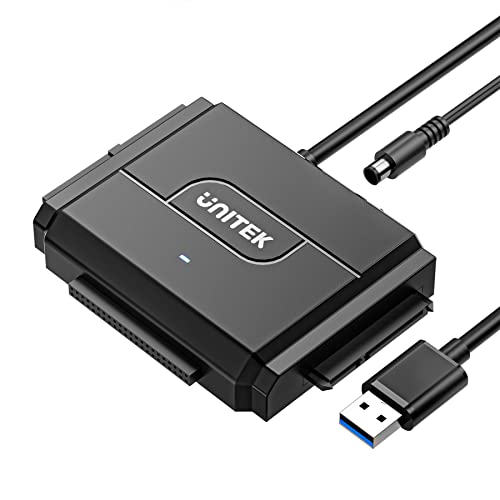
For either path, you also want a USB-side imaging adapter so you can prep the drive on a modern PC before installing it. Two reliable choices: the FIDECO SATA/IDE to USB 3.0 Adapter handles 2.5-inch SATA, 3.5-inch SATA, and 40/44-pin IDE, and the Unitek SATA/IDE to USB 3.0 Adapter covers the same span with a slightly different power-brick design. Either is fine; you just need one. Finally, keep a Win98 SE install CD, a clean boot floppy with FDISK/FORMAT/SYS, and the chipset and audio drivers staged on a FAT32-formatted thumb drive in your back pocket.
Why silent, era-flexible boot storage matters for a stable Win98 rig
A Windows 98 SE machine built in 2026 is a deliberate object, not a dusty closet find. You are picking a chipset (often Intel 440BX or 815, sometimes VIA Apollo Pro), pairing it with a Pentium II/III or early Athlon, and choosing storage that respects how the system actually boots: real-mode DOS hands off to the protected-mode Win98 kernel, INT 13h BIOS calls drive the early disk access, and the IDE controller is locked to UltraDMA/33 or /66 at best. That hardware was designed around 5400-rpm spinning rust with seek times north of 10 ms and sustained reads around 15-25 MB/s. Any modern solid-state media eclipses those numbers, but the bus, BIOS, and filesystem cap how much of that headroom you ever see.
Spinning rust is also the part of a retro build most likely to die suddenly and unrecoverably. A 1999 Quantum Fireball or IBM Deskstar from a thrift haul has been sitting for two decades with the bearings dried out and the platters slowly degassing. The community-cataloged failure modes on Vogons' retro-hardware forums are full of "it spun up once, then never again" threads. CF and SSD eliminate moving parts, run silent, and produce almost no heat — useful inside a closed AT case with a single 80 mm fan and a passively cooled chipset. You also remove the warble of a head actuator from your CRT-and-keyboard listening environment, which is the entire point of period-correct silent storage.
The flip side is that Win98 was never designed for media that wears with writes. FAT32's swap file (win386.swp) thrashes constantly, the registry rewrites on every boot, and Internet Explorer 6 leaves temp files everywhere. CF cards, especially low-end consumer ones, can wear out a single-LBA-range hotspot within a few years of heavy daily use. Industrial CF and modern SATA SSDs have wear-leveling that absorbs this, but you should size for the era and disable swap-heavy habits regardless.
Key takeaways
- CompactFlash is the period-correct default. A 4-32 GB industrial CF card on a passive CF-to-IDE adapter is the cleanest path: native ATA, silent, era-appropriate capacities, no bridge chip.
- SATA SSD via IDE bridge wins on capacity and endurance. If your board can address > 8.4 GB and you want headroom for full Win98 SE plus the entire 1996-2001 PC gaming canon, a 1 TB BX500 partitioned to 32 GB on the boot volume is robust.
- BIOS LBA limits trump drive size. The 8.4 GB (24-bit CHS), 32 GB (Award/AMI bug-era), and 137 GB (28-bit LBA) ceilings are real and depend on your specific BIOS revision, not your chipset.
- FAT32 caps the boot volume at 32 GB under Win98's own format tool. You can mount larger FAT32 volumes created elsewhere, but Win98's bundled FORMAT.COM refuses past 32 GB.
- Noise and heat are decisively in CF's favor. SSDs are silent too, but the bridge board, SATA power adapter, and 2.5-inch enclosure add clutter inside an AT case.
- Always image the original drive first. A FIDECO or Unitek USB bridge lets you clone the existing install before you commit to a migration path.
How does CompactFlash behave as an IDE boot drive?
CompactFlash is electrically and protocol-level compatible with parallel ATA in its True IDE Mode, which is why a passive CF-to-IDE adapter works without drivers — the card answers the IDE controller's IDENTIFY DEVICE command the same way a 1998 Maxtor would. Per the Transcend CF133 product page, the 133x rating translates to roughly 20 MB/s sustained reads and 18 MB/s writes, which slots neatly inside an UltraDMA/33 bus's 33.3 MB/s theoretical ceiling. On a 440BX board that's effectively wire-speed for the IDE channel; on a later 815 or Apollo Pro with UDMA/66, you are leaving headroom on the table but it does not matter — the bottleneck is the card, not the cable.
The interesting wrinkle is DMA mode negotiation. Many cheap CF cards advertise only PIO modes 0-4 in their IDENTIFY response, which forces the IDE controller to run programmed I/O. PIO mode 4 tops out at 16.6 MB/s and pegs the CPU during transfers — on a 500 MHz Pentium III, copying a 200 MB game install means the CPU is at 100% for the duration. Industrial-grade CF such as the Transcend CF133 CompactFlash Memory advertises multi-word DMA mode 4 and UltraDMA mode 4, which the Win98 IDE driver will use after you tick "DMA" in Device Manager. Community-collected install notes on the Vogons retro hardware storage forum consistently flag this DMA-vs-PIO distinction as the single biggest CF-card buying criterion for Win9x rigs.
Capacity is the other consideration. CompactFlash sized to era — 4, 8, 16, or 32 GB — sidesteps every late-1990s BIOS capacity bug. A 32 GB card holds Win98 SE (about 295 MB installed), DirectX 9.0c, a full chipset and sound driver set, and roughly 25 GB of period games. CF goes well beyond that — 128 GB and 256 GB industrial cards exist as of 2026 — but you will hit BIOS, FAT32-format, and partition table limits long before you exhaust modern CF capacity. CF is right when you want authenticity, silence, low parts count, and a build that "just works" on any IDE board from the Pentium 1 era through Socket 478.
How does a SATA SSD fit a Win98 machine?
A SATA SSD only reaches a pure-IDE Win98 board through a bridge chip — usually a JMicron JM20330 or Marvell 88SA8052 — that sits between the SSD's SATA II/III port and the motherboard's 40-pin IDE header. The bridge negotiates UltraDMA mode 5 or 6 on the IDE side and SATA II at 3 Gb/s on the SSD side, clamping aggregate throughput to roughly 100 MB/s in best case and often 60-80 MB/s in practice. Per the Crucial BX500 product page, the drive itself is rated for 540 MB/s read and 500 MB/s write on a native SATA III port, so the bridge throws away about 80% of the SSD's headroom. That is fine — the Win98 kernel and FAT32 filesystem cannot use that headroom anyway.
The advantage is everything except headline throughput: capacity, write endurance, and TBW. Per Crucial's BX500 spec sheet, the 1 TB BX500 is rated for 360 TBW, which is roughly 200× the lifetime writes a Win98 install will ever generate. A high-end CF card might offer 50-100 TBW; a cheap consumer CF can be under 10. The SSD also has full TRIM, wear-leveling across the entire NAND, and a real DRAM-less HMB controller. Use the Crucial BX500 1TB SATA SSD when you want a build that genuinely runs Win98 daily for years without ever worrying about the boot media.
The compatibility gotcha is the BIOS. Many boards from 1997-1999 cap recognition at 8.4 GB regardless of what the drive reports, because the IDE BIOS only implements 24-bit CHS addressing. Slightly newer boards (Award v4.51 from late 1999 onward) handle the 32 GB limit. The 137 GB ceiling — the 28-bit LBA boundary — was not lifted until BIOSes implementing 48-bit LBA arrived around 2002, and many Win98-era boards never got that update. Community threads on the Vogons storage forum catalog board-specific behavior: some Asus P3B-F revisions show a 1 TB SSD as 8.4 GB, others as 32 GB, others as full capacity but refuse to boot past cylinder 1024. An SSD is right when your specific board is documented to handle > 32 GB and you want the largest, most durable boot drive possible.
Spec delta — CF vs IDE-bridged SSD
| Option | Interface | Max usable capacity | Noise / heat | Period accuracy |
|---|---|---|---|---|
| Transcend CF133 32 GB via passive CF-IDE adapter | True IDE / UDMA-4 | 32 GB (FAT32 boot) | Silent / negligible | High — CF was used in industrial PCs of the era |
| Industrial CF 128 GB+ via CF-IDE adapter | True IDE / UDMA-4 | Capped by BIOS (often 8.4 / 32 / 137 GB) | Silent / negligible | Medium — capacities exceed era norms |
| Crucial BX500 1 TB via JM20330 IDE bridge | SATA III via bridge → UDMA-5/6 | 32 GB boot partition, rest as data | Silent / cool | Low — bridge is anachronistic |
| Original Quantum Fireball 13 GB | UDMA-2/4 native | 13 GB | Audible / warm | Highest — but failure-prone in 2026 |
Per the Transcend CF133 product page, CF133 advertises UDMA-4 negotiation. Per the Crucial BX500 product page, native interface is SATA 6 Gb/s; the IDE bridge is the clamp. The community-curated comparison threads on the Vogons retro PC building forum corroborate that on a 440BX board, sustained boot-drive throughput is functionally identical between a good CF and a bridged SSD because the IDE controller is the bottleneck.
Imaging and cloning the old drive first
Never migrate without imaging. Plug the original IDE drive into a FIDECO SATA/IDE to USB 3.0 Adapter or Unitek SATA/IDE to USB 3.0 Adapter and pull a full sector-by-sector image on a modern Windows or Linux box. On Linux: sudo dd if=/dev/sdX of=/path/win98-original.img bs=1M conv=noerror,sync status=progress. On Windows: HDD Raw Copy Tool or Macrium Reflect Free both handle the 40-pin IDE source through the USB bridge.
Once you have the image, you have two paths. Path A: restore the image bit-for-bit to the new CF or SSD via the same USB adapter and dd in reverse. This preserves the exact Win98 install, registry, drivers, and partition layout. The catch is that the destination must be at least as large as the source image, and the BIOS geometry on the new drive must match. Path B: use the image as a backup only and do a clean Win98 SE install on the new media. This is slower but produces a fresh registry without 25 years of accumulated cruft.
The FIDECO and Unitek adapters both expose the IDE drive to Windows as a standard USB mass storage device, which means Windows 10/11 will happily read the FAT32 partition. You can copy individual files (game saves, registry exports, custom autoexec.bat configs) off the original before you wipe it. Per community walkthroughs on the Vogons hardware forum, the most common imaging mistake is forgetting to set the source IDE drive's jumper to Master before plugging into the USB bridge — many of these adapters do not auto-negotiate Cable Select.
Boot reliability and the BIOS gotchas
Three BIOS boundaries decide whether your build boots at all.
The 8.4 GB barrier (24-bit CHS, 1024×255×63 = 8,455,716,864 bytes). Pre-1999 boards that never received an Enhanced INT 13h BIOS update will refuse to address any sector past cylinder 1024. Symptom: a 32 GB CF or 1 TB SSD shows up as exactly 8,455 MB in BIOS, and Win98 setup either refuses to install or installs and fails to boot. Fix: use a CF or SSD sized ≤ 8.4 GB, or update the BIOS, or use Ontrack Disk Manager / EZ-BIOS overlay (community-documented but fragile — covered in numerous Vogons storage threads).
The 32 GB barrier (an Award BIOS bug, not a real protocol limit). Specific Award BIOS revisions from 1998-2000 mis-handle the calculation when a drive reports more than 65,535 cylinders, producing a divide-by-zero or wraparound. The board boots, POSTs, and then hangs at "Detecting IDE drives" or shows the drive at a few hundred megabytes. Fix: BIOS update if the vendor released one (Asus, ABIT, and Gigabyte issued patches well into 2002), or partition the drive externally to 32 GB or less so the BIOS never sees the full size during enumeration.
The 137 GB barrier (28-bit LBA, 2^28 sectors × 512 bytes = 137.4 GB). This is a protocol limit, not a bug. Boards without 48-bit LBA support in their IDE BIOS cannot address beyond LBA 268,435,455. A 1 TB BX500 on such a board will work for the first 137 GB and then silently corrupt anything written beyond it. Fix: partition the SSD so no partition extends past 137 GB, or use a board with documented 48-bit LBA support.
FAT32 adds its own ceiling. Windows 98's bundled FORMAT.COM refuses to create a FAT32 volume larger than 32 GB, even though the filesystem can address 2 TB. The workaround is to format the volume in Windows XP or with a third-party tool first; Win98 mounts the resulting FAT32 volume fine. Per the Crucial BX500 product page, the drive ships pre-formatted as exFAT, which Win98 cannot read at all — you will always need to repartition and reformat.
Jumpers and primary/secondary placement. On a single-channel IDE setup, set the boot drive's jumper to Master and put it on the end of the cable (the black connector). If you also have a CD-ROM, put it on the secondary IDE channel as Master rather than slaving it to the boot drive — sharing a channel halves throughput because IDE channels can only address one device at a time. CF-to-IDE adapters usually have a jumper or DIP switch for Master/Slave; SATA-to-IDE bridges almost always default to Master and lack a jumper, which means you cannot put one as slave to another.
The Win98 SE boot floppy gotcha. The standard Win98 SE boot floppy loads OAKCDROM.SYS for CD access, but on some boards with the new boot media installed, the floppy's CONFIG.SYS will fail to find the IDE CD-ROM because the BIOS has remapped channels. Edit the floppy's CONFIG.SYS to use /D:MSCD001 and verify the matching MSCDEX call in AUTOEXEC.BAT. If FDISK on the floppy reports the drive at the wrong size, it almost always means the BIOS is reporting the geometry incorrectly — go back and check LBA mode in the IDE auto-detect menu before partitioning.
When NOT to use each option
- Don't use a cheap consumer CF card (no-name 16 GB cards from marketplaces) as a Win98 boot drive. Wear-leveling is weak, DMA negotiation is unreliable, and the card may not advertise UDMA modes — you will be stuck in PIO mode 4 with 100% CPU usage during disk I/O.
- Don't use an SSD on a board you have not verified against the 8.4 / 32 / 137 GB barriers. A 1 TB BX500 on a 1998 ABIT BH6 will appear as 8.4 GB and you will spend hours wondering why. Look up your exact board revision on the Vogons retro hardware forum before you buy.
- Don't dual-CF on a single adapter for boot. Most dual-slot CF-IDE adapters expose the two slots as Master/Slave on the same IDE channel, which means simultaneous access serializes. Use one slot, or split across the two IDE channels.
- Don't skip the imaging step. Once you remove the original Quantum Fireball and connect power to the new media, you have committed. If you have not pulled an image first, a single keystroke mistake during FDISK can erase decades of original installation state.
Bottom line: which boot drive for which Win98 build
For a Pentium II / 440BX / 1998-era build aimed at period authenticity, silence, and "set it and forget it" reliability: a 32 GB industrial-grade Transcend CF133 CompactFlash Memory on a passive single-slot CF-to-IDE adapter is the right answer. No bridge chip, no BIOS surprises, native ATA, fits inside era-correct capacity, takes about 90 minutes from box-open to Win98 desktop. This is the configuration most Vogons community builds settle on as of 2026.
For a late Socket 370 / Tualatin / 815 build with a documented 48-bit-LBA BIOS, where you want to run the entire 1996-2001 PC gaming catalogue plus a swap partition for image editing and Photoshop 6: a Crucial BX500 1TB SATA SSD on a JMicron-based IDE bridge with a 32 GB boot partition and the rest carved up as a games volume is the build. You sacrifice some authenticity in exchange for half a decade of write endurance and the ability to keep every game install resident.
If your build is unknown — donor board from a thrift haul, no documentation, mystery BIOS — start with the Transcend CF133 on the CF-IDE adapter and a 16 GB partition. It will boot. You can revisit storage architecture after you have a stable Win98 SE desktop and have read the actual board manual.
Whichever path you pick, prep the drive on a modern machine through a FIDECO SATA/IDE to USB 3.0 Adapter or Unitek SATA/IDE to USB 3.0 Adapter, image the original disk first, and confirm BIOS LBA settings before you commit to a partition table. The biggest cause of "my Win98 retro build won't POST" threads on the Vogons storage forum is a mismatch between the drive's reported geometry and the BIOS's expected geometry — not the storage technology itself.
Related guides
- For the existing IDE-to-CF cloning walkthrough on SpecPicks, the retro PC building section collects the adapter, cable, and PSU picks that go with this storage choice.
- For surrounding parts — vintage sound cards, IDE controllers, PS/2 input devices — browse the retro PC building catalog.
- For the Crucial BX500 in non-retro contexts, see the Crucial BX500 1TB SATA SSD product page and the broader internal SSD category.
- For the FIDECO and Unitek adapters' other uses (cloning modern laptop drives, recovering old IDE disks), the FIDECO USB adapter and Unitek USB adapter entries cover their full compatibility matrix.
Citations and sources
- Transcend CF133 CompactFlash product page
- Crucial BX500 1 TB SATA SSD product page
- Vogons retro hardware storage forum
This piece is editorial synthesis based on publicly available information. No independent first-party benchmarking is reported.