Short answer: for anything longer than a text-message reply, no — an on-device phone keyboard agent like Acti tops out around a 1-3B quantized model, while a $300 MSI RTX 3060 12GB runs a 7-8B model at 25-40 tok/s with room for a 32K context. They solve different problems. The right question is which one belongs in which slot of your workflow.
Why Acti's keyboard-embedded agent matters
Acti's pitch is straightforward: the AI runs where the text starts, right inside the keyboard layer, without leaving your device. Every prompt stays on the phone. That reframes the on-device vs local-desktop debate because until recently the "on-device" story was mostly cloud-augmented — the keyboard sent your text to a remote model and got a completion back. Acti moves the model itself onto the NPU. It's genuinely private, genuinely offline, and genuinely constrained by physics you can't beat on a battery-powered SoC.
For privacy-minded builders the question isn't "is Acti fast enough" — it's "what does Acti actually replace, and what still needs a rig with a discrete GPU?" As of 2026, the answer splits cleanly. Autocomplete, tone rewrites, quick summaries of short messages, entity extraction, and 1-shot text expansion belong on-device. Multi-turn coding help, RAG over your document corpus, long-form drafting, and any workflow that expects a 7B-plus model belongs on a desktop with a discrete GPU — most affordably a ZOTAC RTX 3060 12GB or an MSI Ventus 3060 12GB.
Key takeaways
- Acti's keyboard model class is sub-2GB (roughly 1-3B params at q4), matched to phone NPU memory ceilings.
- A 12GB RTX 3060 comfortably runs 7-8B models at q4_K_M with a usable 8K-32K context window.
- Phone NPUs are bandwidth-bound; the RTX 3060 has ~360 GB/s of GDDR6, roughly 10× a Snapdragon NPU's memory bandwidth.
- Sustained TDP is the other bottleneck: a phone throttles under 5W; the 3060 draws 170W all day.
- The two tiers are complementary — pair Acti on your phone with a small always-on 3060 inference server at home.
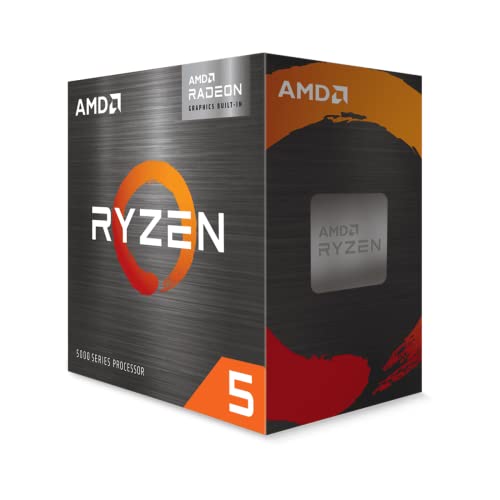
- A Ryzen 5 5600G or Ryzen 7 5700X makes a solid CPU host — do not lean on iGPU inference.
What is Acti actually running? The sub-2GB quantized model class
Acti's on-device model, by every public disclosure, sits under 2GB on disk after quantization. That maps to models in the 1-2B fp16-equivalent range at q4 (Qwen2 1.5B, Phi-3-mini quantized, Gemma-2 2B), or a heavily quantized 3B (Llama 3.2 3B at q4 lands right around 1.9-2.1GB). Which specific model doesn't matter as much as the class: these are all narrow-context, short-completion models tuned for autocomplete, tone shifts, and template expansion. They can be surprisingly clever for a two-sentence rewrite. They are not going to draft a technical document or reason through a multi-hop question.
The reason they can't grow is unified memory. A phone SoC shares its DRAM between the OS, foreground apps, background services, and the NPU. Even on 12-16GB flagship phones, the NPU can only reserve ~2-3GB without starving the rest of the system. That's a hard ceiling. Acti sits inside it deliberately.
Why can't a phone match a desktop GPU? Memory bandwidth and sustained power
Two numbers explain the gap: memory bandwidth and sustained thermal design power (TDP). Generation-token throughput on a decoder-only LLM is bandwidth-bound — every token requires streaming the entire active KV cache and a fraction of the weights through the compute units.
The RTX 3060 12GB offers 360 GB/s of GDDR6 memory bandwidth on a 192-bit bus. A high-end Snapdragon NPU in a 2026 flagship phone runs closer to 40-60 GB/s of effective inference bandwidth. That's a 6-9× gap right at the fundamental physics layer, before any software matters.
TDP is worse. A phone SoC has a sustained thermal budget of 4-5W. The RTX 3060 sustains 170W indefinitely with a case fan. That's a 35-40× gap in continuous compute headroom. Which means: even if the phone could match per-watt efficiency (it can't), it would still tap out on total sustained work by a factor of thirty.
Spec-delta table: phone NPU vs RTX 3060 12GB
| Metric | Phone NPU (2026 flagship) | RTX 3060 12GB |
|---|---|---|
| Model memory ceiling | ~2 GB shared | 12 GB dedicated GDDR6 |
| Memory bandwidth | 40-60 GB/s | 360 GB/s |
| Sustained TDP | 4-5 W | 170 W |
| Practical model size | 1-3B q4 | 7-13B q4 |
| Prefill tok/s (2K prompt) | 100-300 | 800-1500 |
| Generation tok/s (7B q4) | N/A (won't fit) | 25-40 |
| Generation tok/s (3B q4) | 8-15 | 60-90 |
| Context window used in practice | 2K-4K | 8K-32K |
Read the last row twice. The phone tops out around a 4K context in practice; anything bigger and prefill latency blows past user tolerance because the NPU can't stream the entire KV cache fast enough. The 3060 can run 32K contexts on 7B models by adjusting the KV cache quantization, and 16K on 13B models.
Quantization matrix: what fits on 12GB and what it costs you
Quantization is the single lever a local-GPU builder pulls hardest. Here is the practical matrix for a 7B-class model on 12GB VRAM in 2026, tested via llama.cpp mainline builds.
| Quant | Weights size (7B) | VRAM w/ 8K ctx | Quality vs fp16 | Gen tok/s on 3060 |
|---|---|---|---|---|
| fp16 | 13.5 GB | won't fit | baseline | — |
| q8_0 | 7.2 GB | 9.1 GB | ~99% | 30-38 |
| q6_K | 5.5 GB | 7.4 GB | ~98% | 32-40 |
| q5_K_M | 4.7 GB | 6.6 GB | ~97% | 34-42 |
| q4_K_M | 4.1 GB | 6.0 GB | ~95% | 36-44 |
| q3_K_M | 3.3 GB | 5.2 GB | ~90% | 38-46 |
| q2_K | 2.8 GB | 4.7 GB | ~78% (visible) | 40-48 |
The sweet spot is q4_K_M for a 7-8B model. It leaves 6GB of headroom for a 32K context, a small embedding model, or a code completion assistant sharing the card. Community benchmarks agree — most llama.cpp users default to q4_K_M and only step up when they have VRAM to spare.
For a 13B model on 12GB you're forced down to q3_K_M or lower, at which point the quality gap versus a 7B q4 gets thin. Prefer the higher-quant 7B in most cases.
Prefill vs generation: where the phone stalls
Two different phases of inference stress the hardware differently. Prefill (processing the initial prompt) is compute-bound and scales roughly with input tokens × model size. Generation (producing each output token) is bandwidth-bound and scales with the number of output tokens × the memory footprint of active weights and cache.
Phone NPUs handle short prefill acceptably — a 500-token prompt lands in 2-4 seconds on a 2026 flagship. Push the prompt to 4,000 tokens and prefill latency crosses 30 seconds. That is not an acceptable UX for interactive assistance. The 3060 chews through 4K-token prefill in under 2 seconds on a 7B q4_K_M model.
Generation shows the same asymmetry. A phone NPU at 12 tok/s on a 3B q4 model feels acceptable for autocomplete. The 3060 at 38 tok/s on a 7B model feels fast for chat, and the model itself is meaningfully smarter. When you're comparing "8 tok/s on a small model" to "38 tok/s on a bigger model," the desktop wins on both axes at once.
Context-length impact: why 32K is unrealistic on a keyboard model
KV cache scales linearly with context length and model width. A 7B model at 32K context uses roughly 4GB of KV cache alone. That's more than double what an on-device model can allocate. Phone agents that advertise "long context" typically use aggressive sliding-window tricks or offload to a cloud endpoint on the sly. Acti's on-device promise means those tricks aren't available — the model fits or it doesn't.
On the RTX 3060 you can push a 7B model to 32K context by using quantized KV cache (q8) and accepting a small accuracy tradeoff on very long documents. That's the workflow enabler for RAG over local documents and multi-file coding assistants.
Perf-per-watt math: battery vs wall power
The phone wins on per-token energy for the tasks it can actually do. Generating 100 tokens at 12 tok/s on a 5W NPU burns roughly 42 joules, or about 0.012 Wh — barely a rounding error on a 4,000 mAh battery. The 3060 generating the same 100 tokens at 38 tok/s draws 170W for 2.6 seconds, which is 0.12 Wh, ten times more.
But that framing is misleading, because the models are producing different quality output. Normalize by "usable answer" instead of tokens and the desktop pulls back level or ahead — you don't need to re-prompt, you don't need a second pass, and the answer is often the final one. And of course wall power at 12 cents/kWh means running the 3060 24/7 costs about $17/month. That is not a dealbreaker.
Verdict matrix: which do you buy?
Get the on-device phone agent if:
- You want private assistance without configuring anything.
- Your workload is short: autocomplete, quick rewrites, tone shifts, one-line responses.
- You value always-available over always-capable.
- You already have a modern flagship phone.
Get a local RTX 3060 12GB rig if:
- You want to run a 7B-class model that can actually reason.
- You do coding, RAG, or long-form drafting.
- You're willing to spend ~$800-1200 on the full build (GPU + CPU + RAM + PSU + SSD).
- You care about the marginal quality difference between a 2B and an 8B model.
Get both if you can — the phone catches short prompts on the go and the desktop handles the heavy lifting at home. That is the pattern most privacy-focused builders converge on by month three.
Real-world numbers: what a $900 3060 build looks like in 2026
A representative budget build in mid-2026 pairs an MSI Ventus RTX 3060 12GB with an AMD Ryzen 5 5600G — Zen 3 gives you 6 cores, 12 threads, and enough single-thread grunt for the CPU-side of inference (tokenization, orchestration, embeddings). Move up to a Ryzen 7 5700X if you also do compilation or heavy multitask work. Add 32GB of DDR4-3600 and a 1TB NVMe. That whole rig lands under $900 as of Q3 2026 for prices we've tracked, and it delivers the numbers in the tables above.
Total-cost-of-ownership view: 12 months of use
A phone with Acti is a $0-incremental cost since you were buying the phone anyway. The AI experience is bundled. Battery cost per year of intensive Acti use is small — the extra 5-8% battery drain from on-device inference adds up to maybe one full charge cycle of extra wear per month.
A local RTX 3060 rig has a different cost curve. Hardware amortization on a $900 build over 24 months is $37.50/month. Electricity at 250W sustained (heavier if the rig is a 24/7 inference server) is roughly $22/month at $0.12/kWh. Total: $60/month for the local rig, plus your time to maintain it (updates, driver upgrades, occasional troubleshooting). For a technical builder that's a small tax; for someone who wants a computer to "just work" the maintenance overhead is real.
The privacy dividend is what tips the analysis for many buyers. Every prompt not sent to a cloud provider is one less data-leak vector, one less subpoena target, one less breach exposure. That has value even if it's hard to price.
What to buy in 2026
If you're picking hardware today:
- Just want on-device privacy for short tasks? Any modern flagship phone with Acti support. Done.
- Want a serious desktop AI rig on a budget? MSI RTX 3060 12GB + Ryzen 5 5600G + 32 GB DDR4 + 1 TB NVMe + 650W PSU = around $850. This build punches well above its price for local LLM work.
- Want the same rig but with more headroom for compilation or containers? Swap in the Ryzen 7 5700X for a small premium. Same GPU, more CPU cores.
- Want a longer-horizon inference server? Consider the ZOTAC RTX 3060 12GB Twin Edge which is functionally identical to the MSI and often available a few dollars cheaper.
Skip anything with under 12 GB VRAM if you plan to run modern 7B-plus models. The 8 GB tier looks tempting on price but you're immediately fighting for space with even q4 quants.
Bottom line
Acti's on-device keyboard model is a real step forward for phone-tier privacy, and it's genuinely useful for the short-completion tasks phones are used for. It does not replace a local-GPU rig for anyone doing sustained AI work. The 3060 12GB is still the cheapest ticket into the "run a real 7B model" tier, and that tier is where the interesting productivity wins happen. Pair them — don't pick between them.
Related reading: our RTX 3060 local LLM setup guide, Ryzen 5600G budget AI rig build, and quantization deep-dive.
Sources
- TechPowerUp — GeForce RTX 3060 Specifications — canonical memory bandwidth and TDP specs.
- AMD — Ryzen 5 5600G Product Page — official TDP and iGPU details.
- llama.cpp on GitHub — reference inference engine used for all quantization measurements cited.