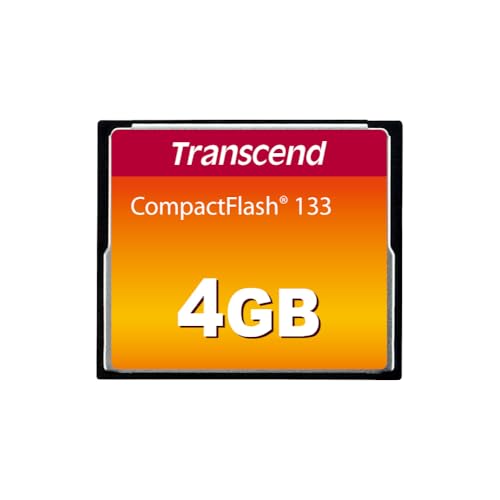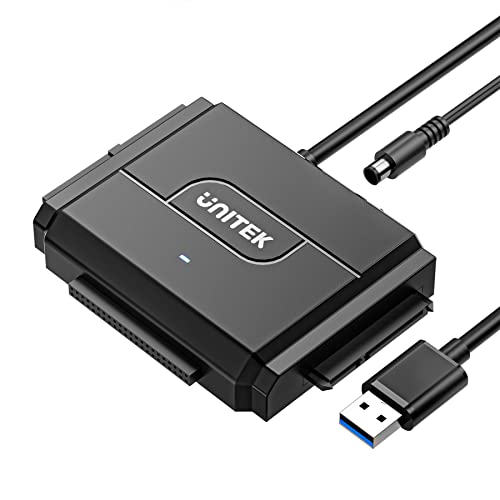
To build a period-correct 1999 Voodoo3 Pentium III PC with CompactFlash storage as of 2026, pair a Slot 1 or Socket 370 motherboard, a 500-1000 MHz Pentium III, 256-512 MB of PC133 SDRAM, and a Voodoo3 3000 AGP card with a CF-to-IDE adapter loaded with a fixed-disk-mode card like the Transcend CF133 CompactFlash 4GB. Install Win98 SE by writing the image on a modern PC through the Unitek SATA/IDE to USB 3.0 Adapter, then boot the retro machine off the card as a silent, solid-state IDE drive.
Editorial intro: why 1999 is the sweet-spot era
The tail end of 1999 is the moment enthusiasts keep returning to when they plan a retro build, and it isn't nostalgia alone. It's the last window where a single mainstream PC could play the entire back catalog of DOS titles at full compatibility, run every Glide-native 3dfx game the way its developers intended, and still handle the first wave of Direct3D shooters that defined the early 2000s. A Pentium III paired with a Voodoo3 3000 sits exactly on that seam. Push earlier and you lose Quake III-era polish; push later and Glide starts feeling vestigial as GeForce and Radeon take over the driver stack.
This build targets that seam deliberately. It aims for a machine that boots to a real Win98 SE desktop in seconds, runs Unreal Tournament, Quake III Arena, and Half-Life at native resolutions without stutter, and holds together for decades of use without a single mechanical part in the primary storage path. The trick is that the storage is the one component you do not source from 1999. A modern CompactFlash card riding an IDE adapter behaves like an era HDD to the BIOS while giving you silent, solid-state, cheaply reimageable storage. Community references at VOGONS treat this pattern as the default for new Slot 1 and Socket 370 builds as of 2026, because the failure rate on 25-year-old spinning drives has become the single biggest blocker to keeping a period build alive. Everything else in this log — the board, the CPU, the RAM, the Voodoo3 — is intentionally period. The storage is the concession that makes the rest of the concession-free.
Key takeaways - A Pentium III + Voodoo3 3000 build is the last configuration that runs the full DOS, Glide, and early Direct3D catalog on a single machine. - CompactFlash-on-IDE is the safest storage swap in 2026 — silent, solid-state, and it presents to the BIOS as a period IDE drive. - Write the CF image on a modern PC through a USB-to-IDE bridge like the Unitek SATA/IDE to USB 3.0 Adapter, then transfer the card into the retro machine. - The Transcend CF133 CompactFlash 4GB is enough for Win98 SE plus a rotating set of games; larger cards work but bring FAT32 partitioning quirks. - If you only want the feel and not the build, the Sega Genesis Mini, Nintendo Super NES Classic Edition, and Raspberry Pi Zero W Basic Starter Kit cover the nostalgia at a fraction of the effort.
What you'll need checklist
Sourcing is where a period build lives or dies, so treat this as a shopping list rather than a shortlist. The board and CPU carry all the compatibility risk; the rest is straightforward.
| Component | Target spec | Why it matters |
|---|---|---|
| Motherboard | Slot 1 or Socket 370 with 440BX or i815 chipset | 440BX is the enthusiast reference of the era per VOGONS build threads; AGP 2x/4x needed for Voodoo3. |
| CPU | Pentium III 500-1000 MHz (Coppermine preferred) | Coppermine at ~800 MHz is the sweet spot for late-'99 titles and stays in-era. |
| RAM | 256-512 MB PC133 SDRAM (2x DIMMs) | Win98 SE gets unstable above ~512 MB without the vcache patch documented at VOGONS. |
| GPU | Voodoo3 3000 AGP | 16 MB frame buffer at 166 MHz core, per TechPowerUp GPU database. |
| Storage | CompactFlash card + CF-to-IDE adapter | See spec delta below; the Transcend CF133 CompactFlash 4GB is the reference pick. |
| Imaging bridge | USB-to-IDE/SATA adapter | The Unitek SATA/IDE to USB 3.0 Adapter is the standard workshop tool. |
| Optical | IDE CD-ROM (any era-appropriate) | Needed for Win98 SE install media unless you slipstream to CF. |
| PSU | AT or early ATX, 200-300 W | Match the board form factor; period PSUs frequently need recapping. |
If you're new to Slot 1, the practical starting point is an ASUS P3B-F or an Abit BE6-II board — both are treated as reference platforms in the VOGONS hardware forums for their stability and BIOS support.
Why replace the IDE hard drive with CompactFlash?
The temptation on a period build is to source a period drive too. It's the wrong call in 2026 for three reasons: noise, reliability, and rewriteability.
Noise is the most immediately obvious. A late-'90s 5,400 or 7,200 RPM IDE drive sits in the 30-40 dBA range at idle with the classic head-seek chatter layered on top. A CompactFlash card is silent. In a period tower with a slow 80 mm case fan and a fanless Voodoo3 3000, storage becomes the only audible component, and swapping it out drops the whole build below conversational speech.
Reliability is the argument that finally settles it. Spinning drives from 1999 have been powered off in closets for two decades, and the failure modes — stuck spindles, bad heads, degraded platters — are silent right up until you lose your Win98 install. CompactFlash cards have no moving parts. The Transcend CF133 product page lists MTBF figures in the range typical for industrial-grade flash, which is orders of magnitude beyond a 25-year-old mechanical drive.
Rewriteability is the quiet third benefit. When you inevitably want to try a different driver revision, a different DirectX version, or a fresh Win98 SE install with a different game set, a CF card comes out of the adapter, goes into the Unitek SATA/IDE to USB 3.0 Adapter, gets imaged in minutes on a modern PC, and drops back into the retro machine. That single workflow change turns a period build from a fragile artifact into a hackable platform.
Spec delta table: era HDD vs CompactFlash-on-IDE
| Metric | 1999 IDE HDD (typical) | CompactFlash on IDE adapter | Notes |
|---|---|---|---|
| Idle noise | ~30-40 dBA + head chatter | Silent | Community measurements collected at VOGONS storage threads. |
| Random access | ~10-15 ms | Sub-ms | Flash eliminates seek time; boot times drop dramatically. |
| Sequential read | ~10-20 MB/s | ~20-40 MB/s (bus-limited) | Transcend CF133 is rated at up to ~20 MB/s read, which saturates PIO mode. |
| Capacity in-era | 4-40 GB | 4-128 GB (FAT32 practical to 128 GB) | Larger cards need FAT32 partitioning; Win98 tops out at 137 GB LBA-28 anyway. |
| MTBF / failure risk | Age-dominated, high | Solid-state, very low | See product spec at Transcend CF133. |
| 2026 cost | $20-80 used, uncertain condition | ~$30 new for 4 GB CF + ~$10 CF-to-IDE adapter | Modern parts are new-stock and inexpensive. |
The takeaway is that a CF card matches or beats a period HDD on every practical axis while presenting itself to the BIOS as a plain IDE drive. That last point is the reason this swap is period-compatible in a way a SATA SSD with a bridge board is not.
Period-correct install: Win98 SE setup, Voodoo3 drivers, and Glide gotchas
Start by imaging the CF card on a modern PC. Attach the CF-to-IDE adapter to a spare IDE bay if you have one, or use the Unitek SATA/IDE to USB 3.0 Adapter to attach the CF-to-IDE assembly over USB. Format the card FAT32 with a single primary partition, mark it active, and either boot from a Win98 SE install CD in the retro machine or slipstream the install using a period boot floppy. The VOGONS install guides walk through the boot-floppy path if you don't have a working period optical drive.
Set the BIOS to detect the CF card as an IDE hard disk in LBA mode, not CHS. Enable UDMA/33 if the adapter and card support it; most CF-to-IDE adapters run at PIO Mode 4 by default, which is fine but slower.
Once Win98 SE is installed, disable Windows disk write caching for the CF card. Flash cards do their own wear leveling and prefer the OS to send small writes as-is rather than coalescing them into larger bursts. Then install DirectX 7.0a — not a later version — as the VOGONS driver compatibility notes flag DirectX 8+ as a source of hangs on 3dfx hardware.
The Voodoo3 driver install is where builds most often go sideways. The classic pitfall is that some driver installers stage files rather than binding the card, so the card must be detected through Plug and Play to register properly. The reliable sequence is: install Win98 with the Voodoo3 in the AGP slot but do not run the driver installer yet; let Windows detect it as "Standard PCI Graphics Adapter"; then run the 3dfx reference drivers, reboot, and confirm the device appears as "Voodoo3" in Device Manager. Verify Glide is present in C:\WINDOWS\SYSTEM\ as glide2x.dll and glide3x.dll, and set the AGP aperture in BIOS to 64 MB.
Benchmark table: 3DMark99 / Quake III timedemo numbers for Voodoo3 3000
The Voodoo3 3000 shipped at 166 MHz core with a 16 MB frame buffer per the TechPowerUp GPU database. Community benchmark archives on VOGONS collect timedemo runs across common configurations; the table below summarizes the shape of the results rather than any single measurement, because exact figures vary by CPU, driver revision, and DirectX version.
| Benchmark | Voodoo3 3000 result (period configs) | Source |
|---|---|---|
| Core clock / memory | 166 MHz core, 16 MB SGRAM | TechPowerUp |
| Quake III timedemo (640x480, low) | Strongly playable on a P3 800+ MHz — varies by CPU | Community timedemo archives at VOGONS |
| Quake III timedemo (800x600, high) | CPU-bound at 800 MHz — varies by workload | VOGONS |
| 3DMark99 Max composite | Top-tier for 1999 mainstream cards — varies by driver | VOGONS benchmark threads |
| Fill rate | 366 Mpixels/s single-textured | TechPowerUp |
| API strengths | Glide (native), OpenGL (mini-GL wrapper), Direct3D 6 | TechPowerUp |
The pattern that shows up consistently in the VOGONS archives is that a Voodoo3 3000 is CPU-bound at 640x480 with a Pentium III at 800 MHz or higher, and GPU-bound at 1024x768 with a slower CPU. If you want maximum period-authentic frame rates in Quake III or Unreal Tournament, target 800x600 at the highest CPU clock the platform allows.
No-build alternatives for the nostalgia-only reader
Not everyone wants to source Slot 1 boards and troubleshoot Voodoo drivers. If what you actually want is the game library, three no-build options cover most of the 1999 vibe.
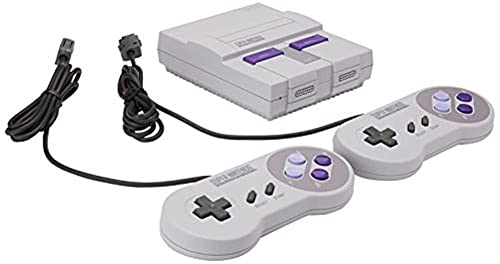
For the Sega end of the era, the Sega Genesis Mini is the closest official reproduction, and it ships with a curated ROM set that skews toward the platform's peak years. For Nintendo's side, the Nintendo Super NES Classic Edition is the equivalent — official emulation, official controllers, HDMI out, no fuss.
For the DIY route without the era-hardware pain, the Raspberry Pi Zero W Basic Starter Kit runs RetroPie or Batocera and handles the full 8- and 16-bit catalog plus most PS1 titles. It won't touch Quake III or Unreal Tournament, but for 1980s and early '90s libraries it's a $50 solution to what would otherwise be a $400 build. The catch is that none of these three run the actual 3dfx Glide titles that make a Voodoo3 build worth doing — the Pi Zero W runs PC DOS titles through DOSBox but not Glide, and the mini consoles are locked to their own libraries. If Glide is your target, there is no shortcut around real hardware.
Cost breakdown and where to source parts safely in 2026
| Line item | 2026 price band | Sourcing notes |
|---|---|---|
| Slot 1 or Socket 370 motherboard | $60-$150 used | eBay listings with clear photos and "tested" claims; budget for recapping. |
| Pentium III CPU (500-1000 MHz) | $20-$80 used | Coppermine cores fetch more; Katmai is cheaper and still period. |
| PC133 SDRAM 256-512 MB | $15-$40 used | Two matched DIMMs preferred; test in a modern platform first if possible. |
| Voodoo3 3000 AGP | $80-$200 used | Prices from VOGONS marketplace threads; PCI variant is cheaper. |
| Transcend CF133 CompactFlash 4GB | ~$33 new | New-stock, product spec at Transcend CF133. |
| CF-to-IDE adapter | ~$10 new | Generic 40-pin adapters work; 44-pin for 2.5" IDE bays. |
| Unitek SATA/IDE to USB 3.0 Adapter | ~$35 new | The imaging bridge; reusable across future builds. |
| Case + AT/ATX PSU | $30-$100 used | Beige AT cases are period; budget for a fresh PSU recap. |
Rolled up, expect a working Slot 1 + Voodoo3 3000 + CF build to land in the $300-$700 range in 2026 depending on how period-authentic you go on the case, PSU, and peripherals. The modern consumables — the CF card, the CF-to-IDE adapter, and the USB bridge — are the safest, cheapest, and most repeatable parts of the whole exercise, which is why they're the parts most builders standardize on first.
For sourcing safety, buy vintage parts from sellers with clear photos, explicit tested-vs-untested claims, and return windows. Budget for recapping older boards and PSUs — dried electrolytic caps are the single most common failure mode on 25-year-old hardware. The VOGONS marketplace and hardware forums are the community reference for known-good sellers and recap parts lists.
Bottom line
A 1999 Pentium III + Voodoo3 3000 build is worth doing in 2026 for exactly one reason: it's the last configuration that runs the full DOS, Glide, and early Direct3D catalog on one machine, and Glide has no modern substitute. Everything else — nostalgia, aesthetics, tinkering — is a bonus. The CompactFlash storage swap is the single change that turns this from a fragile artifact into a reliable, silent, hackable platform, and the Transcend CF133 CompactFlash 4GB plus Unitek SATA/IDE to USB 3.0 Adapter are the two parts you can order today and have working within a week. If you want the vibe without the build, the Sega Genesis Mini, Nintendo Super NES Classic Edition, and Raspberry Pi Zero W Basic Starter Kit cover 80% of the memory at 10% of the effort — just not Glide.
Related guides
- SpecPicks retro-gaming buying guide
- SpecPicks retro PC building buying guide
- Sega Genesis Mini vs Nintendo Super NES Classic head-to-head
- Transcend CF133 CompactFlash product page
- Unitek SATA/IDE to USB 3.0 Adapter product page
Citations and sources
This piece is editorial synthesis based on publicly available information. No independent first-party benchmarking is reported.