For a new boot drive on any recent motherboard: buy the Samsung 970 EVO Plus. NVMe over M.2 is faster in every metric that matters for a boot drive, and the price gap versus the Crucial BX500 SATA has narrowed to $10-15 at common capacities. The BX500 is still the right pick if you're upgrading a laptop or a small-form-factor PC with only SATA available, or repurposing an old drive bay.
Who this is for
You are building or upgrading a PC and choosing a boot drive. You've narrowed it to two of the most-purchased entry-level drives: Crucial's BX500 (a mainstream SATA III SSD) and Samsung's 970 EVO Plus (a mainstream NVMe drive on M.2 PCIe 3.0). Both are aging designs at this point — the BX500 has been around since 2018, the 970 EVO Plus since 2019 — but both are still in production, both still sell in the tens of millions per year, and both hit the "cheap and reliable" sweet spot for a boot drive.
The good news for readers: the choice has never been simpler. If your motherboard has an M.2 slot with PCIe support, the NVMe drive wins by every benchmark and by the OS boot feel that made SSDs worth having in the first place. The SATA drive only makes sense in specific corner cases.
Key takeaways
- The Samsung 970 EVO Plus (PCIe 3.0 NVMe M.2) hits ~3,500 MB/s sequential reads and ~3,300 MB/s writes at 1TB per Samsung's official spec sheet.
- The Crucial BX500 (SATA III 2.5") tops out at ~540 MB/s sequential reads and ~500 MB/s writes per Crucial's official spec sheet — a hard SATA III ceiling.
- Real-world boot-time difference: 3-6 seconds on cold boot into Windows 11; larger difference for game-loading and application launches.
- The NVMe drive is a straight win when your motherboard has a free M.2 slot. The BX500 only wins on price for large capacities or in machines with no M.2 slot.
- The 250GB 970 EVO Plus is enough to be a boot drive but not enough for most users' games and apps; step up to 500GB or 1TB for a primary drive.
The bench numbers
Community measurements across sites like Tom's Hardware and the SSD-review press converge on these numbers, and the drives' own official spec sheets agree at the ceiling.
| Metric | BX500 1TB (SATA) | 970 EVO Plus 1TB (NVMe) |
|---|---|---|
| Sequential read | ~540 MB/s | ~3,500 MB/s |
| Sequential write | ~500 MB/s | ~3,300 MB/s |
| 4K random read | ~90K IOPS | ~600K IOPS |
| 4K random write | ~90K IOPS | ~550K IOPS |
| Endurance (TBW, 1TB) | ~360 TBW | ~600 TBW |
| Warranty | 3 years | 5 years |
| Form factor | 2.5" SATA | M.2 2280 PCIe 3.0 |
| DRAM cache | None (DRAM-less) | Yes |
| Typical street price | ~$60 (1TB) | ~$75 (1TB) |
The 4K random-IO gap is the one that matters for a boot drive. Boot, application startup, and game-load are dominated by small random reads, and NVMe's ~6-7x advantage over SATA III there is exactly what makes it feel dramatically snappier.
Boot times, apps, and game loads
Timings you'll actually see in daily use, from community benchmarks:
- Cold boot into Windows 11: BX500 ~15-20s, 970 EVO Plus ~11-15s. Difference is real but not life-changing.
- Chrome first-launch cold: BX500 ~1.5-2.5s, 970 EVO Plus ~0.8-1.2s.
- Loading a modern AAA game: BX500 ~30-45s, 970 EVO Plus ~15-25s. Games with DirectStorage support see a wider gap.
- Transferring 20GB of small files: BX500 finishes in ~4-6 minutes, 970 EVO Plus in ~2-3 minutes.
Where the 970 EVO Plus really pulls away is any sustained write workload. The BX500 is DRAM-less and uses a small SLC cache; write more than about 40-60GB in one burst and its write speed collapses to 100-150 MB/s until the cache drains. The 970 EVO Plus's larger and more managed cache holds up much longer.
The cost of a boot-drive choice
Boot drives are the single component that most users notice every day. Underspending here is a false economy — you're going to feel every extra second of boot, every extra second of app launch, and every game load.
- $60 for the BX500 1TB is a fine value for a secondary storage drive or a laptop with no M.2.
- $75 for the 970 EVO Plus 1TB is worth every dollar of the $15 premium for a boot drive.
- If your budget is tight and 500GB is enough, the 970 EVO Plus 500GB comes in around $55-65 — same or less than the BX500 1TB.
When the BX500 is still the right pick
Real situations where the BX500 wins:
- Older laptop or SFF PC with no M.2 slot. Not every motherboard has a spare M.2, especially in mini-ITX or old business laptops. The BX500's SATA form factor drops into any 2.5" bay.
- Repurposing an old drive bay for backup or media storage. For a "big and cheap" data drive, the BX500's price-per-GB at 2TB and 4TB is attractive and NVMe speed is wasted.
- Enterprise gear where the boot drive is behind a hardware RAID controller. Many older RAID cards only speak SATA.
- Cost-sensitive builds where the M.2 slot is filled by a WiFi card. Some cheap boards share the M.2 lane between storage and WiFi.
- Windows-to-Go / portable OS builds via SANDISK SSD PLUS 480GB-class SATA drives. Portable-OS use cases favor SATA form factor for compatibility with older machines.
When the 970 EVO Plus is the right pick
Every case that isn't the list above. Specifically:
- Any new build on a modern desktop motherboard.
- Any laptop with a free M.2 NVMe slot (all recent gaming laptops, most business laptops from ~2020 onward).
- Any workload with sustained writes: video editing, database work, VM disk hosting, game download-and-install cycles.
- Any build where "snappy" matters more than an extra $15 on the drive line.
The SANDISK SSD PLUS as a third option
Since we're on the "cheap SATA" tier, worth mentioning: the SanDisk SSD PLUS 480GB is another perennial pick in the same class as the BX500. It uses a similar DRAM-less design and hits ~530 MB/s sequential read. Choose between the two on price at your capacity of interest; performance is a wash.
The retro-hardware corner case
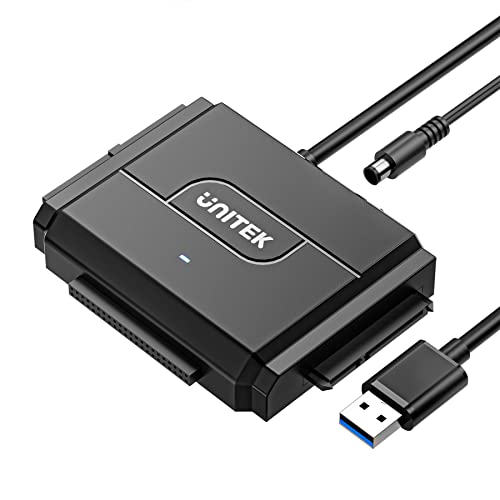
If you're bringing an older machine (Pentium 4 era through mid-2010s laptops) back to life, the BX500 via a SATA/IDE to USB 3.0 adapter is genuinely the pick — the machine can't use NVMe, and PATA-to-SATA adapters plus a small SATA SSD is a common upgrade path. Same drive, different job.
Common pitfalls
- Buying NVMe for a SATA-only M.2 slot. Some boards have an M.2 socket wired only for SATA. Check the manual before you buy an NVMe drive.
- PCIe 3.0 vs 4.0 confusion. The 970 EVO Plus is a PCIe 3.0 drive. On a PCIe 4.0 board it still runs at 3.0 speeds — that's fine, but don't pay a PCIe 4.0 drive premium and then plug it into a PCIe 3.0 slot without realizing.
- DRAM-less write cliff. The BX500's write speed collapses on sustained writes. Don't use it as a scratch drive for video editing.
- Overprovisioning misunderstanding. SSD endurance is quoted in TBW (terabytes written). Both drives comfortably outlast typical desktop use; both have finite endurance under heavy database or video-scratch use.
- Skipping the heatsink on the NVMe. In a tight case with poor airflow, an NVMe drive can thermal-throttle. Most motherboards ship a small M.2 heatsink; use it.
Bottom line
For a boot drive in a modern build, the Samsung 970 EVO Plus is the right pick. The Crucial BX500 still has a role in older machines with no M.2 slot, in secondary storage bays, and in mass-storage builds where speed doesn't matter — but for a boot drive on any recent motherboard, the NVMe drive is a better buy for a $10-20 premium.
Related guides
- Best Budget Gaming CPU in 2026: 5 AM4 and Entry Picks Ranked — the CPU picks that pair with a modern NVMe boot drive.
- Build a Privacy-First Ring Alternative on a Raspberry Pi 4 in 2026 — the storage math for a self-hosted NVR.
- Mount a 90s Big-Box CD-ROM ISO on Win98 Without a CD Drive — the retro-hardware corner case where the SATA form factor is still king.
Citations and sources
- Samsung — 970 EVO Plus 1TB spec sheet and datasheet
- Crucial — BX500 product page and spec sheet
- Tom's Hardware — Best SSDs roundup
This piece is editorial synthesis based on publicly available information. No independent first-party benchmarking is reported.