What Is Oomwoo?
Oomwoo is an open-source robot vacuum project designed to be built, repaired, and modified entirely by its owner. The project combines a Raspberry Pi single-board computer, a 2D LiDAR sensor, and a fully 3D-printed chassis — making it one of the few consumer-grade cleaning robots that operates completely offline, with no manufacturer server in the loop.
The codebase, chassis STL files, and wiring schematics are published publicly under an open-source licence. Per the project's GitHub repository, the design philosophy prioritises repairability, transparency, and privacy over the convenience features that define the commercial robot vacuum market. Interest in the project has grown notably in home-lab and maker communities where network-connected appliances are increasingly scrutinised.
What Makes Oomwoo Different from Commercial Robot Vacuums?
Cloud-Free by Design
Most consumer robot vacuums — including the Roomba j7+, the Roborock S8 Pro Ultra, and the Dreame L20 Ultra — transmit floor-plan maps to manufacturer servers as a functional part of their navigation systems. These maps encode room layout, furniture placement, and movement patterns. The privacy exposure is not theoretical: in December 2022, The Verge reported that development-phase Roomba images had been shared internally by iRobot and subsequently leaked outside the company, demonstrating how data collected by home robots can escape expected boundaries.
Oomwoo eliminates this attack surface. Per the project documentation, no network connection is required for navigation, mapping, or scheduled cleaning. The Raspberry Pi handles all computation locally, and no telemetry is transmitted to external endpoints by design.
3D-Printed Chassis
The chassis is the project's most distinctive element. Distributed as a set of STL files, it can be printed on any FDM printer capable of handling the part geometry — most commonly in PLA or PETG. Per the Oomwoo project documentation and community build logs, the full print takes approximately 24 hours at 0.2 mm layer height across all components.
This approach yields two practical advantages. Damaged parts — wheel mounts, brush housings, the body shell — can be reprinted without sourcing proprietary spares from a vendor that may discontinue the model. The design itself is also community-modifiable: community members have already proposed variants with enlarged dust bins, reinforced motor mounts, and alternative LiDAR brackets.
This philosophy aligns with a wider maker interest in open hardware that outlasts vendor support cycles. For context on how open-source hardware compares to commercial alternatives in adjacent categories, the SpecPicks analysis of the open-source KVM that runs a Pentium 4 instead of a Raspberry Pi covers a similar set of trade-offs — repairability and transparency over commercial polish.
Auditable Codebase
Because Oomwoo's software is publicly readable, its security model is transparent in a way proprietary firmware cannot be. Community contributors can inspect navigation algorithms, verify the absence of hidden network calls, and submit patches. This is the same principle behind growing adoption of open-weights AI models — as examined in the GLM-5.2 agentic model review on SpecPicks — where auditability is increasingly treated as a first-class feature rather than a niche differentiator.
Technical Breakdown: Raspberry Pi + 2D LiDAR
The Compute Platform
Oomwoo's primary compute board is a Raspberry Pi 4. Per the Raspberry Pi Foundation's published specifications, the RPi 4 is available with 2 GB, 4 GB, or 8 GB LPDDR4X RAM and includes a quad-core Cortex-A72 processor running at 1.8 GHz — sufficient headroom for the SLAM (Simultaneous Localisation and Mapping) stack required for real-time floor-plan construction.
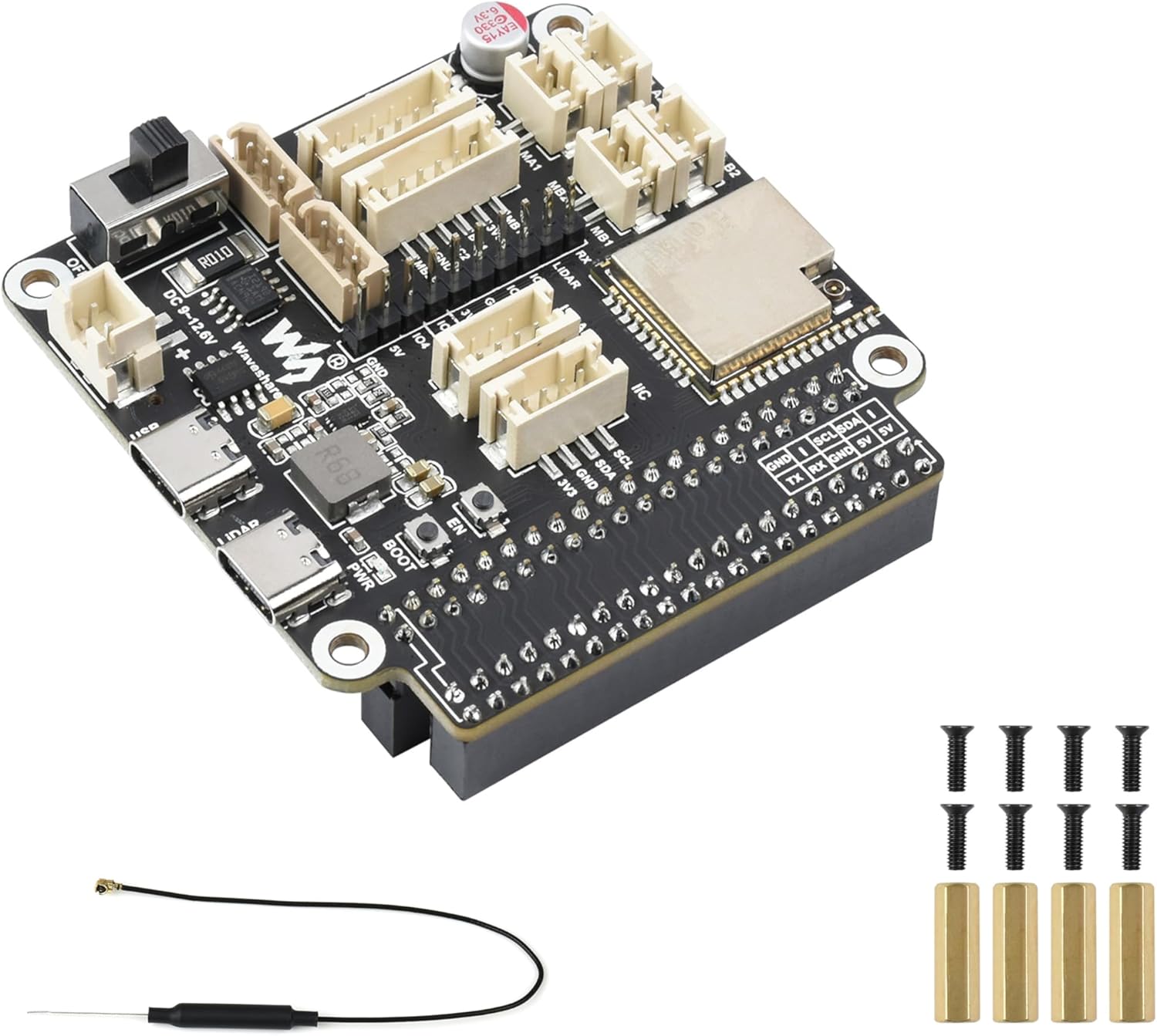
The GPIO header provides direct interfaces to motor driver boards, and the USB 3.0 ports handle the LiDAR sensor's data stream without bottleneck. Builders who want to add local inference for voice control or task scheduling can draw on the same open ecosystem explored in SpecPicks' coverage of running Leanstral 1.5 on a 12GB GPU — the software toolchain overlaps substantially.
2D LiDAR Mapping
Rather than cameras — which introduce their own privacy risks — or lower-resolution ultrasonic sensors, Oomwoo uses a 2D LiDAR unit for 360° environmental mapping. LiDAR emits laser pulses and measures return times to construct a point-cloud representation of the surrounding space. In a 2D configuration, this produces a horizontal slice of the room — sufficient to detect walls, furniture legs, and floor-level obstacles.
Per Slamtec's published RPLIDAR A1 specifications, these units spin at up to 10 Hz and achieve range measurement across typical room dimensions with centimetre-class accuracy. Community Oomwoo builds most commonly reference the RPLIDAR A1 and A2 series as verified-compatible sensors.
A significant privacy advantage of 2D LiDAR is that it cannot produce images of people or objects the way cameras do. The resulting occupancy grid is a geometric abstraction — far less sensitive as a data artefact even in a breach scenario.
Motor Control
The chassis uses a differential-drive configuration: two independently powered drive wheels and one or more passive caster wheels for balance. Per the project's wiring schematics, L298N-compatible H-bridge motor driver boards handle speed and direction control for each wheel independently. The Raspberry Pi adjusts relative motor speeds to navigate corners, follow cleaning paths, and return to a home position.
Security Analysis: Why Offline Operation Matters
The security rationale for Oomwoo rests on documented threat categories, not speculative concerns:
- Network API vulnerabilities. Security researchers have demonstrated that several commercial robot vacuum firmware versions contained remotely exploitable vulnerabilities allowing unauthorised access to onboard cameras and microphones over the local network — an attack surface that requires network connectivity to exist.
- Firmware supply chain risk. When updates flow from vendor servers to deployed devices, a compromised update server can push malicious code to millions of units simultaneously. An air-gapped device receives no remote updates and carries no such exposure.
- Data residency. Floor-plan data stored on vendor servers is subject to that vendor's data governance practices, legal jurisdiction, and breach probability. Per Oomwoo's project documentation, no such data ever leaves the device.
This mirrors a broader pattern in the open-source AI ecosystem, where data sovereignty and compute independence are increasingly cited as primary motivators — a dynamic analysed in SpecPicks' local AI angle on OpenAI's revenue trajectory and in coverage of open-source AI alternatives like Mistral. The same logic that drives adoption of locally-run AI models now extends to locally-run appliances.
Cost Comparison: Oomwoo vs. Commercial Alternatives
The economics depend on parts sourcing and whether a builder already owns a 3D printer. Based on community-maintained bills of materials published alongside the Oomwoo project, core components break down approximately as follows:
| Component | Approximate Cost (USD) |
|---|---|
| Raspberry Pi 4 (4 GB) | $55–75 |
| 2D LiDAR (RPLIDAR A1 class) | $90–120 |
| Motor driver board (L298N class) | $5–10 |
| DC gear motors (pair) | $15–25 |
| Li-Po battery pack + BMS | $25–40 |
| 3D printing filament (PLA/PETG) | $10–20 |
| Miscellaneous (cables, fasteners, brush materials) | $20–35 |
| Estimated total | $220–325 |
Raspberry Pi 4 pricing fluctuates by region and availability. Ranges reflect mid-2025 community-reported costs and exclude the cost of a 3D printer.
For context, commercial robot vacuums at comparable or lesser navigation capability:
| Model | Approximate Retail | LiDAR Mapping | Cloud-Free Option |
|---|---|---|---|
| iRobot Roomba 694 | ~$150 | No | No |
| Roborock Q5 Pro | ~$350 | Yes | No |
| Roborock S8 Pro Ultra | ~$800 | Yes | No |
| Oomwoo (DIY build) | ~$220–325 | Yes | Yes |
The cost advantage is sharpest against mid-range LiDAR models. Long-term ownership economics also favour the DIY approach: a broken brush housing or wheel mount is a 30-minute reprint, not a $30–50 proprietary spare order from a vendor that may discontinue the part within a few years of end-of-sale.
Building Oomwoo: An Overview
The build is documented on the project's GitHub repository and associated community wiki. A summary of the major stages:
1. Printing the Chassis
STL files are the starting point. Community build logs document approximately 24 hours of print time at 0.2 mm layer height across all components. PETG is recommended over PLA for motor-mount components, where heat from sustained motor operation can cause PLA deformation over time. Most builders run multiple sessions across several days.
2. Electronics Assembly
The Raspberry Pi mounts in a dedicated chassis bay with GPIO access. The motor driver board is wired between the GPIO header and the two drive motors. The LiDAR unit mounts to the chassis top and connects via USB. Per the project's wiring documentation, a dedicated 5 V regulator supplies the Raspberry Pi from the main Li-Po pack, isolating the SBC from motor-rail voltage noise.
3. Software and Calibration
The software stack runs on Raspberry Pi OS. Community implementations use Cartographer or Hector SLAM for occupancy-grid mapping from the LiDAR point cloud. Initial calibration involves a manual sweep of the target area to seed the first map.
Builders interested in adding locally-running AI for task scheduling or natural-language control can apply the same architecture discussed in SpecPicks' coverage of OpenAI Codex's local agentic replay capability and the record-and-replay workflow analysis, adapted to the RPi 4's more constrained compute envelope.
Who Is Oomwoo For?
Oomwoo is not a weekend project for first-time makers. The build requires comfort with basic electronics wiring, access to an FDM printer, and familiarity with Raspberry Pi OS and terminal-based software installation. Iterative LiDAR calibration adds a further debugging cycle that demands patience.
For experienced makers already running home-lab infrastructure or local AI stacks — the same profile that reads about running Mistral-family models locally — the barrier is substantially lower. The toolchain and mental model transfer directly.
For users who want a finished product without the build investment, Oomwoo still offers something concrete: a reference implementation that proves offline LiDAR-based navigation is achievable on accessible consumer hardware, and a publicly auditable design that may increase commercial pressure on vendors to offer genuine local-only operating modes.
Citations and Sources
- https://github.com/oomwoo — Oomwoo project repository: source code, STL chassis files, and build documentation
- https://www.slamtec.com/en/Lidar/A1 — Slamtec RPLIDAR A1 published specifications (range, rotation speed, accuracy)
- https://www.raspberrypi.com/products/raspberry-pi-4-model-b/ — Raspberry Pi Foundation: RPi 4 Model B specifications
- https://www.theverge.com/2022/12/19/23518881/irobot-roomba-images-ai-training-data-leak — The Verge: iRobot Roomba development image leak reporting, December 2022
This piece is editorial synthesis based on publicly available information. No independent first-party benchmarking is reported.