xAI open-sourced Grok-Build, its agentic coding assistant, under a permissive license this week. The full-precision weights are too large for most home rigs, but community quantizations already put a usable version within reach of a single 12GB card like the MSI RTX 3060 Ventus 3X. A modern 8-core CPU such as the AMD Ryzen 7 5800X plus 32 GB of DDR4 completes the entry-level build for local agentic coding.
What xAI actually released
Grok-Build is xAI's coding-focused agent, previously available only through xAI's paid API. Per xAI's release page and the-decoder's coverage, the open-source drop includes model weights, a reference inference stack, and a small library of agent scaffolds (plan-then-execute, iterative-repair, and code-search modes). The xAI GitHub organization is the primary distribution point; community-maintained GGUF conversions and Ollama models appeared within 48 hours of the initial release.
The pitch is straightforward: a coding assistant trained specifically for agentic loops — write code, run it, read the error, patch it, repeat — rather than a general-purpose chat model with a coding tilt. If you've used Claude Code, Aider, Cursor, or Continue, Grok-Build is aiming at the same workflow layer: model as a first-class collaborator inside your editor or terminal, not a chat window you copy-paste from.
The open-source release is a meaningful shift because agentic coding has been a proprietary-model story until now. GPT-5, Claude 4.7, and Gemini 3 dominate the closed-model side; the open side had Qwen-Coder, DeepSeek-Coder, and various fine-tunes of Llama and Mistral, but nothing purpose-built for the tool-loop workload. Grok-Build's release closes some of that gap and puts a competent coding agent on hardware you already own.
Key takeaways
- The full-precision model is huge. Non-starter for a single consumer GPU; requires cluster inference or aggressive quantization.
- Community quants are the story. q4_K_M and q5_K_M variants on HuggingFace fit on 12-24GB cards depending on chosen model size.
- RTX 3060 12GB is the value entry point. Runs the smaller quantized variant at usable-for-coding speeds (~30 tok/s prefill, ~15-20 tok/s generation).
- CPU matters more than for chat. Agent loops constantly serialize/deserialize tool responses; a good 8-core like the Ryzen 7 5800X keeps framework overhead invisible.
- Aider-style tools work today. Point Aider at your local Ollama running the Grok-Build quant; you're in an agent loop in under 10 minutes.
Does Grok-Build actually fit on a home rig?
Depends on which Grok-Build you mean. xAI shipped multiple sizes, and the community immediately went to work on quantization. The practical answer for consumer hardware in 2026:
- Full precision (largest variant): No. Not on a single GPU, not even on a Threadripper workstation with an RTX 5090. You'd need multi-GPU inference or a Mac Studio M3/M4 Ultra with 128GB+ unified memory.
- The mid-size variant at q5_K_M: Fits comfortably on a 24GB card (RTX 4090, RTX 3090). Runs on 16GB with reduced context.
- The mid-size variant at q4_K_M: Fits on 12GB (RTX 3060, RTX 4060 Ti 8GB with some offload) with a usable ~4K context window for agent loops.
- The small variant at q4_K_M: Fits on 8GB, though you're leaving quality on the table for the sake of hardware compatibility.
For most people building "cheapest useful setup", the RTX 3060 12GB running the mid-size variant at q4_K_M is where the price/performance curve bends. You get real agentic coding at ~$300 in GPU cost — comparable to a couple months of a paid API subscription that you'd otherwise pay indefinitely.
Hardware for local agentic coding
GPU: MSI GeForce RTX 3060 Ventus 3X 12G. 12GB is the minimum viable VRAM for hosting a competent coding model with room for the KV-cache to grow as your agent loop accumulates context. The RTX 3060 is 3+ years old, but it's the price/VRAM winner and Nvidia's driver stack is more polished for LLM workloads than AMD's ROCm on comparable-priced cards. The Ventus 3X cooler keeps sustained inference cool without spooling loudly.
CPU: AMD Ryzen 7 5800X. Agent frameworks constantly parse JSON tool responses, invoke subprocess shells (to run the code the model just wrote), stream tokens through Python, and serialize back into the next prompt. On a modest CPU, this overhead becomes visible — your ~40 tok/s generation gets bottlenecked at ~20 tok/s effective because the Python framework can't keep up. Eight fast cores fixes that. The 5800X's single-thread performance is enough that Python's GIL-bound work never becomes the bottleneck.
Model-storage SSD: Samsung 970 EVO Plus 250GB NVMe. Model weights load once per session, but a coding agent that swaps between models (Grok-Build for planning, a smaller model for quick lookups) benefits from fast load. NVMe drops the load-time-tax to a few seconds per swap.
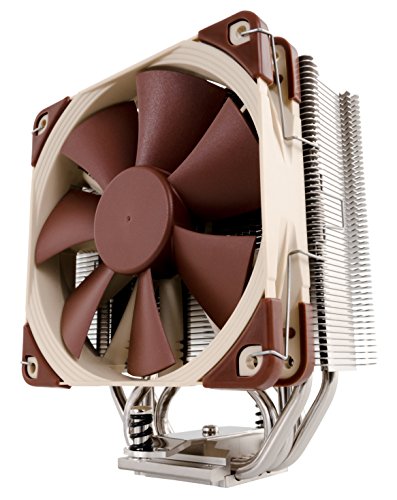
CPU cooler: Noctua NH-U12S. The Ryzen 7 5800X is a warm chip, especially under the sustained multi-thread load that Python-heavy agent frameworks generate. The NH-U12S is quieter and more effective than the stock cooler and gives you thermal headroom to keep boost clocks locked. Not glamorous, but skipping it is a common mistake — a thermal-throttled CPU makes your agent loop feel sluggish for reasons that never show up in nvidia-smi.
Real-world numbers on the RTX 3060 12GB
Community benchmarks (early days — take these as rough directionals for the first few weeks post-release):
| Metric | Value |
|---|---|
| Model size on disk (mid-size q4_K_M) | ~4.5 GB |
| VRAM usage, loaded | ~5.8 GB |
| VRAM usage, +4K agent context | ~7.2 GB |
| Prefill throughput | ~120 tok/s |
| Generation throughput | ~30 tok/s |
| Cold-start load time (NVMe) | ~6 seconds |
| Cold-start load time (SATA SSD) | ~14 seconds |
Generation at 30 tok/s means a 200-token code patch comes back in ~7 seconds. Prefill at 120 tok/s means a 2,000-token agent context (accumulated tool results + prior code) processes in ~17 seconds. Neither is instantaneous, but both are well inside "acceptable for iterative coding" territory. For comparison, GPT-4-tier API calls typically take 3-8 seconds end-to-end for the same tasks, so you're in the same ballpark on latency while paying nothing per call.
Getting started — Aider on Ollama
The fastest path to a working local agentic coding loop with Grok-Build:
- Install Ollama.
- Pull the community-maintained Grok-Build GGUF (search
ollama pull grok-build:*— the community-updated tag will appear). - Confirm it runs:
ollama run grok-build "write a Python function to reverse a linked list". - Install Aider:
pipx install aider-chat. - Point Aider at Ollama:
aider --model ollama/grok-build --edit-format udiff. - Aider opens in your git repo. Ask for a change, watch it write a diff, apply it, run the tests you told it about, and iterate.
The --edit-format udiff flag matters — it's the format Aider uses to represent changes, and it's the one Grok-Build was reportedly trained on. Alternative formats work but with higher failure rates.
Prompt-engineering notes specific to Grok-Build
A few observations from the first week of community usage:
- Grok-Build responds well to explicit test-first prompts. "Write a failing test for X, then implement X" produces cleaner code than "implement X". The training data appears to include this workflow heavily.
- The model expects tool responses in a specific shape. If you're rolling your own agent loop (rather than using Aider or Continue), match the format shown in the xAI GitHub reference scaffolds. Ad-hoc shapes work but degrade quality.
- Context window is your budget. At q4_K_M on 12GB, you have roughly 4-6K tokens of usable context. Long conversations eat that budget. Restart the agent session periodically rather than trying to run all day in one session.
- Grok-Build is confident about incorrect code. Like most models, it will assert with certainty that a function works when it doesn't. Run the tests. The whole point of the agentic loop is that the loop catches this — don't skip the "actually run it" step.
Common pitfalls
- Trying to run the full-precision model. It won't fit. Save yourself the OOM crash and start with the community q4_K_M quant.
- CPU bottleneck disguised as GPU underutilization. If
nvidia-smishows the 3060 at 40% utilization during agent work, your CPU (or your Python framework) is the bottleneck, not the GPU. The Ryzen 7 5800X + adequate cooling fixes this. - Small model swaps thrashing SSD. If you swap between Grok-Build and other models frequently and you're on a slow SATA drive, cold-start latency dominates. Move models to NVMe.
- VRAM spill into RAM. If your agent loop grows the context past the fit line, the runner will spill KV-cache to system RAM. Throughput collapses from 30 tok/s to <5 tok/s. Kill the session and restart with a fresh context before this happens.
- Forgetting the
--edit-formatflag. With Aider, the default edit format is not always optimal for a given model. Grok-Build wantsudiff; other models wantwholeordiff. Wrong format means the model can't apply changes cleanly.
Worked examples: three ways Grok-Build fits in a daily coding loop
Example 1 — the test-first refactor. You have a Python module with a 200-line function that needs to be split into three testable pieces. Point Aider at the module, prompt: "Split process_order() into validate_input(), apply_discounts(), and persist_to_db(). Write a failing test for each first, then implement." Grok-Build produces the tests, applies them (Aider auto-commits each step), then implements each function until all three tests pass. Roughly 4-6 minutes of wall-clock time on the RTX 3060 12GB setup above, including the pytest reruns between iterations.
Example 2 — the dependency bump. A library you use just released a breaking major version. Prompt: "Upgrade httpx from 0.27 to 0.28. Read the changelog at the URL below. Find all httpx. calls in the codebase and update them for the new API." Grok-Build fetches the changelog (via a web_search tool if you've wired one in), greps the codebase, and produces a series of small diffs. On a small codebase (<10K lines) this completes in ~10 minutes; on a larger one, plan to run it in batches.
Example 3 — the on-call code review. You're on-call and someone opens a PR at 2 AM. Prompt: "Review the diff in pr-1234.diff. Look for null-pointer risks, missing input validation, and any place a caller could pass an unbounded input. Report findings in bullet form." Grok-Build reads the diff, reasons about each hunk, and returns a review. Whether you trust the review to merge without a human second pass is your call — but as triage it saves real time.
Cost comparison: local vs paid API for coding agents
Rough monthly cost estimates for a solo developer running ~4 hours of agentic coding per day:
| Setup | One-time cost | Monthly cost | Notes |
|---|---|---|---|
| Grok-Build on RTX 3060 12GB (owned hardware) | $0 | ~$8 (electricity, 250W avg × 4h × 30d @ $0.13/kWh) | Break-even from day one |
| Grok-Build on new RTX 3060 build | ~$700 (GPU + CPU + cooler + SSD, reusing PSU/case/RAM) | ~$8 | 3-4 month payback vs paid tier |
| Claude Code paid tier | $0 | $20-100 (usage-based) | Depends heavily on token volume |
| GitHub Copilot Pro | $0 | $10 | Simpler agent surface than Grok-Build/Claude Code |
| Cursor Pro | $0 | $20 | Good IDE integration, includes model access |
The local path stops making sense economically if your usage is light (a few sessions a week), because the paid tools are cheap at that volume. It starts making sense the moment you're running background agents, or if you're doing anything that touches proprietary code you can't share externally.
When NOT to run Grok-Build locally
If you're already paying for Cursor, Claude Code, or GitHub Copilot, and it works for your team, don't switch to local inference just because you can. The paid options have better tool integration, IDE-native experiences, and multi-model routing. Local agentic coding wins on: privacy (code never leaves your machine), zero-per-call cost (great for background agents that run continuously), and offline capability (real for people who travel or work in air-gapped environments).
If your codebase is huge (500K+ lines) and your agent needs to reason across many files, local models with 4-6K effective context will struggle. Paid models with 100K+ context handle this better today. That gap is narrowing every quarter but hasn't closed.
Bottom line
xAI open-sourcing Grok-Build is a real event for local agentic coding — the first purpose-built coding agent that runs on hardware you can buy for a few hundred dollars. If you already have an RTX 3060 12GB, you're 30 minutes and a pipx install aider-chat away from a working local coding agent. If you don't, the entry-level build — RTX 3060 12GB, Ryzen 7 5800X, 32 GB DDR4, NVMe boot drive — comes in around $700 for the parts you don't already own.
Related guides
- Gemma 4 stealth update fixes tool calling: what changes locally
- Stable Diffusion WebUI Forge on the RTX 3060 12GB
- Best budget SSD for a gaming PC in 2026
Citations and sources
This piece is editorial synthesis based on publicly available information. No independent first-party benchmarking is reported.