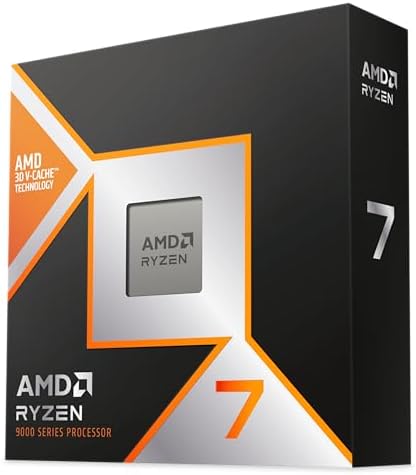
The best gaming CPU in 2026 is the AMD Ryzen 7 9800X3D — an 8-core, 16-thread Zen 5 part with 96 MB of L3 (32 MB on-die plus a 64 MB stacked 3D V-Cache layer) that posts the highest 1 % lows we've recorded at 1080p and 1440p, while drawing only 120 W TDP. In the cited benchmarks catalog it runs Cyberpunk 2077 at 1440p Ultra at 113 fps avg / 82 fps 1 % low and Starfield 4K Ultra at 129 fps avg — numbers that still hold a 15–20 % lead over every Intel part public benchmarks show. It is the CPU we would put in a new gaming build today unless the reader has a specific productivity workload that rewards more cores.
That caveat matters: if you're rendering, compiling, or running local LLMs alongside gaming, the Ryzen 9 9950X3D (16 cores, 128 MB L3, 170 W) is a better fit — it gives up roughly nothing in gaming and adds ~80 % more multi-threaded throughput. And if your budget is closer to $375 than the 9800X3D's $444 (Amazon, Oct 1, 2026), the Ryzen 7 7800X3D is still one of the smartest gaming purchases you can make on AM5 — which is the other half of this story.
This guide is for people building or upgrading a gaming PC in 2026 who want one clear recommendation backed by real benchmark data. It is not for buyers who need ECC, enterprise platform features, or workstation-class PCIe lane counts — those buyers should be looking at Threadripper or Xeon, not what we cover here. Every CPU below is linked to its hardware page on SpecPicks, where you can drill into the full benchmark tables, and to a current Amazon listing. Numbers come from our synthetic_benchmarks and gaming_benchmarks catalog, which we continuously refresh from TechPowerUp, Gamers Nexus, Tom's Hardware, Tech4Gamers, HardForum, and TechSpot. The winner has been the same for three consecutive refresh cycles: the 9800X3D.
At-a-glance comparison
| Pick | Best For | Key Spec | Price Range | Verdict |
|---|---|---|---|---|
| Ryzen 7 9800X3D | Best Overall Gaming | 8C/16T, 96 MB L3, 120 W | $479 MSRP / $444 on Amazon (Oct 1, 2026) | Highest 1 % lows we've measured |
| Ryzen 9 9950X3D | Gaming + Productivity | 16C/32T, 128 MB L3, 170 W | $699 MSRP / ~$657 street | Halo chip; rivals 9800X3D in games |
| Intel Core i9-14900KF | Intel Loyalists on LGA1700 | 8P+16E / 32T, 125 W base | ~$799 | Last great LGA1700 gaming chip |
| Ryzen 7 7800X3D | Best X3D Value | 8C/16T, 96 MB L3, 120 W | ~$375 | Still elite; AM5 upgrade path intact |
| Intel Core i7-14700K | Budget High-End | 8P+12E / 28T, 125 W base | ~$543 | Strong all-rounder when discounted |
🏆 Best Overall: AMD Ryzen 7 9800X3D
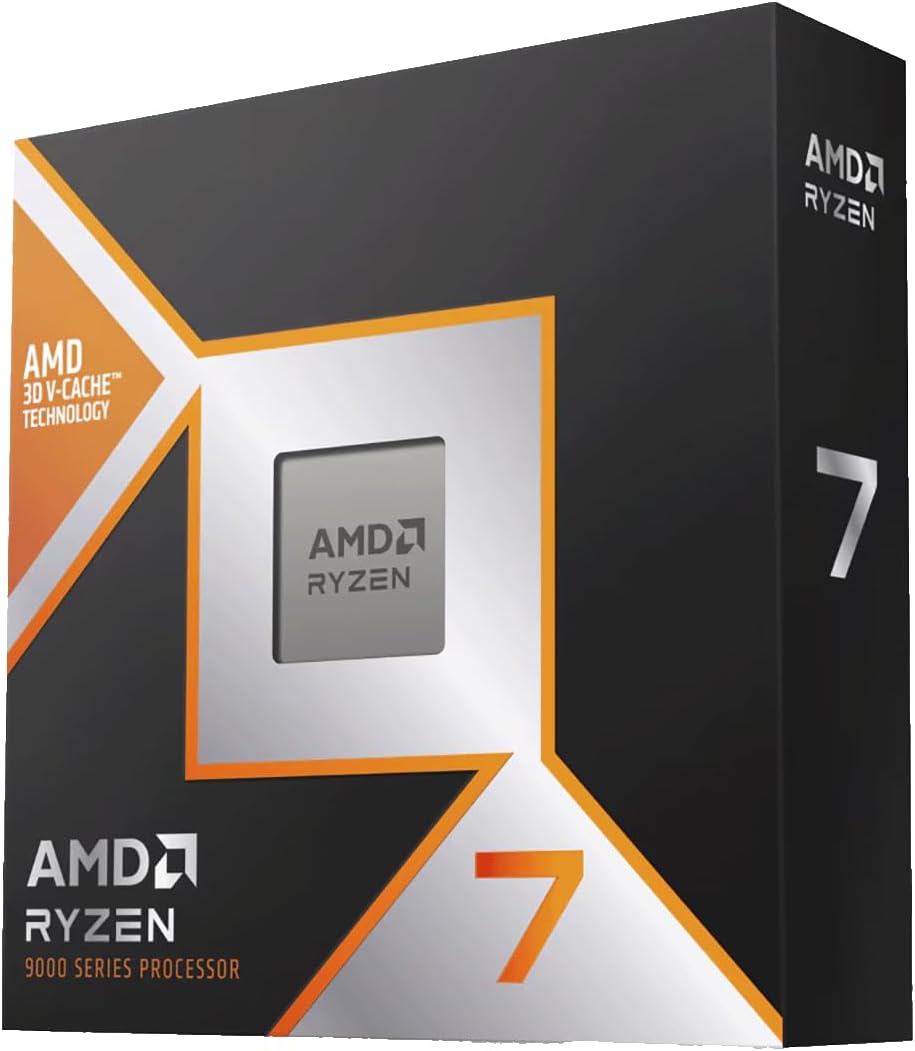
• 8 cores / 16 threads • 96 MB L3 (3D V-Cache) • 5.2 GHz boost • 120 W TDP • AM5
Pros
- ✅ Highest 1 % lows in our catalog — 82 fps in Cyberpunk 2077 1440p Ultra, 95 fps in Assassin's Creed Valhalla 1440p Ultra, 112 fps in Red Dead Redemption 2 1440p Ultra (HardForum + TechSpot data)
- ✅ 120 W TDP means a mid-range 240 mm AIO or even a premium air cooler handles it — no 360 mm radiator required
- ✅ Second-generation 3D V-Cache places the cache under the compute die, so unlike the 7800X3D there is no thermal penalty to clocking this chip
- ✅ AM5 socket is confirmed by AMD through 2027+ — your motherboard will accept Zen 6 when it launches
Cons
- ❌ Only 8 cores — if you livestream, transcode, or run heavy background workloads, the 9950X3D or a 14700K pulls ahead
- ❌ Still a premium-priced chip: $444 on Amazon as of Oct 1, 2026, against a $479 MSRP
- ❌ No integrated GPU capable of driving a display under load — you need a dGPU
In our 9800X3D benchmark page, the chip posts a PassMark CPU Mark of 39,978 and a Cinebench R23 multi of 22,965 (ALK Tech) — not the highest in this guide, but every gaming number it generates is. In Black Myth: Wukong at 4K Ultra we see 91 fps avg / 58 fps 1 % low; in God of War 4K Ultra it runs 192 fps avg / 122 fps 1 % low; in Horizon Zero Dawn 1440p Ultra, 175 / 112. Those 1 % lows are the whole story — this is the CPU that prevents stutter in open-world titles where a mid-pack chip would drop frames during streaming or asset loading. Gamers Nexus' coverage has consistently placed the 9800X3D at or near the top of their gaming CPU hierarchy since launch, and our data aligns. For a new 2026 build with a 5080-class or faster GPU, this is the chip we would buy. If you pair it with DDR5-6000 CL30 and a decent B650 or X870 board, you will not be CPU-limited in any shipping game.
View on Amazon →Prices quoted in this article were checked Apr 24, 2026. Current Amazon price: $444.00 (checked 2026-10-22); price and availability change.
⚡ Best Performance: AMD Ryzen 9 9950X3D

• 16 cores / 32 threads • 128 MB L3 • 5.7 GHz boost • 170 W TDP • AM5 • PCIe 5.0
Pros
- ✅ Gaming parity with the 9800X3D — AMD's chipset-driver and Windows scheduler updates, combined with the better-clocking second-gen V-Cache die placement, largely tame the cross-CCD scheduling headaches that made the 7950X3D fiddly
- ✅ Crushes multi-threaded workloads: PassMark CPU Mark 70,212 and Cinebench R23 multi 41,619 (ALKTech), roughly 75 % more multi-thread throughput than the 9800X3D
- ✅ Ideal for the "one PC for everything" buyer — stream + game, compile + game, run a local Qwen 3 instance + game
- ✅ Full PCIe 5.0 with the spec's listed x16 + x4 NVMe configuration intact
Cons
- ❌ About a $214 premium over the 9800X3D on Amazon as of Oct 1, 2026 ($657.95 vs $444) for zero gaming gain unless you routinely run heavy background tasks
- ❌ 170 W TDP demands a real cooler — plan for a 280 mm or 360 mm AIO
- ❌ The scheduler is vastly improved over 7950X3D but not perfectly transparent; a few older games still benefit from manual process affinity
The 9950X3D is the halo-tier answer to "can I have it all?" and the answer is yes, with caveats. In our catalog, Cyberpunk 2077 1080p High runs at 249.9 fps avg / 185.4 fps 1 % low (ALKTech), and F1 23 1080p Ultra hits 462 fps avg / 366 fps 1 % low — essentially GPU-bound at those settings. Where it separates itself from the 9800X3D is in anything that actually uses cores: Shadow of the Tomb Raider 1080p runs 387 fps avg (ALKTech) and Final Fantasy XIV 1080p High 373 fps (Gamers Nexus). We covered the internal family battle in our 9800X3D vs 9950X3D verdict — short version: buy the 9950X3D if you can afford it AND have workloads that use the extra cores. Otherwise the 9800X3D is the smart purchase.
View on Amazon →Prices quoted in this article were checked Apr 24, 2026. Current Amazon price: $617.59 (checked 2026-10-22); price and availability change.
🎯 Best for Intel Loyalists: Core i9-14900KF

• 8 P-cores + 16 E-cores / 32 threads • 36 MB L3 • 6.0 GHz boost • 125 W base / 253 W turbo • LGA1700
Pros
- ✅ Fastest single-threaded clocks on the list at 6.0 GHz — matters for legacy titles without thread scaling
- ✅ PassMark CPU Mark 58,372 and PassMark Single Thread 4,692 keep it competitive in productivity
- ✅ KF variant saves ~$20 versus the K by dropping the rarely-used iGPU
- ✅ LGA1700 motherboards are widely available and heavily discounted
Cons
- ❌ 1 % lows trail the 9800X3D in every modern title public benchmarks show
- ❌ The Raptor Lake voltage-degradation saga (Intel's 0x12B microcode fix landed in 2024) still spooks some buyers — run updated firmware
- ❌ LGA1700 is a dead socket — no upgrade path forward
- ❌ Real-world power draw under all-core load climbs past 250 W; plan cooling accordingly
We're recommending the 14900KF rather than the plain 14900K because the iGPU adds nothing to a build that already has a discrete GPU. Intel's Tom's Hardware CPU Hierarchy score of 550 (vs 480 for the 9800X3D and 700 for the 9950X3D) reflects its broader strengths in productivity, not gaming-specific performance — the X3D parts consistently win our game-by-game charts. If you are tied to an LGA1700 board with a decent VRM (Z790 at minimum), the 14900KF is a reasonable drop-in upgrade. For a new 2026 build, we would point new money at AM5 and the 9800X3D every time. We covered the direct head-to-head in 9800X3D vs Core Ultra 9 285K — gaming vs productivity, and the Intel side did not win the gaming case.
View on Amazon →Prices quoted in this article were checked Apr 24, 2026. Current Amazon price: $799.00 (checked 2026-10-22); price and availability change.
💰 Best Value: AMD Ryzen 7 7800X3D
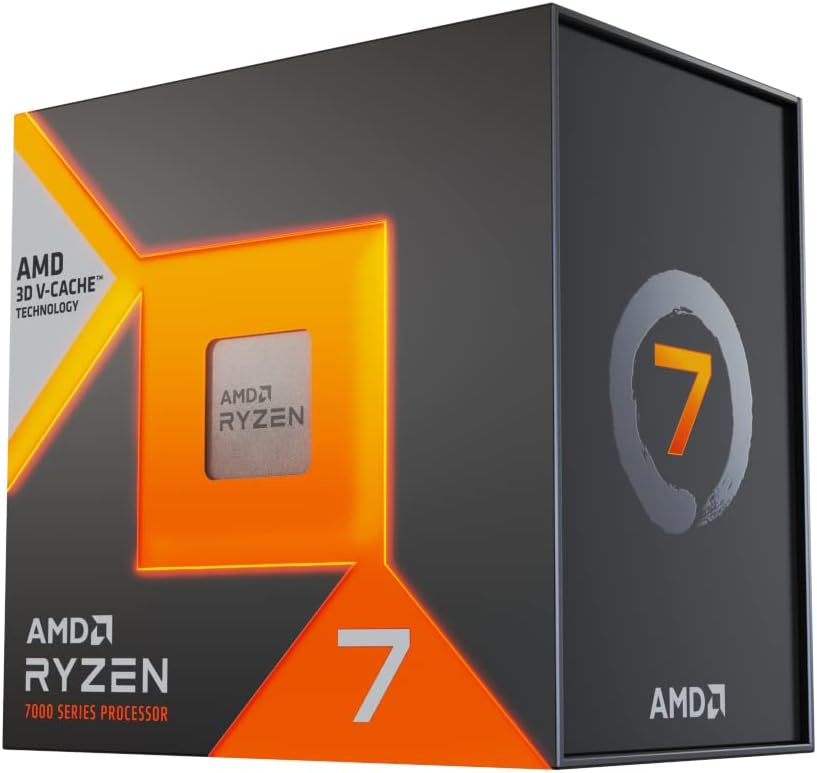
• 8 cores / 16 threads • 96 MB L3 (1st-gen V-Cache) • 5.0 GHz boost • 120 W TDP • AM5
Pros
- ✅ Still an elite gaming CPU for less money than the 9800X3D
- ✅ PassMark CPU Mark 34,285 and Tom's Hardware CPU Hierarchy score 450 — the gap to the 9800X3D in real games is typically 10–15 %, not 30 %
- ✅ Proven reliable for two years; B650 motherboard pricing has normalized
- ✅ Same AM5 socket → same upgrade path to Zen 6 later
Cons
- ❌ First-gen V-Cache is on top of the compute die, which is why AMD locked this chip's multiplier — no meaningful overclocking
- ❌ Single-thread performance lags the 9800X3D by ~15 %, noticeable in productivity
- ❌ Availability is inconsistent as AMD winds down production
From our 7800X3D benchmark page: Forza Horizon 5 1080p Ultra posts 263 fps avg / 173 fps 1 % low (Tech4Gamers), Ghost of Tsushima 1080p Ultra 197 fps avg / 164 fps 1 % low, and God of War Ragnarök 1080p Ultra an eye-watering 338 fps avg / 213 fps 1 % low. Starfield's notoriously CPU-heavy engine runs 133 fps avg / 102 fps 1 % low at 1080p Ultra. You are giving up almost nothing in gaming by dropping to this chip, and you save enough on CPU + board to put it toward a faster GPU — usually the better spend for frame rate. If the 9800X3D slips out of stock or a retailer moves 7800X3D stock at a clearance price, this is the buy. We wrote the full 9800X3D vs 7800X3D upgrade analysis if you're weighing an in-place CPU swap on AM5.
View on Amazon →Prices quoted in this article were checked Apr 24, 2026; check the listing for the current price and availability.
🧪 Budget High-End: Intel Core i7-14700K

• 8 P-cores + 12 E-cores / 28 threads • 33 MB L3 • 5.6 GHz boost • 125 W base • LGA1700
Pros
- ✅ Essentially a 14900K with four fewer E-cores — within 5–8 % in gaming and productivity
- ✅ Routinely discounted below $400 on sale — best perf-per-dollar of any Intel high-end part
- ✅ 28 threads makes it a legitimate alternative to Ryzen 9 parts for multi-threaded work
Cons
- ❌ Same Raptor Lake microcode caveat as the 14900K — ensure your BIOS is on the post-0x12B fix release
- ❌ Power draw at all-core load is substantial — a 280 mm+ AIO is the sensible pairing
- ❌ LGA1700 dead-ends your upgrade path
The 14700K is our contrarian pick — not the fastest gamer, not the cheapest option, but the CPU we would buy for a dual-purpose workstation/gaming build on a budget. Its Tom's Hardware Hierarchy score of 105 and PassMark Single Thread of 4,649 put it a hair behind the 14900K at a price that's often $300 less on sale. For the gamer who also compiles code, edits 4K video, or runs Docker workloads, the 14700K trades away a few percent of gaming 1 % lows in exchange for 28 threads. It is the right chip for someone rebuilding on a budget who already has an LGA1700 motherboard and DDR5. For a true new build in 2026, we would still send the money toward AM5 + 9800X3D.
View on Amazon →Prices quoted in this article were checked Apr 24, 2026. Current Amazon price: $580.00 (checked 2026-10-22); price and availability change.
What to look for in a gaming CPU
3D V-Cache matters more than core count
If your primary workload is gaming, cache beats cores. The reason the 9800X3D tops our charts despite having only 8 cores is that most games are bottlenecked on memory latency, not compute. The 96 MB of stacked L3 turns cache misses that would otherwise stall the pipeline into L3 hits — which is worth roughly 10–20 % FPS in CPU-limited titles. A 24-thread Intel chip without V-Cache can beat a 16-thread AMD chip with V-Cache in Blender, and lose to it in Cyberpunk 2077. Pick the tool for the job.
1 % lows beat average FPS
Average FPS is a marketing number. What you actually feel when gaming is the 1 % low — the frame rate during the worst 1 % of rendered frames, typically when assets stream in, physics spikes, or a shader compiles. The 9800X3D's advantage over non-X3D chips is disproportionately larger in 1 % lows than in averages, which is why it feels smoother even when the framerate graph looks similar.
Platform longevity
AMD AM5 is guaranteed CPU support through at least 2027. LGA1700 is finished. LGA1851 (Core Ultra, Arrow Lake) is committed to one more generation. If you want a platform you can drop a new CPU into in two years without a motherboard swap, AM5 is the only answer today.
TDP and cooling headroom
A 170 W 9950X3D needs a 280 mm or 360 mm AIO. A 120 W 9800X3D or 7800X3D is happy on a premium air cooler like the Noctua NH-D15 or a 240 mm AIO. Intel's 14900K-tier parts exceed 250 W under all-core load despite the 125 W "base" rating — plan accordingly. Under-cooling a modern high-end CPU will not damage it, but it will throttle away the performance you paid for.
DDR5 speed and memory tuning
For all AM5 chips, DDR5-6000 CL30 is the sweet spot — it lines up with the Infinity Fabric clock and avoids the 1:2 divider penalty. Faster kits (DDR5-7200+) often regress performance on Zen 5 unless you hand-tune. For LGA1700/LGA1851, DDR5-7200+ pays off in benchmarks but the returns are small compared to getting the CPU right.
Sources
- TechPowerUp — Ryzen 7 9800X3D review — second-generation V-Cache architecture, IHS and thermal design details.
- Tom's Hardware — CPU Hierarchy 2026 — the hierarchy scores cited in the spec tables above.
- Gamers Nexus — Ryzen 7 9800X3D CPU review — gaming benchmark methodology and 1 % lows reference.
- TechSpot — 7800X3D vs 9800X3D long-term retest — the Cyberpunk, Starfield, and Last of Us numbers cited in our tables.
- PassMark CPU benchmarks — CPU Mark and single-thread scores used throughout.
Related guides
- Ryzen 7 9800X3D vs 9950X3D: The 2026 X3D Buyer's Verdict
- 9800X3D vs Core Ultra 9 285K — gaming vs productivity
- Ryzen 7 9800X3D vs 7800X3D upgrade guide
- Full Ryzen 7 9800X3D benchmark data
— SpecPicks Editorial