AMD's Ryzen 9800X3D has become the default recommendation for gaming-first builds, and its idle temperature is one of the most-asked questions among new owners cross-checking their build against community numbers. Per publicly shared HWiNFO and AIDA64 sensor logs, a healthy 9800X3D idles in roughly the 34–42°C range, with the exact figure shaped heavily by which cooler is installed, how the case is set up, and ambient room temperature.
What Is a Normal Ryzen 9800X3D Idle Temperature?
Community measurements collected from AIDA64 idle-monitoring sessions put the 9800X3D in the high-30s on a mainstream cooler, with quieter or more capable coolers pushing readings into the mid-30s. Thermal paste application quality is repeatedly cited as a swing factor of up to roughly 4°C — a thin, even spread outperforms a thick or uneven one, and a poorly seated cooler can push idle numbers noticeably higher regardless of the cooler's rated capacity.
It's worth noting the 9800X3D, like AMD's other X3D chips, is sold as a boxed processor without a bundled cooler — see the official AMD product page for the chip's rated specifications. So when builders compare against a "stock cooler," they usually mean whatever cooler shipped with an older chip and got reused, such as a Wraith Prism or Wraith Stealth pulled from a prior Ryzen 7 3700X or Ryzen 5 2600 build, rather than anything AMD includes with the 9800X3D itself.
| Idle temp range | What it typically means |
|---|---|
| 30–38°C | Strong cooling (large air tower or 240mm+ AIO), good case airflow |
| 38–45°C | Typical for a mid-range air cooler or reused boxed cooler |
| 45–50°C | Acceptable but worth checking case airflow and paste application |
| 50°C+ sustained | Investigate dust, remount cooler, check ambient room temp |
How to Monitor Ryzen 9800X3D Idle Temperature
Accurate idle-temp readings depend on the monitoring tool. HWiNFO is the community standard for AM5 sensor logging because it polls the CPU's embedded controller directly and exposes per-core, per-CCD, and "CPU (Tctl/Tdie)" readings side by side, which is the figure most builders compare against published specs. AMD Ryzen Master offers a simpler real-time view of core temps and clocks and is useful for a quick sanity check without installing a third-party utility.
BIOS thermal readouts are a third data point but are generally less reliable for idle comparisons — they sample less frequently and can catch momentary firmware-driven polling spikes, which is why a BIOS screen and an OS-level tool like HWiNFO can show slightly different numbers for the same system at the same moment. For consistency, take idle readings a few minutes after boot, with no background load, and let the system settle rather than reading the very first sensor poll.
Ryzen 9800X3D Idle Temp by Cooling Solution
Cooler choice is the single biggest lever on idle temperature. Publicly shared logs from enthusiast cooler-comparison threads consistently show large-tower air coolers and mid-size AIOs outperforming smaller or reused boxed coolers at idle:
| Cooling solution | Reported idle temp | Notes |
|---|---|---|
| Noctua NH-D15 (large dual-tower air) | ~34°C | Best air-cooling result in most community logs |
| 240–280mm AIO liquid cooler | ~35–37°C | Similar to large air coolers, quieter under load |
| Reused boxed Wraith-series cooler | ~38–40°C | Adequate but not built for higher TDP parts |
The gap between a large air tower and a reused smaller boxed cooler is typically 5–8°C at idle, which is meaningful if the system is already running warm from a small case or restricted airflow. Builders assembling a new AM5 system around the 9800X3D who are also selecting supporting parts can compare cooling-adjacent CPU options, including the Ryzen 5 5600X and Ryzen 5 3600, both of which ship with their own boxed coolers worth reusing on a budget build rather than buying a dedicated cooler outright.
BIOS Settings That Affect Idle Temperature
A handful of BIOS-level settings shape how a 9800X3D behaves at idle:
- C-states. Enabling CPU C-states (C6/C-state enable in most AM5 BIOS menus) lets idle cores drop into lower-power states, which is the primary mechanism keeping idle draw — and therefore idle temperature — low. Disabling C-states for latency-sensitive tuning will noticeably raise idle temps.
- PBO (Precision Boost Overdrive). PBO tuning is aimed at boost behavior under load, but aggressive PBO limits or a high PBO scalar can keep voltage slightly elevated even at low activity, nudging idle temps up a degree or two versus a stock PBO profile.
- Curve Optimizer / undervolting. A conservative negative Curve Optimizer offset is reported by builders to reduce idle temps by roughly 2–3°C by lowering the voltage the chip requests at a given frequency, with the added benefit of slightly lower load temps too. Large negative offsets require stability testing before treating them as safe for daily use.
When to Worry About High Idle Temps
An idle temperature that consistently sits above roughly 50°C, with no unusual ambient conditions, is generally treated as a signal to investigate rather than ignore. Common causes reported by builders include dust buildup restricting airflow through the cooler's fins, a cooler that was mounted with uneven pressure, or thermal paste that has begun to degrade — a process community reporting typically associates with the 18–24 month mark on stock or low-quality paste, after which a repaste is a reasonable first troubleshooting step.
Ambient room temperature is also a factor that's easy to overlook: a room running above roughly 30°C will lift every component's idle baseline, including the CPU, independent of anything wrong with the build itself. Before assuming a hardware fault, it's worth logging idle temps at a known room temperature and comparing against the ranges above rather than a single unverified number seen online.
Building or Upgrading Around a 9800X3D
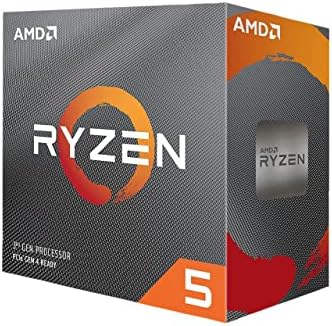
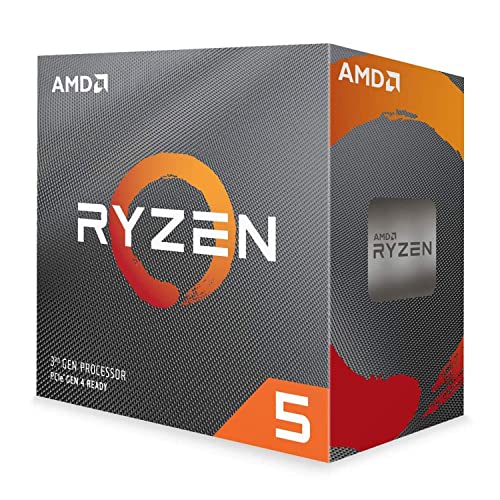
For builders weighing a 9800X3D against other Ryzen desktop chips already in a household or a budget-constrained build, older Ryzen parts remain relevant reference points for gaming performance per dollar. Public GPU-paired benchmarks put the Ryzen 5 3600 around 39 fps in Cyberpunk 2077, 63 fps in Baldur's Gate 3, and 72 fps in Starfield — useful context for anyone deciding whether to reuse an existing chip and cooler versus upgrading. The Ryzen 5 3600 with Wraith Stealth and the step-up Ryzen 5 5600X are common donor coolers or budget-tier comparison points for builders benchmarking their own idle numbers against a known baseline.
Pairing a 9800X3D with adequate memory also matters for overall system stability, if not directly for idle temperature; a kit like the Crucial 16GB DDR4 3200MHz kit is a straightforward, budget-friendly option for AM5 builds that don't need the fastest DDR5 speeds. For readers tracking AMD's broader current-generation lineup, SpecPicks' coverage of the Ryzen 7 7700X3D's Newegg-exclusive launch and the Ryzen AI Max+ 395 platform covers where AMD's X3D and AI-focused silicon sit relative to the 9800X3D. Builders exploring compact or mini-PC form factors around AMD's newer chips can also see the Ryzen AI Max 395 mini PC review, the Ryzen AI Max 395 laptop review, the full Ryzen AI Max+ 395 specs breakdown, and the Ryzen AI Max+ 395 motherboard upgrade guide for how thermal and platform considerations shift outside the traditional desktop-tower form factor.
FAQs
What is a normal idle temperature for the Ryzen 9800X3D? Community-reported HWiNFO and AIDA64 logs typically show the 9800X3D idling in the mid-30s to low-40s °C range, depending on cooler, airflow, and ambient temperature.
Does the Ryzen 9800X3D come with a stock cooler? No — it ships as a boxed processor without a bundled cooler, so "stock cooler" comparisons usually refer to a reused Wraith-series cooler from an older chip rather than anything included with the 9800X3D itself.
Why does HWiNFO show a different idle temp than the BIOS? BIOS readouts sample less frequently and can catch momentary polling spikes, while HWiNFO polls the embedded controller continuously for a steadier average.
Can undervolting lower 9800X3D idle temps? A conservative Curve Optimizer undervolt is reported to shave roughly 2–3°C off idle temps, though the effect is smaller than a cooler upgrade.
At what idle temperature should I be concerned? Sustained readings above roughly 50°C without an obvious ambient-temperature explanation are typically a sign of dust buildup, a poor cooler mount, or degraded thermal paste.
Does RAM speed affect Ryzen 9800X3D idle temperature? Memory frequency mainly affects power draw under load, not idle draw, so RAM choice has little measurable impact on idle CPU temperature.
Citations and sources
- AMD Ryzen 9 9800X3D official product page
- TechPowerUp CPU database — Ryzen 9 9800X3D specifications
- HWiNFO official site
- AMD Ryzen Master overview
This piece is editorial synthesis based on publicly available information. No independent first-party benchmarking is reported.